
Choosing the right bedside companion for late-night reading in the Philippines often comes down to balancing consistent performance with spatial flexibility. If you are trying to decide between a rechargeable study table lamp and a traditional plug-in model, your choice should depend on your bedroom layout, local power grid reliability, and personal reading habits.
For readers who enjoy long, uninterrupted reading sessions and have a stable power outlet situated right next to the nightstand, a plug-in table lamp is generally the superior option. It provides continuous, maintenance-free brightness without the eventual worry of battery degradation.
Conversely, a rechargeable study table lamp is highly recommended if your bedroom has limited wall outlets, if you prefer a minimalist aesthetic free of trailing cords, or if you live in an area prone to seasonal power interruptions and typhoons. In the Philippines, where rotational brownouts can suddenly plunge a room into darkness, a rechargeable lamp serves double duty as a reliable emergency backup light.
Products mentioned in this guide
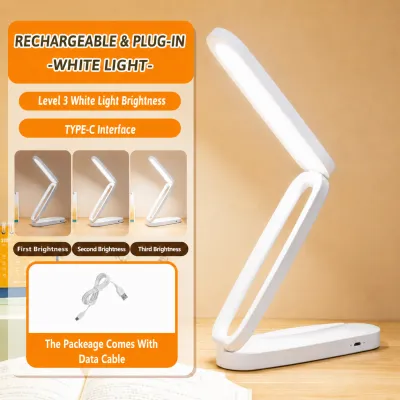
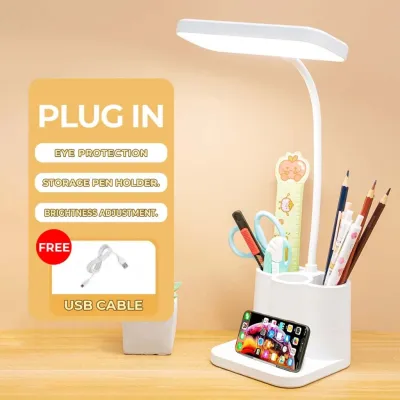
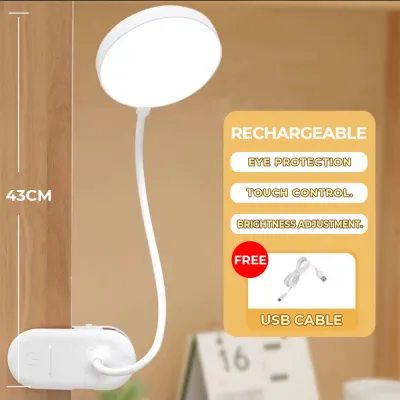
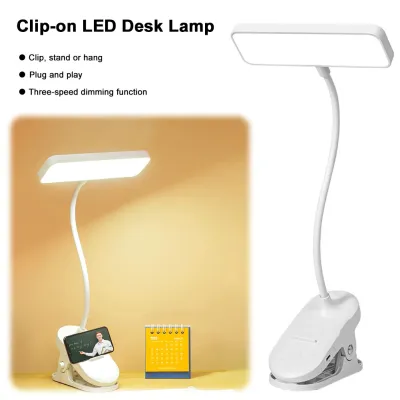
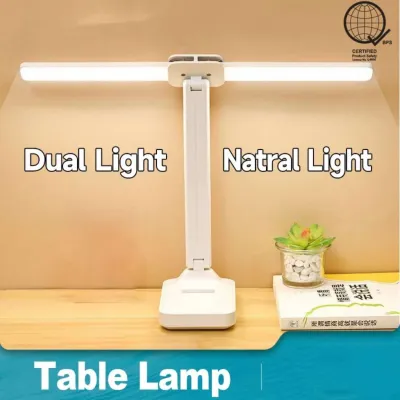
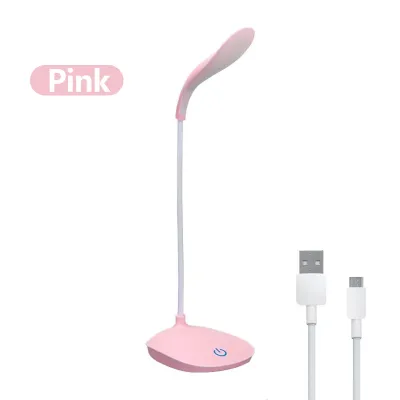
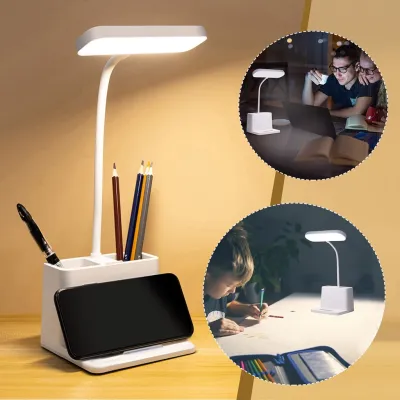
Prices are valid at publication and may change. Please refer to the product page for the latest price.
Rechargeable Study Table Lamp vs. Plug-In: Key Differences at a Glance
To help you visualize how these two lighting options compare, the table below outlines their primary operational characteristics across key decision dimensions.
| Feature | Plug-In Table Lamps | Rechargeable Lamps |
|---|---|---|
| Power Source | Constant 220V AC wall outlet | Internal rechargeable battery (Lithium-ion) |
| Brightness Consistency | Constant, stable lumen output | May dim as battery drains (unless regulated) |
| Portability | Tethered to wall outlet; fixed placement | Highly portable; cordless operation |
| Maintenance | Zero battery maintenance; long lifespan | Requires periodic charging; battery degrades over time |
| Ideal Use Case | Dedicated reading desks or fixed nightstands | Compact nightstands, multi-room use, emergency backup |
While plug-in models draw power continuously from your home’s electrical system, rechargeable units rely on stored energy. This fundamental difference dictates not only where you can place the lamp but also how the light engine behaves over hours of continuous use.
Brightness Consistency and Eye Comfort for Night Reading
LEDs require a constant current to emit a stable light output. Plug-in lamps benefit from a direct connection to the mains grid, allowing the internal driver to deliver a steady stream of power to the light-emitting diodes. This results in consistent lumen output and stable color rendering throughout your reading session. There is no risk of the light slowly fading while you are in the middle of a chapter, which minimizes eye strain caused by forcing your pupils to adjust to fluctuating illumination levels.

With a rechargeable study table lamp, the behavior of the light depends heavily on the quality of its internal circuitry. Basic or older rechargeable models often experience a gradual drop in brightness as the battery voltage declines. This slow, sometimes imperceptible dimming can cause subtle eye fatigue during extended reading sessions. To prevent this, look for modern rechargeable lamps equipped with constant-current regulators. These circuits ensure the lamp maintains its rated brightness until the battery is almost completely depleted, though you must verify this specific feature on the manufacturer’s specification sheet.
Regardless of the power source, eye comfort depends on several critical light characteristics. When selecting a lamp for bedside reading, check the product specifications for flicker-free technology, as invisible high-frequency flickering can lead to headaches and dry eyes. Look for adjustable color temperature settings; a warm light (around 2700K to 3000K) is ideal for evening reading because it minimizes blue light exposure, helping your body prepare for sleep. For tasks requiring higher focus, a neutral or cool light (4000K to 5000K) is more appropriate. Aim for a lamp that can deliver between 300 and 500 lumens of brightness at the book surface, with step-less dimming controls to customize the intensity to your immediate environment.
Portability, Cable Management, and Nightstand Space
The physical layout of a Filipino bedroom often dictates the practicality of your lighting choice. Many homes feature solid concrete or hollow-block walls where retrofitting new electrical outlets is difficult and expensive. If your nightstand is positioned far from the nearest wall socket, a plug-in lamp will require the use of extension cords. This not only creates an unsightly tangle of wires but also introduces tripping hazards in a dark room.
A rechargeable study table lamp excels in these space-constrained or awkwardly arranged environments. By eliminating the power cord, you gain complete freedom of placement. You can position the lamp on the absolute edge of your nightstand, move it to a study desk, or even carry it to another room during a late-night power outage. This cordless design also frees up valuable surface area on compact nightstands, leaving more room for books, spectacles, and a glass of water.
However, portability introduces its own physical design trade-offs. Because plug-in lamps do not need to house heavy internal batteries, their bases can be designed solely for structural stability or aesthetic elegance. When evaluating a cordless rechargeable lamp, pay close attention to the base dimensions and overall weight. A lamp intended for bedside use must have a stable, weighted base with non-slip rubber feet. If the unit is too top-heavy or lightweight, it can easily be knocked over in the dark when reaching for a phone or turning off an alarm.
Power Reliability and Battery Maintenance
In the Philippines, power reliability is a significant factor in any appliance purchase. Depending on your region, seasonal typhoons, grid maintenance, or peak-demand periods can lead to sudden power interruptions. In these scenarios, a rechargeable study table lamp proves to be an invaluable asset. Instead of scrambling in the dark for a flashlight or lighting unsafe candles, a fully charged bedside lamp continues to provide clean, safe, and focused illumination, allowing you to read comfortably through the outage.
However, this convenience comes with long-term maintenance considerations. Most modern cordless lamps use lithium-ion batteries, which naturally degrade over time. In a tropical climate characterized by high ambient temperatures and humidity, this degradation process can accelerate if the lamp is kept in poorly ventilated areas or left in direct sunlight. Over two to three years of regular charge-discharge cycles, the battery’s capacity will inevitably shrink, resulting in shorter operating times between charges. Eventually, the entire unit or its internal battery may need to be replaced, whereas a simple plug-in lamp can easily last for a decade or more with only occasional bulb replacements.
For those choosing a plug-in lamp, the focus shifts to electrical compatibility and safety. The standard utility voltage in the Philippines is 220V to 240V AC at 60Hz. Before purchasing any imported plug-in lamp online, you must verify that its transformer or driver is rated for this voltage range; using a 110V lamp designed for other markets will immediately damage the device and pose a severe fire hazard. Additionally, because voltage fluctuations and power surges are common when electricity is restored after a brownout, it is highly recommended to plug your bedside lamp into a high-quality surge protector to safeguard its electronic components.
Decision Framework: How to Choose Your Bedside Lamp
To make your final decision, evaluate your specific bedroom setup and daily habits against the following criteria:
Choose a plug-in lamp if:
- Outlet Proximity: Your nightstand is located directly next to a wall outlet, eliminating the need for extension cords.
- Reading Duration: You read for multiple hours every night and do not want to worry about a battery dying mid-chapter.
- Low Maintenance: You prefer a "set-and-forget" appliance that requires zero charging schedules or battery maintenance.
- Lighting Demands: You want the absolute highest level of brightness consistency and color rendering without voltage drop-offs.
Choose a rechargeable study table lamp if:
- Space Constraints: Your bedroom layout lacks convenient wall outlets near the bed, or you want to maintain a clean, minimalist nightstand free of cords.
- Emergency Preparedness: You live in an area prone to frequent power outages or rotational brownouts and need a reliable emergency backup light.
- Versatility: You want a versatile light source that can be easily carried to a study desk, living room, or outdoor patio.
- USB Convenience: You prefer a low-voltage device that can be charged via a standard USB port using existing power banks or phone chargers.
Verify these specifications before buying:
- Electrical Certification: Ensure the lamp carries recognized safety certifications (such as the PS or ICC mark in the Philippines, or international equivalents like CE and RoHS) to guarantee safe electrical design.
- Voltage Compatibility: Double-check that any plug-in model is rated for 220V-240V at 60Hz.
- Battery Chemistry and Capacity: For rechargeable models, look for lithium-ion batteries (measured in milliampere-hours, or mAh) and check the manufacturer's estimated runtime on a single charge.
- Warranty Terms: Confirm the seller or manufacturer offers a clear warranty, particularly covering the battery or LED driver, to protect your purchase against premature failure.
Frequently Asked Questions (FAQ)
Is it safe to leave a rechargeable bedside lamp plugged in overnight?
Yes, most reputable modern rechargeable lamps are designed with built-in overcharge protection circuits. These safety mechanisms automatically stop drawing current or redirect it once the internal battery reaches 100% capacity, preventing dangerous overheating or thermal runaway.
However, keeping any battery-powered device constantly connected to a live charger is not recommended for long-term battery health. Continuous trickle charging can slowly degrade the chemical components of a lithium-ion battery, gradually reducing its overall lifespan. For optimal longevity, it is best practice to unplug the charging cable once the indicator light shows a full charge.
Furthermore, always use the charging cable provided by the manufacturer or a certified high-quality replacement. Avoid using cheap, unbranded wall adapters or damaged cords, as poor-quality power delivery can bypass the lamp’s internal safety circuits, posing a risk of short circuits or electrical fires.
Community discussion
Share your experience or ask a question. Comments are reviewed before publication.