
Choosing the right wall lamp rechargeable fixture depends heavily on where you plan to install it. While a bedside lamp must foster a relaxing, glare-free environment for winding down, a hallway lamp must prioritize immediate, reliable navigation. Understanding these distinct spatial requirements ensures you select a device with the correct battery capacity, control interface, and light distribution.
In the Philippines, where seasonal weather changes and occasional power interruptions are part of daily life, these cordless fixtures also serve a vital secondary purpose as emergency backup lighting. Rather than scrambling for a flashlight during a sudden power outage, a strategically placed rechargeable sconce keeps your pathways safe and your bedroom functional. Balancing these practical needs requires looking closely at the technical specifications of each fixture before making a purchase.
Essential Features for Bedside Rechargeable Sconces
Bedside lighting is deeply personal and directly impacts your sleep hygiene. When selecting a rechargeable wall lamp for the bedroom, your primary focus should be on visual comfort, ease of use from a reclining position, and the ability to customize the light output to match your evening routine.
Products mentioned in this guide
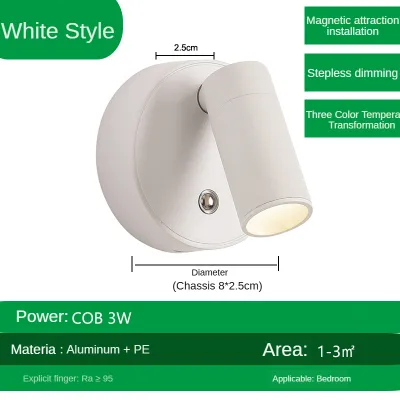
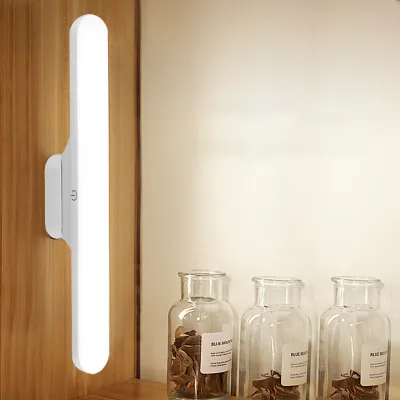
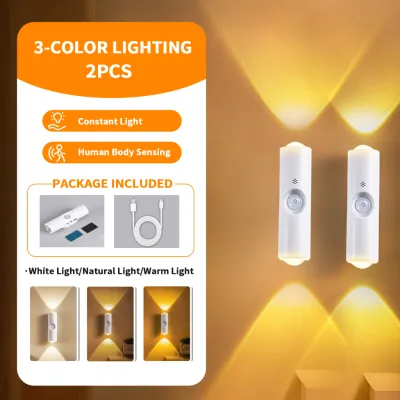
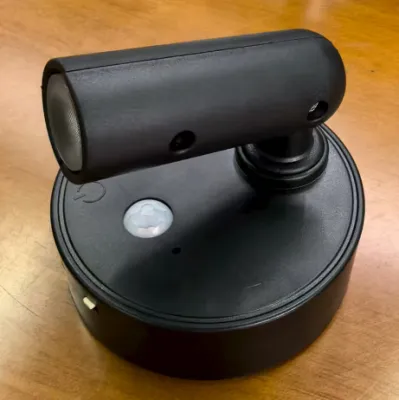
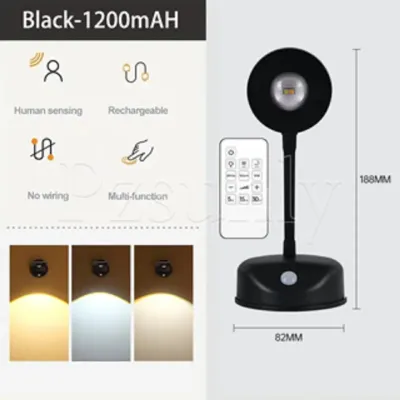
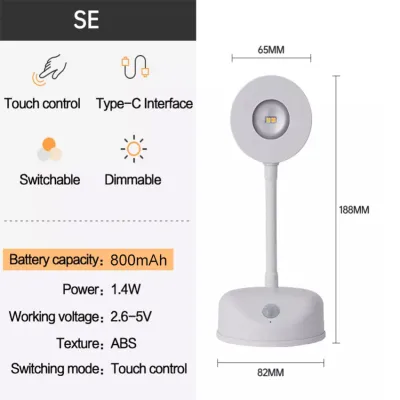
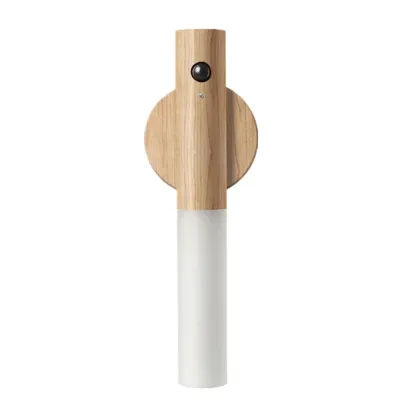
Prices are valid at publication and may change. Please refer to the product page for the latest price.
Adjustable Brightness and Warm Color Temperatures
The human body relies on environmental cues to prepare for sleep, making warm color temperatures highly beneficial for bedside fixtures. Look for lamps that offer light within the 2700K to 3000K range. This warm, golden glow minimizes blue light exposure, which can otherwise disrupt your natural melatonin production and make falling asleep more difficult. While color temperature is ultimately a conditional preference, opting for adjustable color modes gives you the flexibility to switch to a cooler light if you need to focus on detailed tasks during the day.
Dimming capabilities are equally crucial for bedside comfort. Stepless dimming, which allows you to smoothly adjust the brightness from 100% down to a faint 5% glow, is highly recommended over rigid preset levels. This granular control allows you to set a faint nightlight for sleeping or dial up the brightness just enough to read a book comfortably without straining your eyes or waking up a sleeping partner. Always check the manufacturer’s specifications to confirm the dimming method, whether it is controlled by holding down a touch sensor or via a dedicated dial.
Convenient Control Mechanisms
A bedside lamp is only as good as its accessibility. When you are warm and comfortable in bed, the last thing you want to do is stretch awkwardly to turn off a light. Touch-sensitive bases or frames are excellent for immediate bedside reach, allowing you to tap any part of the fixture to toggle the power or adjust the brightness.
For lamps mounted slightly higher or out of direct arm’s reach, a remote control is an invaluable addition. Many modern rechargeable sconces come with compact infrared or radio-frequency remotes that let you adjust settings, set sleep timers, or turn off the light from across the room. If you prefer a more traditional mechanical feel, pull cords provide a classic look and highly reliable tactile feedback, though they lack the advanced dimming adjustments found in touch or remote-controlled models.
Glare-Free and Directional Designs
Direct light shining into your eyes while lying down can cause immediate discomfort and headaches. To prevent this, prioritize physical designs that shield the light source from direct view. Sconces featuring frosted diffusers or deep, opaque shades naturally soften the output and distribute light evenly across the wall rather than projecting a harsh beam directly outward.
If you enjoy reading in bed, consider a hybrid design that features an adjustable reading head or a flexible gooseneck. This allows you to direct a concentrated beam of light downward onto your book or device, keeping the rest of the bedroom relatively dark. Before purchasing, review the product images and customer feedback to verify how well the fixture manages light spill and glare from different viewing angles.
Essential Specs for Hallway and Corridor Lighting
Hallways, corridors, and stairwells are transitional zones that require a completely different set of features. Here, the priority shifts from cozy, manual adjustments to hands-free automation, wide area coverage, and exceptional battery efficiency to ensure safe passage throughout the night.

Motion Sensors and Auto-Off Timers
Walking through a dark hallway at night shouldn’t require searching for a switch. Passive Infrared (PIR) motion sensors are the gold standard for corridor lighting, as they detect changes in heat signatures to instantly activate the lamp when someone approaches. When selecting a sensor-equipped wall lamp, verify the manufacturer’s stated detection range and angle; a reliable sensor should cover at least 3 to 5 meters at a 120-degree angle to capture movement early.
To conserve precious battery power, these fixtures must feature an integrated auto-off timer. Once the sensor no longer detects movement, the light should automatically shut off after a brief period, typically 15, 30, or 60 seconds. Adjustable timers are ideal, allowing you to tailor the duration to the length and layout of your corridor, ensuring the light remains active long enough for you to navigate the space safely without wasting energy.
Adequate Brightness and Wider Beam Angles
While a bedside lamp thrives on soft, localized light, a hallway lamp must provide sufficient illumination to prevent trips and falls. Look for fixtures that offer a higher lumen output, generally between 100 and 200 lumens, to clearly light up floor paths, door frames, and steps.
The beam angle is another critical specification that dictates how effectively the lamp covers the space. A wide beam angle of 120 degrees or more is highly recommended for corridors because it casts light broadly across the floor and walls, eliminating harsh shadows and dark spots. This wide distribution creates a safer, more welcoming pathway and reduces the total number of fixtures you need to install along a single corridor.
Battery Longevity and Standby Time
Because hallway lamps are designed to run autonomously, their battery management systems must be highly efficient. A quality motion-sensor lamp should feature an ultra-low-power standby mode, allowing the battery to last for weeks or even months on a single charge when triggered only a few times a night.
When comparing models on online marketplaces, look for the rated battery capacity (measured in milliampere-hours, or mAh) and check the estimated runtime for both continuous on-state and sensor-triggered use. Additionally, prioritize models equipped with low-battery indicators, such as a subtle color-changing LED near the sensor, so you are alerted to recharge the unit before it goes completely dark.
Shared Hardware: Battery, Charging, and Safe Mounting
Regardless of where you place your rechargeable wall lamps, their long-term utility depends on the quality of their internal hardware, charging convenience, and the security of their physical installation.
Charging Interfaces and Battery Care
Modern rechargeable fixtures should utilize a standard USB-C charging interface. USB-C ports offer faster power delivery and greater physical durability than outdated micro-USB ports, and they allow you to use the same cables and chargers you already use for your smartphone or tablet.
Maintaining the health of the internal lithium-ion battery is particularly important in tropical environments like the Philippines, where high ambient temperatures and elevated humidity can accelerate battery degradation. To prolong the lifespan of your lamp, avoid mounting it in areas exposed to direct sunlight, near windows, or close to heat-generating appliances. Always follow the manufacturer’s care instructions regarding charging; avoid leaving the lamp connected to a charger indefinitely once it reaches 100%, and never leave a charging battery completely unattended. If a lamp becomes unusually hot during charging, disconnect it immediately and consult the manufacturer.
Secure and Damage-Free Installation
Rechargeable wall lamps are popular because they do not require complex, hardwired electrical installations. Most models use a two-part system: a mounting bracket that attaches to the wall, and the lamp itself, which connects to the bracket via strong magnets. This magnetic connection makes it incredibly easy to detach the lamp whenever it needs to be recharged.
However, the method you use to secure the bracket to your wall requires careful consideration. Many fixtures come with double-sided adhesive pads for a damage-free installation. While convenient, adhesives can struggle in humid tropical climates, especially on textured paint, concrete, or plywood walls commonly found in local homes. If you choose to use adhesives, ensure the wall surface is thoroughly cleaned, dry, and completely smooth before application, and respect the manufacturer’s stated weight limits.
For bedside installations—especially if the lamp is mounted directly above your head or sleeping area—relying solely on adhesive pads poses a safety risk, as the heat and humidity can cause the adhesive to fail over time. In these scenarios, it is highly recommended to use mechanical screws and wall anchors to secure the mounting bracket permanently. If you are dealing with fixed wiring conversions, mounting heavy suspended loads, or installing fixtures in damp areas like bathrooms, always isolate the main power supply, follow the detailed installation instructions, and consult a qualified professional to ensure compliance with local electrical safety standards.
Practical Placement and Maintenance Tips
To get the most out of your rechargeable wall lamps, strategic placement is key. For bedside reading, mount the lamp so the bottom of the shade sits approximately at your shoulder height when you are sitting up in bed (typically 1.2 to 1.4 meters above the floor). This positions the light perfectly over your book while keeping the bulb out of your direct line of sight. In hallways, mount the lamps at eye level or slightly higher (around 1.5 to 1.7 meters) to maximize the sensor’s detection field and allow the light to disperse widely across the walking path.
Routine maintenance will keep your fixtures performing efficiently for years. Regularly dust the frosted diffusers and sensor lenses with a dry, clean microfiber cloth to prevent dust buildup from dimming the light or blocking the motion sensor. Periodically inspect the physical stability of the mount, checking for any signs of peeling adhesive or loose screws. Before performing any cleaning or maintenance, always detach the lamp from its magnetic base and ensure it is completely powered off and disconnected from any charging cables.
Frequently Asked Questions (FAQ)
Can I leave a rechargeable wall lamp plugged in all the time?
While many modern rechargeable lamps feature built-in overcharge protection circuits, leaving them permanently plugged into a charger is not recommended. Continuous charging keeps the battery at its maximum voltage and can generate excess heat, both of which accelerate the chemical degradation of lithium-ion cells over time. For optimal battery longevity, charge the lamp only when the low-battery indicator activates, and unplug it once the charging cycle is complete.
Are rechargeable wall sconces bright enough for primary room lighting?
No, rechargeable wall sconces are generally designed to serve as task, accent, or navigational lighting rather than the primary light source for an entire room. Because they run on battery power, their lumen output is optimized to balance brightness with battery life. For a well-lit room, use these sconces as supplemental lighting alongside your main ceiling fixtures, downlights, or floor lamps.
How do I clean a rechargeable wall lamp safely?
To clean your lamp safely, first turn it off and detach it from its magnetic mount or wall bracket. Wipe the exterior surfaces with a dry or very slightly damp microfiber cloth to remove dust and fingerprints. Avoid using harsh chemical solvents, abrasive pads, or spraying liquid cleaners directly onto the fixture, as moisture can easily penetrate the USB-C charging port, motion sensor, or internal circuitry and cause permanent damage. Ensure the unit is completely dry before reattaching it to the mount.
Community discussion
Share your experience or ask a question. Comments are reviewed before publication.