
Choosing the right ambient lighting can transform a standard room into a highly personalized sanctuary. When planning a lights design for room spaces, the choice between colorful RGB and cozy warm white LED strips often dictates the entire mood, functionality, and aesthetic of your home. While one option offers a timeless, relaxing glow that mimics the soft light of sunset, the other provides a dynamic, high-tech canvas capable of shifting colors to match your daily activities. Deciding between them requires looking closely at how you use your space, your existing interior decor, and the specific atmosphere you want to cultivate.
In tropical urban environments, such as high-rise condos or modern suburban homes in the Philippines, indoor lighting plays a crucial role in balancing natural light and creating a cool, inviting indoor retreat. The right choice depends on whether you view your room primarily as a quiet sanctuary to unwind after a long, humid day or as an active hub for entertainment, gaming, and creative work. By evaluating your daily habits and the physical characteristics of your room, you can select a lighting setup that is both visually stunning and highly functional.
Understanding the Core Differences in Room Lighting Design
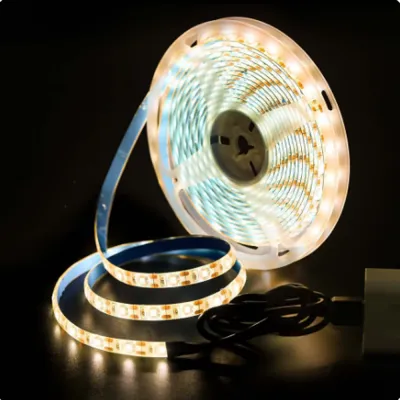
To make an informed decision, it is essential to understand how these two lighting technologies produce light and affect your eyes. Warm white LED strips are designed to emit a single, static color temperature, typically measured between 2700K and 3000K on the Kelvin scale. This range closely replicates the gentle, golden hue of traditional incandescent bulbs or early evening sunlight. Because it sits on the warmer end of the spectrum, warm white light naturally promotes relaxation by signaling to our bodies that it is time to wind down.
Products mentioned in this guide
Prices are valid at publication and may change. Please refer to the product page for the latest price.
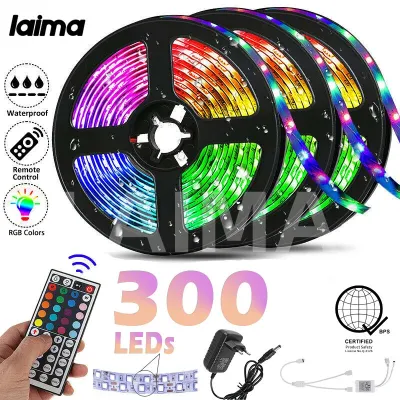
In contrast, standard RGB LED strips utilize three primary color diodes—red, green, and blue—to create a vast spectrum of colors. By mixing the intensity of these three primary colors, an RGB controller can produce vibrant shades of purple, cyan, orange, and even a cool, simulated white. However, because standard RGB strips create white light by mixing red, green, and blue light, the resulting white often has a slightly blue or purple cast, lacking the pure, comforting depth of a dedicated warm white chip.
These differences profoundly alter how we perceive space, textures, and wall colors. Warm white light enhances natural textures like wood grain, woven fabrics, and earthy paint tones, making a room feel more intimate and physically grounded. RGB lighting, on the other hand, can completely wash out or dramatically shift the appearance of wall paint and furniture. For instance, a blue light will make red decor items appear dark or muddy, while a green light can give neutral walls an eerie, futuristic glow. This makes RGB highly effective for creating dramatic, theatrical accent walls, but less suitable for highlighting classic interior finishes.
When to Choose Warm White LED Strips
Warm white LED strips are the ideal choice for spaces dedicated primarily to rest, recovery, and quiet daily routines. Bedrooms, living rooms, and cozy reading corners benefit immensely from the soft, low-glare illumination that warm white light provides. If your evening routine involves reading a book, meditating, or watching a movie before sleep, warm white light supports these activities by minimizing exposure to harsh blue wavelengths, which can interfere with your natural sleep cycle.

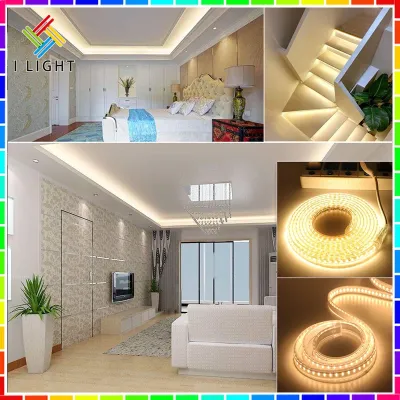
This lighting style pairs exceptionally well with specific interior designs. If your home features wooden furniture, rattan accents, terracotta tiles, or warm neutral walls—common elements in tropical minimalist and classic homes—warm white light will enrich these materials. It brings out the natural warmth of timber and creates a welcoming, sun-kissed ambiance that feels organic and timeless.
Furthermore, warm white lighting is highly forgiving in everyday use. It does not require constant adjustment or app control to look appealing; once installed, it serves as a reliable, elegant backdrop that seamlessly integrates with your existing ceiling fixtures and lamps. For those who prefer a low-maintenance, sophisticated environment where the lighting enhances the architecture rather than competing with it, warm white remains a reliable standard.
When to Choose RGB LED Strips
RGB LED strips shine brightest in spaces designed for high energy, entertainment, and personal expression. If you are designing a dedicated gaming setup, a home theater, or a creative studio, RGB strips allow you to customize the environment to match the task at hand. The ability to switch from a deep, immersive blue for gaming to a vibrant purple for music listening or a soft amber for movie night offers unparalleled flexibility.
Modern smart RGB systems can sync directly with your computer monitor, television, or music system, projecting the colors on your screen onto the wall behind it. This dynamic integration expands the perceived size of your screen and draws you deeper into the media. Additionally, RGB strips can be integrated into smart home routines, slowly shifting from a soft orange in the morning to a cool blue during working hours, and finally to a deep red at night to signal bedtime.
From a design perspective, RGB lighting is a perfect match for modern, minimalist, industrial, or tech-forward decor. Spaces with clean lines, metallic finishes, glass surfaces, and neutral white or gray walls act as a blank canvas for colored light. Instead of relying on physical decor items to add color to a room, you can use RGB strips to paint your walls with light, allowing you to change the entire color scheme of your room with a single tap on your smartphone.
Key Specifications to Verify Before Buying
Before purchasing any LED strip lights, it is critical to verify several technical specifications on the product packaging to ensure safety, compatibility, and longevity in your home.
First, verify the voltage requirements and ensure you have a matching power supply, often called an LED driver. LED strips typically operate on 12V or 24V direct current (DC), though some high-voltage options run on 220V alternating current (AC). Connecting a low-voltage strip directly to a standard household outlet without a compatible transformer will instantly destroy the strip and pose a severe electrical hazard. Always calculate the total wattage of your strip run to ensure your power supply has at least a 20% safety margin above the strip’s maximum power draw.
Second, pay close attention to wattage limits and heat dissipation. While LEDs are highly efficient, they still generate heat, particularly when run at high brightness for extended periods. In warm, humid tropical climates, heat can accumulate quickly behind drywall or inside wooden cabinets, leading to premature LED failure or adhesive degradation. To prevent this, consider installing your LED strips inside aluminum channels. These channels act as heat sinks, drawing warmth away from the LED chips while providing a professional, diffused look that eliminates harsh hot spots.
Third, check the compatibility of the smart controller and its app ecosystem. If you plan to integrate your lights with existing smart home systems, ensure the controller supports your preferred platform. Some controllers rely on local Bluetooth connections, which limit your control range, while others use Wi-Fi or Zigbee protocols for remote access and advanced automation.
Finally, verify the Ingress Protection (IP) rating of the strip based on where you plan to install it. For standard bedroom walls and ceilings, an IP20 rating is sufficient. However, if you are installing ambient lighting in damp areas, such as a bathroom vanity, a kitchen backsplash, or a semi-outdoor balcony exposed to high humidity, you must choose a strip with an IP65 or IP67 rating. These strips are encased in a protective silicone sleeve that shields the delicate circuitry from moisture and dust.
Decision Framework: Which Strip Fits Your Space?
To finalize your choice, ask yourself a few practical questions about your daily habits and design goals. If your primary goal is to create a relaxing environment for reading, sleeping, and unwinding, and your room features traditional, rustic, or warm minimalist decor, choose Warm White LED strips. This option provides a timeless, high-comfort glow that enhances natural materials without requiring constant adjustment.
If your space is dedicated to entertainment, gaming, or creative work, and you enjoy changing the atmosphere of your room frequently to match your mood, choose RGB LED strips. This setup gives you the freedom to experiment with vibrant colors, dynamic patterns, and smart home integrations that turn your lighting into an active part of your daily activities.
If you find yourself torn between the two, you do not necessarily have to compromise. Consider looking for RGBW or RGB+CCT LED strips. Unlike standard RGB strips, RGBW strips feature a dedicated, high-quality white LED chip alongside the red, green, and blue chips. This allows you to enjoy a true, cozy warm white light for everyday relaxation, while still retaining the ability to switch to vibrant colors when it is time to entertain or play games.
Before making your final purchase, always verify if your existing dimmer switches or smart home hubs are compatible with the specific strip and controller you select. Many traditional wall dimmers are incompatible with LED drivers, which can cause annoying flickering or buzzing sounds. Opting for a dedicated smart controller or a compatible low-voltage dimmer will ensure smooth, flicker-free operation.
Installation and Safety Boundaries
Installing LED strip lights is a highly accessible DIY project, but achieving a clean, safe, and long-lasting installation requires adhering to specific guidelines. Begin by thoroughly cleaning the mounting surface to remove dust, oil, and moisture. In humid environments, standard adhesive backings can lose their grip over time, causing the strip to sag. Using mounting clips or installing the strips within aluminum channels secured with screws provides a much more reliable hold, especially on textured walls or wooden surfaces.
Be mindful of physical limitations and safety boundaries during installation. Avoid sticking LED strips directly onto highly heat-sensitive materials or in tight, unventilated spaces where heat cannot escape. If your design involves working at heights, such as installing cove lighting along a high ceiling, ensure you use a stable ladder and have an assistant present to prevent falls.
Never attempt to install low-voltage strips in wet zones, such as directly inside a shower enclosure or near a sink, without verifying the manufacturer’s specific safety ratings and using a properly isolated power source. For any installation that requires fixed wiring, cutting into walls to run cables, connecting directly to your home’s main electrical panel, or integrating complex smart relays, stop your DIY efforts. In these scenarios, always isolate the power at the circuit breaker and hire a qualified professional electrician to complete the work safely and in compliance with local electrical codes.
Frequently Asked Questions (FAQ)
Can I use RGB strips for everyday reading or working?
While you can use RGB strips for general illumination, standard RGB strips are not ideal for focused tasks like reading or working. Because standard RGB strips create white light by mixing red, green, and blue light, the resulting illumination often lacks the visual clarity and color rendering accuracy of dedicated white light. This can lead to eye strain and make text harder to read. For task-oriented areas, it is highly recommended to use dedicated warm white strips, task lamps, or upgrade to an RGBW strip that features a dedicated white light chip.
Do warm white LED strips consume less power than RGB strips?
Power consumption is determined by the total wattage and LED chip density of the strip rather than the color of the light itself. A high-density warm white strip run at maximum brightness can consume just as much, or more, power than an RGB strip displaying a single color. To accurately compare energy usage, always check the product packaging or manufacturer specification sheet for the exact wattage per meter. Running any LED strip at a dimmed level will naturally reduce its power consumption, regardless of the color type.
Community discussion
Share your experience or ask a question. Comments are reviewed before publication.