
The rise of aesthetic bedroom trends has made sunset projection lamps a staple on social media feeds, prized for their ability to transform plain walls into glowing, photogenic backdrops. However, when it comes to finding the right room lights for sleeping, there is a significant difference between a lamp designed for photography and one engineered to support your body’s natural sleep-wake cycle. While a standard decorative lamp might create a striking visual effect, using it incorrectly at bedtime can actually disrupt your sleep hygiene and leave you feeling fatigued the next morning.
To turn a sunset projection lamp into an effective sleep aid, you must look beyond pure visual aesthetics and focus on biological design. The human brain relies heavily on environmental light cues to regulate circadian rhythms, signaling when to produce cortisol for alertness and when to release melatonin for rest. By understanding how specific lighting features interact with your biology, you can select a lamp that not only enhances your bedroom decor but also actively prepares your mind and body for deep, restorative sleep.
Why Viral Sunset Projection Lamps Aren't Always Best for Sleep
Most viral sunset projection lamps are engineered for high-impact visual appeal rather than biological wind-down. These devices typically utilize high-intensity, focused light-emitting diodes (LEDs) paired with thick convex lenses to project sharp, high-contrast circular halos across a room. While this concentrated beam is ideal for capturing dramatic photos, it creates a high-contrast environment in a dark bedroom. When your eyes are forced to constantly adjust between the intense glare of the projection hotspot and the deep shadows of the rest of the room, the ciliary muscles in your eyes overwork, leading to noticeable eye strain and tension before bed.
Products mentioned in this guide
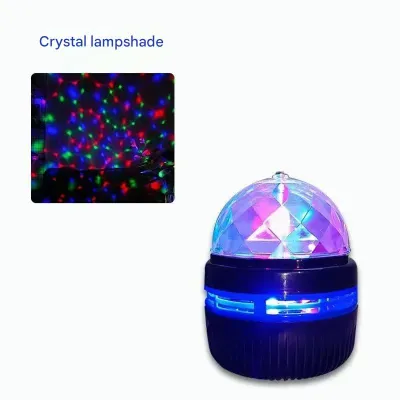
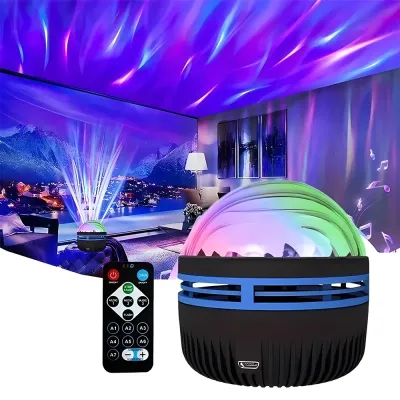

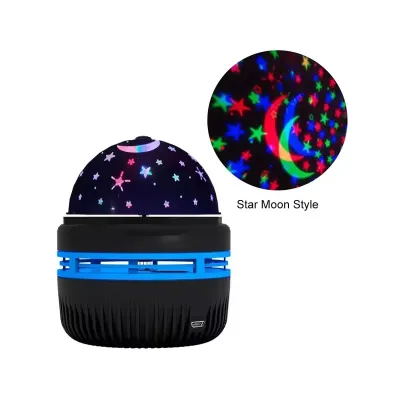
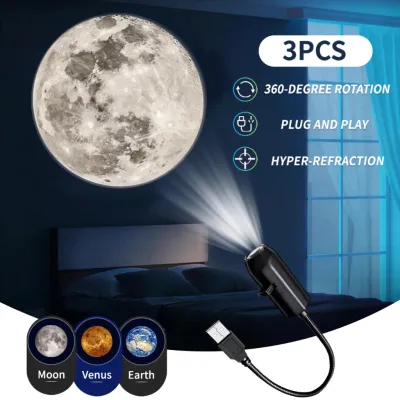
Prices are valid at publication and may change. Please refer to the product page for the latest price.
Beyond physical eye strain, cheap or poorly designed sunset lamps pose a hidden risk to your sleep architecture: blue light leakage. Many low-cost multi-color lamps achieve their orange, yellow, or red hues by mixing light from red, green, and blue LED chips, or by placing colored plastic filters over a cheap white LED that relies on a high-energy blue-light pump. Even if the projected light appears warm or amber to your eyes, the underlying light spectrum may still contain significant spikes of blue wavelength. Exposure to this hidden blue light suppresses the secretion of melatonin, tricking your brain into thinking it is still daytime and delaying your ability to fall asleep.
To protect your sleep quality, it is essential to shift your focus from purely decorative projection pieces to dedicated room lights for sleeping. A biologically supportive sleep light prioritizes diffused, low-intensity illumination and a clean spectral output that minimizes blue and green wavelengths. By selecting a lamp with the correct technical specifications, you can create a soothing, low-stress visual environment that actively encourages your nervous system to transition from a state of high alertness to a peaceful, pre-sleep wind-down.
3 Must-Have Features in Room Lights for Sleeping
When evaluating sunset or mood lamps for bedtime use, you should look for specific technical features that support, rather than disrupt, your circadian rhythm. The following three features are essential for turning any ambient light into a highly effective tool for sleep hygiene.

Warm Color Temperatures and Red Light Benefits
To support natural melatonin production, the color temperature of your evening lighting is critical. Color temperature is measured on the Kelvin (K) scale, which quantifies the warmth or coolness of a light source. For daytime productivity, cool white light (4000K to 6500K) is ideal because its blue-rich spectrum keeps you alert. For bedtime, however, you should seek room lights for sleeping that operate well under 2000K, leaning heavily into deep amber, orange, and monochromatic red wavelengths.
Our eyes contain specialized photoreceptors called intrinsically photosensitive retinal ganglion cells (ipRGCs), which are highly sensitive to blue and green light wavelengths (roughly 460 to 500 nanometers). When these cells detect blue light, they signal the brain’s suprachiasmatic nucleus to suppress melatonin. Conversely, deep amber and red light wavelengths sit at the opposite end of the visible light spectrum (600 to 700 nanometers) and have a negligible effect on these photoreceptors. Using a lamp that emits a true low-Kelvin amber or red glow allows you to navigate your bedroom safely without sending wakefulness signals to your brain.
When shopping for a sleep-supporting lamp, avoid relying on vague marketing terms like “warm glow,” “cozy ambiance,” or “golden hour effect.” Instead, look at the technical specifications on the product packaging or manufacturer’s website. Look for an explicit Kelvin rating of 1800K or lower, or verify that the lamp features a dedicated, pure red light mode that does not rely on mixing blue wavelengths to achieve its color.
Stepless Dimming and Low Minimum Brightness
Even the warmest red or amber light can disrupt your sleep if it is too bright. As you prepare for bed, your eyes undergo a process called dark adaptation, becoming significantly more sensitive to light. A lamp that feels comfortably dim in a well-lit living room can feel blindingly bright in a pitch-black bedroom. Therefore, precise control over your lamp’s light output is crucial for maintaining a relaxing environment.
Many budget-friendly lamps offer stepped dimming, which limits you to a few fixed brightness levels (such as 100%, 50%, and 25%). The major drawback of stepped dimming is that the lowest setting is often still far too bright for a dark bedroom, forcing you to choose between an overly bright room or complete darkness before you are ready. In contrast, stepless dimming allows you to smoothly adjust the brightness from 100% down to 1% or less, giving you complete control over the intensity of the light.
When selecting a sunset lamp, look for models that emphasize a very low minimum brightness level, ideally producing fewer than 10 to 20 lumens on their lowest setting. This ultra-low output allows you to maintain a faint, warm guide light that keeps your bedroom cozy and safe to navigate, without emitting enough energy to interfere with your transition into deep sleep. A smooth, analog-style dial or a high-resolution digital dimming slider will provide the most precise control over these low-lumen ranges.
Auto-Off Timers and Gradual Fading Functions
One of the most common dilemmas when using ambient bedroom lighting is deciding when to turn it off. If you leave the light on all night, you risk disrupting your sleep cycles later in the evening. However, if you have to physically get out of bed, walk across the room, and flip a switch just as you are drifting off, the sudden physical movement and cognitive engagement can startle your nervous system and undo your entire wind-down routine.
To solve this problem, look for lamps equipped with integrated auto-off timers or gradual fading functions. A basic auto-off timer allows you to set the light to turn off automatically after a set period, such as 30, 60, or 90 minutes, ensuring the room is completely dark once you are asleep. More advanced models feature “sunset simulation” or gradual fading curves. These systems slowly reduce the lamp’s brightness over a set duration, mimicking the natural progression of twilight and gently coaxing your brain into sleep mode without any sudden changes in illumination.
For maximum convenience, look for lamps that include a dedicated remote control or a companion smartphone app. This allows you to adjust settings, change colors, or set timers directly from your bed. Being able to control your lighting environment without changing your comfortable sleeping posture is a simple but highly effective way to preserve your relaxed state and transition smoothly into sleep.
Which Type of Sunset Lamp Fits Your Bedtime Routine?
Not all sunset and mood lamps are built the same way. To find the right option for your bedroom, it helps to understand the three primary categories of sleep-supporting lamps available on the market, along with their unique benefits and practical limitations.
Smart Wi-Fi Mood Lamps for Custom Fading
Smart Wi-Fi mood lamps represent the most versatile option for modern bedrooms, particularly for those living in compact urban condos where space is limited and multi-functional furniture is highly valued. These lamps connect directly to your home network, allowing you to control them via smartphone apps or integrate them into broader smart home ecosystems. This connectivity enables you to program highly customized lighting schedules, such as setting the lamp to automatically turn on at a warm 2000K amber at 9:00 PM, gradually shift to a deep, low-intensity red by 9:45 PM, and fade out completely by 10:30 PM.
- Best For: Tech-savvy individuals who want precise control over their lighting schedules, custom color hex codes, and seamless integration with existing smart home routines.
- Limitations: These lamps require a stable 2.4GHz Wi-Fi connection to access their smart features, and the initial setup process through smartphone apps can sometimes be tedious for less tech-savvy users.
- Price Range: Generally mid-range to premium, typically ranging from ₱1,200 to ₱3,500 depending on the brand and smart home compatibility.
Dedicated Circadian Rhythm and Wake-Up Lights
Dedicated circadian rhythm lights, often referred to as wake-up lights, are specialized wellness devices designed specifically to support healthy sleep-wake cycles. Rather than focusing on decorative wall projection, these lamps utilize curved, diffused panels to fill your bedroom with a soft, ambient glow. They feature highly sophisticated, pre-programmed sunset and sunrise simulations that gradually transition through biologically optimized color spectrums. Many of these devices also include integrated sound machines that pair the visual sunset with soothing white noise, rain sounds, or gentle nature soundscapes to enhance the wind-down experience.
- Best For: Individuals who struggle with sleep onset, morning grogginess, or irregular schedules—such as shift workers or BPO professionals in the Philippines who need to establish a consistent sleep routine during daylight hours.
- Limitations: These devices are designed for functional wellness rather than creative room decoration, meaning they are often bulkier, take up more space on a nightstand, and carry a higher price tag.
- Price Range: Premium, typically ranging from ₱4,000 to over ₱10,000 for high-end models with advanced sound integration and clinical-grade light output.
Simple Plug-In Timer Lamps for Basic Ambiance
If you prefer a straightforward, low-tech approach to your evening routine, a simple plug-in amber lamp with a physical timer is an excellent choice. These lamps do not require internet connections, smartphone apps, or complex programming. Instead, they rely on physical control dials, inline switches, or basic infrared remote controls to adjust brightness and set simple countdown timers. They typically feature a fixed, warm amber LED light source or use a replaceable low-wattage bulb to cast a soft, consistent glow across your bedroom.
- Best For: Renters, students living in dormitories, or anyone seeking a simple, reliable, plug-and-play solution that does not require digital troubleshooting or smart home setup.
- Limitations: These lamps lack advanced features like gradual fading or dynamic color shifting; when the set timer expires, the light will simply turn off abruptly, which may occasionally startle light sleepers.
- Price Range: Budget-friendly, usually ranging from ₱500 to ₱1,500, making them highly accessible for casual users.
Safe Placement and Electrical Checks for Condo Bedrooms
To get the most out of your sleep light while maintaining a safe living environment, proper placement and electrical safety are essential, especially in compact condo bedrooms where space is at a premium and electrical outlets may be limited.
When positioning your sunset or mood lamp, focus on creating indirect, diffused light rather than projecting a direct beam into your eyes. Avoid pointing a projection lens directly at your bed or nightstand. Instead, position the lamp on a low shelf, a desk, or behind your headboard, directing the light toward a blank, light-colored wall or ceiling. This allows the wall to act as a natural reflector, scattering the light softly throughout the room and eliminating harsh glare and shadows that can strain your eyes before sleep.
Electrical safety is another critical consideration, particularly when purchasing imported electronics online. In the Philippines, the standard electrical grid operates at 220V/60Hz. Many imported sunset lamps are designed for 110V standards or utilize low-cost USB connections without including a certified wall adapter. Before plugging any lamp into your wall outlet, verify its voltage rating on the product label. If the lamp uses a USB cable, always pair it with a high-quality, certified USB wall charger (typically 5V/2A) from a reputable brand, rather than using unbranded, cheap adapters that can overheat and pose a fire hazard. Look for local safety certifications, such as the Philippine Standard (PS) mark or the Import Commodity Clearance (ICC) sticker, to ensure the device has passed rigorous electrical safety testing.
Finally, practice proper cable management and heat mitigation. Because the Philippines has a warm, tropical climate with high humidity, electronic drivers inside LED lamps can run hot, especially if the room is not air-conditioned. Ensure your lamp is placed in a well-ventilated area with at least a few inches of clearance around its cooling vents or housing. Keep the power cord neatly routed along walls or furniture legs, keeping it completely clear of your bedding, curtains, and high-traffic walking paths to prevent tripping hazards in the dark.
Quick Comparison: Choosing the Right Sleep Light
To help you quickly identify the best lighting solution for your specific bedroom setup, the table below summarizes the key differences between the three main categories of sleep-supporting lamps.
| Lamp Type | Best For | Dimming Style | Timer Function | Setup Complexity |
|---|---|---|---|---|
| Smart Wi-Fi Mood Lamps | Tech-savvy users wanting custom schedules and precise colors | Stepless (0% to 100% via app) | Highly customizable schedules and gradual fading | Moderate (requires 2.4GHz Wi-Fi and app setup) |
| Dedicated Circadian Lights | Shift workers and those needing structured sleep-wake support | Stepless (automatic circadian curves) | Gradual sunset and sunrise simulations with sound | Low to Moderate (on-device programming) |
| Simple Plug-In Timer Lamps | Budget-conscious users seeking a simple, reliable setup | Stepped or analog dial | Basic countdown timer (abrupt shutoff) | Very Low (plug-and-play operation) |
Frequently Asked Questions (FAQ)
Can I leave a sunset lamp on all night while I sleep?
It is highly recommended that you do not leave a sunset lamp on all night. While warm amber and red lights are excellent for winding down before bed, your body requires complete darkness during the night to achieve deep, high-quality sleep and maintain optimal melatonin production. Continuous exposure to light throughout the night, even at low intensities, can disrupt your sleep cycles and lead to fragmented rest.
To avoid this, utilize your lamp’s built-in auto-off timer or gradual fading feature so that the light turns off automatically within 30 to 60 minutes of you falling asleep. If you require a continuous nightlight for safety or navigation, opt for a very low-lumen, dedicated red nightlight placed close to the floor, rather than leaving a bright sunset lamp active on your nightstand.
Do I need a special bulb for a sunset lamp, or are LEDs enough?
Most modern sunset projection lamps use integrated, non-replaceable LEDs that are permanently soldered onto the internal circuit board. These integrated LEDs are specifically designed to work with the lamp’s optical lens to project distinct colors, meaning you cannot swap out the bulb yourself. When buying this type of lamp, you must ensure the built-in LEDs emit the correct warm wavelengths from the start.
If you prefer a highly customizable option, you can purchase a standard table lamp with a common screw-in socket (such as an E27 base) and insert a specialized smart LED bulb or a dedicated low-Kelvin amber sleep bulb. This modular approach allows you to easily replace the bulb if it burns out or upgrade to a more advanced smart bulb in the future. If you choose this route, always check the lamp fixture’s maximum wattage limit and verify that the replacement bulb is compatible with the local 220V grid before installation.
Community discussion
Share your experience or ask a question. Comments are reviewed before publication.