
Outdoor security lighting in the Philippines faces demanding environmental challenges. High humidity, intense tropical heat, heavy seasonal downpours, and strong winds during typhoon season can quickly degrade standard consumer-grade outdoor lights. Investing in a heavy-duty solar street light offers a self-sustaining security solution that operates independently of the electrical grid, ensuring your perimeter remains illuminated even during power outages.
To find a fixture that truly delivers long-lasting performance, you must look beyond basic marketing claims. Evaluating the physical construction, sensor technology, battery chemistry, and installation requirements will help you select a robust system tailored to your specific property layout. This guide outlines the critical specifications and verification steps required to choose a reliable, heavy-duty solar street light for your home, business, or community space.
Identifying Heavy-Duty Build Quality and Durability
The physical casing of a solar street light is its first line of defense against harsh tropical elements. Standard outdoor lights often use thin ABS plastic housings that degrade, crack, and discolor under prolonged exposure to intense ultraviolet (UV) rays. For a heavy-duty application, prioritize fixtures constructed from die-cast aluminum or high-grade, UV-stabilized polycarbonate. Die-cast aluminum offers superior structural integrity and acts as an effective heat sink, drawing heat away from the internal LEDs and driver components to extend their operational lifespan.
Products mentioned in this guide
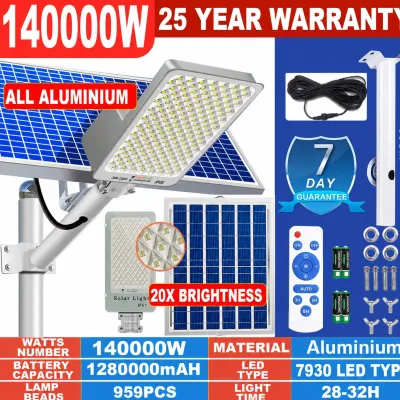
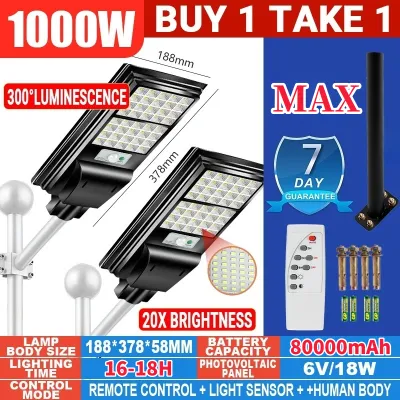
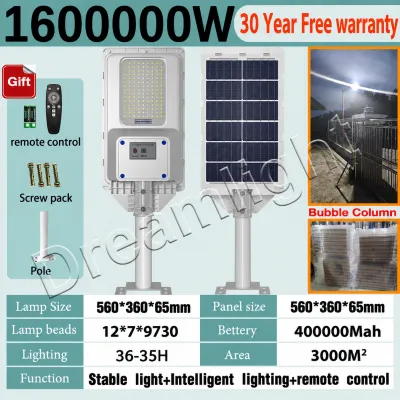
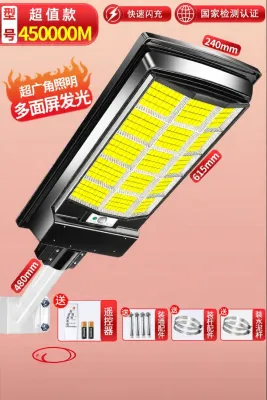
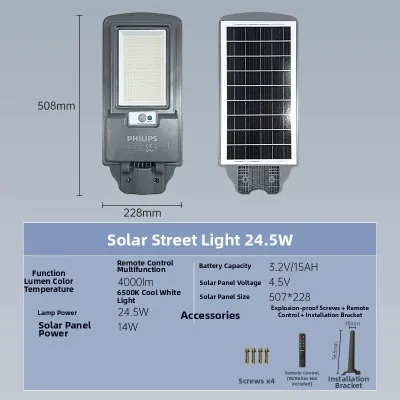
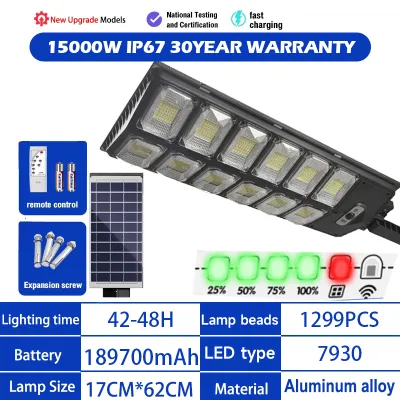
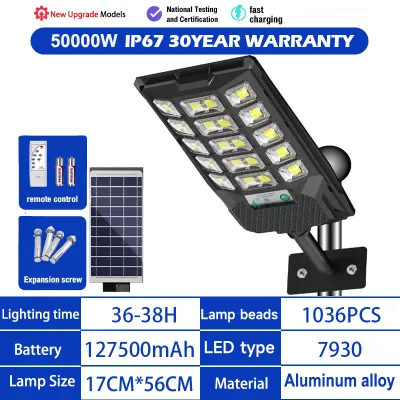
Prices are valid at publication and may change. Please refer to the product page for the latest price.
Water and dust ingress are primary causes of premature solar light failure. When reviewing product specifications, verify the Ingress Protection (IP) rating printed on the manufacturer’s label. A heavy-duty outdoor fixture should carry a minimum rating of IP65, which indicates complete protection against dust ingress and resistance to low-pressure water jets from any direction. For areas highly exposed to severe tropical storms and driving rain, look for an IP66 or IP67 rating, ensuring the internal electronics remain completely sealed against moisture.
Physical impact and wind resistance are equally vital for elevated fixtures. Check the product documentation for an IK impact resistance rating, which measures a fixture’s ability to withstand external mechanical impacts. An IK08 rating or higher indicates excellent durability against falling debris or accidental impacts. Additionally, examine the structural design of the mounting bracket and housing; streamlined, aerodynamic profiles help reduce wind drag, allowing the installed fixture to withstand the high-velocity winds common during the Philippine typhoon season.
Evaluating Brightness and Sensors for Security Needs
Achieving effective security illumination requires understanding the relationship between lumen output and wattage. In solar lighting, wattage refers to the power consumed or generated, whereas lumens measure the actual visible light emitted. Do not rely solely on high wattage claims as an indicator of brightness; instead, verify the rated lumen output on the official specification sheet. For perimeter security and clear visibility along pathways, look for fixtures that deliver a verified output of at least 3,000 to 6,000 lumens, depending on the mounting height and the total area you need to cover.

Motion sensors play a critical role in conserving battery power while providing active security deterrence. Most heavy-duty solar street lights utilize either Passive Infrared (PIR) or microwave sensors. PIR sensors detect changes in heat signatures, making them highly effective at identifying moving people or vehicles while ignoring wind-blown foliage. Microwave sensors emit continuous electromagnetic waves and detect reflections from moving objects; they offer a wider detection range and can sense motion through thin barriers, but they may be more prone to false triggers in dense gardens or high-wind environments. Review your property layout to determine which sensor type best minimizes false alarms while maintaining reliable coverage.
Color temperature, measured in Kelvin (K), directly impacts nighttime visibility and the performance of security cameras. For security applications, cool white light ranging from 5,000K to 6,500K is generally preferred. This temperature range provides high-contrast, crisp illumination that makes details, colors, and faces easier to distinguish on security camera footage. Avoid overly warm light (below 3,000K) for security perimeters, as it reduces contrast and can make it more difficult to identify potential intruders or hazards in dark corners.
Assessing Battery and Solar Panel Reliability
The longevity of a solar street light depends heavily on its internal battery chemistry. Standard lithium-ion (Li-ion) batteries are common but have a shorter cycle life and can degrade quickly under high ambient temperatures. For heavy-duty security applications, verify that the product label specifies Lithium Iron Phosphate (LiFePO4) battery chemistry. LiFePO4 batteries offer superior thermal stability, making them much safer and more durable in hot tropical climates, and they typically support thousands of charge-discharge cycles before experiencing significant capacity loss.
Consistent security requires a system that can operate through consecutive overcast or rainy days. This capability is measured as “autonomy days” or backup time. Check the manufacturer’s technical specifications to see how many nights the light can run on a single full charge without receiving direct sunlight. A high-quality heavy-duty solar street light should offer at least two to three days of autonomy, often achieved by automatically dimming the light to a lower standby level (such as 20% or 30% brightness) and ramping up to 100% only when the motion sensor is triggered.
To ensure the battery actually reaches a full charge during the day, the solar panel must be properly scaled to the battery’s capacity. Look for monocrystalline solar panels, which offer higher energy conversion efficiency than polycrystalline alternatives, especially in low-light or partially cloudy conditions. Verify that the solar panel’s wattage rating is sufficient to fully recharge the battery within typical daylight hours. A mismatched system with an undersized panel will fail to fully charge the battery, leading to premature shutoffs during the night and accelerating battery degradation over time.
Checking Installation Requirements and Safety Boundaries
Installing a heavy-duty solar street light requires careful structural planning to prevent physical hazards and ensure optimal performance. Because these fixtures combine the weight of the light engine, a large solar panel, and a heavy internal battery, they exert significant structural load. Before purchasing, verify the pole diameter compatibility, flange sizes, and wind-load limits specified in the product manual. Ensure that any mounting pole or wall bracket used is rated to support the total weight of the fixture under local wind conditions.
Placement strategy is critical for maximizing solar energy collection and sensor effectiveness. Position the fixture where the solar panel receives unobstructed, direct sunlight for the majority of the day, keeping it clear of tree branches, roof overhangs, or adjacent buildings that cast shadows. In the Philippines, angling the solar panel slightly toward the south can optimize year-round solar harvesting. Additionally, ensure the mounting height aligns with the manufacturer’s recommendations to maintain the intended light distribution pattern and sensor detection zone.
Safety boundaries must be strictly observed during installation. While solar lights do not require connection to the main electrical grid, mounting heavy fixtures at significant heights presents serious physical risks. Working at height requires appropriate safety harnesses, stable ladders or scaffolding, and secure fastening tools. If your installation involves mounting poles exceeding three meters, integrating the light into existing fixed electrical wiring for hybrid backup, or working in challenging structural environments, consult a qualified professional or structural engineer to ensure the installation is secure and compliant with local safety standards.
Building Your Pre-Purchase Verification Checklist
Before finalizing your purchase on any online marketplace or from a local distributor, compile a verification checklist to validate the manufacturer’s claims. Start by examining the warranty terms in detail. A reliable heavy-duty solar street light should come with a comprehensive warranty that explicitly covers the battery, solar panel, and LED driver components for a multi-year period, rather than a generic warranty that only covers the outer housing.
Confirm whether the fixture features replaceable components. Many budget-friendly solar lights are sealed units, meaning that when the battery eventually degrades after several years, the entire fixture must be discarded. Heavy-duty models designed for long-term use typically allow users to open the compartment and swap out the battery or LED modules, significantly reducing long-term maintenance costs and electronic waste.
Finally, look for recognized electrical and safety certification marks on the product packaging or spec sheets. Certifications such as CE, RoHS, or local quality marks indicate that the product has undergone standardized testing for electrical safety, material hazards, and environmental resistance. Avoid purchasing unbranded fixtures that lack verifiable certification labels, as they often fail to meet their advertised performance and safety standards.
Frequently Asked Questions (FAQ)
How high should I mount a solar security street light?
Refer to the manufacturer’s recommended mounting height range, typically between 3 to 6 meters for heavy-duty residential or commercial models. Mounting the fixture too low can compress the light beam, creating harsh glare and reducing the motion sensor’s detection area. Conversely, mounting the light higher than recommended disperses the illumination too widely, reducing ground-level brightness and making the motion sensor less responsive to movement below.
Do heavy-duty solar street lights work during prolonged rainy weather?
Yes, provided they are designed with sufficient battery autonomy and efficient solar panels. Check the product’s specification sheet for the rated autonomy days, which indicates how many nights the light can operate without direct sunlight. High-quality monocrystalline panels can still generate a limited charge from ambient daylight on overcast days, and intelligent power management systems will automatically dim the light output to conserve battery reserves until clear weather returns.
Community discussion
Share your experience or ask a question. Comments are reviewed before publication.