
Choosing the right lighting for a low-ceiling condominium in the Philippines requires a careful balance of aesthetics, spatial awareness, and technical compatibility. Standard condo units often feature ceiling heights of 2.4 to 2.6 meters, leaving little room for bulky, hanging fixtures that can make a living space feel cramped. A slim linear light ceiling installation offers a modern, streamlined alternative. By sitting close to the ceiling plane and distributing light along a continuous path, these fixtures preserve precious headroom while creating a clean, expansive visual effect.
To successfully integrate linear lighting into your condo, you must look beyond simple design aesthetics. Factors such as mounting constraints on concrete slabs, local electrical standards, heat dissipation, and diffuser quality all play critical roles in the safety and longevity of your setup. This guide outlines the essential technical specifications, installation environments, and product features you need to evaluate to build a reliable shortlist for your home.
Why Profile Height and Light Distribution Matter in Low Ceilings
In a space with limited vertical clearance, every centimeter of fixture depth impacts how open the room feels. Traditional surface-mounted dome lights or low-hanging pendants break up the ceiling plane, drawing the eyes downward and making the room feel smaller. An ultra-slim linear light ceiling fixture, typically measuring less than 5 centimeters in depth, maintains an unobstructed sightline across your living and dining areas. This low profile keeps the ceiling plane visually clean, which naturally makes the entire room feel more spacious.
Products mentioned in this guide
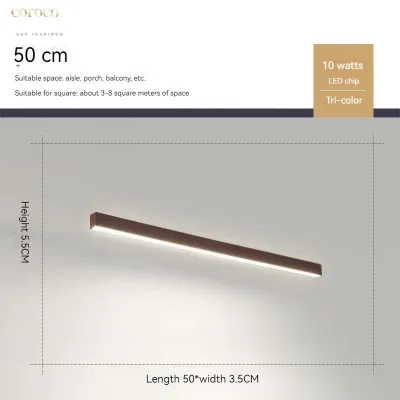
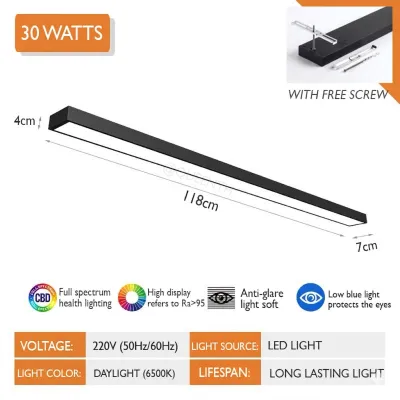
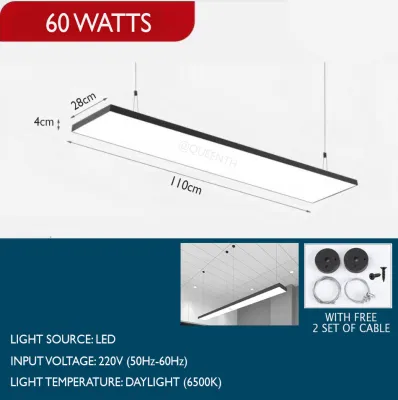
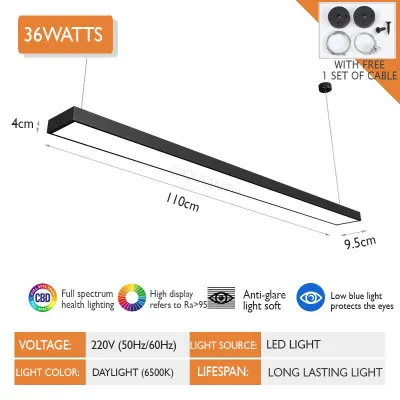
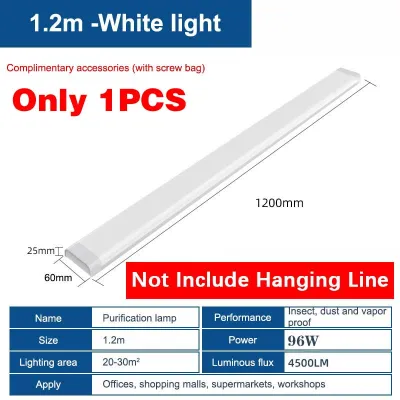
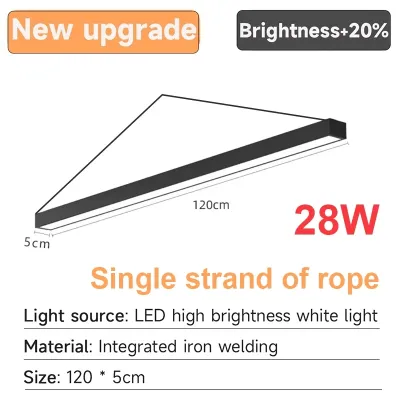
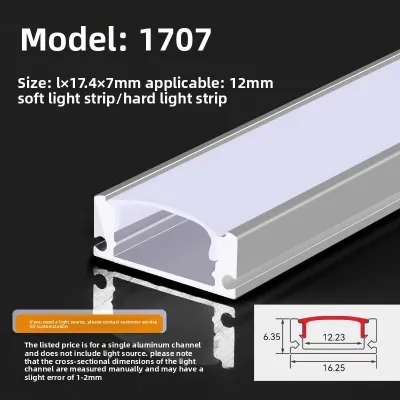
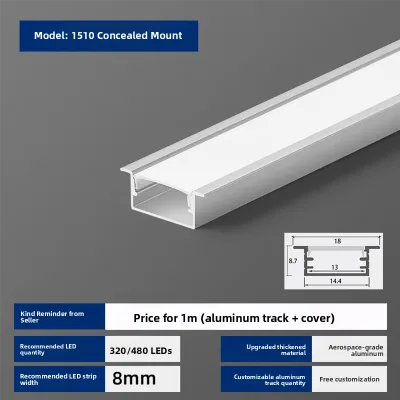
Prices are valid at publication and may change. Please refer to the product page for the latest price.
Light distribution is equally critical when the light source is positioned closer to eye level. Standard point-source fixtures can cast harsh, localized shadows and create intense glare on polished condo floors or television screens. Linear fixtures resolve this by spreading light over a longer, continuous surface. When paired with a high-quality diffuser, the light is scattered at a wider angle, softening shadows and providing a more uniform wash of illumination across the room.
Using continuous lines of light also allows you to employ visual techniques that alter the perception of a room’s dimensions. Running a linear fixture parallel to the longest wall of your condo draws the eye along that axis, visually elongating the space. You can also use linear configurations to define distinct functional zones—such as separating a compact kitchen from the dining area—without relying on physical partitions that block natural light and airflow.
Essential Specifications to Check Before Buying
Before purchasing any linear ceiling fixture, you must verify its physical dimensions against your actual ceiling layout and furniture placement. Measure the total length of the area where you plan to install the light, ensuring the fixture will not interfere with wall-mounted air conditioning units, structural columns, or overhead kitchen cabinets. The width and depth of the profile should scale proportionally with your furniture; a profile that is too wide can look heavy and counterproductive on a low ceiling.

Electrical compatibility is a critical safety factor that must be verified prior to purchase. The standard electrical grid in the Philippines operates at 220V to 240V at a frequency of 60Hz. Many linear lights sourced online are configured for 110V or 50Hz systems; installing these without a compatible driver can cause immediate component failure, flickering, or electrical hazards. Ensure the integrated LED driver is rated for 220V-240V and 60Hz, and look for local safety certifications such as the Philippine Standard (PS) mark or the Import Commodity Clearance (ICC) sticker.
Evaluating brightness requires looking at the fixture’s lumen output rather than its wattage. Because low ceilings bring the light source closer to your living zone, excessive brightness can cause eye strain, while insufficient lumens will leave the space feeling gloomy. For general living areas, a baseline of 300 to 400 lumens per square meter is typically recommended. Opt for high-efficiency fixtures that deliver a high lumen-to-watt ratio, which ensures adequate brightness without excessive power consumption or heat generation.
Color temperature is a conditional preference that should match the specific function of each condo zone. Warm white (2700K to 3000K) creates a cozy, inviting atmosphere suitable for bedrooms and dining areas. Neutral white (4000K) closely mimics natural daylight, making it an excellent choice for kitchens, study areas, and home offices where task clarity is essential. Cool white (6000K to 6500K) provides a bright, clinical light best reserved for utility closets or bathrooms, as it can feel overly harsh in main living areas with low ceilings.
Installation Environments and Mounting Constraints
Linear ceiling lights are generally categorized by how they attach to the ceiling: recessed (flush-mount) or surface-mounted. Recessed linear profiles sit completely flush with the ceiling surface, offering the most seamless look possible. However, they require a suspended ceiling cavity, such as a gypsum or plasterboard drop ceiling, to house the profile, wiring, and driver. Surface-mounted profiles attach directly to the underside of the ceiling and are highly versatile, though they will protrude slightly into the room.
Your condo’s structural composition dictates which mounting method is viable. Many residential developments in the Philippines utilize solid concrete slab ceilings. Drilling deep channels into a load-bearing concrete slab to recess a light fixture is structurally dangerous and strictly prohibited by building administrations. For solid concrete ceilings, surface-mounted linear profiles or slim LED batten lights are the only practical options. If your unit features a suspended drop ceiling, you have the structural flexibility to choose recessed profiles, provided there is sufficient vertical clearance behind the board.
Thermal management is another key consideration, particularly in the warm, humid climate of the Philippines. Although LEDs are highly efficient, they still generate heat that must be dissipated to prevent premature degradation of the chips and driver. High-quality linear fixtures use aluminum profiles that act as heat sinks, drawing warmth away from the electronics. If you are installing fixtures in tight, enclosed ceiling cavities, ensure there is adequate ventilation and clearance around the housing as specified by the manufacturer to prevent heat buildup.
Because linear ceiling lights typically require hardwiring into your condo’s electrical system, safety must be prioritized during installation. Working with fixed wiring, especially at height or when drilling into concrete, carries inherent risks. Always isolate the power at the main circuit breaker before starting any electrical work. For all hardwired installations, it is highly recommended to hire a licensed electrician who can ensure proper grounding, secure mounting, and compliance with the Philippine Electrical Code.
Building Your Shortlist: Features to Compare
When comparing different linear light options, dimming capability is a valuable feature to look for. Dimming allows you to adjust the light levels to suit different times of day, transforming your condo from a bright workspace into a relaxed evening environment. However, not all linear lights are dimmable out of the box. You must verify that the fixture’s integrated driver is explicitly rated as dimmable and check its compatibility with standard wall dimmer switches to avoid issues like buzzing or flickering.
The material of the diffuser—the cover that sits over the LEDs—significantly affects both light quality and product lifespan. Cheap plastic diffusers can degrade and turn yellow over time when exposed to heat and ambient UV light, which reduces light output and looks unsightly. Polycarbonate diffusers offer excellent impact resistance and durability, while high-grade acrylic diffusers provide superior light transmission and long-term resistance to yellowing. Look for a frosted or opal finish to ensure the individual LED dots are completely hidden, creating a smooth, continuous line of light.
If you plan to run long, uninterrupted lines of light across a large living area or down a hallway, look for modular or linkable linear systems. Some fixtures feature quick-connect terminals that allow you to link multiple units end-to-end. When planning a continuous run, check the manufacturer’s specifications to determine the maximum number of fixtures that can be safely linked on a single power feed. This prevents overloading the internal wiring and ensures consistent brightness from one end of the run to the other.
Finally, evaluate the warranty terms and the availability of local after-sales support. Because many slim linear lights feature integrated LEDs rather than replaceable bulbs, a failure in the driver or the LED strip often requires repairing or replacing the entire fixture. Look for brands that offer at least a two-year warranty and have an active customer service presence in the Philippines. This ensures you can easily source replacement parts or obtain technical assistance if a component fails prematurely.
Frequently Asked Questions (FAQ)
Can I install linear ceiling lights on a concrete condo ceiling?
Yes, you can install linear ceiling lights on a concrete ceiling, but you must use surface-mounted fixtures. Cutting or channeling into a structural concrete slab to recess a fixture is structurally unsafe and typically prohibited by condo property management. To install a surface-mounted linear light, you will need to secure mounting brackets directly to the concrete using appropriate wall plugs and screws. If there is no existing electrical junction box at your desired location, you will need to route the wiring through surface-mounted conduits or decorative cable tracks. Always consult your condo’s building administration to secure the necessary work permits and review structural guidelines before drilling.
Do slim linear lights get hot in enclosed ceiling spaces?
While LED linear lights run much cooler than traditional incandescent bulbs, they still generate heat that must be managed. The electronic driver and the LED chips produce thermal energy that is typically dissipated through the fixture’s aluminum housing, which acts as a heat sink. If a slim linear light is installed in a tight, unventilated suspended ceiling cavity, this heat can accumulate. Over time, trapped heat will degrade the driver and shorten the lifespan of the LEDs. Always check the manufacturer’s specifications for clearance requirements and suitability for enclosed spaces. If you notice signs of overheating, such as flickering, dimming, or a warm odor, isolate the power immediately and consult a professional.
Are linear ceiling lights dimmable out of the box?
No, linear ceiling lights are not automatically dimmable. The ability to dim depends entirely on the type of LED driver installed inside or alongside the fixture. Standard linear lights often come with non-dimmable drivers. If you connect a non-dimmable fixture to a standard wall dimmer switch, you will likely experience severe flickering, buzzing, or a complete failure to illuminate. To achieve dimming, you must specifically select a fixture labeled as dimmable and pair it with a compatible dimmer switch. Always verify the compatibility requirements in the product manual or consult a qualified electrician before purchasing dimming components.
Community discussion
Share your experience or ask a question. Comments are reviewed before publication.