
Key Design Features for Visual Expansion
Living in a compact urban space, such as a modern condominium or a cozy studio apartment, requires smart furniture choices that serve multiple purposes. A whole body mirror cabinet organizer is an exceptional double-duty asset for these tight quarters. It consolidates your dressing mirror, jewelry chest, and cosmetic storage into a single vertical footprint, freeing up valuable floor area that would otherwise be occupied by separate, bulky furniture pieces.
Beyond its physical utility, this specialized organizer functions as a powerful tool to alter the visual perception of a room. By reflecting light and extending sightlines, the mirror surface tricks the brain into perceiving a larger area than actually exists. Achieving this spatial illusion requires selecting a cabinet with specific design characteristics that minimize its physical presence while maximizing its reflective potential. Note that this space-expanding effect is a conditional perceptual phenomenon rather than a guaranteed physical expansion, meaning its success depends heavily on room layout and lighting.
To successfully open up a cramped room, you must focus on three primary design pillars. First, high-clarity mirror glass is essential to provide deep, undistorted reflections that mimic an open doorway or window. Second, low-profile or frameless outer structures reduce the visual weight of the unit, preventing it from looking like a heavy obstacle on the wall. Finally, a shallow, highly organized storage configuration keeps the physical cabinet as flush to the wall as possible, maintaining clear walkways and a clean, clutter-free environment.
Products mentioned in this guide
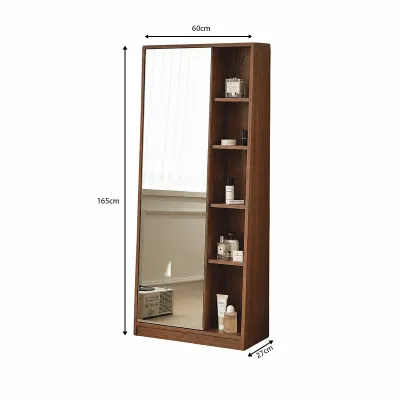
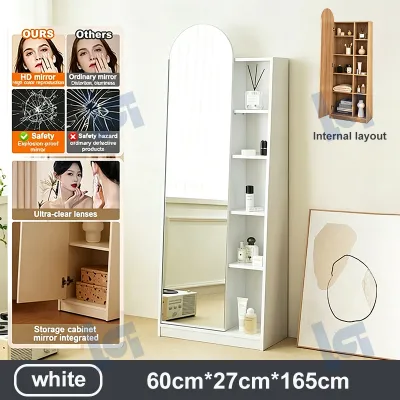
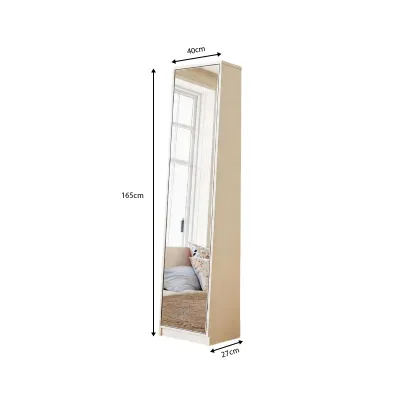
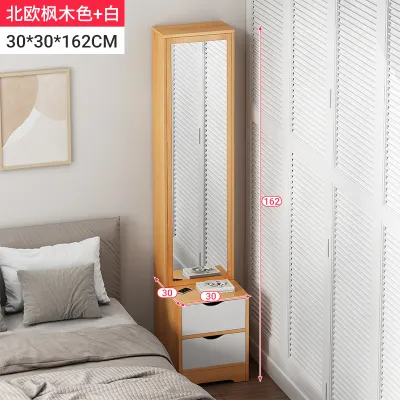
Prices are valid at publication and may change. Please refer to the product page for the latest price.
Choose the Right Mirror Glass for Maximum Depth
The quality of the mirror glass plays a decisive role in how effectively a cabinet expands a room. Standard mirror glass often contains a higher concentration of iron oxides, which can introduce a subtle green tint to the reflection. While this tint might seem negligible in a spacious home, in a compact room it can absorb light and slightly dim the reflected image, making the space feel enclosed. High-clarity or low-iron glass, by contrast, delivers a truer, brighter reflection that accurately reproduces the room’s natural light and color palette, enhancing the overall sense of depth.

The structure of the reflective surface also impacts spatial perception. A single, continuous pane of glass is far more effective at creating the illusion of an extended room than tiled or segmented mirror designs. Segmented mirrors break up the reflection into multiple frames, which draws attention to the mirror’s surface itself rather than the simulated space beyond it. An uninterrupted reflection allows the eye to travel smoothly across the room, seamlessly blending the physical environment with the reflected image.
Edge treatments on the glass further influence light behavior and visual continuity. Flat polished edges offer a clean, seamless transition from the mirror to the surrounding wall, which is ideal for modern, minimalist aesthetics. Beveled edges, which feature a sloped perimeter, refract light at the borders to create a subtle, decorative shimmer. While beveled edges add a touch of classic elegance, they can sometimes create visual boundaries that highlight the mirror’s physical limits. For the most convincing space-expanding effect, a flat polished edge is generally preferred.
When shopping for a cabinet, always verify the manufacturer’s specifications regarding glass quality and thickness. A mirror thickness of at least 4 to 6 millimeters is recommended to prevent the warping effect that often occurs with thin, low-quality glass. Additionally, look for mirrors with a safety shatterproof film backing, which keeps the glass intact in the event of accidental impact, ensuring safety in tight, high-traffic quarters.
Select Frame Styles That Reduce Visual Weight
Visual weight refers to how much attention an object demands within a room. In a compact bedroom, a large cabinet with a thick, ornate, or dark wooden frame acts as a major visual anchor. This heavy border clearly defines the limits of the wall, making the room feel boxed in and emphasizing the cabinet’s physical bulk. To make a space feel larger, the goal is to choose a frame style that virtually disappears against your wall.
Frameless designs are the premier choice for visual expansion. Without a distinct border, the reflected image appears to flow directly out of the wall, creating a seamless transition that maximizes the illusion of an open doorway. If a frame is structurally necessary—such as for wall-mounted units that require extra edge protection—look for ultra-thin metal frames. Minimalist profiles made of brushed aluminum, chrome, or light-colored metals provide excellent structural support without encroaching on the reflective surface.
Color and finish selection are equally critical when selecting a framed cabinet. Light-reflective finishes, such as brushed nickel, chrome, or light natural woods like maple or birch, help bounce ambient light around the room. If you prefer a painted finish, matching the cabinet’s frame and side panels to your wall color is a highly effective design strategy. When the cabinet body matches the wall, the physical structure blends into the background, allowing the mirror’s reflection to take center stage.
Conversely, avoid heavy, dark frames such as espresso, deep mahogany, or matte black, unless they match a dark accent wall. These dark colors absorb light and create sharp, high-contrast borders that draw the eye directly to the cabinet’s physical boundaries. By keeping the frame thin, light, or entirely non-existent, you minimize visual clutter and allow the eye to perceive the reflected space as a natural extension of the room.
Optimize Storage Depth and Concealment
The primary appeal of a whole body mirror cabinet organizer is its ability to hide everyday clutter, which is one of the most effective ways to make a small room feel larger. However, if the cabinet itself is too deep, it will protrude far into the room, creating a physical bottleneck and casting large shadows that make the space feel cramped. Balancing storage capacity with a slim profile is key to maintaining an open environment.
For compact bedrooms and typical urban condominiums, a shallow-depth cabinet is highly recommended. Look for models with an exterior depth of 10 to 15 centimeters. This slim profile is deep enough to accommodate common personal items—such as cosmetics, skincare bottles, jewelry, and hair accessories—without protruding excessively into your walking path. Keeping the cabinet flush or nearly flush to the wall preserves precious floor space and maintains a clean, streamlined wall profile.
To make the most of this shallow depth, the interior configuration must be highly efficient. Adjustable shelving is a vital feature, allowing you to customize the interior layout to fit items of varying heights, thereby eliminating wasted vertical space. Dedicated compartments, such as ring slots, necklace hooks, and zippered pouches, prevent items from tangling and cluttering the shelves. By keeping every item neatly tucked away behind closed doors, you eliminate the visual noise of exposed storage, which instantly makes a room feel more organized and spacious.
External hardware can also add unnecessary visual and physical bulk. Features like soft-close hinges and push-to-open magnetic latches are highly beneficial because they eliminate the need for protruding handles or knobs. A completely flat, handle-free front surface ensures that the mirror remains a clean, uninterrupted sheet of glass when closed. This seamless exterior enhances the minimalist aesthetic and prevents clothing or bags from snagging as you walk past the cabinet in tight quarters.
Match Dimensions and Plan Safe Installation
Selecting the right dimensions for your whole body mirror cabinet organizer requires balancing your physical storage needs with the scale of your room. A mirror that is too small will fail to reflect enough light to create a spatial illusion, while a cabinet that is excessively wide can overwhelm a narrow wall. The ideal unit should be tall enough to provide a complete head-to-toe view from a comfortable standing distance—typically requiring a mirror height of at least 120 to 150 centimeters—while keeping its width proportional to the wall segment it occupies.
Before purchasing, conduct a thorough spatial measurement of your planned installation site. Measure the available wall width and height, and pay close attention to clearances. You must account for the swing path of the cabinet door to ensure it does not strike nearby furniture, light fixtures, or the main entry door. Additionally, verify that there is at least 60 to 70 centimeters of clear walking space in front of the cabinet when the door is fully open, allowing you to access your items comfortably without feeling restricted.
Safe installation is paramount, as a full-length mirror cabinet is a heavy, suspended load that poses safety risks if improperly secured. In the Philippines, residential wall construction varies significantly. Many modern condominium partitions are constructed from hollow drywall or gypsum board over light metal studs, whereas older homes and structural perimeter walls are typically solid concrete or concrete hollow blocks (CHB). You must identify your wall type before starting installation to select the correct mounting hardware.
For concrete walls, use heavy-duty plastic or metal expansion anchors designed to grip solid masonry. For hollow drywall partitions, you must locate the underlying wood or metal studs using a stud finder and secure the cabinet’s mounting brackets directly into them. If the cabinet cannot be aligned with the studs, you must use heavy-duty toggle bolts rated to support the maximum weight of the cabinet when fully loaded with your personal items. Always consult the manufacturer’s installation manual for exact weight limits, structural requirements, and recommended mounting heights.
Environmental conditions must also be considered, particularly in humid tropical climates. High humidity can compromise wall integrity over time and cause low-quality cabinet backings to warp or mold. Ensure the cabinet is constructed from moisture-resistant materials, such as treated engineered wood or rust-resistant metals, and verify that the mirror backing has a protective coating to prevent silvering degradation. If you are unsure of your wall’s structural capacity or do not have the proper tools, stop the installation and consult a qualified professional to ensure a secure, long-lasting mount.
If your chosen mirror cabinet features integrated LED lighting, electrical safety must be prioritized. Verify that the lighting components are rated for your local voltage (typically 220V in the Philippines) and carry appropriate safety certifications. For cabinets requiring fixed electrical wiring or installation in damp environments like an en-suite bathroom, always isolate the power supply at the circuit breaker before handling any wires. If you are not experienced with electrical work, hire a licensed electrician to complete the wiring safely and ensure compliance with local electrical codes.
Avoid Common Sizing and Placement Mistakes
Even the most stylish mirror cabinet can fail to make a room look bigger if it is placed incorrectly. One of the most common errors is positioning the cabinet directly opposite a cluttered area, such as an open closet, a busy workstation, or a storage rack. Because mirrors reflect whatever is in front of them, this placement doubles the visual clutter, making the room feel twice as chaotic and cramped. Instead, aim to position the cabinet opposite a clean wall, a window, or a light source to reflect open space and bounce natural light deeper into the room.
Another frequent mistake is ignoring natural light paths. Placing a deep cabinet directly adjacent to a window can cast large, dark shadows across the wall, which visually shrinks the room. Additionally, ensure the cabinet door does not block windows or natural light sources when opened, as this can temporarily darken the space and create physical bottlenecks.
Finally, never compromise on structural safety for the sake of aesthetics. Attempting to hang a heavy, full-length cabinet using standard nails, adhesive strips, or lightweight plastic wall plugs is a severe hazard that can lead to property damage or personal injury. If the wall structure feels unstable, or if the mounting instructions provided by the manufacturer conflict with your specific wall type, do not proceed with the installation. Stop and seek professional assistance to ensure your cabinet is safely and permanently anchored.
Frequently Asked Questions (FAQ)
Can a mirror cabinet be installed on a hollow drywall partition?
Yes, but you must take specific structural precautions to handle the weight. Standard hollow drywall cannot support a heavy, full-length mirror cabinet on its own. You must locate the underlying metal or wood studs using a stud finder and secure the cabinet’s mounting brackets directly to them. If stud alignment is not possible, you must use heavy-duty toggle bolts or hollow-wall anchors specifically rated for the cabinet’s fully loaded weight. Always check the manufacturer’s installation manual for weight limits, and consult a professional installer if you have doubts about the wall’s structural integrity.
Does the mirror need to be full-length to make the room look bigger?
While a full-length mirror provides the most dramatic illusion of depth by reflecting the floor-to-ceiling plane, it is not strictly mandatory. A large, wide, or half-length mirror can also expand a space effectively if it is positioned to capture light sources or key architectural features. The primary goal is to maximize the continuous reflective surface area relative to the wall size. Avoid segmented or heavily divided mirrors, as multiple seams break up the reflection and can make a compact space feel visually fragmented.

Community discussion
Share your experience or ask a question. Comments are reviewed before publication.