
Selecting the right square LED light size requires balancing the physical dimensions of the fixture with your room’s square footage, ceiling height, and functional lighting needs. A fixture that is too small leaves corners in shadow, while an oversized panel can overwhelm a compact room visually and operationally.
To find the ideal fit, you must evaluate both the physical footprint of the panel and its light output in lumens. In the Philippines, where concrete ceilings and high humidity are common, installation methods and thermal management also play a critical role in your final choice. By calculating your room’s area and assessing your ceiling structure, you can select a square LED panel that provides balanced illumination and integrates seamlessly into your living space.
Matching Square LED Panel Dimensions to Your Room Layout
Standard square LED panels generally come in common sizes such as 30×30 centimeters and 60×60 centimeters. The 30×30 cm panels are highly suited for smaller utility areas, narrow hallways, walk-in closets, or bathrooms. The larger 60×60 cm panels are the standard benchmark for spacious areas like kitchens, living rooms, study areas, and home offices.
Products mentioned in this guide
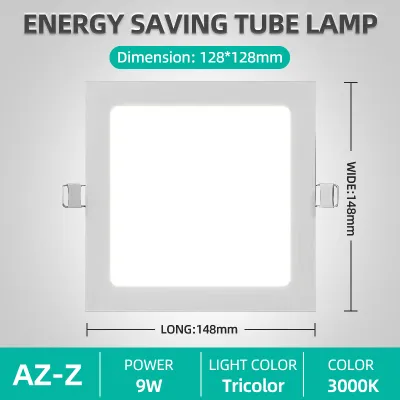
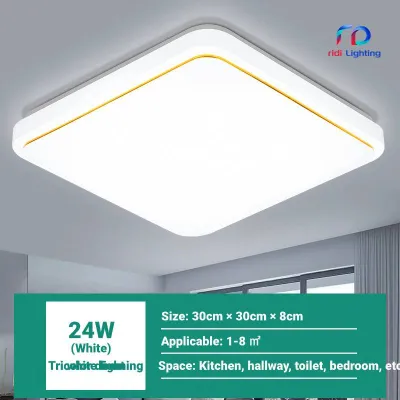
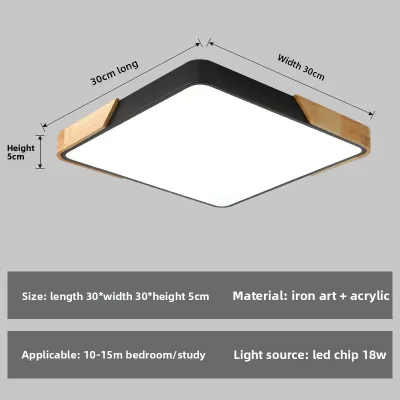
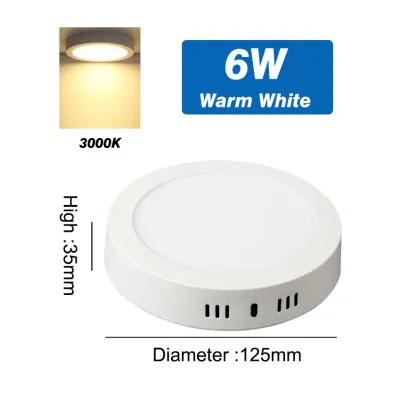
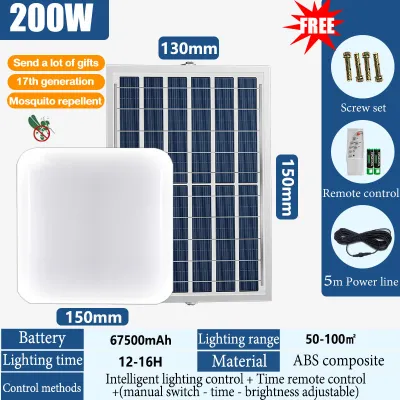
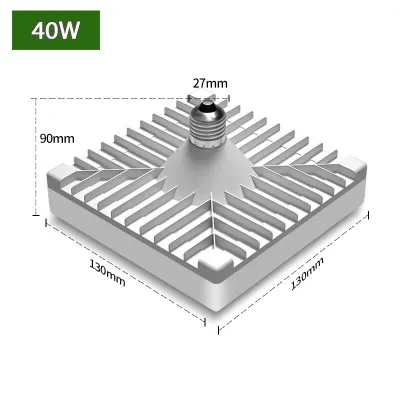
Prices are valid at publication and may change. Please refer to the product page for the latest price.
Evaluating how these sizes look on your ceiling is essential for maintaining visual proportion. A single 60×60 cm panel works well as a central light source in a medium-sized bedroom, offering a clean, modern aesthetic. In contrast, placing a single 30×30 cm panel in a large living room will look visually lost and fail to distribute light evenly across the space.
Before purchasing any fixture, measure the flat area of your ceiling and identify potential structural obstructions. Look out for concrete beams, wooden joists, air conditioning vents, or existing utility pipes. For recessed panels, these obstructions can completely block installation, which might require you to pivot to a surface-mounted frame instead.
Choosing between one large central panel and multiple smaller distributed panels depends on your room’s shape and use. A single large central panel creates a minimalist focal point, which is highly effective in square rooms. However, distributing multiple smaller panels in a grid provides more uniform light coverage, reduces harsh shadows, and allows you to zone different parts of an open-plan living space.
Determining the Right Wattage and Brightness for Your Needs
To plan your lighting layout, you must first differentiate between ambient and task lighting. Ambient lighting provides general visibility for walking and socializing, requiring a softer, more diffused glow. Task lighting, which is essential for kitchen countertops, study desks, or vanity mirrors, demands concentrated, brighter light to prevent eye strain during focused activities.

Do not rely solely on physical dimensions or wattage to estimate how bright a square LED light will be. Wattage measures electrical power consumption, whereas lumens measure actual light output. Modern, energy-efficient square LED panels can produce high lumen output at relatively low wattages, so always check the manufacturer’s specifications for the lumen rating rather than assuming a larger panel is automatically brighter.
To estimate your total light requirements, calculate the room’s area in square meters by multiplying the length of the room by its width. A practical framework for residential spaces is to aim for approximately 100 to 150 lumens per square meter for ambient areas like bedrooms and living rooms. For task-heavy areas like kitchens or home offices, aim for 300 to 400 lumens per square meter.
Once you have your target total lumens, divide that number by the lumen output of your chosen panel size to determine how many fixtures you need. For example, if a room requires 3,000 lumens in total, you could use one high-output panel or distribute the load across three smaller panels that produce 1,000 lumens each.
Adjusting Light Choices for Ceiling Height and Distribution
Ceiling elevation directly affects how light spreads and how intense it feels when it reaches floor level. Standard residential ceilings in the Philippines often range from 2.4 to 2.7 meters, but some modern homes feature double-height ceilings or loft designs. High ceilings cause light to disperse over a wider area, which decreases the perceived intensity on the floor and requires higher-wattage panels or narrower beam angles to push light downward.
Most square LED panels feature wide beam angles, often around 120 degrees, paired with frosted acrylic diffusers. This design scatters light broadly to minimize harsh glare, making it excellent for low to medium ceilings. However, this wide distribution means the light loses intensity quickly over longer vertical distances, making wide-angle panels less effective on exceptionally high ceilings.
If your ceiling is high or your room has an irregular shape, relying on a single central square panel will likely leave the corners in darkness. To counter this, adjust your layout by placing smaller panels closer to the walls or incorporating complementary accent lighting. This distribution ensures that light reaches every corner of the room without requiring you to over-light the center.
Verifying Installation Clearances and Electrical Safety
Recessed square LED panels require a specific clearance depth in the ceiling cavity to accommodate the fixture housing and the external LED driver safely. Always measure this cavity depth before buying your fixtures. If the space behind your gypsum or fiber cement ceiling board is too shallow or blocked by concrete slabs, you must use a surface-mount kit or look for ultra-thin slim panel designs.
Verify that the fixture is rated for the local electrical supply, which is typically 220V to 240V at 60Hz. Ensure your existing wiring circuit and breaker can safely handle the total wattage of the new fixtures, especially if you are replacing low-wattage bulbs with multiple high-power LED panels. Additionally, check that the fixtures carry recognized electrical safety certifications to ensure long-term reliability.
Working with fixed electrical wiring, modifying ceiling structures, or installing fixtures in high-humidity areas like bathrooms requires strict safety precautions. Always isolate the power at the main circuit breaker before handling any wiring, and follow the manufacturer’s installation instructions precisely. For fixed wiring, structural modifications, or installations in moisture-prone areas, always consult a qualified professional or licensed electrician to perform the work safely.
Common Sizing and Placement Mistakes to Avoid
One of the most common mistakes is installing a single small panel in a large room, which leads to dim, uninviting spaces and forces your eyes to strain. Another frequent error is ignoring the visual scale of the fixture relative to the room’s overall proportions. A massive 60×60 cm panel in a tiny hallway or small powder room looks visually oppressive and disrupts the design harmony of the space.
Conversely, avoid over-lighting compact spaces with high-wattage panels, which can cause uncomfortable glare. This is particularly problematic in rooms with highly reflective floor tiles, which are common in tropical homes. The intense light bounces off the polished surfaces, causing visual fatigue and making the room feel sterile rather than welcoming. Selecting a lower-wattage panel or choosing a dimmable model helps maintain a comfortable balance.
Frequently Asked Questions (FAQ)
Can I install a square LED panel on a solid concrete ceiling?
Yes, you can install a square LED panel on a solid concrete ceiling, but you cannot use a recessed installation without building a false ceiling. Instead, you must use a compatible surface-mount frame or bracket kit that screws directly into the concrete, housing the LED driver neatly inside the frame. Because drilling into solid concrete requires specialized rotary hammer drills and masonry anchors, obtain a professional assessment to avoid damaging embedded electrical conduits or structural reinforcement bars.
Is my existing dimmer switch compatible with a new square LED panel?
Not necessarily, as traditional dimmer switches designed for incandescent bulbs often cause LED panels to flicker, buzz, or fail prematurely. To ensure compatibility, you must verify that the square LED panel is explicitly labeled as dimmable by the manufacturer and check their approved dimmer compatibility list. If your current switch is incompatible, you will need to upgrade to a dedicated LED-compatible dimmer switch that matches the dimming protocol specified by the panel manufacturer.
Community discussion
Share your experience or ask a question. Comments are reviewed before publication.