
Quick Answer: Which Smart Bulb is Best for Your Condo?
Selecting the ideal smart bulb for your condominium in the Philippines depends heavily on your existing smart home ecosystem, your overall budget, and your willingness to integrate a dedicated hardware hub. There is no single universal winner for every living space. Instead, each brand serves a distinct profile of user needs, spatial layouts, and technical preferences.
Philips Hue remains the premium benchmark for ecosystem reliability and lighting quality, though it requires a higher initial investment due to its dedicated hub. Xiaomi and Yeelight offer exceptional value, high brightness, and flexible connectivity options that do not require a central bridge, making them highly attractive for budget-conscious owners. Sylvania provides a highly accessible entry point with straightforward smart features that integrate smoothly into major third-party smart home platforms, offering a balanced middle ground for practical, everyday use.
Achieving the perfect ambient lighting in a condo requires careful attention to color rendering, dimming ranges, and physical compatibility. Because condos often feature compact layouts with multi-functional zones—where a single living area serves as a workspace, dining room, and relaxation lounge—your choice of smart bulb will directly influence how versatile your space becomes. Understanding how these brands compare across connectivity, lighting performance, and local installation requirements is the first step toward transforming your home.
Products mentioned in this guide
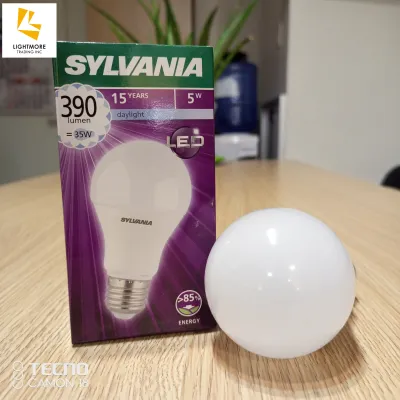
Prices are valid at publication and may change. Please refer to the product page for the latest price.
Smart Ecosystems and Connectivity: How They Connect
The underlying wireless technology of a smart bulb determines how reliably it operates, how quickly it responds to commands, and how it impacts your home network. When deploying multiple smart lights across a condo, connectivity becomes the most critical decision factor. The primary divide lies between hub-based Zigbee networks and hub-free Wi-Fi or Bluetooth configurations.

Philips Hue relies primarily on the Zigbee protocol, which requires a dedicated Hue Bridge connected to your internet router. Zigbee operates as a mesh network, meaning each bulb acts as a signal repeater that passes commands along to the next bulb. This setup drastically reduces the load on your central router because only the Bridge connects directly to your home network. For high-density condominium buildings in major Philippine metropolitan areas, where dozens of neighboring Wi-Fi networks crowd the 2.4GHz spectrum, a Zigbee-based system offers unmatched stability and near-instantaneous response times.
In contrast, Xiaomi, Yeelight, and Sylvania smart bulbs typically utilize direct Wi-Fi or Bluetooth connections. Wi-Fi bulbs connect directly to your local 2.4GHz router band without requiring an extra hub, which lowers the initial cost of entry. However, if you plan to install fifteen or twenty smart bulbs across a multi-room condo, a standard-issue router provided by local internet service providers may struggle to manage the simultaneous connections. This network congestion can lead to delayed responses, frequent offline statuses, or dropped connections. Bluetooth Mesh configurations, offered by some Yeelight and Xiaomi models, alleviate this router strain but require a compatible local Bluetooth gateway, such as a smart speaker, to enable remote control outside the home.
Ecosystem compatibility also dictates your daily user experience. Philips Hue features deep integration with Apple Home, Google Home, and Amazon Alexa, supported by a highly polished native app that allows for intricate automation and entertainment syncing. Xiaomi and Yeelight bulbs operate natively within the Mi Home and Yeelight apps, which are excellent if you already use other smart appliances from those brands, such as air purifiers or robot vacuums. Sylvania Smart+ bulbs are designed for broad, open-platform compatibility, allowing users to pair them directly with Google Assistant or Amazon Alexa devices. Before purchasing, evaluate your current smart home setup and select a brand that aligns with the control interface you use most frequently.
Ambient Lighting Performance: Color, Dimming, and Quality
Creating a relaxing atmosphere in a condo requires smart bulbs that can transition smoothly between functional task lighting and warm, low-intensity evening glows. The quality of light, the range of color temperatures, and the smoothness of the dimming curve vary significantly among the four brands.
Color temperature range determines how warm or cool the light can get. Standard smart bulbs typically offer a tunable white range from a warm 2000 Kelvin (K) or 2700K up to a crisp, cool 6500K. Philips Hue and premium Yeelight models often extend down to a very warm 2000K or even 1600K, mimicking the soft, golden glow of candlelight. This ultra-warm spectrum is ideal for winding down in the evening and preparing your body for sleep. Sylvania and Xiaomi bulbs generally cover the standard 2700K to 6500K range, which is perfectly adequate for daily tasks and general ambient lighting but may lack the deep, amber warmth of more premium options.
Dimming performance is where the difference between premium and budget-friendly hardware becomes most apparent. True ambient lighting relies on the ability to dim lights down to very low levels (1% to 5%) without flickering or buzzing. Philips Hue utilizes high-quality internal drivers that deliver exceptionally smooth, continuous dimming down to less than 1% brightness, making it perfect for late-night movie viewing or nightlight functions. Budget-friendly options from Xiaomi, Yeelight, and Sylvania sometimes exhibit “stepped” dimming, where the brightness jumps noticeably between levels rather than sliding smoothly. At ultra-low dimming percentages, some budget bulbs may also produce a faint high-frequency buzz or visible flickering, which can detract from a relaxing environment.
Color quality is measured by the Color Rendering Index (CRI), which rates how accurately a light source reveals the true colors of objects, furniture, and skin tones compared to natural sunlight. A higher CRI (typically 90 or above) ensures that your interior decor, wood finishes, and artwork look vibrant and natural. Philips Hue bulbs consistently deliver high CRI ratings of 90+, rendering colors with exceptional accuracy. Xiaomi and Yeelight bulbs generally offer a respectable CRI of 80 to 90, which is highly suitable for standard residential use. Sylvania bulbs typically sit around the CRI 80 mark, providing standard color accuracy that is functional but may make deep red tones or complex wood grains appear slightly flat compared to high-CRI alternatives.
Condo Living Considerations: Voltage, Fittings, and Environment
Installing smart lighting in a Philippine condominium requires attention to practical electrical standards, physical fixture dimensions, and local environmental conditions. Ignoring these physical constraints can lead to premature bulb failure or installation safety hazards.
First, you must verify the voltage compatibility of any smart bulb you intend to purchase. The standard electrical grid in the Philippines operates at 220V to 240V at 60Hz. Because many smart bulbs are imported, it is common to find 110V US-spec Sylvania or Philips Hue bulbs sold through unauthorized online channels. Connecting a 110V-only bulb to a 220V Philippine outlet will immediately destroy the bulb’s internal electronics and can pose a serious electrical fire hazard. Always check the physical label printed on the bulb itself to confirm it is rated for 220V-240V before screwing it into a socket.
The standard light socket in most Philippine condos is the E27 screw base. While Sylvania, Philips Hue, Xiaomi, and Yeelight all offer standard E27 bulbs, you must verify the specific fixture requirements of your secondary lights. Smaller bedside lamps, track lighting, or decorative chandeliers may require smaller E14 screw bases or GU10 bi-pin connectors. While Philips Hue and Yeelight offer a wider variety of form factors (including lightstrips, downlights, and smaller spot bulbs), Sylvania and Xiaomi focus primarily on the standard E27 shape, which may limit your options for specialized decorative fixtures.
Physical clearance is another critical factor. Smart bulbs contain integrated wireless chips, power drivers, and control boards, which makes them physically larger, taller, and heavier than traditional, non-smart LED or incandescent bulbs. Before purchasing, measure the interior clearance of your recessed ceiling downlight cans, enclosed glass globes, or narrow decorative shades. If a smart bulb is too tall, it may protrude awkwardly from a ceiling recess or prevent a decorative cover from closing properly.
Finally, consider the tropical climate of the Philippines. High ambient temperatures and humidity levels can accelerate the degradation of the delicate microchips inside smart bulbs. When smart bulbs are installed in fully enclosed fixtures, heat builds up rapidly around the base of the bulb where the wireless receiver and driver are located. This heat buildup is exacerbated in condos where the air conditioning is turned off during the day while residents are away. To maximize the lifespan of your smart bulbs, avoid installing them in airtight or poorly ventilated fixtures unless the manufacturer’s label explicitly states they are rated for enclosed environments. For any installation involving fixed wiring, working at heights on tall condo ceilings, or damp areas like bathrooms, always isolate the power at the main circuit breaker first, follow the manufacturer’s step-by-step instructions, and consult a qualified professional if you are unsure of the safety procedures.
Value and Long-Term Ecosystem Costs
Evaluating the true cost of a smart lighting system requires looking beyond the initial purchase price of a single bulb. You must consider the long-term expenses associated with system expansion, standby power consumption, and local warranty support.
Hub-free bulbs from Xiaomi, Yeelight, and Sylvania present a highly attractive, low-cost entry point. You can purchase a single Wi-Fi bulb to test in a bedside lamp without committing to any additional hardware. However, if you decide to expand this setup to cover your entire kitchen, living room, and bedroom, the cost dynamics shift. To support twenty or thirty Wi-Fi smart bulbs reliably, you may need to purchase a premium, high-capacity mesh router system to handle the increased device load. This shifts your financial investment from lighting hardware to network infrastructure.
Conversely, the Philips Hue ecosystem demands a high upfront cost because you must purchase the Hue Bridge starter kit. However, because the Bridge handles up to fifty bulbs using the low-power Zigbee protocol, adding subsequent bulbs is seamless and does not impact your home Wi-Fi performance. This makes Philips Hue a more cost-effective and stable solution in the long run if you plan to fully automate a larger multi-room condo.
Standby power consumption, often referred to as vampire draw, is another factor that impacts your monthly Meralco electricity bill. Because smart bulbs must remain constantly connected to your wireless network to receive commands, they continuously draw a small amount of electricity even when they are turned “off” via an app or voice assistant. Zigbee-based bulbs like Philips Hue typically draw very little standby power, usually between 0.15 and 0.3 watts per bulb. Wi-Fi smart bulbs from Xiaomi, Yeelight, and Sylvania generally draw more power to maintain their direct router connections, often ranging from 0.5 to 1.2 watts per bulb. While this difference seems negligible for a single bulb, multiplying it across fifteen or twenty bulbs running continuously throughout the year can result in a noticeable difference in standby energy costs.
Lastly, prioritize purchasing from official brand stores or authorized local distributors in the Philippines. Buying grey-market imports from online marketplaces may save you money upfront, but it often leaves you without a valid warranty if a bulb fails prematurely due to voltage fluctuations or tropical heat. Official local channels for Philips Hue, Xiaomi, and Yeelight typically provide a one-to-two-year warranty, ensuring you can easily secure a replacement if a unit malfunctions.
Final Verdict: How to Choose the Right Smart Bulb
To finalize your smart lighting decision, align your choice with your specific space, budget, and technical comfort level. Use the following conditional decision framework to select the brand that best matches your condo living scenario:
- Choose Philips Hue if: You want the absolute highest quality of light, flawless low-level dimming, and unmatched network reliability. This is the ideal choice if you plan to install a large number of smart bulbs across your condo, want to sync your lighting with movies or music, and are comfortable paying a premium upfront for the Hue Bridge ecosystem.
- Choose Xiaomi or Yeelight if: You are looking for excellent value, high brightness levels, and a rich feature set without the need for an expensive central hub. This option is perfect for studio or one-bedroom condos where you only need a few bulbs, and it integrates beautifully if you already use other smart appliances within the Mi Home ecosystem.
- Choose Sylvania if: You want a straightforward, budget-friendly, and accessible smart bulb that connects directly to your existing Wi-Fi network. This is a solid choice for users who want simple, reliable voice control via Google Assistant or Alexa without being locked into a proprietary brand ecosystem.
Before making any purchase, always perform a final verification check. Turn off the power to your fixtures and examine the existing bulb sockets to confirm they are standard E27 bases. Measure the physical clearance inside your light fixtures to ensure a bulkier smart bulb will fit comfortably. Finally, check the product packaging or manufacturer’s label to guarantee the bulb is rated for 220V-240V operation to ensure a safe, long-lasting setup in your home.
Frequently Asked Questions (FAQ)
Can I use these smart bulbs with my condo's existing dimmer switches?
No, you must not use smart bulbs with traditional wall-mounted dimmer switches. Smart bulbs contain sophisticated internal electronic drivers and wireless receivers that require a constant, uninterrupted supply of full 220V power to function correctly.
When you use a traditional wall dimmer to lower the brightness, it physically reduces or chops the voltage flowing to the socket. Starving a smart bulb of its required operating voltage will cause severe flickering, loud buzzing, connection drops, or permanent damage to the bulb’s internal microchips. This damage can immediately void your manufacturer’s warranty.
If your condo has existing wall dimmers, check the bulb’s label and the fixture’s manufacturer instructions first. You should keep the physical wall switch turned on at 100% power at all times, or have a qualified professional replace the dimmer with a standard on/off switch. To dim your smart bulbs safely, use the companion mobile app, voice commands, or compatible wireless smart dimmer switches designed specifically for your chosen smart bulb ecosystem.
Community discussion
Share your experience or ask a question. Comments are reviewed before publication.