
Planning a dinner party or a grand reception often brings up the dilemma of how to dress the dining table without crowding your guests or blocking their view. The choice between tall floral centerpieces and low arrangements depends on a balance of your table’s physical dimensions, the room’s ceiling height, guest interaction needs, and practical stability factors. By analyzing these spatial and social elements, you can select a suitable centerpiece height that enhances your venue’s architecture while keeping your dining experience comfortable and engaging.
How do table dimensions and shape affect your centerpiece height choice?
Your table’s width, length, and shape dictate the physical footprint available for decor, meaning larger tables can support tall, elevated designs while narrow or small tables require low, compact arrangements to avoid overcrowding.
Table width is a critical limiting factor when choosing centerpiece height. A standard dining table typically measures between 90 to 100 centimeters wide. If your table is narrower than this, placing a wide-based tall centerpiece or a bulky low arrangement will quickly crowd the surface, leaving little room for plates, glassware, and serving utensils. For narrow tables, low, slender arrangements or bud vases aligned in a single row are highly practical, as they preserve precious space.
Products mentioned in this guide

59 Lazada user ratings
This is my second time buying this vase, and it's a solid choice for the value.
The vase is really nice; it would be even better if it had a unique shape.
It definitely looks very classy and is perfect for the living room.
It's really nice and goes well with the flowers I got from IKEA.
The vase is great, this is my second purchase!
40 Lazada user ratings
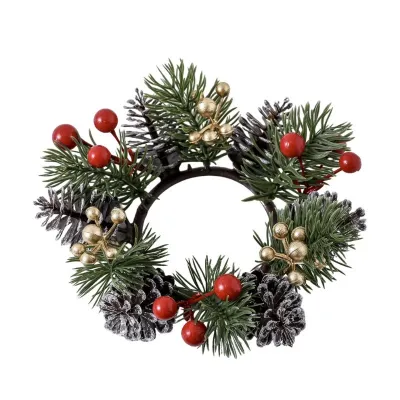
received in good condition well packed nice design perfect for upcoming holidays
Perfect for Christmas events, Exquisite festive decoration,
Lifelike American-style design, Durable and long-lasting,
Prices are valid at publication and may change. Please refer to the product page for the latest price.
The shape of your table also plays a major role in determining the visual balance of your floral decor. Round tables naturally draw the eye to a single central point, making them highly suitable candidates for a single, impactful centerpiece. A tall, slender arrangement works beautifully on a large round table, as it creates a dramatic focal point without consuming too much surface area. Conversely, square and rectangular tables offer more linear space, which can make a single centerpiece look isolated or unfinished.
For long rectangular tables, a repeating pattern of arrangements is often necessary to create a cohesive look. If you choose tall centerpieces, they should be spaced evenly along the center line, interspersed with open areas to prevent the table from feeling like a solid wall of flowers. If you opt for low arrangements, you can create a continuous floral runner or place small, low clusters at regular intervals to guide the eye along the length of the table.
Additionally, you must consider how food will be served during your meal. In many dining cultures, particularly in the Philippines, family-style dining is highly popular, where large serving platters of food are placed directly on the table for guests to share. If your menu involves passing heavy dishes or placing multiple serving bowls on the table, low arrangements that can be easily moved aside—or tall arrangements supported by very thin, elevated pedestals that leave the tabletop clear—are essential to maintain functionality.
When does ceiling height make tall floral centerpieces the better option?
Tall floral centerpieces become a highly effective choice when your dining space features high, vaulted, or double-height ceilings, as they draw the eye upward and fill the vast vertical void that low arrangements cannot reach.

Matching your centerpiece height to the room’s vertical dimensions is crucial for achieving visual proportion. Standard residential ceilings, which typically sit around 2.4 to 2.7 meters high, can easily feel cramped if you introduce towering floral stands. In these intimate settings, low arrangements are generally more appropriate because they keep the visual focus at the table level, creating a cozy and comfortable atmosphere.
However, when you are hosting an event in a venue with vaulted ceilings, a grand ballroom, or an open-air garden pavilion, low arrangements can easily get lost in the vastness of the space. In these high-ceilinged environments, tall floral centerpieces act as design anchors. They draw the eye upward, highlighting the architectural beauty of the venue and making the entire room feel more filled, balanced, and cohesive.
When planning tall arrangements, you must also evaluate the presence of hanging light fixtures, ceiling fans, or low-hanging chandeliers. A tall centerpiece must never interfere with the physical path of a ceiling fan or block the light cast by a chandelier. If the clearance between the tabletop and the lowest point of a hanging fixture is tight, opting for low arrangements is the safer and more visually balanced choice to avoid a cluttered, top-heavy appearance.
How do guest sightlines and interaction needs dictate centerpiece height?
Guest sightlines require that centerpieces sit either completely below the eye level or high above it, ensuring that conversation can flow across the table without physical or visual obstructions.
To maintain a comfortable environment for your guests, you should adhere to the standard sightline rule. This rule dictates that floral arrangements should either be kept under 30 centimeters (12 inches) tall or elevated above 60 centimeters (24 inches). The space between these two measurements is the active sightline zone, where guests’ eyes naturally align when they are seated and talking across the table. Placing dense flowers or thick, solid vases in this zone forces guests to lean sideways or strain to see one another, which can quickly ruin the flow of conversation.
Low arrangements are highly effective for intimate gatherings, family dinners, or business meetings where active, cross-table conversation is the primary goal. By keeping the floral designs low and compact, you allow guests to maintain direct eye contact, pass dishes easily, and feel a sense of closeness. These low designs foster a relaxed, conversational atmosphere that is highly suited for smaller, more personal events.
Tall floral centerpieces, on the other hand, are well-suited for large-scale events, formal banquets, or receptions where guests are more likely to converse with the people sitting directly next to them rather than across a wide table. Because these events often feature large round tables where cross-table conversation is naturally limited by distance, tall arrangements can be used to provide maximum visual impact without disrupting the primary social dynamics of the table.
When opting for tall arrangements, the design of the stand or pedestal is just as important as the height itself. To preserve sightlines, use very slender metal risers, clear acrylic pedestals, or tall glass trumpet vases. These thin supports allow guests to see through the center of the arrangement at eye level, keeping the view across the table clear while the dramatic floral display sits safely above their heads.
What are the practical setup and stability considerations for each style?
Practical setup requires evaluating the physical weight, base stability, and environmental conditions of your venue, as tall arrangements are highly susceptible to tipping in breezy settings while low arrangements offer superior stability and ease of transport.
Tall centerpieces are inherently top-heavy, meaning they require careful engineering to ensure they do not tip over during your event. The base of a tall vase or stand must be wide and heavy enough to support the weight of the floral foam, water, and heavy blooms at the top. If you are using lightweight plastic or thin metal stands, you may need to weight the base with decorative stones, sand, or heavy metal plates to prevent accidental tipping if a guest bumps the table.
Environmental factors like drafts, air conditioning vents, and ceiling fans can also pose a significant threat to tall arrangements. In tropical climates, indoor venues often rely on high-powered ceiling fans or strong air conditioning currents to keep guests cool. If a tall centerpiece is placed directly under a fast-moving fan or in the path of an AC vent, the constant airflow can cause the arrangement to sway or even blow over. For outdoor events, such as garden or beachside receptions, wind is an even greater hazard, making tall arrangements highly risky unless they are securely anchored to the tables.
Low arrangements offer superior stability and safety under breezy conditions, making them a highly practical choice for high-traffic areas, outdoor venues, or events with children. Because their center of gravity is very low, they are virtually impossible to tip over accidentally. They are also highly resilient against wind and drafts, ensuring that your table decor remains intact throughout the entire event without requiring constant monitoring or reinforcement.
Transport and setup logistics are another major differentiator between the two styles. Low arrangements are generally easy to assemble ahead of time, pack into transport boxes, and place directly onto the tables with minimal effort. Tall arrangements, however, often require on-site assembly, as transporting fully assembled tall floral displays is highly difficult and risks damaging the flowers. This means you or your florist will need to allocate significant setup time at the venue to secure the stands, mount the floral arrangements, and make final adjustments.
How can you mix tall and low floral centerpieces for a balanced table layout?
Mixing tall and low floral centerpieces creates a dynamic, visually engaging landscape by alternating heights along long tables or clustering low designs around a central tall focal point.
Combining both tall and low arrangements is a highly effective way to add visual rhythm and depth to your dining space, preventing the room from looking flat or monotonous. For long rectangular tables, alternating between tall and low designs is a highly effective strategy. You can place a tall, dramatic arrangement at the center of the table, flanked by lower, more compact arrangements on either side, creating a wave-like visual flow that keeps the eye moving across the room.
On large round tables, you can use low clusters as secondary accents to ground a primary tall centerpiece. Placing small bud vases, tea lights, or low floral bowls around the base of a tall stand helps soften the transition between the tabletop and the elevated arrangement. This technique also ensures that guests have beautiful flowers to look at close up, while still enjoying the grand scale of the tall design above them.
When mixing heights, maintaining a cohesive design palette is essential to prevent the decor from looking chaotic or disjointed. You should use a consistent color scheme, flower varieties, and container materials across both tall and low arrangements. For example, if your tall centerpieces feature white roses, blush carnations, and eucalyptus in gold metal stands, your low arrangements should utilize the same floral mix in smaller gold bowls or brass bud vases.
Finally, mixing heights can be a highly budget-friendly strategy. Tall floral centerpieces are generally much more expensive than low ones due to the volume of flowers required and the cost of the stands or vases. For example, spending ₱5,000 on a single tall arrangement might limit your overall decor, but mixing it with smaller ₱500 bud vases helps stretch your budget. By using a mix of tall and low arrangements—such as placing tall centerpieces on only half of your tables and low arrangements on the rest—you can achieve a high-end, luxurious look for your event while keeping your overall floral budget manageable.

Community discussion
Share your experience or ask a question. Comments are reviewed before publication.