
Christmas LED projector lights have become a highly practical and festive addition to holiday decorating in the Philippines. These devices offer an efficient, low-clutter alternative to traditional string lights, projecting vibrant patterns like cascading snowflakes, moving stars, and holiday greetings directly onto walls, ceilings, or outdoor facades. To find options worth buying, homeowners must evaluate specific performance criteria: weatherproofing for tropical December humidity, projection clarity, and convenient power configurations compatible with local electrical setups.
Why Filipino Homes Are Switching to LED Projector Lights
Traditional holiday decorating in the Philippines often involves untangling meters of bulky string lights, climbing ladders to secure heavy ornaments, and finding storage space for dusty decor once January arrives. As residential landscapes shift toward high-density developments and compact modern homes, many families are seeking simpler alternatives. Christmas LED projector lights solve these practical challenges by replacing boxes of physical decorations with a single, compact device.
For residents living in urban condominiums or subdivisions with strict aesthetic guidelines, these projectors offer a way to celebrate without permanently modifying walls or cluttering small balconies. Setting up a projector takes minutes compared to the hours required for traditional light installations. Additionally, modern light-emitting diode (LED) technology consumes significantly less electricity than older incandescent bulbs, which is a crucial consideration given the relatively high cost of household electricity. This energy efficiency allows households to maintain a bright, festive atmosphere throughout the long holiday season without facing an overwhelming utility bill.
Products mentioned in this guide
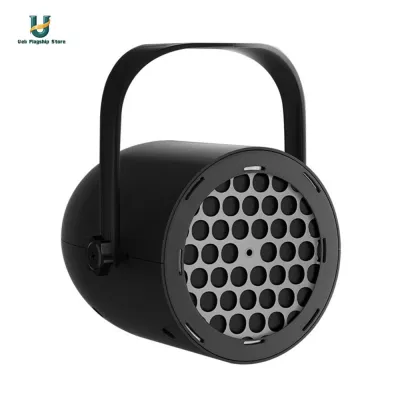
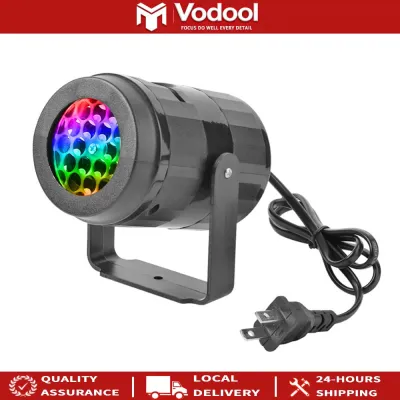
![[Vodool Home Mall] LED Christmas Pattern Projector Lamp Waterproof 360 Rotatable Stage Projection Lights Holiday Party Decor Colorful Projector Lamp Decorative Lighting](https://img.lazcdn.com/g/p/d03694eab8298bbf9a5b582a99cb2c3a.jpg_400x400q80.jpg_.webp)
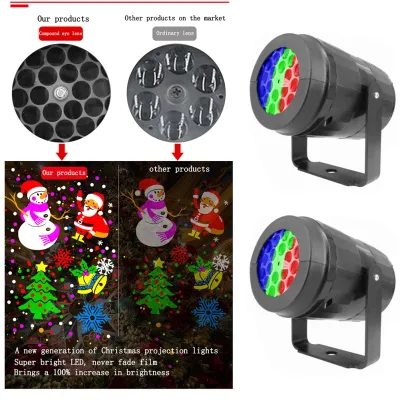
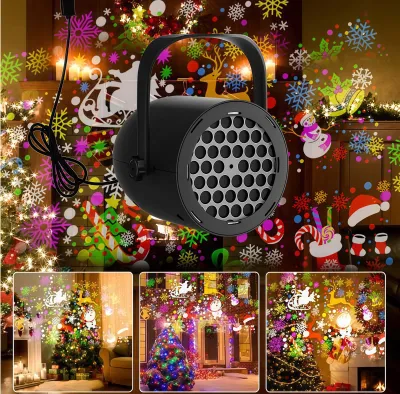
![[UEB Mall]LED Christmas Pattern Projector Lamp Waterproof 360 Rotatable Stage Projection Lights Holiday Party Decor Landscape Projector Lamp Decorative Lighting](https://img.lazcdn.com/g/p/46e1e1e3a36f737e46aa7872f120c407.jpg_400x400q80.jpg_.webp)
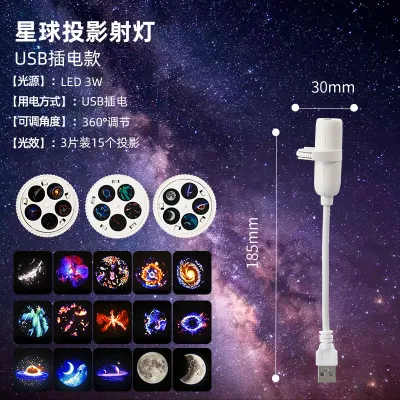
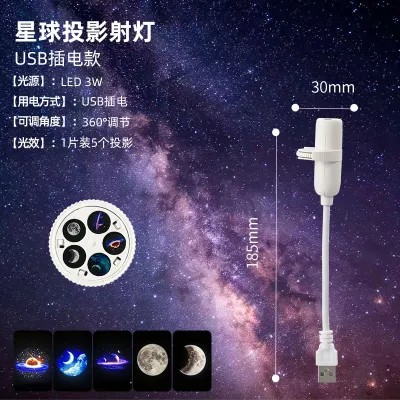
Prices are valid at publication and may change. Please refer to the product page for the latest price.
Key Features That Define a High-Value Christmas Projector
Choosing a projector requires looking past attractive marketing photos to examine the actual technical specifications. A high-value unit must withstand the operating environment, deliver visible patterns even in the presence of ambient streetlights, and offer reliable power options. Understanding these key features ensures that your investment lasts for multiple holiday seasons rather than failing after a few nights of use.

Weather Resistance for Local Conditions
When selecting a projector for outdoor use, such as illuminating a garden, driveway, or house facade, weather resistance is paramount. The Philippine climate in December can bring unexpected tropical showers, high humidity, and heavy morning dew. Outdoor projectors must feature an Ingress Protection (IP) rating, which indicates their level of sealing against solids and liquids. Look for units rated at least IP44 for basic splash resistance, though IP65 is highly recommended for complete dust protection and resistance to direct rain. Indoor-only models generally lack these ratings and must never be exposed to moisture, as doing so risks short circuits or electrical shock. Always check the manufacturer’s packaging to verify whether the entire assembly—including the power adapter—is rated for outdoor environments.
Projection Clarity and Coverage Area
The visual impact of a projector depends heavily on its light output, lens quality, and focal adjustment. Look for manufacturers that specify the light source’s brightness in lumens or watts, as low-quality novelties often produce dim, blurry patterns that disappear under standard neighborhood streetlights. High-quality models feature adjustable focus rings or premium glass lenses that maintain sharp edges across the entire projection field.
Homeowners should also consider the style of projection. Static, warm-white patterns offer a classic, elegant aesthetic that complements traditional holiday decor. In contrast, multi-color moving animations—such as rotating snowmen, falling stars, or color-changing waves—provide a playful, energetic atmosphere that appeals particularly to children. These style choices are largely matters of personal preference and spatial design rather than measures of a projector’s raw performance. Avoid generic, unbranded models that lack optical focus adjustments, as these frequently project distorted, low-contrast shapes at longer distances.
Power, Cords, and Smart Controls
Practical usability often comes down to the physical setup of the device. Because outdoor power outlets are not standard in every home, the length of the integrated power cord is a critical detail. A short cord forces the use of multiple extension cables, increasing the risk of moisture ingress at the connection points. Ensure the plug type is compatible with local household sockets, which typically accept Type A or Type B plugs operating at a standard voltage of 220V at 60Hz.
Furthermore, look for models equipped with built-in timers or wireless remote controls. A timer allows the projector to turn on automatically at dusk and shut off after a set number of hours, preventing unnecessary power consumption overnight. Remote controls let you adjust the speed of moving animations, change color schemes, or switch off the unit from the comfort of your living room, eliminating the need to step outside in the dark.
How to Match the Projector to Your Living Space
The architectural layout of your home dictates the type of projector that will perform best. A device that beautifully illuminates a spacious two-story suburban house might be completely impractical for a compact studio unit in a high-rise building. Matching the product to your specific living environment prevents light pollution issues and ensures optimal visual clarity.
Condo Balconies and Indoor Living Rooms
For condominium dwellers and those decorating interior spaces, compact, lower-lumen projectors are the ideal choice. High-intensity outdoor projectors used indoors can cause uncomfortable glare and wash out the colors of your interior decor. Instead, opt for smaller units that project soft, warm-toned patterns or gentle starry skies across living room ceilings or accent walls.
If you plan to use a projector on a condo balcony, it is essential to review your building administration’s guidelines regarding exterior decorations and light spill. Strong beams shining outward can disturb neighbors in adjacent units or violate property rules. To maintain good community relations, position the projector so that the beam faces inward toward your balcony wall or floor, keeping the festive illumination entirely within your private space.
House Facades, Gates, and Yards
Standalone homes with open outdoor areas require robust, high-lumen projectors with wide-angle lenses. To cover a two-story facade, a large gate, or a wide driveway, select a model that includes a sturdy, pointed ground stake for secure installation in soil or grass. These models must project a wide beam that remains bright even when positioned several meters away from the target surface.
When planning an outdoor installation, measure the distance from your nearest outdoor-safe power source to the intended projector location. You may need to purchase heavy-duty, weather-resistant extension cords designed specifically for outdoor use. Ensure that the projector’s mounting bracket allows for vertical tilt adjustments, enabling you to angle the light precisely onto your house walls while avoiding nearby trees or neighbor’s windows.
Essential Safety and Installation Tips for Holiday Lighting
Electrical safety should always be the top priority when setting up temporary holiday lighting. In the Philippines, household power runs at 220V, which requires careful handling to prevent electrical hazards, short circuits, or fire risks. Before plugging in any new device, inspect the physical unit, the power cord, and the adapter for any signs of damage, exposed wires, or cracks in the housing.
Always verify that your holiday lighting products carry recognized safety certifications. For imported electrical items sold locally, look for the Philippine Standard (PS) mark or the Import Commodity Clearance (ICC) sticker on the packaging or cord. These marks indicate that the product has undergone safety testing to comply with local electrical standards.
When installing your projector, follow these safety guidelines:
- Avoid Overloading Outlets: Do not daisy-chain multiple extension cords or overload a single wall outlet with multiple high-wattage decorative items. Use a dedicated, surge-protected power strip if necessary.
- Isolate Power During Installation: Always turn off or isolate the main power source before positioning, adjusting, or plugging in outdoor electrical equipment.
- Keep Connections Dry: Even if a projector is rated for outdoor use, the power adapter or plug connection is often vulnerable to moisture. Keep all plug connections elevated off the ground, away from areas where puddles might form, and protect them with weatherproof electrical boxes or heavy-duty plastic covers.
- Secure Outdoor Mounts: Ensure that ground stakes are firmly anchored in soft soil to prevent the projector from tipping over during strong winds or heavy rain. If mounting on a hard surface like concrete or a balcony railing, use the manufacturer-approved mounting bracket and secure it tightly.
- Prevent Glare and Blinding: Angle the projector downward or directly toward your home's facade. Never point the light beam upward toward the sky, toward public roads where it could blind passing drivers and pedestrians, or directly into your neighbors' windows.
- Consult Professionals for Complex Setups: If your holiday display requires high-altitude mounting, fixed wiring modifications, or integration with your home's main electrical panel, do not attempt to install it yourself. Consult a qualified professional or licensed electrician to ensure the setup complies with local building codes.
Smart Shopping: How to Spot Good Value Online
With numerous holiday decorations available on online marketplaces and e-commerce platforms, finding a reliable LED projector requires a discerning eye. Many sellers use highly edited, computer-generated marketing images that exaggerate the brightness, color saturation, and coverage area of their products. To avoid disappointment, always scroll down to the user review section to look for real, unedited photos and videos uploaded by actual buyers. These customer-submitted media files provide a much more accurate representation of how the projection looks in real-world, low-light conditions.
When comparing options, evaluate the overall package value rather than simply choosing the cheapest unit. A slightly more expensive projector that includes a local warranty, a robust return policy, and multiple interchangeable pattern slides often represents better long-term value than a cheap, single-pattern model with no customer support. Look for established sellers with high positive ratings and active customer service channels, as this ensures you can easily request a replacement or refund in the rare event of a manufacturing defect, dead pixels, or motor failure.
Frequently Asked Questions (FAQ)
Can I use an outdoor Christmas projector light indoors?
Yes, outdoor-rated Christmas projectors can safely be used inside your home. However, keep in mind that outdoor models are often bulkier, feature longer, heavier power cords, and output higher lumens that might feel overly bright in a small, enclosed room. When using an outdoor unit indoors, position it away from highly flammable materials like curtains or fabric decorations, and ensure the power adapter remains well-ventilated to prevent overheating.
How far should I place the projector from the wall or facade?
The ideal placement distance typically ranges from 3 to 10 meters, depending on the specific lens design and your desired projection size. Placing the projector closer to the wall results in a smaller, brighter, and sharper image, while moving it farther away increases the coverage area but reduces the overall brightness. To find the perfect balance, temporarily plug in the unit at dusk and test the focus at various distances before permanently securing the ground stake or mounting bracket.
Community discussion
Share your experience or ask a question. Comments are reviewed before publication.