
Choosing between surface-mounted track lights and flush recessed spot lights depends entirely on your specific ceiling structure, design preferences, and installation limits. Track systems offer high flexibility and are ideal for surfaces where cutting holes is impossible, while recessed fixtures provide a seamless, minimalist look that requires adequate ceiling clearance. This guide breaks down the physical constraints, aesthetic trade-offs, and practical considerations to help you select the right LED lights for your house ceiling.
Understanding the Physical and Functional Differences
To make an informed decision, it is essential to understand how these two lighting systems differ in their physical form and how they deliver light. Track lights are surface-mounted systems consisting of a continuous metal rail—the track—that carries electrical current. Individual light fixtures, or heads, snap directly into this rail and can be slid, repositioned, and angled in various directions. This design makes track lighting highly adaptable, allowing you to direct light precisely where it is needed most.
In contrast, recessed spot lights, often called downlights, are installed flush with the ceiling surface. The bulk of the fixture, including the housing, wiring, and driver, is concealed entirely within the ceiling cavity. Only the face of the light and its surrounding trim remain visible from below. While some recessed spots feature adjustable inner gimbals that allow you to tilt the beam slightly, many are fixed, directing light straight downward to provide clean, even illumination.
Products mentioned in this guide
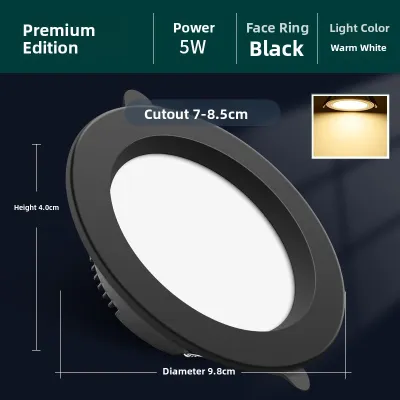
Prices are valid at publication and may change. Please refer to the product page for the latest price.
Both systems require integration into your home’s electrical grid, which typically operates on standard household voltage. Because installing these fixtures involves working with live electrical wiring, safety must be your top priority. Always isolate the power at your main circuit breaker before beginning any installation work. If you are dealing with complex wiring layouts, high ceilings, or damp environments, hiring a qualified professional is highly recommended to ensure compliance with local electrical safety standards.
Evaluating Your Ceiling Material and Structural Limits
Your ceiling’s physical construction is often the deciding factor when choosing between these two lighting options. Solid concrete ceilings, which are highly common in modern condominiums and residential builds in tropical climates like the Philippines, present a significant barrier for recessed fixtures. Chipping or core drilling into structural concrete to create cavities for recessed cans is labor-intensive, costly, and can compromise structural integrity. For solid concrete surfaces, surface-mounted track lights are the most practical choice, as the track rail can be anchored directly to the slab using standard masonry fasteners.

If your home features suspended ceilings made of gypsum board, fiber cement board, or plywood, recessed spot lights become a highly viable option. These hollow ceiling structures allow you to cut precise holes to accommodate the fixture housings. However, you must verify the available clearance depth behind the ceiling board before purchasing your lights. Standard recessed fixtures require a specific vertical clearance to fit the housing and allow heat to dissipate safely, and you must also ensure the layout avoids structural joists and metal framing channels.
Ceiling height also plays a critical role in how these fixtures impact your living space. In rooms with low ceilings, recessed spot lights are highly advantageous because they preserve vertical headroom, helping the space feel larger and more open. Track lighting systems, even low-profile designs, extend downward into the room. In spaces with limited vertical clearance, low-hanging track heads can create visual clutter or feel physically intrusive, whereas they perform exceptionally well in high-ceilinged living rooms, lofts, or double-height entryways.
Comparing Aesthetics and Lighting Flexibility
The visual impact of your lighting choice will significantly shape the character of your home. Track lights deliver a distinct architectural, modern, or industrial aesthetic. Because the rails and fixture heads are fully visible, they act as design elements that can complement contemporary, industrial, or rustic interior styles. They are excellent for creating a sense of drama, drawing the eye upward, and highlighting specific design features.
Recessed spot lights, by comparison, support a clean, minimalist aesthetic. By sitting flush with the ceiling, they remain unobtrusive and allow other design elements, such as furniture, artwork, or panoramic windows, to take center stage. This makes recessed lighting highly versatile, as it blends seamlessly into almost any decor style without clashing with existing fixtures or architectural details.
When it comes to lighting flexibility, track systems offer a clear advantage. If you decide to rearrange your furniture, change your dining table layout, or rotate the artwork on your walls, you can easily slide the track heads along the rail and adjust their angles to match the new setup. Recessed spot lights are permanent installations; once the holes are cut and the fixtures are wired, changing their layout requires patching drywall, running new cables, and repainting the ceiling. Additionally, both systems allow you to customize beam angles and glare control, but track lights make it much easier to swap out individual heads or lenses to adjust the light distribution as your needs evolve.
Weighing Installation Effort and Long-Term Upkeep
The effort required for installation and ongoing maintenance is another practical consideration. Installing a track light system is generally straightforward, especially if you are retrofitting an existing ceiling light point. You only need to mount the track rail to the ceiling surface and connect the power feed to the existing junction box, making it a relatively quick project. Recessed spot lights require significantly more labor, as you must map out a precise grid, cut multiple holes, route electrical cables through the ceiling cavity from fixture to fixture, and secure each unit in place.
From a cost perspective, the pricing structure of each system accumulates differently. A track system requires purchasing the rail, connectors, and individual heads. While the initial rail represents an extra component, it allows you to power multiple fixtures from a single electrical point. Recessed lighting requires purchasing individual housings, trims, and compatible LED drivers or bulbs for every single light point. For large rooms that require extensive illumination, the cost of multiple recessed fixtures, combined with the labor required to cut and wire them, can quickly exceed the cost of a single track installation.
Long-term upkeep also differs due to the physical design of the fixtures. Track lights are fully exposed, meaning they will accumulate dust on top of the rails and fixture heads, particularly in dusty or humid tropical environments. They require regular dusting to maintain their appearance. However, replacing a failed bulb or upgrading to a newer LED head is incredibly simple and requires no tools. Recessed spot lights accumulate less visible dust on their faces, but dust and small insects can sometimes settle inside the trim or ceiling cavity. Replacing an integrated recessed LED fixture can also be more delicate, as pulling the spring-loaded clips out of the ceiling can occasionally chip or damage the surrounding gypsum board if not done carefully.
Final Decision Guide: Which Option Fits Your Home?
To finalize your choice, evaluate your specific living situation against these key scenarios:
Choose track lights if:
- Your home has solid concrete ceilings where cutting recessed holes is structurally impossible or impractical.
- You live in a rental property and want an upgraded lighting system that you can easily uninstall and take with you when you move.
- You want highly flexible accent lighting that can be adjusted whenever you rearrange your furniture or artwork.
- You prefer an exposed, modern, or industrial design aesthetic that makes a visual statement.
Choose recessed spot lights if:
- You have a suspended gypsum or drop ceiling with adequate vertical clearance to house the fixtures safely.
- You want a clean, seamless, minimalist look where the lighting fixtures remain virtually invisible.
- You need uniform, glare-free ambient illumination across a large area, such as a kitchen, hallway, or open-plan living space.
- Your ceilings are relatively low, and you need to preserve every centimeter of vertical headroom.
Before making any purchase, always verify the technical specifications of your chosen fixtures. Check the operating voltage to ensure compatibility with your local electrical grid, and confirm that the fixtures carry appropriate electrical safety certifications. If you plan to install lights in damp areas like bathrooms or covered outdoor patios, verify that they have a suitable IP rating for moisture resistance. Finally, if you intend to use a dimmer switch, ensure that both the LED drivers and the wall switch are fully compatible to prevent flickering or buzzing, and consult a qualified electrician to handle the installation safely.
Frequently Asked Questions (FAQ)
Can I use both track lights and recessed spot lights in the same room?
Yes, combining both fixture types is an excellent way to create a layered lighting scheme. You can use recessed spot lights with wide beam angles to provide even, ambient background illumination throughout the space. Then, you can install a track light system along a specific wall or over a kitchen island to provide focused task lighting or highlight artwork. This combination allows you to adjust the mood of the room by controlling each lighting layer independently.
Do I need a special dimmer switch for these LED ceiling lights?
Yes, LED fixtures require compatible dimming systems to function smoothly. Standard dimmers designed for older incandescent bulbs often cause LED lights to flicker, buzz, or fail prematurely. When buying your track heads or recessed downlights, check whether they require a specific dimming protocol, such as Triac, 0-10V, or digital dimming. Ensure that your wall dimmer switch is explicitly rated for LED loads and matches the dimming method of your chosen light fixtures.
Community discussion
Share your experience or ask a question. Comments are reviewed before publication.