
When you see an outdoor solar light advertised with a rating of 200,000 watts, it is easy to assume you are purchasing an industrial-strength illumination system. In reality, this massive number is a marketing designation rather than a measure of actual electrical power consumption. For homeowners and community organizers looking to light up dark pathways, driveways, or gardens, understanding what these specifications truly mean is the first step to making an informed purchase.
This guide helps you decode these high-wattage claims, identify the metrics that truly determine brightness and runtime, and verify the product’s real-world performance for your outdoor spaces. By focusing on standardized technical specifications rather than promotional titles, you can select a reliable lighting solution that fits your specific environmental needs.
Decoding the 200000 Watts Marketing Label
In the outdoor lighting industry, exceptionally high numbers like 200,000W are typically used as “watt equivalents” to compare LED output to traditional incandescent bulbs, or they may simply be inflated marketing figures. Historically, consumers associated higher wattage with brighter light because older incandescent bulbs required more electricity to produce more light. Modern light-emitting diode (LED) technology has broken this link by producing high levels of brightness while consuming only a fraction of the energy.
Products mentioned in this guide
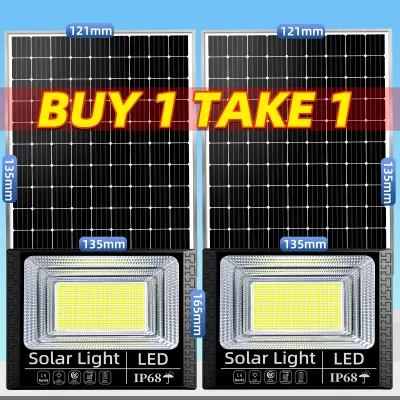
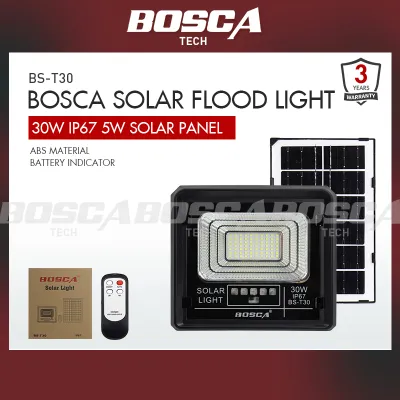
Prices are valid at publication and may change. Please refer to the product page for the latest price.
The actual electrical power draw for residential, pathway, or street solar lights is significantly lower than these promotional figures. Most high-performing outdoor solar lights operate on a true electrical power draw measured in single or double-digit watts, typically ranging from 10W to 50W. This lower power draw is what allows the light to run efficiently on a compact, built-in battery charged solely by a solar panel.
To find the actual rated power and energy consumption of a solar light, you must look past the online marketplace listing titles. Examine the physical product label on the light housing, the packaging, or the technical specifications table in the official user manual. Look for the rated power (W), input voltage, base or interface type, dimming method, dimensions, and electrical certification marks to verify the unit’s true electrical characteristics and compatibility with your installation environment.
Evaluating True Brightness and Battery Runtime
To gauge how well a solar light will illuminate your outdoor space, shift your focus from wattage to lumens (lm). Lumens are the standardized measurement of visible light emitted by a source. A higher lumen rating means a brighter light, regardless of the wattage claimed on the box. For example, a gentle garden accent light may only require 100 to 200 lumens, while a security floodlight or street light typically requires 1,000 to 3,000 lumens to illuminate a wide area effectively.

Battery capacity is another critical specification that dictates how long the light will remain operational after a full charge. This capacity is usually measured in milliamp-hours (mAh) or watt-hours (Wh). A larger battery capacity allows the light to store more energy, ensuring it can run through the night even during consecutive cloudy days. When reviewing specifications, check the battery chemistry, voltage, and capacity to ensure they align with your runtime expectations.
The solar panel’s wattage determines how quickly and efficiently the battery can recharge. An integrated or detached solar panel must have a high enough power generation capability (measured in watts) to fully replenish the battery during daylight hours. If the solar panel is too small or underpowered relative to the battery capacity, the light may fail to reach a full charge, resulting in dim performance or a short operating life at night.
Verifying Weather Resistance and Real-World Performance
Before purchasing, match the solar light’s intended application with realistic performance requirements. A security floodlight requires a high lumen output and a wide motion-sensor range, whereas pathway lights benefit from a softer, more localized glow. Decorative style and perceived color temperature—such as warm white versus cool white—are conditional preferences that affect the spatial atmosphere rather than the physical performance of the light.
Because outdoor lights are constantly exposed to the elements, verifying weather resistance is essential, especially in tropical climates prone to heavy rainfall and high humidity. Check the Ingress Protection (IP) rating printed on the product label or manual. An IP65 or IP66 rating indicates that the light housing is sealed against dust and can withstand low-pressure water jets, making it suitable for wet outdoor environments.
Review the manufacturer’s stated charging time and working time specifications under realistic conditions. While a manual may state an optimal charging time of 6 to 8 hours, actual charging efficiency depends heavily on local sunlight availability. During rainy seasons or overcast days, the solar panel will generate less power, which directly reduces the nighttime runtime of the light.
Installation Guidelines and Safety Boundaries
To maximize the performance of your solar light, follow the specific mounting height, angle, and clearance instructions provided in the manufacturer’s manual. Positioning the solar panel at the correct angle ensures it receives maximum exposure to direct sunlight throughout the day. Avoid installing the unit under the shadow of trees, roof overhangs, or adjacent buildings, as even partial shading can drastically reduce solar charging efficiency.
Ensure that the chosen mounting surface, wall, or pole can safely support the physical weight and wind load of the lighting unit. High-wattage equivalent solar lights often feature large solar panels and heavy battery compartments that require secure anchoring. Use the recommended mounting brackets and hardware, and regularly inspect the installation to ensure the fixtures remain tight and stable.
While solar lights are generally safe low-voltage systems, certain installations may involve complex setups. If your project requires fixed wiring, integration with high-voltage AC electrical systems, work at extreme heights, or structural modifications not covered by the manual, prioritize safety. Isolate the power source, follow all installation instructions carefully, and consult a qualified professional or licensed electrician to handle the electrical and structural work.
Frequently Asked Questions (FAQ)
Can a residential solar light actually consume 200000 watts?
No, it is physically impossible for a standard residential solar light to consume or output 200,000 watts of actual electrical power. A true 200,000-watt draw would require industrial-grade electrical infrastructure, massive high-voltage cabling, and would generate extreme heat capable of destroying consumer electronics. In the consumer solar lighting market, such numbers are purely marketing equivalents or highly exaggerated promotional labels rather than actual electrical specifications.
How do I match the solar panel output to the battery capacity?
To evaluate if the solar panel can effectively charge the battery, compare the panel’s rated wattage with the battery’s capacity in watt-hours (Wh). If the battery capacity is listed in milliamp-hours (mAh), multiply it by the battery’s nominal voltage (V) and divide by 1,000 to calculate the watt-hours. Ideally, the solar panel’s wattage multiplied by the average daily peak sunlight hours in your region should equal or exceed the battery’s total watt-hour capacity to ensure a complete charge under normal conditions.
Community discussion
Share your experience or ask a question. Comments are reviewed before publication.