
To make a small bathroom feel significantly larger, the ideal choice is an oval mirror for bathroom installations that measures approximately 20 to 24 inches (51 to 61 cm) in width and 30 to 36 inches (76 to 91 cm) in height. The core rule of thumb is to select a mirror that is 2 to 4 inches (5 to 10 cm) narrower than your vanity cabinet. This proportion preserves essential wall margins while drawing the eye upward. In compact spaces, such as urban condominiums or townhouses in the Philippines, vertical space is your greatest asset. An oval mirror leverages this asset by breaking up the rigid, boxy lines of standard bathroom tiles and cabinetry, reflecting light across a wider vertical plane, and creating an airy, open atmosphere.
Why Oval Shapes Create the Illusion of More Space
The visual mechanics of an oval mirror rely on soft, continuous curves that trick the brain into perceiving more physical volume within a room. Unlike rectangular or square mirrors, which have sharp, defined corners that box in a wall, an oval shape lacks hard boundaries. This absence of corners allows the eye to glide seamlessly around the frame and onto the surrounding wall, creating a continuous visual flow. By eliminating these rigid intersections, the mirror feels less like a heavy, dominant block and more like a natural window or portal.
Furthermore, the elongated vertical axis of an oval mirror naturally draws the eye upward. In small bathrooms, particularly those with standard 2.4-meter ceilings common in local residential developments, emphasizing verticality is crucial. This upward movement shifts the focus away from a cramped floor plan and highlights the height of the room.
Products mentioned in this guide
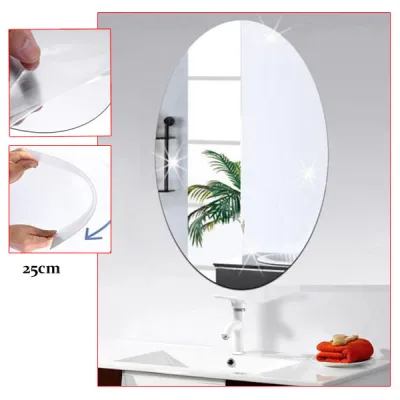
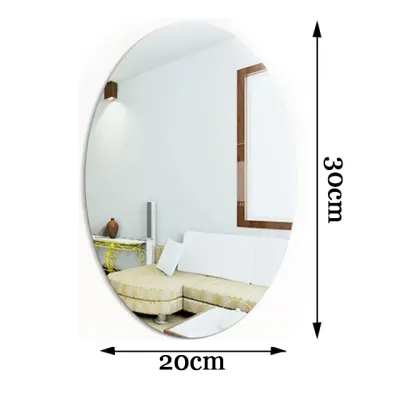
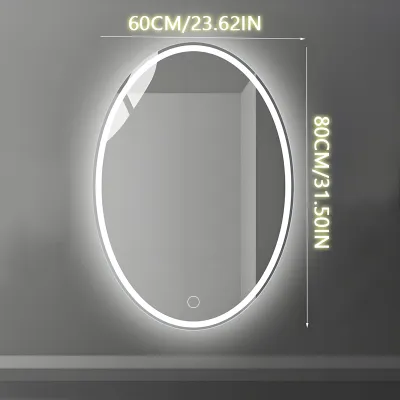
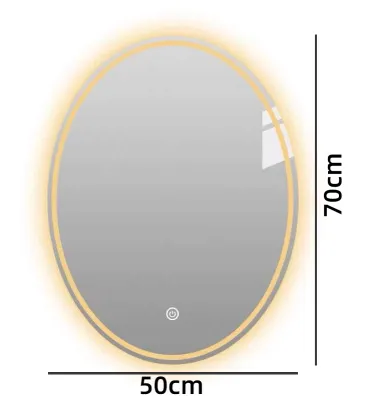
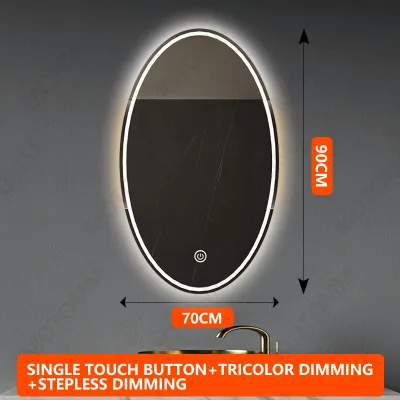
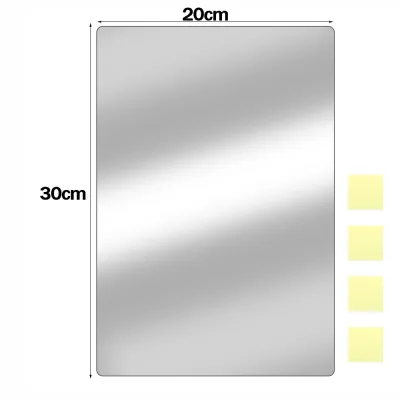
Prices are valid at publication and may change. Please refer to the product page for the latest price.
Additionally, most bathroom fixtures—such as semi-recessed basins, curved faucets, and rounded toilet bowls—feature organic, softened lines. An oval mirror harmonizes beautifully with these curved elements. This design cohesion reduces visual noise, making the entire vanity area look intentional, uncluttered, and spacious.
How to Measure Your Vanity and Wall for the Perfect Fit
Achieving the perfect spatial expansion requires precise measurements. Before purchasing an oval mirror, you must evaluate the physical boundaries of your vanity cabinet, the sink basin, and the surrounding wall architecture. Taking the time to measure prevents the common mistake of buying a mirror that either overwhelms the room or looks awkwardly small.

Sizing Relative to the Vanity Width and Height
The width of your bathroom vanity serves as the primary anchor for your mirror’s dimensions. As a standard design principle, an oval mirror should be 2 to 4 inches (5 to 10 cm) narrower than the vanity cabinet beneath it. For example, if you have a standard 30-inch (76 cm) vanity, your mirror’s maximum width should be 26 to 28 inches (66 to 71 cm). This offset creates a balanced, tapered silhouette that prevents the mirror from looking top-heavy.
Height is equally critical for both functionality and spatial illusion. The mirror must be tall enough to accommodate users of different heights comfortably. Ideally, the reflective surface should extend at least 4 to 6 inches (10 to 15 cm) above the eye level of the tallest household member and several inches below the chin of the shortest. In a small bathroom, choosing an extra-tall oval mirror—such as one measuring 36 to 40 inches (91 to 102 cm) high—amplifies the vertical reflection, capturing more light and making the ceiling feel significantly higher.
Sizing Relative to the Wall and Ceiling Margins
Beyond the vanity, you must account for the vertical and horizontal margins of the wall. Leave at least 4 to 6 inches (10 to 15 cm) of breathing room between the top of the mirror and the ceiling or crown molding. Shoving a mirror directly against the ceiling line creates a cramped, squeezed appearance that instantly makes the room feel smaller.
Horizontal clearance is just as vital, especially in narrow layouts or alcoves. If your vanity is tucked into a corner, ensure there are at least 3 inches (7.6 cm) of space between the edge of the mirror and the adjacent side wall. If you plan to install wall sconces on either side of your oval mirror, you must factor their width into your calculations. Sconces typically require 6 to 8 inches (15 to 20 cm) of lateral space each. If your wall is too narrow to accommodate both a wide mirror and side lights, opt for a narrower oval mirror or transition to overhead lighting to avoid a cluttered, claustrophobic vanity setup.
Recommended Oval Mirror Dimensions for Small Bathroom Layouts
To simplify your decision-making process, it helps to match your mirror dimensions directly to standard vanity sizes. Below is a quick-reference guide tailored to common compact bathroom layouts.
| Vanity Width | Recommended Mirror Width | Recommended Mirror Height | Best Layout Scenario |
|---|---|---|---|
| 24 inches (61 cm) | 18 to 20 inches (46 to 51 cm) | 30 to 34 inches (76 to 86 cm) | Ultra-compact powder rooms, studio condo bathrooms |
| 30 inches (76 cm) | 24 to 26 inches (61 to 66 cm) | 32 to 36 inches (81 to 91 cm) | Standard single-sink guest or master bathrooms |
| 36 inches (91 cm) | 28 to 32 inches (71 to 81 cm) | 36 to 40 inches (91 to 102 cm) | Spacious single vanities with extra countertop space |
| 48 inches (122 cm) | Single: 36 to 40 inches (91 to 102 cm) <br> Double: 18 to 20 inches (46 to 51 cm) each | 36 to 42 inches (91 to 107 cm) | Compact double vanities or wide single-sink setups |
For Compact Single Vanities (24 to 36 Inches)
Compact single vanities, ranging from 24 to 36 inches (61 to 91 cm), are the standard in most urban apartments and townhomes in the Philippines. For a 24-inch vanity, an oval mirror measuring 20 inches wide by 30 inches tall (51 x 76 cm) is highly effective. This size maintains a clean 2-inch margin on either side while offering ample reflective surface.
If you have a 30- or 36-inch vanity, you can comfortably scale up to a mirror that is 24 inches wide by 36 inches tall (61 x 91 cm). Choosing a taller, narrower oval mirror is a deliberate design strategy for small spaces. By maximizing the vertical dimension, you draw the eye upward toward the ceiling, which visually counteracts a narrow floor plan. This vertical stretch creates a sense of grandeur and openness that a wider, squarer mirror simply cannot replicate.
For Wider Single or Compact Double Vanities (48 to 60 Inches)
When dealing with wider vanities in a relatively small bathroom—such as a 48-inch (122 cm) or 60-inch (152 cm) cabinet—you face a unique design choice. You can either install one large, singular oval mirror or hang two smaller, matching oval mirrors side-by-side.
A single, oversized oval mirror (for example, 36 inches wide by 40 inches tall) acts as a dramatic focal point. It reflects a massive amount of light, which instantly brightens dark corners and makes the entire room feel twice as deep. However, ensure the frame is thin or frameless so it does not dominate the wall.
Alternatively, installing twin oval mirrors (each around 20 inches wide and 32 inches tall) over a double sink setup creates a highly symmetrical, elegant look. The vertical gaps between and beside the two mirrors provide essential “visual breathing room.” This layout keeps the wall looking organized and prevents the heavy, monolithic feel that a single massive rectangular mirror might produce. When using two mirrors, ensure they are spaced at least 4 to 6 inches (10 to 15 cm) apart, and centered precisely over each sink basin.
Installation Heights to Maximize Vertical Space
Hanging your oval mirror at the correct height is just as important as choosing the right dimensions. Proper placement ensures the mirror is fully functional while maximizing the illusion of vertical space.
The standard rule is to hang the mirror so that its bottom edge sits 4 to 6 inches (10 to 15 cm) above the top of your sink basin or backsplash. This distance is a practical sweet spot: it is high enough to protect the glass from water splashes, soap residue, and moisture degradation, yet low enough to maintain a cohesive visual connection with the vanity cabinet. If the gap is too wide, the mirror will look like it is floating aimlessly on the wall.
For optimal functionality, the center of the mirror should align with the average eye level of the household, which is typically about 60 to 64 inches (152 to 163 cm) from the finished floor. However, in a small bathroom, you can hang the mirror slightly higher—perhaps 2 to 3 inches above standard eye level—to encourage the eye to look upward. This subtle adjustment makes the ceiling feel loftier, provided the bottom edge does not visually disconnect from the vanity.
Safety and Installation Note: Before mounting your mirror, always verify the construction of your bathroom wall. In the Philippines, bathroom walls are frequently made of concrete hollow blocks covered in plaster or ceramic tiles. Mounting a heavy mirror on these surfaces requires a masonry drill bit, plastic wall plugs (tox), and heavy-duty screws. Never rely on simple adhesive strips or standard drywall anchors, as the high humidity in tropical bathrooms can weaken adhesives over time, leading to a fall hazard. If you are installing a modern LED backlit oval mirror, ensure the product is rated for damp environments (look for IP44 certification or higher) and operates on the standard local 220V grid. Always isolate the power supply at the circuit breaker before handling any electrical connections, and consult a qualified professional electrician for fixed wiring installations.
Common Sizing and Placement Mistakes to Avoid
When designing a small bathroom, small errors in scale can have a massive negative impact. Avoiding these common pitfalls will ensure your oval mirror works to expand, rather than shrink, your space.
First, never choose a mirror that is wider than your vanity cabinet. A mirror that extends past the edges of the vanity creates an awkward, top-heavy appearance. This imbalance makes the vanity area feel cramped and visually unstable, instantly making the room feel smaller.
Second, avoid hanging the mirror too close to the ceiling. If the top of your oval mirror is jammed against the ceiling or crown molding, it highlights the physical limits of the room, making the ceiling feel lower than it actually is. Always preserve that crucial 4-to-6-inch margin of wall space at the top.
Third, steer clear of thick, heavy, or highly ornate frames. While a chunky wooden or heavily carved frame might look beautiful in a spacious hallway, in a small bathroom, it eats up precious reflective surface area. Thick frames also cast harsh shadows under overhead lighting, which makes a compact room feel darker and more enclosed. Instead, opt for ultra-thin metal frames (such as matte black, brushed brass, or chrome) or a completely frameless design.
Finally, always account for the physical environment and layout of the room. Measure the swing radius of your bathroom door, shower glass doors, and the placement of wall-mounted towel bars. A beautiful oval mirror is of no use if it collides with an opening door or blocks access to essential fixtures.
Frequently Asked Questions (FAQ)
Can a frameless oval mirror make a small bathroom look bigger?
Yes, a frameless or thin-beveled oval mirror is one of the most effective choices for maximizing the feeling of openness in a tight space. Because it lacks a solid, dark border, a frameless mirror blends seamlessly into the wall. This lack of visual boundaries allows the reflective glass to merge with its surroundings, bouncing light into every corner of the room. The result is a clean, minimalist aesthetic that makes the entire bathroom feel brighter, lighter, and significantly more spacious than a framed alternative.
Should the mirror be centered on the wall or the vanity?
You should always center the oval mirror directly over the vanity cabinet and the sink basin, rather than centering it on the wall itself. In many compact bathrooms, the vanity is offset to one side due to plumbing constraints, leaving unequal wall space on either side. Centering the mirror on the wall instead of the sink creates a jarring, asymmetrical misalignment that disrupts your daily routine and looks visually chaotic. Aligning the mirror precisely with the sink maintains functional symmetry and a sense of order, which naturally makes a small space feel more organized and spacious.

Community discussion
Share your experience or ask a question. Comments are reviewed before publication.