
Selecting a solar flood light for outdoor security requires balancing light output, battery capacity, sensor capabilities, and weatherproofing to match your property’s specific layout. In tropical climates like the Philippines, where intense sunlight is often followed by heavy monsoon rains and high humidity, choosing the right fixture involves looking beyond basic brand names. A reliable outdoor security setup depends on verifying technical specifications on the product packaging, understanding how solar panels perform under partial shade, and selecting the appropriate operating modes to ensure continuous overnight protection.
Solar-powered security systems offer independence from the electrical grid, helping homeowners maintain illumination during power outages while keeping monthly utility bills low. However, to achieve these benefits, buyers must evaluate key technical details rather than relying on generic marketing claims. Understanding how to read product labels and match specifications to your physical environment is the first step toward securing your property effectively.
Essential Light Output and Power Specifications
When evaluating a Bosca solar flood light, the lumen rating is the primary indicator of brightness. Lumens measure the total amount of visible light emitted by a source, which directly determines how well the fixture can illuminate dark corners, driveways, or perimeters. Instead of relying solely on wattage—which measures power consumption rather than light output—you should check the product label for the explicit lumen rating. Matching this rating to your required coverage area ensures you do not underpower a large backyard or overpower a small entryway.
Products mentioned in this guide
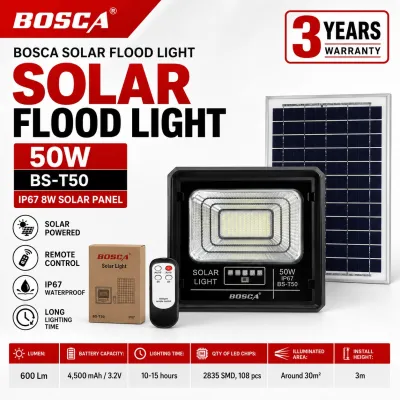
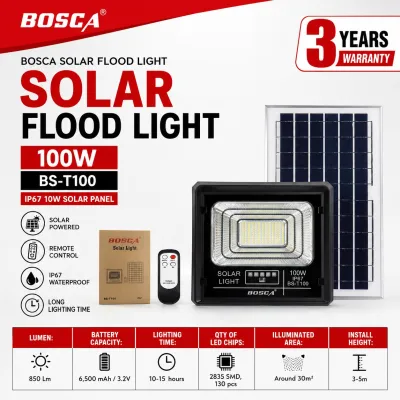
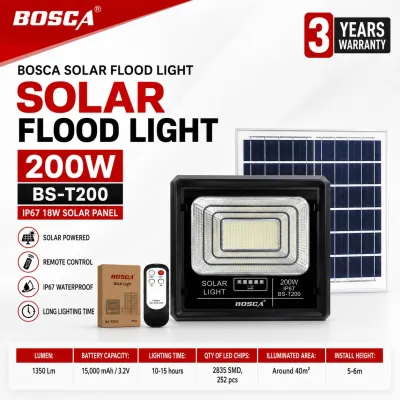
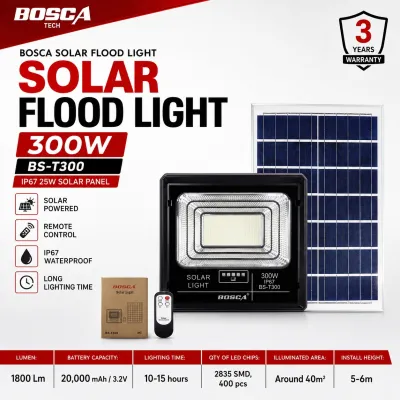
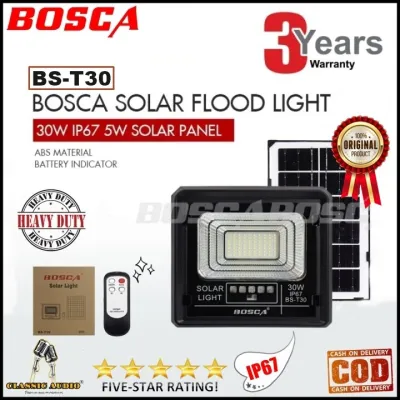
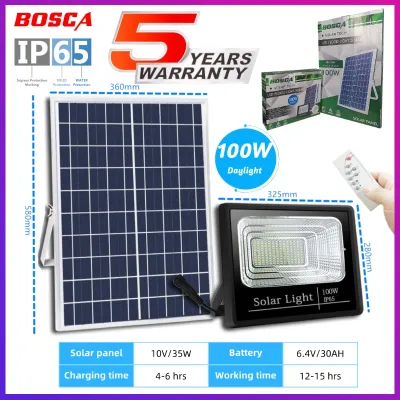
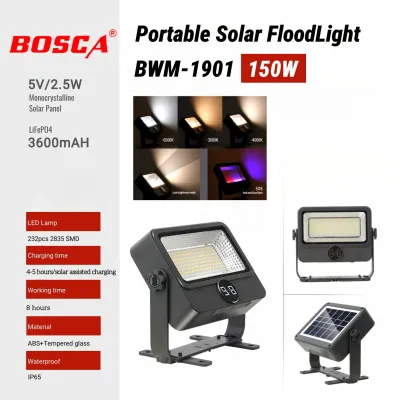
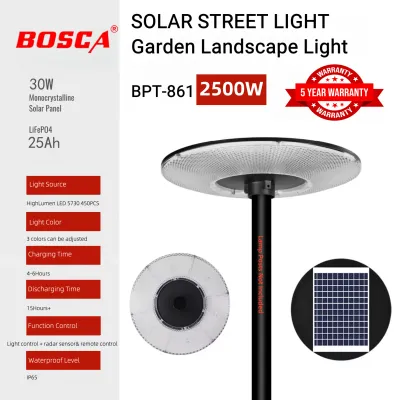
Prices are valid at publication and may change. Please refer to the product page for the latest price.
Battery capacity and solar panel efficiency are equally critical to maintaining consistent security lighting throughout the night. Solar flood lights typically use rechargeable lithium batteries, such as Lithium Iron Phosphate (LiFePO4), which are favored in tropical regions for their thermal stability and durability under high temperatures. When reviewing specifications, look for the battery capacity indicated in milliampere-hours (mAh) or watt-hours (Wh). A larger battery capacity allows the light to store more energy during the day, ensuring it has enough power to run through overcast days or prolonged rainy spells.
The efficiency of the solar panel determines how quickly and effectively the battery charges. High-efficiency monocrystalline solar panels are generally preferred over polycrystalline alternatives because they convert sunlight into electricity more effectively, even in low-light conditions. To maximize this efficiency, you must consider the physical placement of the panel. If your security zone is located under deep roof eaves, dense tree canopies, or architectural shading, an integrated solar light—where the panel is fixed directly to the light fixture—may not receive enough direct sunlight to charge fully.
In shaded environments, a split-type solar flood light is often the most practical solution. These systems separate the solar panel from the light fixture, connecting them with a durable, weather-resistant cable. This design allows you to mount the light fixture exactly where security illumination is needed—such as a dark side pathway or a covered garage—while positioning the solar panel on a rooftop or an open wall that receives unobstructed sunlight. Verifying the length of the included connection cable before purchase is essential to ensure it can reach your desired mounting location.
Security Sensors and Operating Modes
Effective outdoor security lighting relies heavily on motion detection to deter intruders and conserve battery power. Most modern solar flood lights utilize Passive Infrared (PIR) sensors, which detect heat signatures from moving objects like humans, large animals, or vehicles. When choosing a fixture, review the PIR sensor’s detection range and angle on the packaging. A wider detection angle, such as 120 to 180 degrees, provides broader coverage, while a longer detection distance ensures the light activates before an intruder gets too close to your home.

Operating modes allow you to customize how the light behaves throughout the night based on your security priorities. The most common setting is motion-activated mode, where the light remains completely off until the PIR sensor detects movement, at which point it shines at full brightness for a predetermined duration. This mode is highly energy-efficient and is ideal for properties with limited daily sunlight, as it preserves the battery for when illumination is actually needed.
Another popular option is the dim-to-bright mode, also known as dusk-to-dawn with motion boost. In this setting, the flood light emits a low, ambient glow throughout the night to signal that the property is monitored. When motion is detected, the light instantly ramps up to 100% brightness, providing maximum visibility and drawing attention to the movement. While this mode offers continuous visibility, it consumes more battery power than the pure motion-activated setting, requiring a well-charged battery and optimal solar panel placement.
Continuous dusk-to-dawn mode keeps the light shining at a constant brightness level from sunset to sunrise without relying on motion sensors. While this provides uninterrupted illumination, it places a heavy demand on the battery and solar panel. If you prefer this mode, you must verify that the battery capacity and solar panel wattage are sufficient to sustain continuous operation, especially during seasons with shorter daylight hours or frequent cloud cover. Additionally, look for fixtures with adjustable sensitivity and timer settings, which allow you to fine-tune the sensor to ignore wind-blown foliage or small animals, reducing false triggers.
Build Quality, Weather Resistance, and Installation Safety
Outdoor security lights are constantly exposed to environmental elements, making build quality and weather resistance paramount. When examining a solar flood light, check the packaging for its Ingress Protection (IP) rating. The IP rating consists of two digits: the first indicates protection against solid particles like dust, while the second indicates protection against liquids. For reliable outdoor performance in tropical climates prone to heavy downpours and typhoons, look for a rating of at least IP65 or IP66, which ensures the housing is dust-tight and protected against powerful water jets.
The materials used in the housing directly affect the fixture’s lifespan and performance. Aluminum housings with anti-corrosion or rust-proof coatings generally offer superior durability and heat dissipation compared to standard plastic enclosures. Proper heat dissipation is critical because excessive heat can degrade both the LED chips and the internal lithium battery, leading to premature failure. If you live in a coastal area, verifying that the metal components are treated to resist salt-air corrosion is an important step in protecting your investment.
Safety must be a primary consideration during the installation process. Mounting a solar flood light often requires working at heights, which introduces physical risks. Before beginning, verify the structural load limits of the mounting surface—whether it is a concrete wall, a wooden post, or a metal bracket—to ensure it can safely support the weight of both the light fixture and the solar panel. Always follow the manufacturer’s installation instructions regarding mounting hardware, screw sizes, and bracket alignment to prevent the fixture from falling during high winds.
For complex installations, high-reach mounting, or any setup that involves integrating the solar light with existing electrical systems, it is highly recommended to consult a qualified professional. If you are installing a hybrid solar system that connects to the main electrical grid, ensure that power-isolation protocols are strictly followed before handling any wiring. Additionally, always verify the electrical certifications, voltage compatibility, and wattage limits printed on the packaging to ensure the fixture meets local safety standards. Taking these safety precautions protects both the installer and the property from electrical hazards and structural damage.
Matching Bosca Features to Your Property Layout
To design an effective security layout, you must match the specific features of your solar flood light to the different zones of your property. High-traffic entryways, such as front gates, main doors, and garage entrances, require focused, high-intensity beams with highly responsive motion sensors to ensure clear visibility when arriving or departing. In contrast, wide perimeters, such as side yards or back fences, benefit from wider beam angles that distribute light over a larger area, eliminating blind spots where intruders could hide.
Before making a purchase, create a practical checklist to verify that the product meets all your installation and operational requirements. This checklist should include confirming that all necessary mounting hardware, brackets, and extension cables are included in the box. Additionally, review the manufacturer’s warranty terms and check for the availability of local after-sales support or service centers in the Philippines. Having access to local support ensures that you can easily obtain replacement parts or assistance if the fixture requires maintenance.
It is also crucial to recognize the physical limitations of solar lighting technology within your specific architectural environment. Solar panels require direct, unobstructed sunlight to charge efficiently. If your property features deeply recessed walls, overhanging balconies, or dense landscaping that blocks the sun, a standard integrated solar light will not perform reliably. Acknowledging these limitations allows you to plan alternative solutions, such as using split-type models to place the solar panel in a sunny location or trimming back branches to clear the path for sunlight.
Finally, consider the aesthetic and functional preferences of your lighting setup, such as color temperature. While cool white light (typically 5000K to 6500K) is generally preferred for security purposes because it provides high contrast and clear visibility, warm white light (around 3000K) may be preferred for areas where you want a softer, more decorative ambiance. Keep in mind that color temperature is a matter of personal preference and does not affect the actual security performance or detection capabilities of the fixture.
Frequently Asked Questions (FAQ)
Do solar flood lights work effectively during prolonged rainy seasons?
Continuous cloud cover and heavy rain during the monsoon season reduce the amount of direct sunlight reaching the solar panel, which significantly lowers its charging efficiency. While modern solar panels can still generate a limited amount of electricity from ambient daylight, the battery will not charge fully compared to a bright, sunny day. To ensure reliable performance during these periods, check the product manual for low-light charging capabilities, or select operating modes like motion-activation that conserve battery power by keeping the light off until movement is detected.
Can the built-in battery in a solar security light be replaced?
Whether the battery can be replaced depends entirely on the design of the specific solar flood light model. Some fixtures feature accessible battery compartments that allow users to replace worn-out rechargeable cells easily, while others use sealed, integrated units to maximize water resistance and dust protection. Before attempting to open or disassemble any fixture, consult the manufacturer’s product manual and warranty guidelines, as unauthorized disassembly of a sealed unit can void your warranty and compromise the light’s weatherproofing.
How high should a solar flood light be mounted for optimal motion detection?
For optimal motion detection and light coverage, most manufacturers recommend mounting solar flood lights equipped with PIR sensors at a height of 2 to 4 meters (approximately 6 to 13 feet). Mounting the fixture within this range ensures that the sensor can accurately detect ground-level heat signatures while providing a wide angle of illumination. If your ideal mounting point exceeds safe DIY limits or requires working on high ladders, prioritize safety and hire a qualified professional to complete the installation.
Community discussion
Share your experience or ask a question. Comments are reviewed before publication.