
Setting up a productive work-from-home (WFH) space or study area requires a careful balance between functional utility and personal comfort. While standard plastic or metal task lights offer clinical efficiency, many remote professionals and students seek a warmer, more organic aesthetic to soften their workspace. A capiz lamp, crafted from the translucent shells of the windowpane oyster (Placuna placenta), introduces a beautiful, coastal texture that diffuses light into a soft, inviting glow. However, because natural shells behave differently than engineered glass or fabric, choosing a capiz lamp for active work requires looking beyond its visual appeal. You must evaluate how its organic structure manages heat, distributes light, and stands up to the physical demands of a busy desk.
To make a capiz desk lamp work for your daily productivity, the key is finding a design that balances its natural decorative qualities with the precise requirements of task lighting. This means verifying bulb compatibility, checking physical dimensions for desk ergonomics, and ensuring the structural frame can safely support the delicate shell assemblies. By focusing on these technical and physical specifications, you can enjoy the unique, calming aesthetic of capiz shells without sacrificing the clear, strain-free illumination needed for reading, writing, and screen-based tasks.
Assessing Capiz Shells for Task Lighting Demands
Before integrating a capiz lamp into your workspace, it is essential to understand the fundamental difference between ambient lighting and task lighting. Capiz shells are naturally translucent and excel at scattering light, which creates a warm, low-contrast glow. While this is excellent for reducing eye strain caused by harsh overhead fixtures, it does not naturally provide the focused, high-contrast beam needed for reading physical documents or performing detailed manual work. If your daily tasks involve analyzing printed spreadsheets, sketching, or proofreading, a standalone capiz lamp with a fully enclosed shell shade may leave your desk feeling too dim.
Products mentioned in this guide

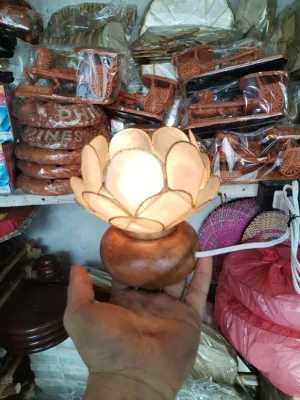
Prices are valid at publication and may change. Please refer to the product page for the latest price.
For most WFH setups, a capiz lamp serves best as a supplementary light source rather than your sole desk light. It works beautifully to soften the contrast between a bright computer monitor and a dark room, helping to mitigate digital eye strain during late-night sessions. If you want to use a capiz lamp as your primary light, look for hybrid designs that feature an open bottom or adjustable frame, allowing unfiltered light to cast directly onto your working surface while the shells diffuse the upward and outward glare.
Additionally, the physical environment of an active workspace presents unique challenges for natural materials. Capiz shells are thin, lightweight, and inherently fragile. In a high-traffic desk area where you are constantly moving books, laptops, and coffee mugs, a delicate, multi-tiered hanging shell lamp is highly vulnerable to accidental damage. The tropical humidity common in the Philippines can also attract dust that clings to the textured surfaces of the shells, requiring regular, gentle maintenance to keep the fixture looking pristine and functioning efficiently.
Key Light Specifications for WFH and Study
Achieving the right level of brightness is critical when adapting a decorative capiz lamp for functional study or office work. Because natural shells absorb and scatter a significant portion of the light emitted by the bulb, you cannot rely on standard wattage assumptions. You must cross-reference the lamp’s maximum wattage rating with the actual lumen output of the bulb you plan to install. For comfortable reading and writing, a desk surface typically requires an illumination level of 400 to 500 lumens, which must be achieved safely within the lamp’s physical and thermal limits.

Another critical specification is the physical clearance between the light bulb and the inner surface of the capiz shells. Because capiz is an organic material composed primarily of calcium carbonate and organic proteins, it is sensitive to prolonged exposure to high temperatures. If a bulb is positioned too close to the shells, the localized heat can cause the natural binders in the shell to dry out, leading to discoloration, warping, or cracking over time. Always check the product specifications for the recommended bulb shape and ensure there is a clear physical gap of at least a few centimeters between the bulb and the shade.
When browsing options on local online marketplaces, always verify the product listing for explicit LED compatibility and the required bulb base type. Most traditional capiz lamps are designed with standard screw-type sockets, such as E27 or E26 bases, which are widely available. Ensuring the lamp uses a standard, non-proprietary socket makes it much easier to find energy-efficient, low-heat bulbs that fit perfectly within the delicate shade.
Bulb Compatibility and Heat Limits
To protect both your investment and your workspace, verifying the maximum wattage limit of the lamp socket is a non-negotiable safety step. Most decorative capiz lamps have a maximum rating of 25 to 40 watts for traditional incandescent bulbs. Exceeding this limit poses a serious fire hazard and will rapidly degrade the natural shell material. To maximize brightness while keeping heat generation to an absolute minimum, you should prioritize modern LED bulbs. An LED bulb can deliver the equivalent brightness of a 60-watt incandescent bulb while consuming only 6 to 9 watts of power, keeping the operating temperature well within safe limits.
When selecting an LED bulb, pay close attention to its physical dimensions. Standard A19 or classic globe-shaped bulbs might be too wide for narrow, cylindrical capiz shades, forcing the bulb too close to the delicate shell walls. In such cases, look for compact candle-shaped bulbs (C37) or tubular stick bulbs (T37) that offer a slimmer profile. These specialized shapes maintain a safe clearance, ensuring that heat dissipates evenly into the surrounding air rather than trapping high temperatures against the organic panels.
Furthermore, ensure that the bulb base matches the socket perfectly without requiring force. A loose or improperly seated bulb can create electrical resistance, leading to localized heating at the socket level. If you are installing the lamp in a humid tropical environment, this heat can accelerate the oxidation of metal contacts, potentially causing flickering or premature bulb failure. Taking a few minutes to verify these physical and electrical dimensions before installation prevents long-term maintenance headaches.
Light Diffusion and Shell Arrangement
The way capiz shells are cut, layered, and framed directly dictates how light is distributed across your desk. Single-layer capiz panels mounted on a flat wire frame allow more light to pass through, offering a brighter overall output. In contrast, multi-layered, cascading designs—where shells overlap like wind chimes—create a highly diffused, dappled light pattern. While these cascading designs are visually stunning, the overlapping layers can cast distracting shadows across your keyboard and documents, making them less suitable for focused reading or writing.
To optimize a capiz lamp for active work, look for structural designs that incorporate open-top or open-bottom configurations. An open-bottom shade allows direct, unobstructed light to illuminate your desk surface, providing the high-contrast task lighting you need, while the surrounding capiz panels diffuse the side glare to keep the overall ambiance soft and comfortable. Alternatively, an open-top design directs light upward to bounce off the ceiling, creating a pleasant indirect ambient light that fills the room without creating harsh shadows on your desk.
You must also consider how the natural color of the capiz shells interacts with the color temperature of your bulb. Unbleached capiz shells have a naturally warm, slightly amber or yellowish tint. If you pair them with a warm white bulb (2700K to 3000K), the resulting light can become excessively yellow, which can cause drowsiness during long study sessions. To counteract this warm tint and create a more alert, productive environment, consider using a cool white (4000K) or daylight (6500K) LED bulb. The natural filtration of the shells will soften these cooler temperatures, resulting in a balanced, neutral white light that is gentle on the eyes.
Matching Desk Ergonomics and Physical Dimensions
A desk lamp must fit seamlessly into your physical workspace without causing clutter or physical discomfort. Before purchasing a capiz lamp, measure your desk’s available surface area, taking into account the space occupied by your computer monitor, keyboard, mouse, and writing materials. Capiz lamps often feature wider, decorative bases or flared shades that can easily crowd a compact WFH desk. Ensure the base diameter is compact enough to sit securely on your desk without overlapping cords or hanging over the edge.
The height of the lamp is equally important for maintaining proper ergonomics. Ideally, the bottom of the lamp shade should sit at or slightly below your eye level when you are seated in your work chair. If the lamp is too tall, or if the shade is positioned too high, the bare bulb may shine directly into your eyes, causing glare and rapid eye fatigue. Because most capiz lamps feature fixed, non-adjustable necks, you must measure your seated eye level relative to your desk surface and compare it directly to the lamp’s specified height before buying.
Weight and stability are critical safety factors, especially for lightweight natural materials. Capiz shells themselves are incredibly light, which means the overall stability of the lamp depends entirely on the design of its base. A lamp with a top-heavy shade and a narrow, lightweight plastic or thin metal base can easily tip over if bumped by a stray hand, a sliding notebook, or a sudden breeze from an open window. Look for models that feature a weighted metal, ceramic, or solid wood base that provides a low center of gravity, keeping the fixture firmly anchored to your desk.
Verifying Electrical Safety and Build Quality
Because a desk lamp is a functional appliance that will be operating for hours at a time, verifying its electrical safety and build quality is paramount. Start by examining the power cord and switch configuration. An inline rocker switch located close to the lamp base is generally the most convenient option for a desk setup, as it allows you to turn the light on and off without reaching behind monitors or stretching across your workspace. Ensure the cord length is sufficient to reach your nearest power outlet or extension strip without being pulled taut, which can create a tripping hazard or strain the internal wiring.
Inspect the quality of the electrical connections where the cord enters the base and where it connects to the socket. In tropical climates like the Philippines, high humidity can accelerate the degradation of poorly insulated wiring and cheap metal components. Look for fixtures that feature robust, insulated cords and sockets that carry recognized electrical safety certifications, such as the Philippine Standard (PS) mark or the Import Commodity Clearance (ICC) sticker, which indicate the product has undergone rigorous safety testing. Always unplug the lamp from the wall outlet before installing a bulb or cleaning the fixture to isolate the power and prevent electrical shock.
Beyond the electrical components, evaluate the structural integrity of the capiz shell attachments. High-quality capiz lamps use durable metal rings, sturdy wire bindings, or strong nylon threads to secure each individual shell to the main frame. Avoid lamps that rely heavily on hot glue or cheap adhesives to hold the shells in place; the heat generated by the bulb, combined with tropical humidity, can cause these adhesives to soften and fail, leading to loose shells and a ruined aesthetic. A well-constructed frame made of brass, wrought iron, or powder-coated steel ensures the lamp remains stable and intact for years of daily use.
Building Your Capiz Lamp Shortlist
When you are ready to shop on local online marketplaces or visit physical home decor boutiques, having a structured evaluation checklist will help you filter out fragile or unsuitable options. Begin by defining your primary lighting goal: do you need a dedicated task light to read physical books, or are you looking for a soft ambient light to reduce screen glare? If you need direct task lighting, immediately filter out fully enclosed, multi-layered cascading designs and focus on open-bottom or adjustable hybrid models.
Next, carefully read the product descriptions provided by the seller. Look for explicit details regarding LED compatibility, maximum wattage limits, socket sizes, and exact physical dimensions. If a listing lacks these technical specifications, do not hesitate to message the seller directly to confirm the details before placing your order. This proactive step is especially important when buying handmade or artisanal items, where specifications can sometimes vary slightly from piece to piece.
Take the time to read through buyer reviews and feedback, paying close attention to comments regarding packaging and shipping. Because capiz shells are highly fragile, they are susceptible to cracking or breaking during transit. Look for sellers who have a proven track record of using robust packaging materials, such as thick bubble wrap, custom foam inserts, and sturdy cardboard boxes. Additionally, verify the seller’s return and replacement policy so you can easily exchange the item if any shells arrive damaged.
Finally, set a realistic budget range. High-quality, hand-crafted capiz desk lamps in the Philippines typically range from ₱1,200 to ₱3,500, depending on the complexity of the design, the quality of the frame, and the size of the fixture. While cheaper options may be tempting, investing a bit more in a lamp with a weighted base, certified electrical components, and secure metal ring bindings ensures a safer, more durable, and highly functional addition to your work-from-home sanctuary.
Frequently Asked Questions (FAQ)
Can I use a smart bulb in a capiz desk lamp?
Yes, you can use a smart bulb in a capiz desk lamp, provided the bulb’s base matches the lamp’s socket (typically E27 or E26) and its physical dimensions fit comfortably within the shade. However, keep in mind that smart bulbs often contain internal wireless receivers and power management circuitry, making them slightly bulkier and heavier than standard LED bulbs. You must measure the inner clearance of the capiz shade to ensure the smart bulb does not touch the delicate shells. Using a smart bulb is highly beneficial for a WFH setup, as it allows you to adjust the color temperature throughout the day—using a cooler, brighter light for focused morning work and transitioning to a warmer, dimmer glow in the evening to help you wind down. Because some enclosed capiz shades can trap heat, choose a lower-wattage smart LED bulb to ensure the operating temperature remains safe for the natural shell material.
How do I clean dust from capiz shells without damaging them?
Cleaning capiz shells requires a gentle touch to avoid scratching the natural luster or breaking the delicate panels. For routine maintenance in a dusty home office, use a clean, dry microfiber cloth or a soft-bristled makeup brush to gently sweep away dust from the surfaces and crevices. Avoid using commercial liquid glass cleaners, abrasive scrubbing pads, or harsh chemical solvents, as these can strip away the natural protective coating of the shells, leaving them dull and brittle. Never submerge the lamp or the shell assemblies in water, as moisture can seep into the metal bindings, leading to rust, corrosion, and structural failure. If the shells require a deeper clean to remove stubborn grime, slightly dampen a soft cloth with plain water, gently wipe the affected area, and immediately dry it with a clean towel. Always refer to the manufacturer’s specific care instructions to ensure you preserve the natural beauty of your lamp.
Community discussion
Share your experience or ask a question. Comments are reviewed before publication.