
When purchasing waterproof LED curtain lights for outdoor use, you must focus on five essential parameters: a verified Ingress Protection (IP) rating of at least IP65 for exposed areas, a power source compatible with your local electrical setup, durable UV-resistant cabling, appropriate physical dimensions with balanced strand density, and secure, non-destructive mounting hardware. An outdoor led curtain can transform a plain wall, balcony, or pergola into a stunning cascade of light, but the harsh realities of outdoor environments demand careful product evaluation. In tropical climates like the Philippines, where intense heat, high humidity, and torrential seasonal rains are common, standard indoor decorative lights will quickly fail, posing severe electrical hazards. Ensuring every part of your lighting setup is rated for outdoor exposure is essential for both longevity and personal safety.
Essential Specifications to Check Before You Buy
To successfully select an outdoor LED curtain, five primary decision-making factors must guide your purchase: the Ingress Protection (IP) rating, the power source type, the physical coverage dimensions, the color temperature, and the installation hardware. Each of these components plays a vital role in determining whether your decorative display will survive the elements or short-circuit during the first heavy downpour.
Outdoor installations in tropical climates require a much higher level of scrutiny than typical indoor setups. High ambient temperatures accelerate the degradation of cheap plastics, while persistent humidity can cause moisture to seep into poorly sealed wire connections. Consequently, choosing materials with UV-stabilized insulation and corrosion-resistant copper wiring is a necessity rather than an optional upgrade.
Products mentioned in this guide
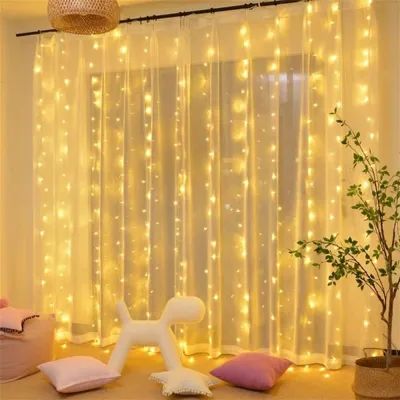
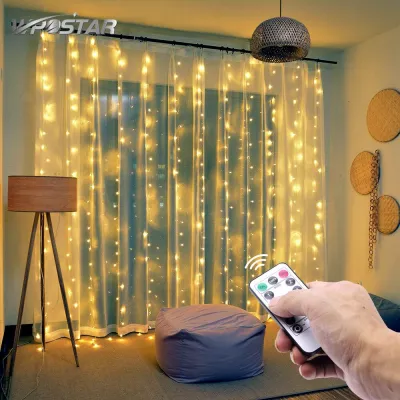
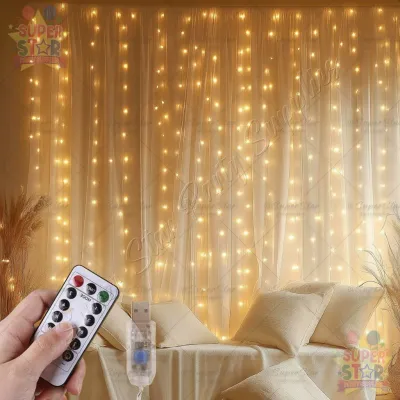
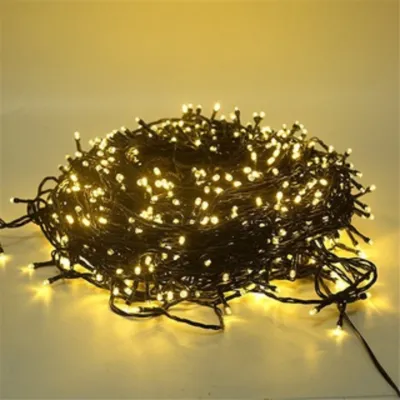
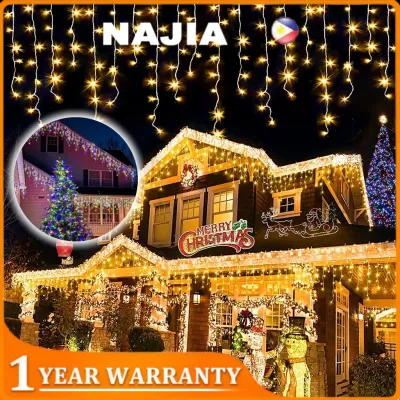
Prices are valid at publication and may change. Please refer to the product page for the latest price.
Many products on the market are sold with broad, generic labels such as “waterproof” or “weatherproof” printed on the packaging. These terms are often misleading because they do not specify the exact conditions the lights can tolerate. To make an informed decision, you must verify these claims against standardized IP codes and component-level specifications provided by the manufacturer.
Always check for local and international safety certifications, such as the Philippine Standard (PS) mark or Import Commodity Clearance (ICC) sticker, which verify that the electrical product has undergone rigorous safety and quality testing. Buying uncertified electrical goods increases the risk of short circuits, electrical fires, and shocks, especially when exposed to outdoor moisture.
Decoding IP Ratings for Outdoor LED Curtain Installations
Understanding Ingress Protection (IP) ratings is the most critical step in ensuring your led curtain remains safe and functional outdoors. An IP rating consists of two digits: the first digit (ranging from 0 to 6) indicates protection against solid particles like dust, while the second digit (ranging from 0 to 9) measures protection against liquids. For outdoor lighting, the second digit is the most crucial factor to examine.

An IP65 rating signifies that the product is completely dust-tight and protected against low-pressure water jets from any direction. This level of protection is generally sufficient for covered outdoor spaces, such as balconies, verandas, or under deep roof eaves where the lights are not directly blasted by heavy, wind-driven rain.
For fully exposed installations—such as hanging along a garden fence, draped over an open pergola, or suspended across an open patio—an IP67 or IP68 rating is highly recommended. IP67-rated equipment can withstand temporary immersion in water up to one meter deep, making it highly resilient against the intense, driving downpours typical of the Philippine wet season. IP68 offers even greater protection, allowing continuous submersion under conditions specified by the manufacturer.
A major pitfall for consumers is assuming that a “waterproof” rating applies uniformly to the entire product assembly. In many commercial LED curtain sets, the light strands themselves may carry an IP65 or IP67 rating, while the controller box, the physical plug, or the battery compartment is only rated IP44 (which only protects against splashing water). If an IP44 component is left exposed to direct rainfall or pooling water on the ground, it will fail and potentially ruin the entire light string.
Before finalizing your purchase, carefully read the manufacturer’s specification sheet to identify the individual ratings of all components, including the transformer, the mode selector switch, and the end-to-end connectors. If any component has a lower rating, you must plan to house that specific part inside a certified weatherproof electrical enclosure or keep it sheltered under a secure roof.
Selecting the Right Power Source and Cable Setup
Choosing how to power your outdoor LED curtain involves balancing electrical safety, installation convenience, and long-term operational costs. The three primary power configurations available are plug-in (mains) power, solar-powered systems, and battery or USB-powered units, each presenting unique trade-offs.
Plug-in systems connected directly to the mains power supply are the most common choice for large, high-brightness displays. In the Philippines, you must verify that the transformer is compatible with the standard 220-volt (V) electrical system and that the plug matches your outdoor outlets. Because mains voltage carries a higher risk of severe electrical shock, you must use outdoor-rated extension cords and ensure all plug connections are kept elevated off wet grass or damp concrete surfaces using specialized weather-resistant safety covers.
Solar-powered curtain lights offer an energy-efficient, wireless alternative that eliminates the need to run extension cords from your home. However, their performance depends heavily on the placement of the solar panel, which must receive several hours of direct, unobstructed sunlight daily to fully charge the internal battery. During the prolonged cloudy and rainy days of the monsoon season, solar-powered lights may suffer from significantly reduced runtimes or lower brightness levels.
Battery-powered and USB-powered curtain lights are highly portable and easy to set up, making them excellent choices for temporary events or short-term holiday decorations. However, they are generally unsuitable for permanent outdoor installations or large-scale displays due to their lower power output and the frequent need to replace batteries or connect to an external power bank. Running USB cables through open windows or doors can also compromise your home’s security and insulation.
Another essential detail to check is the length of the lead wire—the unlit portion of the main cable running from the first strand of lights to the power plug or controller. A short lead wire forces you to place your electrical connections closer to the wet outdoor environment, which increases safety risks. Look for a lead wire of at least 3 to 5 meters to ensure you can reach a safe, dry, and weather-protected outlet without creating trip hazards or resorting to unsafe daisy-chaining of multiple extension cords.
Matching Light Quality, Modes, and Coverage Size
The physical dimensions and light characteristics of your LED curtain must align with both your structural space and your aesthetic goals. Measuring your target area accurately is the first step; curtain lights are typically sold in standard dimensions such as 3 meters wide by 3 meters drop, or 3 meters wide by 2 meters drop.
When planning your layout, consider the density of the vertical light strands. A curtain with strands spaced 10 centimeters apart will look rich and full, whereas a spacing of 30 centimeters or more can appear sparse and disconnected, especially when viewed from a distance. Ensure the drop length is slightly shorter than the height of your mounting structure to prevent the bottom LEDs from dragging on wet ground, which can cause physical damage and moisture ingress.
Color temperature is a subjective preference that dramatically influences the atmosphere of your outdoor space. Warm white lights (typically 2700K to 3000K) create a cozy, inviting, and traditional ambiance suitable for dining areas and relaxed patios. Cool white lights (5000K to 6500K) provide a bright, modern, and high-visibility effect that works well for security lighting or contemporary architectural features, while multicolor (RGB) options offer a festive, playful vibe for parties and holidays.
Brightness levels, measured in lumens, and overall wattage limits must be verified to ensure the lights meet your functional needs without causing excessive glare or high electricity bills. Many outdoor LED curtain sets feature integrated mode controllers that allow you to switch between steady-on, slow fade, twinkling, or flashing patterns. If you plan to leave these lights unattended, verify that the controller remembers your last selected setting when powered off, and ensure the controller housing itself is fully weather-sealed against humidity.
Installation Safety and Mounting Mechanisms
Hanging an outdoor LED curtain requires a secure mounting strategy to protect both the light string and your property from damage. When mounting lights onto eaves, pergolas, fences, or trees, avoid using metal staples, nails, or tacks, as these can easily pierce the protective plastic insulation of the wires, leading to short circuits, electrical shocks, or fire hazards.
Instead, utilize safe, non-destructive mounting accessories such as UV-resistant nylon zip ties, plastic S-hooks, or dedicated outdoor adhesive clips designed for exterior surfaces. These fasteners hold the main horizontal support wire securely without pinching or cutting the delicate copper conductors inside. If you are mounting onto a wooden structure, stainless steel cup hooks can provide a durable, rust-free anchor point.
Wind load is a frequently overlooked factor in outdoor installations. A large LED curtain acts like a sail, catching wind currents and putting significant physical stress on the top support wire and the individual vertical strands. To prevent the strands from tangling, tearing, or wrapping around nearby objects during sudden gusts, anchor the bottom of the strands loosely to a weighted line or secure them with flexible ties, leaving enough slack to allow for natural movement without putting tension on the electrical connections.
Electrical safety must always be your top priority. Before installing, adjusting, or cleaning your outdoor lights, isolate the power supply by turning off the corresponding circuit breaker at your home’s main panel. Any permanent electrical modifications—such as installing new outdoor receptacles, drilling through exterior walls to run wiring, or hardwiring a light fixture directly into your home’s electrical grid—must be performed by a qualified professional electrician to ensure compliance with the Philippine Electrical Code and local building regulations.
Feature Checklist for Different Outdoor Scenarios
To simplify your decision-making process, the following comparison matrix outlines the recommended specifications for three common outdoor installation scenarios. Matching your specific environment to these guidelines will help ensure safety, durability, and optimal performance.
| Installation Scenario | Recommended IP Rating | Ideal Power Source | Mounting Focus | Key Maintenance Check |
|---|---|---|---|---|
| Covered Balcony / Patio | IP44 (controller) / IP65 (strands) | Plug-in (220V) or USB | Removable plastic clips or S-hooks | Inspect for dust buildup and insect nesting in connector caps |
| Fully Exposed Garden Fence | IP67 or IP68 (all components) | Solar-powered or protected Plug-in | UV-resistant zip ties and anchored bottom wire | Check for cable wear from wind friction and UV degradation |
| Temporary Event / Party | IP44 or IP65 (depending on weather) | Battery-powered or Plug-in | Temporary spring clamps or zip ties | Ensure all temporary extension cords are dry and off the ground |
As demonstrated by the table, a covered balcony offers some protection from direct rainfall, allowing you to use components with slightly lower IP ratings, provided the main controller is kept dry. In contrast, a fully exposed garden fence demands the highest level of ingress protection (IP67 or IP68) across every single component, along with robust mounting hardware to withstand constant exposure to wind, sun, and heavy rain.
Frequently Asked Questions (FAQ)
Can I leave LED curtain lights outside during heavy typhoons?
No, you should not leave LED curtain lights outside during heavy typhoons or severe tropical storms. While a high IP rating (such as IP67 or IP68) protects the internal electronics from water ingress, it does not protect the physical structure of the lights from extreme wind loads, flying debris, or falling tree branches. Strong winds can easily tear the vertical strands, snap the main support wire, or pull mounting clips out of exterior walls, creating a hazardous electrical situation. When a typhoon warning is issued, it is highly recommended to safely isolate the power at the breaker, carefully take down the lights, and store them indoors until the weather clears.
Do solar-powered curtain lights work well in shaded areas?
Solar-powered curtain lights will not perform at their full potential if the solar panel is installed in a shaded area. The photovoltaic panel requires direct, unobstructed sunlight to generate enough electrical energy to fully charge the internal rechargeable battery. If the panel is shaded by trees, roof eaves, or adjacent buildings, the battery will only charge partially, resulting in dim lighting, short operational runtimes, or a complete failure to turn on at night. If your desired mounting area for the LED curtain is heavily shaded, look for a model that features a detachable solar panel with a long extension cable, allowing you to position the panel in a sunny spot while keeping the lights in the shade, or opt for a plug-in system instead.
How do I safely connect multiple curtain light sets together?
To safely connect multiple curtain light sets, you must strictly follow the manufacturer’s instructions regarding the maximum number of connectable end-to-end strands. Exceeding this limit can overload the thin copper wiring of the primary set, leading to excessive heat buildup, melted insulation, short circuits, and potential fire hazards. Always verify the total wattage draw of the combined sets and ensure it does not exceed the capacity of your outdoor extension cord, the transformer, or the wall outlet. Additionally, ensure that the male-to-female connection joints between the sets are equipped with rubber O-rings and threaded waterproof caps, screwed together tightly to prevent moisture from entering the electrical path.
Community discussion
Share your experience or ask a question. Comments are reviewed before publication.