
A 10-meter solar light string offers an ideal balance of length and flexibility for transforming outdoor spaces, from cozy balconies to expansive garden patios. However, finding the right set requires looking beyond the basic length and aesthetic appeal. Because these lights rely entirely on the sun for power and must withstand continuous outdoor exposure, you must carefully evaluate their physical dimensions, solar panel efficiency, battery capacity, weatherproofing, and installation requirements. Making an informed choice ensures your outdoor lighting remains bright, reliable, and safe throughout the changing seasons.
When shopping for a 10m solar light string, the key is to understand how the manufacturer defines its specifications. A product labeled as “10 meters” might not offer 10 meters of actual illumination, and a solar panel that works perfectly in a desert climate might struggle under the humid, overcast skies of a tropical rainy season. By learning how to read product labels, verify technical specifications, and assess material quality, you can select a lighting system that delivers the exact ambiance and durability your outdoor living space demands.
Core Dimensions and Light Output to Verify
One of the most common pitfalls when purchasing a 10m solar light string is confusing the total length of the product with its actual lighted length. Many manufacturers measure the entire cord from the solar panel plug to the very last bulb. This total length often includes a substantial “lead wire”—the unlit portion of the cable designed to run from the solar panel (which must be placed in direct sunlight) to the start of the decorative lighting area. If a 10m string has a 3-meter lead wire, you are left with only 7 meters of illuminated bulbs. Always check the product specifications to verify the exact lighted length versus the lead wire length before making a purchase.
Products mentioned in this guide
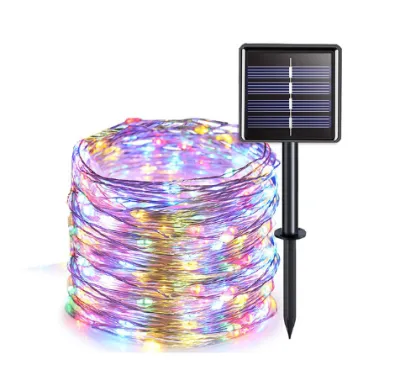
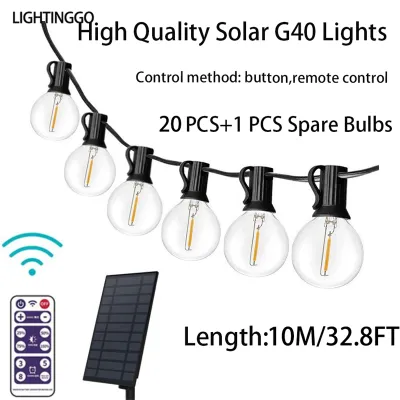
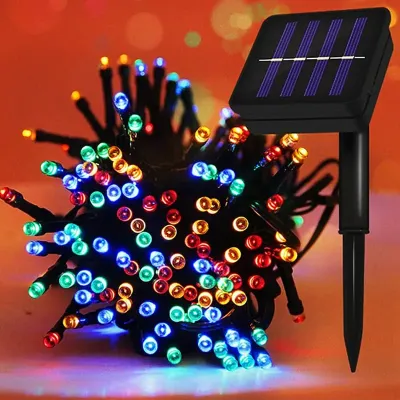
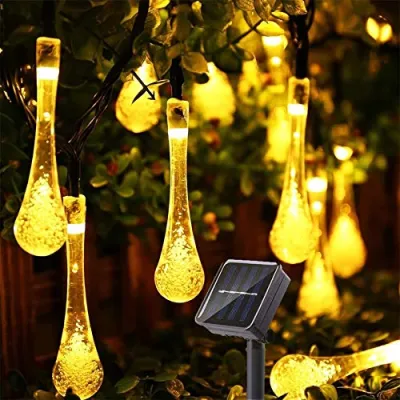
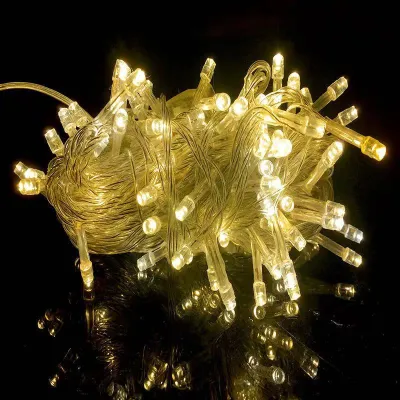
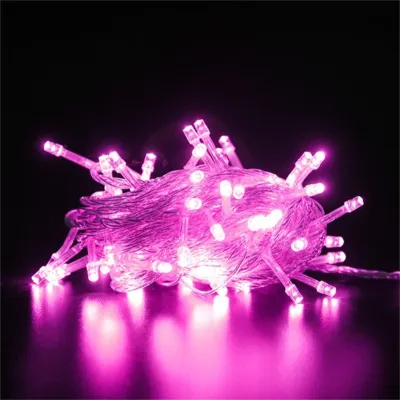
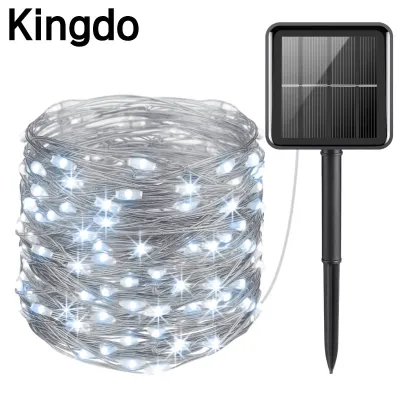
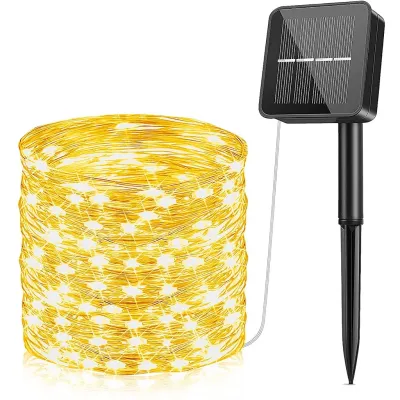
Prices are valid at publication and may change. Please refer to the product page for the latest price.
Bulb count and spacing are equally critical because they directly determine the light density, overall brightness, and visual impact of the string. A 10m string with 10 bulbs spaced 1 meter apart will create a sparse, minimalist glow, whereas a 10m string with 30 or 50 bulbs spaced closely together will provide a much brighter, more continuous line of light. Consider the purpose of your lighting: closely spaced bulbs are excellent for dining areas or pathways where visibility is important, while wider spacing is often preferred for soft, background accent lighting along fences or tree branches.
The type of bulb and the material of its outer casing play a major role in both energy efficiency and physical durability. Modern solar string lights almost exclusively use Light Emitting Diodes (LEDs) due to their low power consumption and long lifespan, but the design of the bulb casing varies. Glass bulbs offer a classic, high-clarity look but are highly susceptible to shattering if knocked by strong winds, falling tree branches, or accidental impacts during installation. For outdoor environments, shatterproof plastic or polycarbonate bulb casings are highly recommended, as they resist cracking, withstand physical shocks, and protect the delicate internal LED components from moisture intrusion.
Assessing Solar Panel and Battery Capacity
The performance of any solar lighting system hinges on the efficiency of its solar panel and the capacity of its internal storage battery. When reviewing product specifications, pay close attention to the type of solar panel included. Monocrystalline solar panels are generally more efficient at converting sunlight into electricity, especially in low-light or overcast conditions, making them highly suitable for regions with frequent cloud cover or rainy seasons. Polycrystalline panels are typically less expensive but have a lower conversion efficiency, meaning they require more surface area and longer exposure to direct, intense sunlight to generate the same amount of power.

Equally important is the battery capacity, which is measured in milliampere-hours (mAh). The battery acts as the reservoir for the energy collected during the day; if the battery capacity is too small, your lights will turn off after only a few hours, even if the solar panel received a full day of sunlight. Look for models that specify their battery chemistry, such as Lithium-ion (Li-ion) or Lithium Iron Phosphate (LiFePO4), which generally offer better longevity, faster charging, and more charge-discharge cycles than older Nickel-Metal Hydride (Ni-MH) batteries. Additionally, check whether the battery compartment is accessible and uses standard, user-replaceable rechargeable cells, as this allows you to extend the lifespan of your light string when the original battery eventually degrades.
Understanding the relationship between expected runtime and charging time is vital for managing your expectations. Manufacturers often advertise runtimes of 8 to 12 hours, but these figures are typically based on ideal laboratory conditions or perfect summer days with maximum solar exposure. In practice, the actual runtime will vary significantly based on seasonal sunlight variations, the angle of the solar panel, and local weather patterns. During rainy or overcast weeks, a solar panel may only receive enough light to charge the battery partially, resulting in a much shorter runtime at night. Selecting a system with a slightly oversized solar panel and battery capacity can help buffer against these inevitable fluctuations in daily sunlight.
Verifying Weather Resistance and Durability
Outdoor lighting must be built to survive the elements, making weather resistance a non-negotiable factor when selecting a 10m solar light string. The standard method for verifying a product’s resistance to water and dust is the Ingress Protection (IP) rating. An IP rating consists of two digits: the first digit (ranging from 0 to 6) indicates protection against solid objects and dust, while the second digit (ranging from 0 to 9) measures protection against liquids. For general outdoor garden use, a minimum rating of IP44 is required to protect against splashing water from any direction. However, if your lights will be fully exposed to heavy tropical downpours, high-pressure garden hoses, or pooling water, look for a higher rating such as IP65 or IP67, which offers superior protection against water jets and temporary immersion.
Beyond water resistance, the physical durability of the cables and connectors determines how long the light string will last in an outdoor environment. Look for heavy-duty, thick-gauge wires insulated with UV-resistant materials like rubber or heavy-duty PVC. Thin, fragile wires can easily degrade under constant exposure to intense tropical sunlight, leading to cracked insulation, short circuits, or safety hazards. The connectors—especially the joint where the light string plugs into the solar panel housing—should feature threaded locking collars and rubber O-ring gaskets to prevent moisture from seeping into the electrical contacts.
Before finalizing your purchase, review the manufacturer’s guidelines regarding operational limits and extreme weather exposure. While high-quality solar strings are designed to live outdoors, extreme weather events such as typhoons, severe gales, or freezing temperatures may exceed their structural limits. Checking the warranty terms can give you a clear indication of the product’s expected durability; manufacturers who offer explicit warranties for outdoor use demonstrate greater confidence in their weatherproofing standards. Knowing these limits helps you decide when it is necessary to temporarily take down and store your lights to protect your investment.
Choosing Lighting Modes and Visual Effects
The visual appeal of your outdoor space is heavily influenced by the color temperature and functional lighting modes of your solar string lights. Color temperature is measured in Kelvin (K) and dictates the “warmth” or “coolness” of the light. Warm white lights (typically between 2200K and 3000K) emit a soft, golden glow that mimics traditional incandescent bulbs, making them ideal for creating a cozy, relaxing, and intimate atmosphere on patios or dining decks. Cool white lights (5000K to 6500K) provide a bright, crisp, bluish-white light that enhances visibility and security, while multicolor (RGB) options allow you to switch between vibrant hues for festive occasions and holidays.
Many 10m solar light strings feature multiple built-in lighting modes, such as steady-on, slow fading, twinkling, flashing, or sequential patterns. While these modes offer decorative versatility, it is highly beneficial to choose a model with a built-in memory function. A memory function ensures that when the solar panel’s dusk-to-dawn sensor automatically turns the lights on at night, they return to your last selected mode rather than resetting to a default flashing pattern. This prevents you from having to manually cycle through the settings every single evening to find your preferred steady-on or ambient mode.
For added convenience, some premium solar light strings include dimmability and remote control features. Dimmable lights allow you to adjust the brightness level to suit different occasions, preserving battery power on overcast days by running the lights at a lower output. When evaluating remote controls, keep in mind that most budget-friendly models rely on Infrared (IR) technology, which requires a direct, unobstructed line-of-sight to the solar panel receiver and has a limited range of a few meters. Radio Frequency (RF) remotes, on the other hand, can operate through walls and over longer distances, though they may require separate batteries that you will need to monitor and replace periodically.
Planning Installation and Safety Boundaries
Proper installation is key to maximizing both the performance and the lifespan of your 10m solar light string. The most critical step is the placement of the solar panel. To charge effectively, the panel must be positioned where it receives direct, unobstructed sunlight for the majority of the day. Avoid placing the panel under the shade of trees, roof eaves, pergolas, or outdoor umbrellas. Additionally, ensure the panel is positioned away from competing nighttime light sources, such as bright streetlights, security floodlights, or indoor window lights; these external light sources can trick the panel’s built-in dusk-to-dawn sensor into thinking it is still daytime, preventing your string lights from turning on automatically.
Secure mounting and careful cable management are essential to prevent physical damage to the light string over time. Most solar panels come with a ground stake for garden beds or a mounting bracket for walls and fences. When hanging the 10m cable, avoid pulling it too taut, as wind movement and temperature changes can place excessive tension on the wires and connectors, leading to internal wire breakage. Use insulated mounting clips, zip ties, or cup hooks to support the weight of the cable at regular intervals, and avoid using sharp metal staples or nails that could pierce the protective outer insulation.
While solar string lights operate on low-voltage direct current (DC) and are generally very safe to handle, you must recognize the boundaries of DIY installation. If your installation plan involves routing cables through permanent building structures, connecting to fixed high-voltage AC wiring, working at significant heights on ladders, or suspending heavy loads over seating areas, prioritize safety. Always isolate the power source before handling any electrical connections, follow the manufacturer’s step-by-step installation instructions carefully, and do not hesitate to consult a qualified professional electrician or structural installer to ensure your setup complies with local safety standards and building codes.
Matching Features to Your Outdoor Space
To get the most value out of your purchase, it is helpful to match the specific features of the solar light string to the unique environmental conditions of your outdoor space. If you are installing the lights in a highly exposed, open area like an uncovered rooftop terrace, a spacious lawn, or a poolside deck, durability should be your top priority. For these environments, select a model with a high waterproof rating (IP65 or higher), heavy-duty rubberized cabling, shatterproof plastic bulbs, and a robust mounting system that can withstand strong winds and intense, direct sunlight without degrading.
Conversely, if your garden or patio is heavily shaded by physical structures or mature trees, a standard all-in-one solar light string may struggle to charge. In these limited-sunlight spaces, look for a model that features a detachable solar panel connected to the light string by a long extension lead wire. This design allows you to mount the lights in your shaded seating area while placing the solar panel several meters away on a sunny roofline or fence top. Additionally, prioritizing a model that includes a USB charging backup port allows you to manually charge the battery indoors via a standard wall charger during prolonged periods of rainy or overcast weather.
Finally, consider whether you need the lights primarily for ambient decoration or for functional pathway task lighting. For a cozy, decorative backyard vibe, a string with lower lumen output, warm white color temperature, and wider bulb spacing will create a relaxing retreat. If you need to illuminate a dark walkway, stairs, or a barbecue area for safety and task visibility, prioritize a light string with higher bulb density, brighter lumen ratings, and a reliable steady-on mode. By analyzing your specific spatial layout and lighting goals, you can select a 10m solar light string that delivers the perfect balance of beauty, utility, and long-term performance.
Frequently Asked Questions (FAQ)
Can I leave my solar light string outside during heavy rain or storms?
Yes, high-quality solar light strings with an IP44 rating or higher are designed to withstand normal rain, wind, and outdoor humidity. However, standard weatherproofing does not protect against extreme conditions such as typhoons, severe flooding, or high-pressure water jets. If a severe storm or typhoon is forecasted in your area, it is highly recommended to temporarily take down the light string and store the solar panel indoors. This simple precaution prevents physical damage from flying debris, falling branches, or water intrusion caused by temporary submersion, helping to preserve your investment for years to come.
Why do my solar lights only stay on for a few hours at night?
If your solar lights are turning off prematurely, the most common cause is insufficient charging during the day. Check the solar panel to ensure it is not shaded by growing foliage, dirt, dust, or bird droppings, which can drastically reduce charging efficiency; cleaning the panel surface periodically with a damp cloth can restore performance. Another common issue is the presence of nearby artificial light sources, such as streetlights, which confuse the dusk-to-dawn sensor. If the panel is clean and well-positioned, the internal rechargeable battery may be reaching the end of its lifespan and failing to hold a charge, in which case you should check if the battery can be replaced.
Can I connect multiple 10m solar light strings together end-to-end?
In most cases, you cannot connect multiple solar light strings end-to-end because the small solar panel and internal battery are specifically calibrated to power only the original 10-meter length. Attempting to daisy-chain multiple strings together can overload the solar panel’s circuitry, drain the battery rapidly, or cause the lights to dim significantly or fail to light up at all. If you need to cover a larger area, the safest and most effective solution is to purchase multiple independent 10m sets and mount their solar panels side-by-side, or specifically look for heavy-duty commercial models that are explicitly labeled by the manufacturer as connectable.
Community discussion
Share your experience or ask a question. Comments are reviewed before publication.