
Choosing a Luffy moon lamp requires balancing aesthetic appeal with practical lighting specifications. These decorative lights feature the iconic silhouette of the beloved anime captain set against a realistic lunar surface, making them a popular choice for fans looking to personalize their living spaces.
To find a lamp that enhances your home, you must evaluate its size, lighting modes, material durability, and power configuration. Whether you want to create a cozy reading nook, add a warm sunset glow to your bedroom, or find an eye-catching accent piece for your living room, understanding these key features ensures you select a high-quality product that fits your lifestyle.
Evaluating Size and Placement for Your Space
When selecting a Luffy moon lamp, the physical dimensions of the device dictate where it can be safely and attractively displayed. These lamps typically range in diameter from a compact 10 centimeters to a substantial 20 centimeters or more. In cozy living spaces, such as urban condominiums or compact bedrooms, a lamp that is too large can easily overcrowd a bedside table or study desk.
Products mentioned in this guide
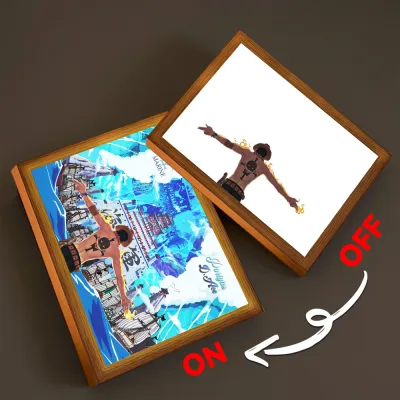

Prices are valid at publication and may change. Please refer to the product page for the latest price.
Conversely, a tiny lamp might fail to make a visual impact when placed on a large bookshelf or entertainment center. Before making a purchase, measure the exact surface area of your intended display spot. Consider not only the spherical lamp itself but also the footprint of its stand, which is often a wooden tripod or a molded plastic base.
A stable setup requires a flat, level surface with enough clearance to prevent the lamp from being accidentally knocked over. If you plan to place the lamp on a high shelf, ensure there is sufficient vertical clearance so the light can disperse evenly without being blocked by the shelf above. The visual weight of the lamp should complement, rather than dominate, your existing decor.
Placement is also heavily influenced by proximity to power sources. For plug-in models, check the length of the included power cord to ensure it reaches your wall outlet without stretching tightly across walkways, which creates a tripping hazard. In tropical environments where open windows are common, position the lamp away from areas prone to sudden rain splashes or high humidity.
Ensuring proper airflow around the lamp is crucial for maintaining the integrity of both the outer shell and the internal electrical components over time. If you have limited wall outlets, a cordless, rechargeable model may offer more placement flexibility, allowing you to position the lamp on floating shelves or central dining tables.
Understanding Lighting Modes and Color Temperatures
The lighting capabilities of a Luffy moon lamp determine its versatility as both a functional light source and an ambient decor piece. Most modern moon lamps utilize light-emitting diodes (LEDs) that can transition between different color temperatures, measured in Kelvin (K). A warm white light, typically around 2700K to 3000K, emits a cozy, gentle glow that is ideal for winding down in the evening or acting as a nightlight.

A cool white light, ranging from 5000K to 6500K, provides a brighter, high-contrast illumination that is better suited for reading or highlighting the intricate details of the lamp’s design. Many enthusiasts seek out these lamps for their ability to project a warm, golden-hour sunset effect. This specific color profile mimics the rich orange and red hues of a natural sunset, making it a popular choice for photography, video backdrops, or creating a relaxing, cinematic atmosphere.
When evaluating a lamp, check if it offers dedicated mood modes or color-changing cycles that allow you to switch between standard lunar white and vibrant sunset tones depending on your mood or the time of day. Dimming functionality is another critical feature to verify. A lamp with adjustable brightness levels allows you to customize the light output to suit different scenarios, from a soft, low-light glow for sleeping to a bright, clear light for daytime display.
Examine the control mechanisms used to adjust these settings. Some lamps feature a simple touch-sensitive metal ring around the charging port, while others utilize a tap-sensitive shell that changes colors when gently tapped. For maximum convenience, look for models that include an infrared remote control, which allows you to adjust the brightness, color temperature, and lighting modes from across the room without disturbing your setup.
Checking Material Quality and Build Durability
The physical construction of a Luffy moon lamp directly affects its visual realism, safety, and longevity. Most high-quality moon lamps are manufactured using 3D printing technology, which allows for the creation of intricate, textured surfaces that mimic real lunar topography, including craters, ridges, and plains. When inspecting a lamp, look for clean, detailed surface printing with minimal visible layer lines.
The silhouette of the character should be seamlessly integrated into the texture, appearing as a clear, high-contrast shadow when the lamp is illuminated from within. The choice of material is highly important for both durability and safety. Polylactic acid (PLA) is a common, biodegradable thermoplastic derived from renewable resources like cornstarch. It offers a beautiful, matte finish that diffuses light softly, but it can become soft or warp if exposed to high temperatures.
Acrylonitrile butadiene styrene (ABS) is a tougher, more impact-resistant alternative that handles heat better. Regardless of the material, verify that the housing has adequate heat dissipation properties. While LEDs generate significantly less heat than traditional incandescent bulbs, an enclosed spherical design can still trap warmth during extended use, especially in warm, tropical climates.
A stable, well-constructed base is essential to protect your investment. Many lamps come with a classic wooden tripod stand that must be assembled. Ensure the wooden pieces fit together snugly without wobbling. Some premium models feature magnetic levitation bases that allow the moon lamp to float and spin in mid-air.
While visually stunning, these levitating models require a highly stable, vibration-free surface and a continuous power connection to maintain their magnetic field. If you have pets or young children, a standard weighted base is often the more practical and secure choice to prevent accidental drops.
Comparing Power Sources and Connectivity
Understanding how your Luffy moon lamp is powered will help you choose a model that fits your daily routine and placement preferences. Lamps generally fall into two categories: rechargeable battery-powered models and continuous USB-powered models. Rechargeable models, typically equipped with internal lithium-ion batteries, offer the ultimate flexibility in terms of placement.
You can place a cordless lamp in the center of a dining table, on a floating shelf, or even use it as a portable lantern without worrying about cable management. However, battery-powered lamps require regular charging. When evaluating these models, check the battery capacity, which is measured in milliampere-hours (mAh).
A larger battery capacity generally translates to longer runtimes between charges, though this also depends on the brightness level you use. Keep in mind that in warm, humid climates, internal batteries can degrade more quickly over time. If you plan to use the lamp as a primary, daily light source for hours at a time, a continuous USB-powered model is often more reliable.
These models plug directly into a standard USB wall adapter, power bank, or computer, ensuring a steady, uninterrupted power supply without the risk of battery depletion. Before purchasing, verify the charging interface and voltage requirements of the lamp. Most modern devices utilize a standard USB-C or micro-USB port.
Ensure that the input voltage matches standard 5V USB outputs to prevent damage to the internal circuitry. If you are interested in smart home integration, some advanced models offer Bluetooth or Wi-Fi connectivity, allowing you to control the lamp via a smartphone application or sync it with smart home assistants. For standard models, a reliable infrared remote control remains the most straightforward and user-friendly option for wireless adjustments.
Building Your Shortlist: Matching Features to Your Needs
To find the right Luffy moon lamp for your home, start by defining your primary use case. If your main goal is content creation or photography, prioritize a lamp with high-intensity sunset modes, excellent color rendering, and a reliable remote control for easy adjustments. If you intend to use the lamp as a nightlight in a child’s bedroom, focus on safety features, such as a durable, impact-resistant ABS shell, a stable wooden base, and a gentle, dimmable warm white light mode.
For a living room accent piece, a larger diameter lamp with detailed 3D printing and a premium stand will make the strongest visual statement. Budget is another key factor to consider when building your shortlist. Basic, compact 3D-printed moon lamps with simple touch controls typically range from ₱400 to ₱800.
Mid-range models that offer multiple color temperatures, remote controls, and larger diameters generally cost between ₱1,000 and ₱1,800. If you are looking for premium features, such as magnetic levitation, smart app connectivity, or highly detailed custom engraving, expect to invest ₱2,500 or more. Setting a clear budget helps you narrow down your options and avoid paying for advanced features you may not need.
When shopping on online marketplaces, take the time to read customer reviews and look at user-uploaded photos to verify the actual light quality and build finish. Pay close attention to feedback regarding battery life, remote control responsiveness, and packaging quality, as delicate 3D-printed shells can sometimes be damaged during transit.
Always verify the seller’s return policies and warranty terms to ensure you can easily exchange the product if it arrives with defects. Finally, check for standard electrical safety certifications on the product listing to guarantee the lamp has undergone proper quality control testing.
Frequently Asked Questions (FAQ)
Can I leave a Luffy moon lamp on overnight?
Whether you can safely leave a Luffy moon lamp on overnight depends largely on its power source and build quality. If the lamp is powered by a high-quality, continuous USB connection and uses low-wattage LEDs, it can generally be left on for extended periods, provided there is adequate ventilation around the device to prevent heat buildup.
However, if the lamp relies on an internal rechargeable battery, leaving it plugged in and turned on overnight can accelerate battery degradation over time. Always consult the manufacturer’s guidelines regarding continuous operation limits, and avoid placing the lamp near flammable materials or in enclosed spaces with poor airflow.
How do I clean the textured surface without damaging it?
Cleaning the textured, 3D-printed surface of a Luffy moon lamp requires a gentle touch to avoid damaging the delicate details and material finish. To remove everyday dust and lint, use a dry, clean microfiber cloth to wipe the surface gently.
For slightly stubborn dirt, you can lightly dampen the microfiber cloth with plain water, ensuring it is not dripping wet. Avoid using harsh chemical cleaners, alcohol, or abrasive scrubbing pads, as these can degrade the plastic shell and fade the printed character details. Most importantly, ensure that no moisture enters the charging port, power switch, or any electrical seams to prevent short circuits and internal damage.
Community discussion
Share your experience or ask a question. Comments are reviewed before publication.