
Selecting the perfect meteor shower rain light for your garden or patio requires a careful balance of aesthetic appeal, structural durability, and electrical safety. These cascading lights, which mimic the natural beauty of falling rain or shooting stars, can instantly transform an ordinary outdoor space into a captivating evening retreat. However, because these fixtures are fully exposed to the elements, making a hasty purchase can lead to premature product failure or electrical hazards. To ensure your investment lasts through changing seasons, you must evaluate key technical specifications, material compositions, and installation requirements before making a decision.
Understand the Core Features of Meteor Shower Lights
When shopping for meteor shower rain lights, the physical construction of the light tubes is your first line of defense against the elements. Most manufacturers use either polycarbonate or acrylic to house the delicate LED strips. Polycarbonate is highly recommended for outdoor use due to its excellent impact resistance and ability to withstand high winds without cracking. Additionally, high-quality polycarbonate is treated to resist ultraviolet (UV) radiation, preventing the tubes from turning yellow and cloudy over time under intense sunlight. Acrylic, while offering excellent initial clarity, tends to become brittle and discolor when exposed to prolonged solar radiation, which ultimately dims the light output.
Inside each tube, the arrangement of the LED chips determines the quality of the visual effect. Look for tubes that feature double-sided printed circuit boards (PCBs). Double-sided boards have LED chips mounted on both the front and back, ensuring a full 360-degree viewing angle so the lights look equally brilliant from any spot in your garden. Single-sided boards, by contrast, project light in only one direction, leaving dark spots when the tubes twist or sway in the wind.
Products mentioned in this guide
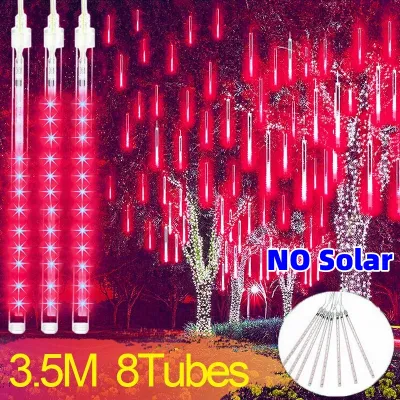
![[COD]Solar/Plug in Meteor Shower Rain Lights LED Outdoor Waterproof Icicle Fairy String Lights for Home Garden Christmas Raya Decoration](https://img.lazcdn.com/g/p/fd49d32f1a873f0ead753f71865dcfa9.jpg_400x400q80.jpg_.webp)
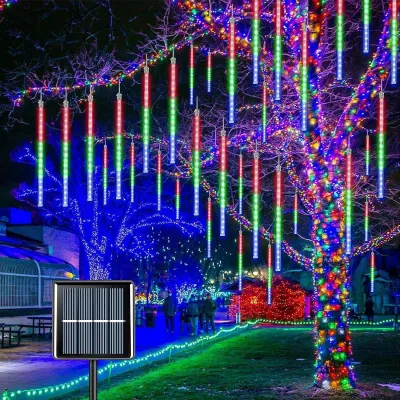
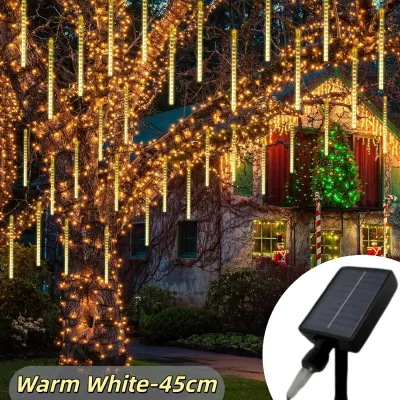
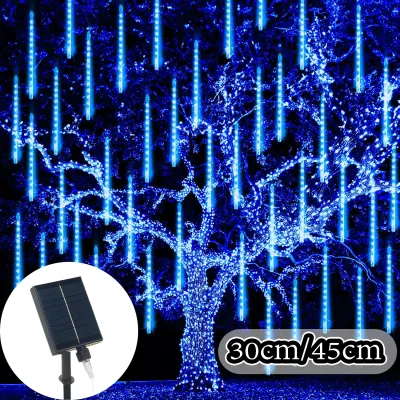
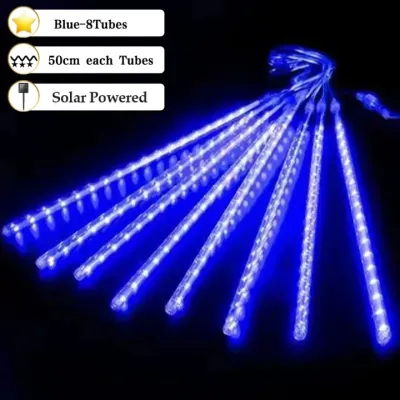
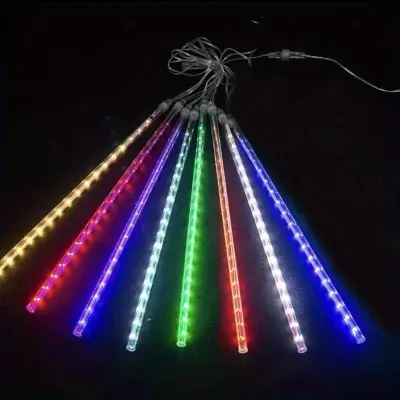
Prices are valid at publication and may change. Please refer to the product page for the latest price.
The motion of the falling light is controlled by an internal microchip, and this effect generally falls into two categories: synchronous and asynchronous. Synchronous lights feature tubes that all cascade at the exact same time. While this can create a highly structured display, it can sometimes feel repetitive or mechanical. Asynchronous lights utilize individual microchips in each tube, allowing them to fall at slightly different speeds and intervals. This creates a randomized, natural dripping effect that closely mimics real rainfall or a passing meteor shower, offering a more organic and soothing ambiance for your patio.
Verify Weather Resistance and Electrical Safety
Outdoor lighting must be engineered to handle moisture, dust, and temperature fluctuations. The standard method for verifying this durability is the Ingress Protection (IP) rating. For standard garden installations where the lights are partially sheltered by tree canopies or patio roofs, an IP65 rating is typically sufficient, meaning the product is protected against dust ingress and low-pressure water jets. However, if you plan to install the lights in fully exposed areas subject to heavy tropical downpours, look for an IP67 rating, which ensures the tubes can withstand temporary submersion in water without failing.

Beyond the tubes themselves, you must inspect the waterproofing of the entire electrical chain. The connection points between individual light strings are common entry points for moisture. High-quality outdoor lights feature screw-together connectors equipped with internal rubber gaskets or O-rings that seal out water when tightened. The power plug, controller box, and AC adapter are often the most vulnerable components. Unless these specific parts are explicitly rated for outdoor use, they must be housed inside a dedicated weatherproof electrical enclosure or plugged into an indoor outlet.
Electrical safety should always be a top priority when dealing with outdoor wiring. Meteor shower lights are available in both high-voltage (direct mains power, which is 220V in the Philippines) and low-voltage (typically 12V or 24V via a step-down transformer) configurations. Low-voltage systems are inherently safer for residential gardens because a damaged cable is far less likely to cause a severe electrical shock to humans or pets. Always verify that the power adapter carries recognized electrical safety certifications and is plugged into a socket protected by a Ground Fault Circuit Interrupter (GFCI) or a residual current device (RCD).
Select the Appropriate Power Source and Cable Length
Choosing how to power your meteor shower lights depends on your garden’s layout and your daily usage preferences. Plug-in models connected to a mains outlet provide the most consistent brightness and can run indefinitely without fading. However, they require proximity to an electrical outlet, which may limit your placement options or necessitate the use of heavy-duty, outdoor-rated extension cords.
Solar-powered meteor shower lights offer unmatched installation flexibility, allowing you to hang lights on distant trees or garden perimeters without running long cables across your lawn. The trade-off is their dependence on weather conditions. In tropical climates, solar panels must be positioned to receive direct, unobstructed sunlight for at least six to eight hours daily. Lush garden foliage can easily shade the panels, drastically reducing their charging capacity. When choosing solar, look for systems with adjustable panel mounts and larger battery capacities (measured in mAh) to ensure they can store enough energy to power the lights through the evening.
Another critical specification is the length of the lead wire—the portion of the cable between the power plug or solar panel and the first light tube. A lead wire that is too short forces you to place the first light tube awkwardly close to the ground or the power source. Measure the distance from your planned outlet or solar panel mounting spot to the first branch or eave where the lights will hang, and ensure the product’s lead wire is long enough to cover this distance without tension.
Determine the Ideal Tube Length, Count, and Color Temperature
The physical dimensions of your meteor shower lights should match the scale of your outdoor space. Light tubes are commonly available in lengths of 30 cm, 50 cm, and 80 cm. Shorter 30 cm tubes are ideal for low-hanging structures, such as patio umbrellas, pergola beams, or smaller garden shrubs, where a longer tube would hang too low and create a physical obstruction. Conversely, 50 cm and 80 cm tubes are well suited for high suspensions, such as the branches of mature trees or the eaves of a two-story home, where the longer cascading line is easier to see from a distance.
The number of tubes on a single string also affects the overall visual impact. Most standard sets include 8 or 10 tubes spaced roughly 30 cm to 40 cm apart. If you have a large tree canopy to decorate, a single string may look sparse. You will need to calculate how many strings are required to achieve a full, balanced look. Ensure you check the spacing between the tubes on the product specifications to plan how they will drape across your branches.
Color temperature plays a significant role in setting the mood of your outdoor area. Warm white lights (ranging from 2700K to 3000K) emit a soft, golden glow that creates a cozy, intimate, and welcoming atmosphere, making them perfect for dining patios and relaxed garden seating areas. Cool white lights (6000K to 6500K) produce a bright, crisp, blue-toned light that mimics the look of falling ice or bright stars, which works exceptionally well in modern landscape designs. Multicolor (RGB) strings offer vibrant, changing colors that are ideal for festive celebrations, holidays, and lively outdoor parties.
Plan Your Installation and Mounting Strategy
A successful installation requires identifying secure anchor points that can support the weight of the lights, especially during windy conditions. Sturdy tree branches, wooden pergolas, and metal roof eaves are excellent mounting surfaces. Avoid attaching lights to thin, dead branches that could snap, or to active utility lines, which presents a severe safety hazard.
When securing the lights, avoid using metal nails, staples, or bare wire ties, as these can easily pinch or cut through the protective plastic insulation of the light cables, leading to short circuits or electrical shocks. Instead, opt for UV-resistant nylon zip ties, padded S-hooks, or specialized outdoor cable clips. These accessories hold the cables securely in place without damaging the protective sheathing, and they can withstand prolonged exposure to sun and rain without degrading.
Safety must remain your primary concern throughout the installation process. If you are hanging lights at a height, always use a sturdy, level ladder and have a helper secure the base. Ensure the entire lighting system is completely disconnected from the power source before you begin mounting or adjusting the cables. Finally, route all ground-level cables along garden borders or under mulch to prevent them from becoming tripping hazards or getting damaged by lawnmowers and edge trimmers.
Build Your Pre-Purchase Verification Checklist
Before finalizing your purchase on any online marketplace, take a few minutes to run through this essential verification checklist to ensure the lights meet your specific needs:
- IP Rating: Confirm the lights are rated at least IP65 for sheltered outdoor areas, or IP67 for fully exposed locations.
- Voltage and Certification: Verify that the power adapter is compatible with your local voltage (220V in the Philippines) and carries recognized electrical safety marks.
- Total Cable Length: Double-check that the lead wire is long enough to reach your power source, and that the total length of the light string fits your designated hanging area.
- Package Contents: Ensure the package includes all necessary components, such as the power adapter, controller, and any specified mounting hardware.
- Warranty and Returns: Review the retailer's return policy and warranty terms specifically for outdoor electronics, protecting you in case of transit damage or early defects.
Frequently Asked Questions (FAQ)
Can I connect multiple meteor shower light strings together?
Yes, many meteor shower light strings are designed with end-to-end male and female connectors, allowing you to daisy-chain multiple sets together. However, you must always check the manufacturer’s specifications for the maximum number of connectable strings, which is typically limited to 3 or 5 sets. Exceeding this limit can overload the primary power adapter, leading to dimming, flickering, or permanent damage to the circuit. Always ensure that all connection joints are screwed together tightly and wrapped with waterproof electrical tape for added protection.
How do I clean and store meteor shower lights during the off-season?
Proper maintenance and storage can significantly extend the lifespan of your lights. To clean them, unplug the system and gently wipe down the plastic tubes with a soft, damp microfiber cloth to remove accumulated dust, dirt, and water spots. Allow the entire string to dry completely in a shaded area before packing them away. When storing, coil the cables loosely in a circular pattern rather than wrapping them tightly around your hand, which can kink or break the internal copper wires. Store the lights in a sturdy, sealed container in a cool, dry place to protect them from moisture and pests.
Will solar-powered meteor shower lights work during the rainy season?
Solar-powered lights will continue to charge on cloudy or rainy days, but their efficiency will be significantly reduced due to the lack of direct sunlight. During prolonged periods of overcast weather, the internal battery may not fully charge, resulting in shorter runtimes or dimmer light output in the evening. If you require consistent, bright, and reliable illumination throughout the wet season, it is highly recommended to opt for a plug-in model connected to an outdoor-rated outlet, or to choose a solar model that offers an alternative USB charging option.
Community discussion
Share your experience or ask a question. Comments are reviewed before publication.