
Decorating your home’s exterior for the holiday season brings a warm, festive glow to the neighborhood, but traditional plug-in displays can lead to a substantial spike in your monthly electricity bill. Transitioning to solar-powered outdoor decorations offers an eco-friendly, cost-effective alternative that draws renewable energy directly from the sun. However, selecting the right set of lights requires looking beyond simple aesthetics to evaluate technical specifications that dictate how well the system will perform in challenging outdoor environments.
When shopping for a solar xmas lights outdoor waterproof setup, you must prioritize durability, energy efficiency, and reliable power storage. The outdoor environment presents unique challenges, particularly in tropical climates like the Philippines, where high humidity, intense heat, and sudden heavy downpours can quickly compromise poorly constructed electronics. By understanding how to evaluate ingress protection (IP) ratings, solar panel technologies, battery capacities, and physical build quality, you can select a lighting system that remains bright throughout the festive season and survives to be used for years to come.
Quick Guide: Essential Specs for Outdoor Solar Lights
Before diving into design options, establishing a baseline of technical requirements will help you filter out low-quality products that are prone to early failure. Outdoor solar Christmas lights are self-contained electrical systems consisting of a solar photovoltaic panel, a rechargeable battery pack, a charge controller, and the LED light string itself. Because these components are exposed to the elements 24 hours a day, verifying their individual specifications on the manufacturer’s product label is the most reliable way to ensure long-term performance.
Products mentioned in this guide
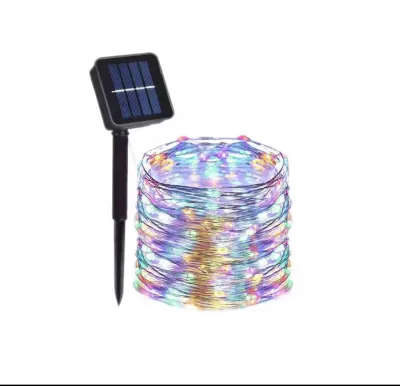
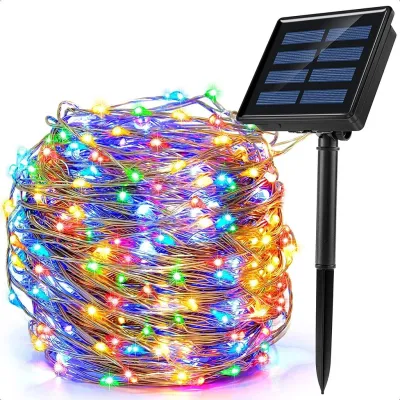
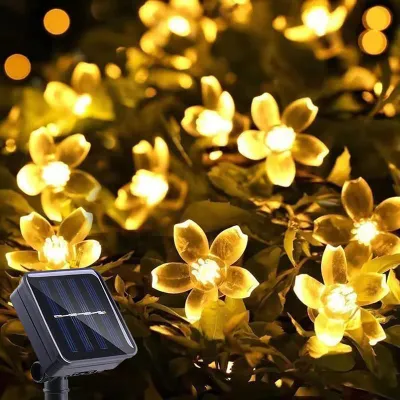
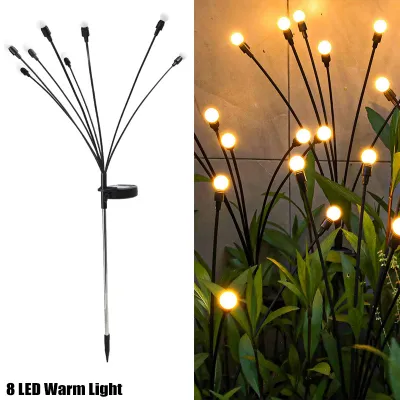
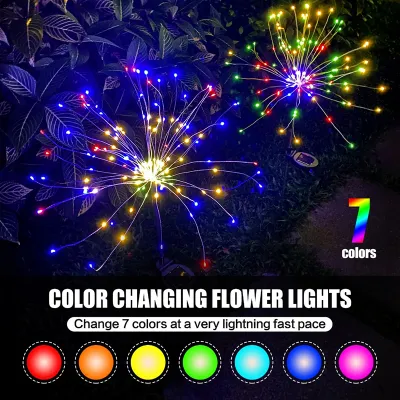
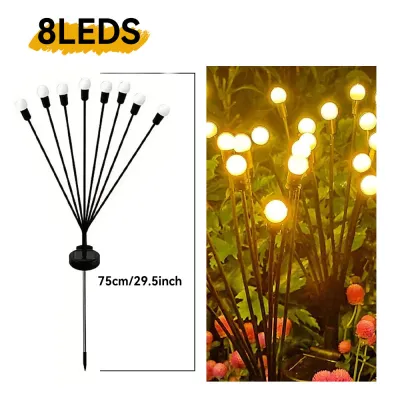
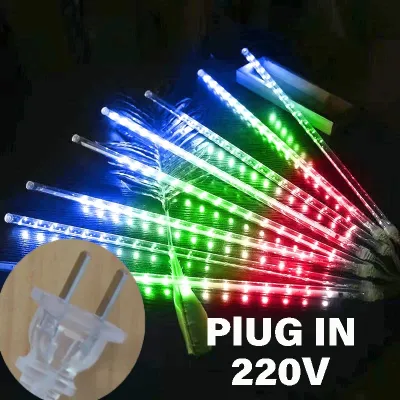
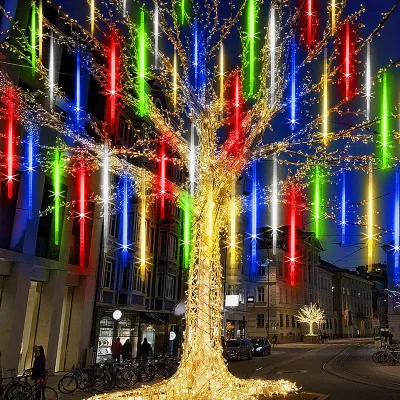
Prices are valid at publication and may change. Please refer to the product page for the latest price.
The primary specifications to verify before making a purchase include:
- Ingress Protection (IP) Rating: Look for a minimum rating of IP44 for sheltered areas, though IP65 or higher is highly recommended for fully exposed outdoor installations to prevent water and dust entry.
- Solar Panel Type: Monocrystalline panels offer the highest conversion efficiency, which is crucial for charging the battery during overcast or rainy days.
- Battery Capacity: Measured in milliampere-hours (mAh), the battery capacity should match the energy demands of the light string to provide at least 6 to 8 hours of continuous nighttime illumination.
- Voltage and Safety Certifications: Ensure the product lists its operating voltage (typically low-voltage DC, such as 1.2V, 3.2V, or 3.7V) and carries recognized electrical safety certifications to verify the quality of the internal wiring and control circuitry.
- Lead Cable Length: The distance between the solar panel stake and the first LED bulb must be long enough to allow optimal panel placement in direct sunlight while the lights are hung in your desired decorative spot.
Many budget-friendly products on online marketplaces are marketed with generic terms like “heavy-duty waterproof,” but these claims are often loose marketing terms that do not guarantee actual performance. Checking the official specification sheet or the product packaging for concrete ratings is the only way to confirm that the lights can handle the moisture and debris of an outdoor environment. In the local market, high-quality solar string lights typically range from ₱300 for basic decorative sets to over ₱1,500 for heavy-duty, commercial-grade systems with high-capacity batteries. Because solar string lights operate on low-voltage direct current, they are inherently safer for DIY installations than high-voltage mains-powered alternatives, but their performance remains entirely dependent on the quality of their power collection and storage components.
Understanding Waterproof Ratings for Outdoor Durability
The term “waterproof” is frequently used by manufacturers to describe any product that can survive a light drizzle, but true outdoor durability requires a standardized level of protection. The international standard for measuring this protection is the Ingress Protection (IP) rating system, which consists of the letters “IP” followed by two digits. The first digit represents protection against solid particles like dust and dirt (ranging from 0 to 6), while the second digit indicates protection against liquids (ranging from 0 to 9K).

For outdoor Christmas lights, understanding these digits is essential for matching the product to your specific installation environment:
- IP44 Rating: This rating indicates protection against solid objects larger than 1 millimeter and protection against water splashing from any direction. Lights with an IP44 rating are suitable for semi-sheltered outdoor areas, such as covered porches, balconies, or under deep roof eaves, where they are protected from direct, driving rain.
- IP65 Rating: This rating signifies that the product is completely dust-tight and can withstand water projected by a nozzle from any direction. IP65-rated lights are highly durable and suitable for fully exposed outdoor areas, including tree branches, garden fences, and open lawns, where they will face heavy tropical downpours and high winds.
- IP67 and IP68 Ratings: These ratings represent protection against temporary and continuous immersion in water, respectively. While rarely necessary for standard decorative string lights, these ratings are crucial if you plan to run lights along the ground where water tends to pool or near water features like garden ponds.
It is common for manufacturers to design solar light sets with split IP ratings, where the solar panel and its integrated control box have a higher rating (such as IP65) than the light string itself (which might only be IP44). This design distinction is practical because the solar panel must be placed in an open, exposed area to capture maximum sunlight, while the light string might be partially shielded by foliage or building structures. However, you should always check the manufacturer’s specification sheet to verify the exact rating of both components to avoid premature failure caused by water leaking into the battery compartment or the LED sockets.
It is also important to remember that “waterproof” is not synonymous with “submersible.” Unless a product is explicitly certified with an IP67 or IP68 rating, you must avoid installing string lights in low-lying garden areas, gutters, or depressions where water can accumulate and submerge the wire or connections. If water enters the light sockets or the control box, it can cause short circuits, accelerate corrosion of the copper wiring, and permanently damage the rechargeable battery.
Matching Solar Panels and Batteries to Your Nighttime Needs
The performance of outdoor solar Christmas lights depends entirely on the balance between the energy collected during the day and the energy consumed at night. This balance is determined by the efficiency of the solar panel and the capacity of the integrated rechargeable battery. Understanding the differences between these components allows you to choose a system that stays bright throughout your evening celebrations, even during periods of less-than-ideal weather.
Solar panels used in consumer decorative lighting generally fall into two categories:
- Monocrystalline Solar Panels: These panels are made from a single, high-purity silicon crystal structure, recognizable by their dark, uniform appearance and cut corners. They offer the highest energy conversion efficiency (typically between 15% and 22%), meaning they can generate more electricity per square inch of surface area. This efficiency makes them the superior choice for regions with frequent cloud cover or shorter daylight hours, as they maximize energy collection in limited sunlight.
- Polycrystalline Solar Panels: Constructed from multiple silicon fragments melted together, these panels have a speckled blue appearance. They are less expensive to manufacture but have a lower conversion efficiency (usually between 12% and 16%). While suitable for areas that receive consistent, intense daily sunlight, they may struggle to fully charge the battery during overcast or rainy seasons.
The energy generated by the solar panel is stored in a rechargeable battery housed within the control box. The two most common battery chemistries found in solar string lights are Nickel-Metal Hydride (NiMH) and Lithium-ion (Li-ion). NiMH batteries are common in budget-friendly models, operating at a lower voltage (typically 1.2V) and performing reliably in moderate temperatures, though they have a lower energy density. Li-ion batteries (often 3.2V or 3.7V) offer higher energy density, faster charging times, and a longer overall lifespan, making them ideal for powering longer light strings or brighter LEDs.
Battery capacity is measured in milliampere-hours (mAh), which represents the amount of electrical charge the battery can store. A higher mAh rating means the battery can power the lights for a longer duration, provided the solar panel is large and efficient enough to fully charge it during the day. For example, a 100-LED string light set might require a battery capacity of at least 1200mAh to run for 8 hours on a steady-on setting, whereas a larger 200-LED set might require 2000mAh or more.
To ensure practical usability, always check the physical layout of the light set, specifically the lead wire length. The lead wire is the unlit segment of cable extending from the solar panel to the first LED bulb. A generous lead wire length (ideally 2 meters or more) gives you the flexibility to mount or stake the solar panel in an open, unshaded area of your yard where it can receive direct sunlight, while routing the actual decorative lights into shaded porches, under trees, or along covered walkways.
Additionally, verify that the light set includes an integrated auto on/off dusk-to-dawn sensor. This sensor detects ambient light levels, automatically switching the LEDs off at sunrise to initiate charging and turning them on at sunset to display your decorations. This automation ensures that no stored battery power is wasted during daylight hours, maximizing the nighttime runtime of your holiday display.
Selecting Light Styles, Colors, and Illumination Modes
Once you have verified the technical and power specifications, you can focus on the aesthetic design of your outdoor holiday lighting. The style, color temperature, and operational modes of the lights should be chosen to complement your home’s architecture and the surrounding landscape. Because these visual elements are highly subjective, understanding the practical applications of each style will help you create a cohesive and appealing display.
Consider how different light styles fit specific areas of your property:
- Fairy Lights: These consist of tiny LEDs embedded along a thin, flexible copper or silver wire. Their lightweight and pliable nature makes them perfect for wrapping tightly around tree trunks, weaving through delicate garden shrubs, or creating a subtle, glowing canopy over outdoor dining tables.
- Globe String Lights: Featuring larger, rounded plastic bulb covers, globe lights provide a more prominent visual presence. They are ideal for hanging in open air between patio posts, draping along fences, or defining the borders of an outdoor entertainment area.
- Icicle Lights: Designed with multiple short vertical drops of varying lengths, icicle lights mimic dripping ice. They are best suited for mounting along rooflines, gutters, porch railings, or window frames to create a classic cascading holiday effect.
- Net Lights: These lights are pre-woven into a grid-like mesh pattern. They are designed specifically for draping over manicured hedges, bushes, or low garden walls, allowing you to achieve uniform light distribution in a fraction of the time it would take to wrap individual strands.
Color temperature is another critical design choice that shapes the atmosphere of your outdoor space. Warm white lights (typically 2700K to 3000K) emit a soft, golden glow that evokes a cozy, traditional, and welcoming ambiance. Cool white lights (5000K to 6500K) produce a bright, crisp, bluish-white light that delivers a modern, high-visibility look. Multicolor strings feature a vibrant mix of red, green, blue, and yellow bulbs, adding a playful, festive, and energetic feel to your holiday decorations. These aesthetic choices should be treated as conditional preferences based on your design goals rather than universal measures of performance.
Most modern solar light controllers offer multiple illumination modes, such as steady on, slow fade, twinkle, chasing, and rapid flash. When evaluating these options, check if the controller features an integrated memory function. Without a memory function, the solar light controller will reset to its default setting (which is often a chaotic cycle of all modes) every time the dusk-to-dawn sensor turns the system off and on again. A memory function ensures that your preferred mode remains active night after night without requiring manual adjustment.
Finally, carefully calculate the total length of the light string and the spacing between individual bulbs. For large-scale decorating projects, such as wrapping a mature tree or outlining a long fence line, you must determine how many individual solar light sets are required. Unlike traditional plug-in lights, solar light sets cannot be daisy-chained together end-to-end unless the manufacturer has specifically engineered the system with an oversized solar panel and a heavy-duty battery to handle the increased electrical load. Attempting to connect extra light strands to a standard solar panel will overload the controller, resulting in extremely dim output or a complete failure to illuminate.
Safe Installation and Routine Maintenance Guidelines
Proper installation and regular maintenance are vital to protecting your investment and ensuring that your solar Christmas lights operate safely and efficiently throughout the holiday season. Because these lights are installed outdoors and subjected to environmental wear, following established safety protocols during setup will prevent electrical issues and physical damage to the equipment.
When setting up your solar lights, adhere to these key installation practices:
- Solar Panel Placement: Place the solar panel in a location that receives unobstructed, direct sunlight for at least 6 to 8 hours daily. Avoid areas shaded by trees, roof overhangs, or walls during peak daylight hours. The panel should be angled upward (typically between 30 and 45 degrees) to maximize solar exposure.
- Securing the Wires: Use UV-resistant plastic zip ties, insulated cable clips, or specialized outdoor light hangers to secure the light strings to trees, fences, or gutters. Never use metal staples, nails, or tacks, as these can easily pinch or pierce the wire's protective insulation, exposing the copper conductors to moisture and causing short circuits.
- Avoiding Tension and Sharp Bends: Allow a small amount of slack in the light string during installation to accommodate natural wind movement and thermal expansion. Avoid bending the wires at sharp angles, particularly where the wire enters the LED sockets or the solar panel control box, as this can fatigue the metal conductors and cause internal wire breaks.
Installing lights on high structures like rooflines, gutters, or tall trees introduces physical risks. Always use a sturdy, slip-resistant ladder placed on flat, stable ground, and have a helper secure the base of the ladder at all times. If your installation requires working near main electrical service lines, mounting lights on complex structural elements, or executing permanent hardwired electrical connections, stop immediately and consult a qualified professional electrician. Always isolate the power to any nearby existing electrical fixtures before starting your installation to eliminate the risk of accidental shock.
Once installed, routine maintenance will keep your solar lights operating at peak efficiency. Dust, dirt, pollen, and bird droppings can accumulate on the surface of the solar panel, significantly reducing its ability to absorb sunlight and charge the battery. Periodically wipe the solar panel cover with a soft, damp microfiber cloth. Avoid using abrasive scrubbing pads, steel wool, or harsh chemical cleaners, as these can scratch or cloud the protective plastic or glass, permanently reducing the panel’s light transmission.
Before hanging your lights each year, inspect the entire length of the string for signs of wear, such as frayed insulation, exposed wires, or cracked bulb covers. If you discover any damage that compromises the moisture barrier, discard the set or replace the damaged section if the manufacturer provides compatible replacement parts. For off-season storage, clean the light string and solar panel thoroughly, allowing them to dry completely in a shaded area. If the battery compartment is accessible, remove the rechargeable batteries before storing the unit in a cool, dry place; this prevents chemical leakage and terminal corrosion during months of storage in hot, humid climates.
Frequently Asked Questions (FAQ)
Do solar Christmas lights work on cloudy or rainy days?
Yes, solar panels can still collect energy on cloudy or rainy days, but their efficiency is significantly reduced. Because cloud cover diffuses and blocks direct sunlight, the solar panel will generate less electricity, resulting in a partially charged battery and a shorter nighttime runtime. If you live in an area prone to frequent overcast weather or heavy rains during the holiday season, look for solar light models equipped with high-efficiency monocrystalline panels and larger battery capacities (measured in mAh) to maximize energy collection and storage under limited light conditions.
Can I replace the batteries in solar string lights?
In many mid-range and premium solar string lights, the rechargeable batteries are user-replaceable and housed in an accessible compartment secured by screws and a rubber gasket. These systems typically use standard rechargeable NiMH (AA or AAA) or Li-ion (18650 or 32700) batteries, which can be easily swapped out when they no longer hold a charge. However, some budget-friendly models feature completely sealed control boxes with non-replaceable batteries. Before purchasing, check the manufacturer’s product specifications or battery compartment design if you want the ability to replace the batteries and extend the lifespan of your light set.
How long do outdoor solar Christmas lights typically last?
The overall lifespan of outdoor solar Christmas lights is determined by the durability of their individual components. The LED bulbs themselves are highly durable and can easily last for tens of thousands of hours of operation. However, the rechargeable batteries naturally degrade over time, typically requiring replacement after 1 to 2 years of regular charge-and-discharge cycles. The plastic housing of the solar panel and control box may also degrade or become brittle after prolonged exposure to intense UV radiation and tropical heat. Performing routine maintenance, cleaning the solar panel regularly, and storing the system properly during the off-season will significantly extend the usable life of your solar lights.
Community discussion
Share your experience or ask a question. Comments are reviewed before publication.