
Choosing the right reading light is a balance between spatial limits, personal habits, and room layout. While traditional desk lamps and floor lamps provide excellent ambient illumination, they require a dedicated physical footprint. A clip on lamp light offers a highly targeted, space-saving alternative that attaches directly to furniture, headboards, or shelves. This makes it an ideal choice for specific living situations where flexibility and focused light are the primary requirements.
You should choose a clip-on lamp if you are dealing with limited surface area, live in a rental property where drilling is prohibited, or share a bedroom and need to read without disturbing others. Conversely, if you require broad, room-filling light or have fragile furniture surfaces, a traditional freestanding lamp remains the safer and more effective option. Understanding these distinct scenarios helps you select the lighting setup that best matches your daily routine.
Maximizing Space: Beds, Bunks, and Compact Desks
In compact living environments, such as studio apartments, micro-condos, or shared boarding houses, floor and table space are at a premium. A standard bedside table lamp requires a flat, stable surface, which often means sacrificing space on a nightstand that could otherwise hold a phone, a glass of water, or books. A clip-on lamp completely bypasses this requirement by utilizing vertical or edge space that would otherwise go unused.
Products mentioned in this guide
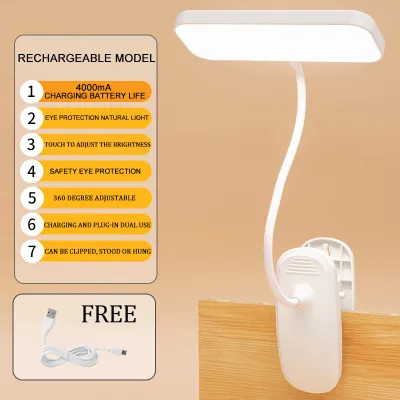
![[Ready Stock+COD] Portable Clip Desk Lamp Eyes Protection Clamp Clip Light Bendable USB Reading Lamp Desk Bedroom](https://img.lazcdn.com/g/p/f8d0e877c767af668a5f3063d7c72454.jpg_400x400q80.jpg_.webp)
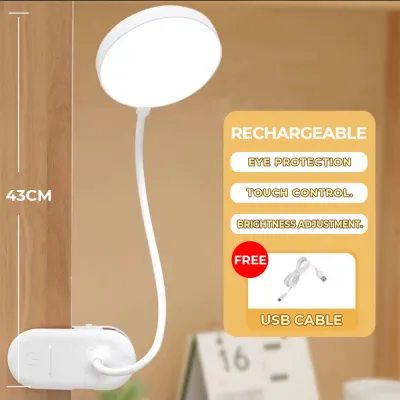
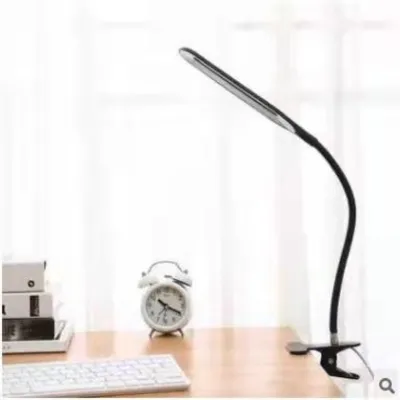
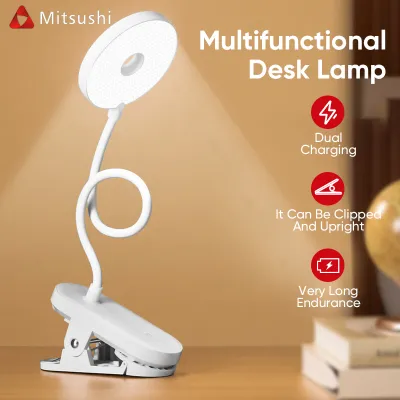
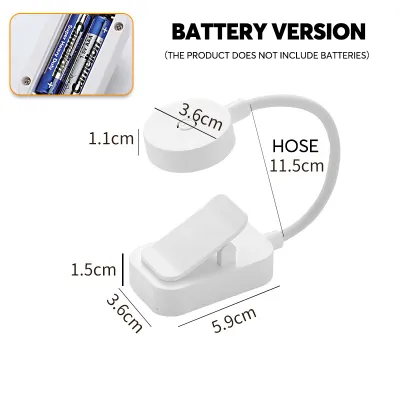
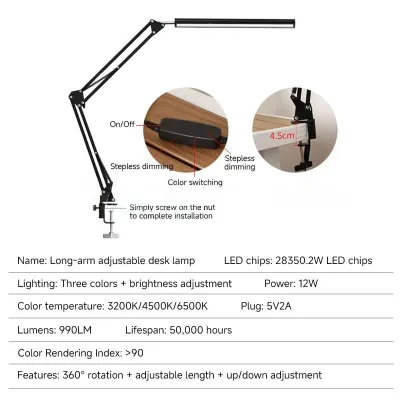
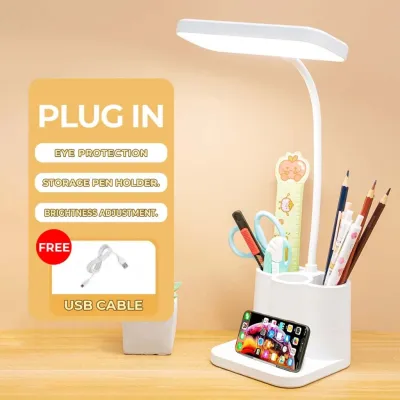
Prices are valid at publication and may change. Please refer to the product page for the latest price.
Bunk beds and loft beds present a unique spatial challenge where traditional lamps are virtually unusable. There is rarely room for a bedside table next to a top bunk, and floor lamps cannot safely reach the necessary height without risking instability. Clamping a dedicated reading light directly onto the bed frame or guardrail provides a direct, accessible light source without requiring any floor or table space.
Before choosing this setup, it is essential to evaluate the physical structure of your furniture. Most clip-on lamps are designed to grip flat surfaces, but bed frames and shelves vary widely in thickness and material. You must measure the thickness of your headboard or shelf edge to ensure it falls within the clamp’s maximum opening capacity, preventing the lamp from slipping or falling.
Additionally, consider the material of the attachment point. Metal frame beds and solid wood headboards provide excellent stability for heavy-duty clamps. However, softer materials or veneered particle board can scratch or dent under high clamping pressure. Looking for clamps equipped with thick rubber or silicone padding helps protect your furniture while maintaining a secure, non-slip grip.
Renters and Dorms: Damage-Free and Portable Lighting
For students living in university dormitories or tenants renting apartments, making permanent modifications to a room is rarely an option. Landlords frequently prohibit drilling holes into walls, which rules out the installation of elegant, space-saving wall sconces. A clip-on lamp provides the targeted utility of a wall-mounted reading light without requiring screws, anchors, or structural damage.

This temporary installation method makes clip-on lights highly portable and adaptable. If you rearrange your room, move to a new apartment, or transition between a dorm and a family home, your light source can be packed in seconds and reinstalled elsewhere immediately. There is no need to patch drywall, repaint, or worry about security deposit deductions when it is time to move.
Power supply versatility is another major benefit for temporary living spaces, which often suffer from poorly positioned or insufficient electrical outlets. Clip-on lamps are widely available in three main power configurations, each serving different spatial needs:
- Direct AC Plug-In: Best for permanent placement near a wall outlet, ensuring consistent, maximum brightness without worrying about battery life.
- USB-Powered: Highly versatile, allowing you to power the lamp directly from a laptop, a desktop monitor, or a standard phone charger block.
- Rechargeable Battery: Ideal for areas completely lacking nearby outlets, and highly practical in regions prone to seasonal power interruptions or brownouts.
Choosing the right power source depends heavily on how close your bed or desk is to an outlet. If you opt for a rechargeable model, verify the battery capacity and estimated runtime to ensure it can support your reading habits between charges.
Shared Bedrooms: Focused Light Without Disturbing Others
Sharing a sleeping space with a partner, sibling, or roommate requires a careful approach to nighttime lighting. A standard desk lamp or bedside lamp diffuses light broadly across the room, which can easily disrupt someone trying to sleep nearby. Clip-on lamps excel in these shared environments because they provide highly directional, localized illumination.
Most high-quality clip-on lamps feature fully adjustable goosenecks or multi-axis swivels. This allows you to position the light source mere inches from your book or device, pointing the beam downward at a sharp angle. By keeping the light source close to the target, you minimize light spill and prevent glare from reflecting across the room.
Furthermore, many modern clip-on models utilize focused optical lenses or deep-set hoods that restrict the light beam to a narrow cone. This design ensures that the illumination remains concentrated strictly on your reading material. Your roommate or partner can sleep in a dark environment while you enjoy clear, high-contrast visibility for reading or studying late into the night.
When to Skip the Clip-On Lamp: Limitations and Safety Checks
While clip-on lamps are highly versatile, they are not suitable for every environment or furniture piece. The most significant limitation of a clip-on light is its reliance on physical clamping force and structural balance. If a lamp is too heavy for its clamp, or if the surface it is attached to is unstable, the entire unit can slip, fall, and potentially cause injury or damage.
Avoid attaching clip-on lamps to thin glass shelves, acrylic panels, or fragile antique furniture. The concentrated pressure exerted by a strong spring-loaded clamp can easily crack glass or leave deep, permanent indentations in soft, aged wood. If your only available mounting surface is delicate, a freestanding desk lamp or a floor lamp is a much safer alternative.
Thermal safety is another critical consideration, particularly when using lamps in close proximity to bedding, curtains, or enclosed bunk spaces. Traditional incandescent or halogen bulbs generate substantial heat during operation. If a hot bulb comes into direct contact with loose sheets, pillows, or fabric headboards, it poses a severe fire hazard.
To mitigate these risks, always prioritize low-heat LED models and follow these safety guidelines:
- Verify Clearances: Ensure the lamp head is positioned away from curtains, bedding, and flammable materials.
- Check Clamp Stability: Test the grip by gently tugging the lamp after installation; if it wobbles or slides, relocate it to a thicker, more stable edge.
- Avoid Over-Tightening: For screw-type clamps, tighten only until secure to prevent crushing the mounting surface.
- Monitor Heat Levels: Even with LEDs, ensure the housing has adequate ventilation and does not remain trapped under blankets or pillows.
What to Check Before Buying: Clamp Size, Power, and Safety
To ensure your clip-on lamp performs reliably and safely, you must verify several key technical specifications before making a purchase. Never rely solely on aesthetic appeal; instead, match the lamp’s physical and electrical properties to your specific installation environment.
First, measure your target mounting surface and compare it to the manufacturer’s specified maximum clamp opening width. Most standard clamps accommodate thicknesses between 1 and 2.5 inches. Attempting to force a clamp onto a surface that is too thick will strain the spring mechanism, leading to premature failure or a weak, unsafe grip.
Second, carefully check the electrical specifications of the lamp. In the Philippines, the standard household electrical supply is 220V at 60Hz. If you are purchasing a direct plug-in model, verify that the voltage rating matches this standard to prevent electrical hazards, overheating, or device damage. Look for official safety certifications, such as the Philippine Standard (PS) mark or the Import Commodity Clearance (ICC) sticker, which indicate the product has undergone rigorous safety and quality testing.
Third, consider the color temperature of the light source, which is measured in Kelvin (K). For comfortable nighttime reading that does not disrupt your sleep cycle, look for lamps that offer a warm white light (around 2700K to 3000K). Avoid harsh, cool white light (5000K or higher) in the evening, as high blue-light exposure can interfere with melatonin production and cause eye strain.
Finally, verify the cord length for plug-in models. A cord that is too short will be stretched taut, creating a tripping hazard and pulling on the lamp, which could cause it to detach. If you choose a model with a replaceable bulb, always respect the maximum wattage limit printed on the product label to prevent overheating the lamp housing.
Frequently Asked Questions (FAQ)
Can I use a clip-on lamp on a glass or fragile headboard?
No, you should avoid using a standard spring-loaded clip-on lamp on a glass, acrylic, or fragile headboard. The concentrated point pressure exerted by the clamp can easily shatter glass or crack delicate materials. If you must use a clamp on a sensitive surface, ensure the lamp is specifically rated for fragile materials, features thick, soft silicone padding, and uses a gentle screw-tightening mechanism rather than a high-tension spring. Otherwise, a freestanding table lamp is the safer choice.
Are rechargeable clip-on lamps bright enough for reading?
Yes, many modern rechargeable clip-on lamps are bright enough for comfortable reading, provided you check their lumen output before purchasing. For reading, look for a lamp that delivers at least 150 to 300 lumens. Keep in mind that battery-operated models may dim gradually as the battery drains. Always check the manufacturer’s specifications for battery runtimes at your preferred brightness level to ensure the lamp will last through your typical reading sessions without needing constant recharging.
Community discussion
Share your experience or ask a question. Comments are reviewed before publication.