
Selecting the appropriate framing material is a foundational decision when planning a gallery wall. The choice between wood and metal frames shapes not only the visual character of your display but also the structural requirements of the installation. While wood frames introduce organic warmth, rich textures, and classic substantiality, metal frames offer clean lines, high structural rigidity, and a modern, minimalist profile. Balancing these characteristics requires evaluating your artwork, your wall’s load capacity, and the environmental conditions of your room.
Visual Impact: Matching Frame Material to Your Art Style
The visual weight of a frame dictates how a viewer’s eye navigates your gallery wall. Wood frames naturally possess a more substantial profile, with widths often ranging from one to three inches or more. This thickness creates a strong, defined border that separates the artwork from the surrounding wall, making it effective for anchoring large, standalone pieces or creating a traditional, cozy aesthetic. The natural grain patterns, knots, and variations in wood stains—such as deep walnut, warm oak, or pale maple—add organic texture that complements classic art forms. Oil paintings, textured canvas prints, and vintage illustrations pair well with wood, as the material echoes the historic craftsmanship of traditional galleries.
In contrast, metal frames are celebrated for their sleek, narrow profiles. Often measuring less than half an inch in width, these frames minimize visual distraction, allowing the artwork itself to remain the primary focus. This slim border is suitable for dense, multi-piece grid layouts where thick frames would otherwise overlap visually and create a cluttered, overwhelming appearance. Metal finishes offer a different spectrum of design possibilities, ranging from matte black and brushed aluminum to polished brass and chrome. These clean, reflective, or satin surfaces are well-suited for modern art styles, including fine art photography, abstract prints, and minimalist graphic designs. The choice of finish can either blend into a neutral wall or provide a sharp, metallic accent that highlights specific tones within the artwork.
Products mentioned in this guide
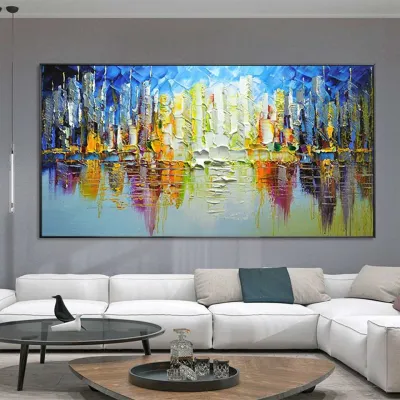
5 Lazada user ratings
The painting was not HD. Ordinary painting
Perfect for living room,

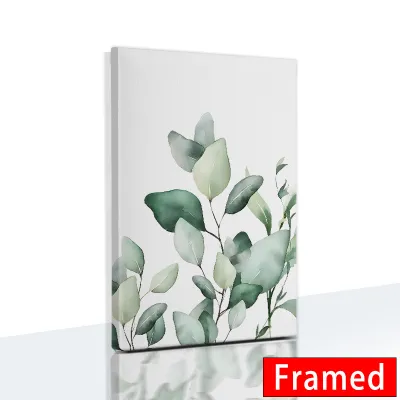
87 Lazada user ratings
at first I thought it's a legit painting. but it's an abstract image printed on the canvas (thus the low price) then some paint (white) and …Read full reviewShow less
at first I thought it's a legit painting. but it's an abstract image printed on the canvas (thus the low price) then some paint (white) and glittered glue added to it for it to have a texture. it now appears like a real hand painted art. nevertheless, I am happy with the purchase.☺️
thank you po. nabaliktad ko ang pagkakabit instead white sa taas, e blue ang sa taas. tutal abstract naman ok nayan at maganda naman tingnan…Read full reviewShow less
thank you po. nabaliktad ko ang pagkakabit instead white sa taas, e blue ang sa taas. tutal abstract naman ok nayan at maganda naman tingnan kahit sang anggulo. thanks po.

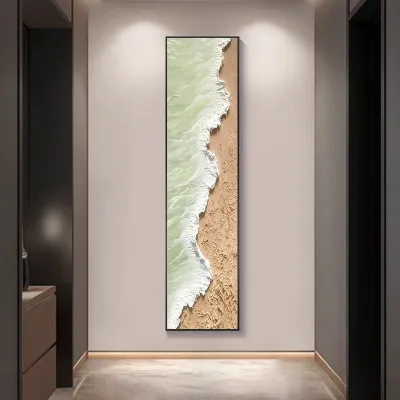

134 Lazada user ratings
💰Price:ok maganfa design 🎨Design:very nice designs 💯 good 🛡️Safety:safety safety safety safety 🦺🦺 🔍Quality:nice matibay matibay maganda design
nkaka disappoint sobra liit pala ang naka picture kasi saxophone sa sala set un wall decor scam pala. Sana maging totoo nmn kayo.
ang cute ang ganda at ang bilis niya dumating salamat seller sa uulitin medyo Malaki na maliit pang tlga yang na order ko ngayon
mqbilis ang delivery. maganda xa . sulit ang pera. highly recommend this product qnd seller. definitely, we'll order again
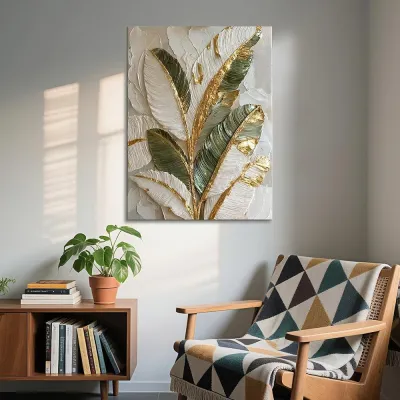
21 Lazada user ratings
it's not same with the picture,may pingas at damage p...excited to see p nman .a bit disappointed,even the color is different..but any way p…Read full reviewShow less
it's not same with the picture,may pingas at damage p...excited to see p nman .a bit disappointed,even the color is different..but any way pede n pag tyagaan..syang nman...
It looks fine. can be used as decor.
for me..satisfied aq very nice
nice, thanks
Prices are valid at publication and may change. Please refer to the product page for the latest price.
Physical Differences: Weight, Depth, and Hanging Hardware
Beyond aesthetics, the physical properties of wood and metal frames dictate how they interact with your walls and how easily they can be installed. Frame depth plays a critical role in creating a three-dimensional effect. Wood frames typically feature deeper profiles that project further from the wall, casting soft, natural shadows that give the gallery wall a layered, sculptural quality. Metal frames are often shallower, sitting closer to the wall surface, though deep metal box frames are available for a modern shadow-box effect. The thin edges of metal frames cast sharper, more defined shadows under direct overhead lighting, which can enhance the clean, geometric lines of a contemporary layout.

Weight is another crucial differentiator that impacts your choice of hanging hardware. Solid wood frames, particularly those made from dense hardwoods like oak or ash, are heavier than their metal counterparts. When framing large pieces with glass glazing, the cumulative weight can be substantial. This requires robust wall anchors, heavy-duty picture hooks, or direct mounting into wall studs to prevent damage. In contrast, aluminum metal frames are lightweight yet structurally rigid, resisting bending even under the weight of large glass panes. This makes metal a practical choice for plasterboard or drywall partitions where heavy loads are a concern.
The ease of adjusting and leveling your frames during installation also varies by material. Wood frames are highly versatile, accommodating a wide range of hardware including D-rings, wire hangers, and sawtooth brackets. While wire hanging allows for quick leveling adjustments, it can cause the frame to tilt forward slightly away from the wall. Metal frames, on the other hand, often utilize specialized hardware that slides directly into channels built into the back of the frame profile. This channel system allows for precise lateral adjustments along a hanging wire or rail, keeping the frame flush against the wall and making it easier to maintain precise alignment in a complex grid.
Environmental Checks: Verifying Durability Specs
Before finalizing your frame selection, it is essential to evaluate the environmental conditions of the installation space. In regions with high humidity or tropical climates, such as the Philippines, moisture resistance is a primary concern. Solid wood is a hygroscopic material, meaning it absorbs and releases moisture from the air. In high-humidity areas like kitchens, bathrooms, or poorly ventilated hallways, untreated or poorly sealed wood frames can warp, twist, or experience joint separation over time. If you select wood for these spaces, verify that the manufacturer has applied a moisture-resistant sealant or opt for engineered wood composites designed to withstand humidity.
Metal frames, particularly anodized aluminum, offer strong resistance to moisture and humidity, making them durable options for challenging environments. They do not warp, swell, or split when exposed to moisture. However, it is still important to perform observable structural checks. Inspect metal frames for any signs of chipping or scratching in the painted or powder-coated finish, as exposed raw metal can be susceptible to oxidation over time. For wood frames, inspect the corners to ensure the mitered joints are tightly joined and reinforced with corner brackets or v-nails, which prevent the joints from pulling apart under the weight of the glass.
Regardless of the frame material, protecting the artwork itself from environmental degradation is paramount. Verify the glazing options provided with the frames. Standard glass or acrylic can allow ultraviolet (UV) light to pass through, leading to the fading and discoloration of paper prints and photographs over time. Check product labels for UV-filtering glazing options, which block a high percentage of harmful rays. Additionally, in earthquake-prone areas or high-traffic zones, lightweight acrylic glazing is often a safer alternative to traditional glass, as it is shatter-resistant and significantly reduces the overall weight of the frame.
Decision Framework: When to Choose Wood, Metal, or Both
To guide your final decision, consider this structured framework based on your specific aesthetic preferences, structural limitations, and artwork requirements:
Choose wood frames if:
- You want to introduce visual warmth, organic textures, or a traditional, rustic, or eclectic aesthetic to your living space.
- Your artwork consists of oil paintings, textured canvases, vintage prints, or classic watercolors that benefit from a substantial, classic border.
- You are framing large, individual statement pieces that require a thick, robust profile to anchor them visually on an expansive wall.
Choose metal frames if:
- You are aiming for a sleek, modern, or minimalist aesthetic with clean lines and sharp angles.
- You are planning a dense, multi-piece grid layout where slim profiles are necessary to prevent the wall from looking cluttered.
- Your walls have limited load-bearing capacity, and you require lightweight frames that can be securely hung with standard hardware.
Neither material may fit if:
- Your wall construction (such as unreinforced plaster, hollow drywall, or thin decorative partitions) cannot support the weight of multiple heavy frames without professional structural reinforcement.
- Your artwork is highly valuable, delicate, or historical, requiring specialized archival framing, acid-free backing, and museum-grade conservation glazing that standard retail frames cannot accommodate.
Verify first if you plan to mix materials:
- Ensure visual balance by distributing the heavier visual weight of wood frames evenly throughout the layout rather than clustering them on one side.
- Check that the hanging depths of both frame types are compatible so that some pieces do not protrude awkwardly far from the wall compared to others.
- Use cohesive matting, such as matching off-white or neutral mats across all frames, to tie the diverse materials together into a unified presentation.
Step-by-Step Guide to Arranging Your Gallery Wall
Creating a cohesive gallery wall requires careful planning and systematic execution to avoid turning your wall into a patchwork of misplaced nail holes. The first step is to establish a unifying element that ties the collection together. This can be achieved through consistent matting colors, uniform spacing between frames (typically two to three inches), or a dominant frame color that repeats throughout the layout. Even if you are mixing wood and metal frames, maintaining a consistent spacing interval helps the eye perceive the collection as a single, deliberate installation rather than a random assortment of pictures.
Before picking up a drill or hammer, map out your layout. An effective method is to lay all your framed pieces out on the floor in front of the target wall. This allows you to experiment with different arrangements, balance the visual weight of different frame sizes and materials, and adjust the spacing without damaging your walls. Once you are satisfied with the floor layout, trace each frame onto kraft paper or newspaper, cut out the templates, and tape them to the wall using painter’s tape. This step lets you step back and evaluate the scale, height, and overall composition of the gallery wall in the actual space.
Finally, before securing any hangers, check the wall construction and locate structural supports. In homes with concrete or masonry walls, which are common in the Philippines, you will need a hammer drill, masonry drill bits, and plastic wall plugs (often referred to as tox plugs) to ensure a secure hold. For drywall or plasterboard walls, use a stud finder to locate wall studs for heavier frames. If a frame must be hung where no stud is present, select high-quality hollow-wall anchors or toggle bolts rated for the frame’s weight. Always double-check your measurements on the paper templates, marking the exact hook placement relative to the top of the frame, before drilling your final holes.
Frequently Asked Questions (FAQ)
Can I mix wood and metal frames in the same gallery wall?
Yes, mixing wood and metal frames can create a dynamic, curated look that feels organic and collected over time rather than mass-produced. To maintain visual cohesion, use consistent matting across all pieces, such as identical off-white mats, or limit your artwork to a unified color palette or theme. This common thread allows the different frame materials to coexist harmoniously.
When arranging a mixed-material gallery wall, pay close attention to the distribution of visual weight. Wood frames, with their thicker profiles and natural textures, naturally draw more attention than slim metal frames. Distribute these heavier wood frames evenly across your layout—perhaps placing them at diagonal opposites or using a large wood frame as a central anchor surrounded by lighter metal frames—to prevent the display from looking lopsided or unbalanced.

Community discussion
Share your experience or ask a question. Comments are reviewed before publication.