
Choosing a bedside rechargeable wall lamp is an excellent way to upgrade your bedroom lighting without the hassle of hiring an electrician for complicated in-wall wiring. These versatile fixtures mount directly to your wall, providing targeted illumination exactly where you need it. For those who share a bed or enjoy late-night reading, the right lamp must balance personal comfort with partner consideration. Achieving this balance depends heavily on two critical factors: color temperature and physical adjustability.
By understanding how these features interact with your bedroom environment, you can create a cozy, functional space that supports both healthy sleep hygiene and focused reading. This guide breaks down the essential specifications, design choices, and installation checks to help you make an informed decision. Whether you are looking to save on the ₱500 to ₱1,500 installation fees of hardwired fixtures or simply want a flexible DIY lighting solution, focusing on these key details will ensure you select the perfect model.
Understanding Color Temperature for Bedside Use
Color temperature, measured in Kelvins (K), dictates the warmth or coolness of the light emitted by your lamp. When browsing product packaging or online listings, you will typically see ratings ranging from 2700K to over 6000K. For a bedside environment, selecting the correct Kelvin range is vital for maintaining your body’s natural circadian rhythm.
Products mentioned in this guide
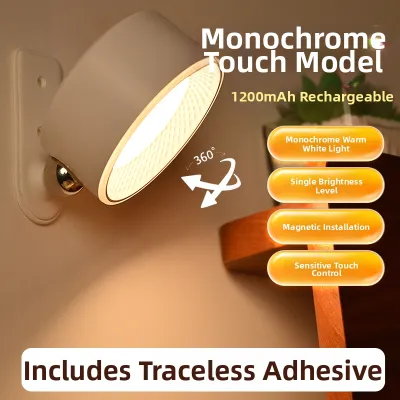
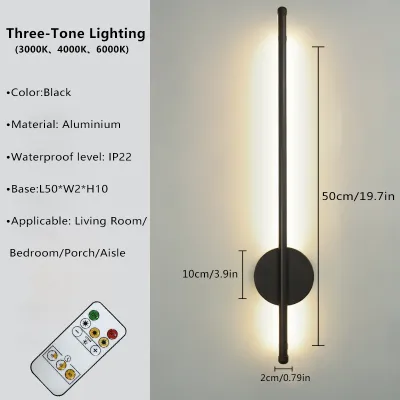
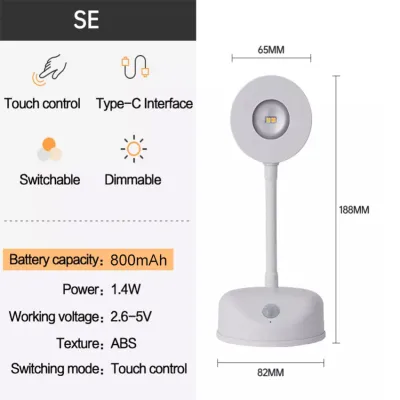
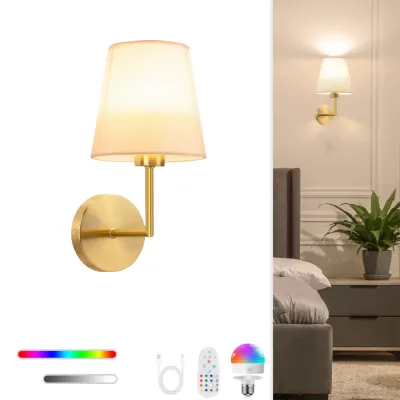
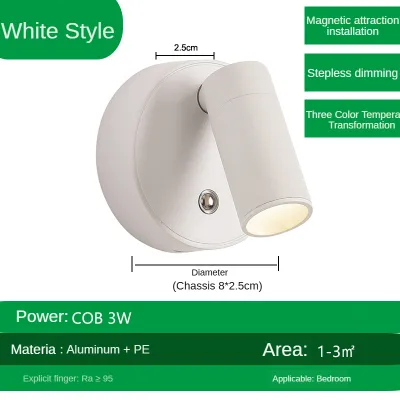
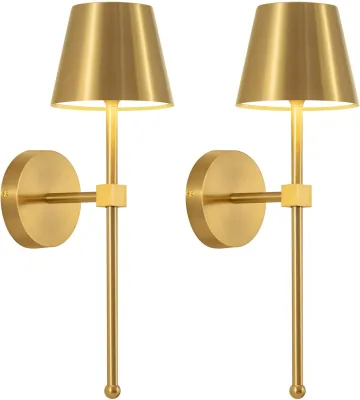
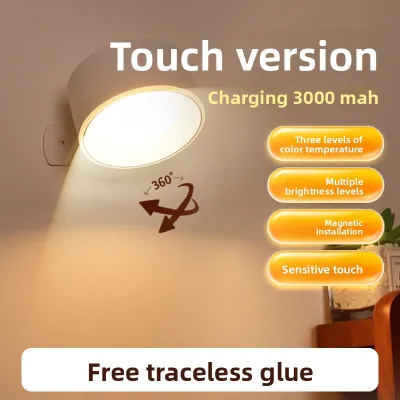
Prices are valid at publication and may change. Please refer to the product page for the latest price.
A warm white light, ranging from 2700K to 3000K, is highly recommended for evening use. This temperature mimics the soft, amber glow of traditional incandescent bulbs, creating a relaxing atmosphere that signals to your brain that it is time to wind down. Warm light minimizes exposure to blue wavelengths, which are known to disrupt sleep patterns.
If you primarily use your lamp for intense reading or detailed tasks, a neutral white light around 4000K offers sharper contrast and reduces eye strain. However, because neutral light can feel too stimulating right before sleep, many modern rechargeable wall lamps feature adjustable color temperatures. These multi-mode fixtures allow you to switch between a cooler task mode for early evening reading and a warm ambient mode as you prepare for sleep.
Beyond color temperature, dimming capability is a crucial feature to verify. Look for lamps that offer either multi-level dimming (such as 10%, 50%, and 100% presets) or stepless dimming, which allows you to slide or hold a button to adjust the brightness smoothly. Stepless dimming provides the ultimate control, enabling you to lower the brightness to a faint glow that is just enough to navigate the room without waking your partner. Always check the product specifications to confirm the dimming method, as some models may require a remote control while others use touch-sensitive housing.
Evaluating Adjustability and Light Control
Physical adjustability determines how effectively you can direct light onto your book or device while keeping the rest of the room dark. If you share a bed, a fixed wall sconce will likely spill light across the entire mattress, disturbing your partner’s sleep. To prevent this, you must evaluate the lamp’s structural design and light-directing features.

Flexible gooseneck arms are highly popular for bedside reading. They feature a fully adjustable, silicone-coated metal tube that can be bent in any direction. This allows you to position the light source mere inches from your page, pointing directly downward. When evaluating goosenecks, look for high-quality, stiff construction; cheap goosenecks can droop over time under the weight of the lamp head.
Alternatively, multi-joint swivel arms offer a more structured, classic aesthetic. These fixtures use mechanical hinges to swing the lamp out from the wall and tilt the head. While highly durable, swivel arms have a fixed path of movement and may require periodic tightening of the joint screws to prevent sagging.
The design of the lamp head itself plays a massive role in light control. Look for fixtures with deep-set shades, narrow beam angles (ideally between 30 and 45 degrees), or physical baffles. These design elements act as barriers, shaping the light into a tight cone rather than a wide flood. This ensures that the illumination remains confined to your side of the bed.
Finally, consider the physical reach of the lamp in relation to your headboard and mattress height. Before purchasing, measure your intended mounting spot. The lamp should be positioned high enough to clear your shoulder when you are sitting up, yet low enough that you can easily reach the physical power switch or touch sensor without stretching.
Essential Checks for Rechargeable Bedside Lamps
Because rechargeable wall lamps operate on battery power, their convenience depends entirely on their power management and physical installation. A lamp that requires constant recharging or falls off the wall due to poor mounting will quickly become a source of frustration.
Start by checking the battery capacity, which is measured in milliampere-hours (mAh). While a higher mAh rating generally indicates a longer runtime, actual battery life varies significantly based on your chosen brightness level. A lamp used on its lowest dimming setting may last for weeks, whereas using it on maximum brightness might require recharging after a few hours. Compare the manufacturer’s estimated runtimes against your nightly reading habits to ensure the charging frequency fits your lifestyle.
The type of charging interface is another critical factor for long-term convenience. Opt for lamps that utilize standard USB-C ports. This allows you to share charging cables with your smartphone or tablet, eliminating the need to keep track of proprietary cords or outdated Micro-USB cables.
When it comes to installation, rechargeable lamps typically offer two mounting options: adhesive magnetic bases or screw-in brackets. In tropical climates with high humidity, adhesive pads can lose their grip over time as moisture degrades the glue. If you choose an adhesive mount, ensure the wall surface is completely clean, dry, and non-porous, and strictly adhere to the manufacturer’s weight limits. For a secure, worry-free setup—especially with heavier metal fixtures—it is always best to use the included screw-in brackets.
Lastly, verify that the lamp carries reputable electrical safety certifications on its label. Even though these are low-voltage DC devices, certified internal battery management systems protect against overheating and short circuits, giving you peace of mind as you sleep.
Frequently Asked Questions (FAQ)
Can I leave a rechargeable wall lamp plugged in continuously?
Whether you can leave your lamp plugged in depends on its internal circuitry. You should always check the manufacturer’s instructions to see if the device features overcharge protection or a battery bypass mode. Continuous charging on cheaper models without these protections can lead to battery degradation, reducing the lamp’s wireless runtime over time. If the product label does not explicitly state that it is safe for continuous corded use, it is best to unplug the lamp once the charging indicator shows it is fully charged.
How should I position the lamp to avoid glare on a phone or tablet screen?
To minimize distracting reflections on glossy digital screens, position the lamp slightly behind your shoulder rather than directly overhead or in front of you. This placement ensures that the light path strikes your device at an angle that reflects away from your eyes. Additionally, utilize the lamp’s dimming feature to lower the light intensity, and tilt the adjustable head slightly downward to focus the beam on your hands rather than the screen itself.

Community discussion
Share your experience or ask a question. Comments are reviewed before publication.