
When illuminating large outdoor spaces in the Philippines, finding a reliable, weather-resistant lighting solution is essential. High-intensity outdoor lighting must withstand intense tropical downpours, high humidity, and scorching afternoon heat. Investing in a high-quality ip67 solar light 100 watts system offers a cost-effective, energy-independent solution to illuminate driveways, perimeter walls, and gardens without adding to your monthly electricity bill. However, navigating the crowded marketplace requires understanding what these technical specifications actually mean for your property. Selecting the right fixture involves evaluating physical designs, battery chemistry, and installation practices to ensure long-term durability.
Why 100W and IP67 Matter for Philippine Weather
The “100W” label on a solar light fixture primarily refers to the nominal power capacity of its LED module rather than its power consumption from the electrical grid. In traditional grid-tied lighting, wattage is directly linked to brightness; however, in solar technology, it serves as a general indicator of physical capacity and potential coverage. A true 100W-class solar light is designed to illuminate expansive areas, making it ideal for standard residential yards, commercial perimeters, and barangay pathways. Because solar manufacturers sometimes use wattage as a marketing label rather than a strict power measurement, verifying the actual light output in lumens is essential to ensure you get the brightness you expect.
The Ingress Protection (IP) rating is the most critical survival metric for any outdoor fixture in a tropical climate. An IP67 rating consists of two distinct digits that define the fixture’s sealing capabilities. The first digit, “6,” represents the highest level of dust protection, ensuring that fine dust, dirt, and airborne particulates cannot penetrate the internal housing. The second digit, “7,” indicates that the fixture can withstand temporary immersion in water up to one meter deep for up to 30 minutes. This level of sealing is vital for surviving the intense monsoon seasons and sudden tropical depressions common across the Philippine archipelago.
Products mentioned in this guide
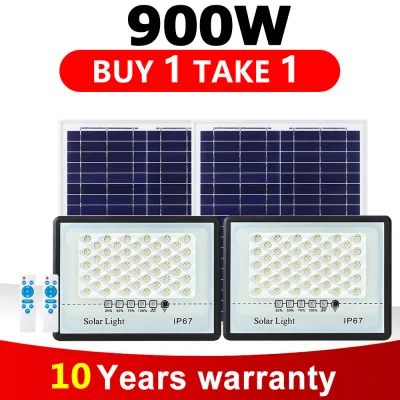
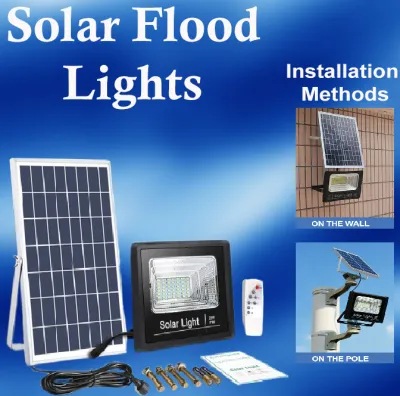
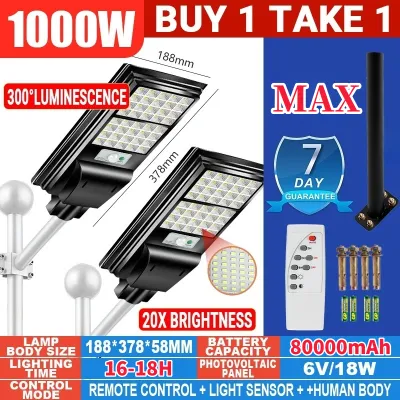
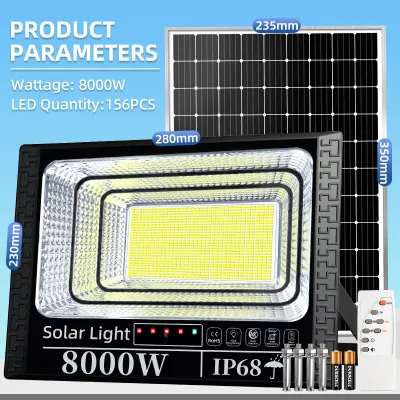
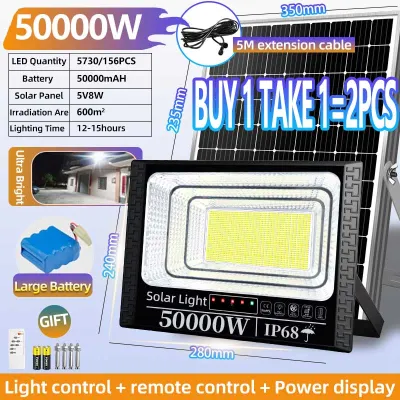
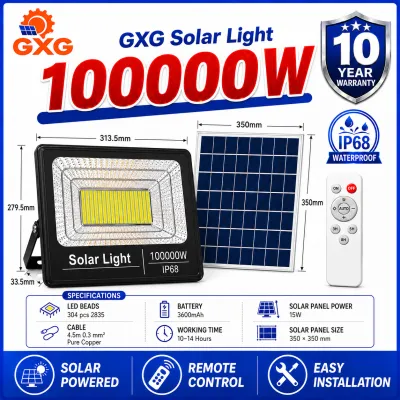
Prices are valid at publication and may change. Please refer to the product page for the latest price.
Local environmental factors make these specifications indispensable. High relative humidity can cause condensation to build up inside poorly sealed fixtures, leading to short circuits and premature corrosion of the delicate driver circuitry. Furthermore, during heavy downpours, wind-driven rain can penetrate standard weather-resistant enclosures. An IP67-rated fixture ensures that the internal battery, charge controller, and LED chips remain completely dry, even when subjected to torrential rain and temporary pooling. Meanwhile, the 100W capacity ensures that the light cuts through heavy rain or thick evening mist, maintaining safety and security around your property.
Essential Specifications for an IP67 Solar Light (100 Watts)
To make an informed purchase on online marketplaces or at local hardware stores, you must look beyond basic packaging claims. Evaluating specific technical components ensures that your chosen fixture will perform reliably over several years.

First, prioritize looking for the actual lumen output instead of relying solely on the advertised wattage. A genuine 100W equivalent LED fixture should deliver between 5,000 and 10,000 lumens of light. If a product claims 100W but only outputs 1,500 lumens, the LED chips are either highly inefficient or the battery cannot supply sufficient current. Always check the manufacturer’s spec sheet for the lumens-per-watt (lm/W) efficiency ratio; a higher ratio means more light is produced using less battery power.
Next, examine the solar panel type provided with the kit. Monocrystalline solar panels are highly recommended for Philippine conditions due to their superior conversion efficiency, which typically ranges from 18% to 22%. They perform better in low-light conditions, such as overcast or rainy days, and require less surface area to charge the battery fully. Polycrystalline panels, recognizable by their speckled blue appearance, are more budget-friendly but have lower efficiency (around 15% to 17%). They require larger physical dimensions to generate the same amount of power, making them less ideal if mounting space is limited or partially shaded.
The choice of motion sensor technology also dictates how effectively the light manages its stored energy. Passive Infrared (PIR) sensors detect changes in heat signatures, making them highly effective at identifying people or animals approaching a gate or driveway. However, PIR sensors can occasionally fail to trigger in extremely high ambient temperatures when the background temperature matches human body heat. Microwave or radar sensors, on the other hand, emit high-frequency radio waves to detect physical movement. They can sense motion through light rain, foliage, and even thin plastic covers, making them excellent for general security pathways, though they may be triggered by wind-blown branches.
The battery is the heart of any solar lighting system, and its chemistry determines both safety and longevity in hot climates. The table below outlines the critical differences between the two primary battery types found in modern solar fixtures.
| Feature | Lithium Iron Phosphate (LiFePO4) | Lithium-ion (Li-ion) |
|---|---|---|
| Thermal Stability | Excellent (withstands up to 60°C without risk) | Moderate (susceptible to thermal runaway above 45°C) |
| Lifespan (Cycles) | 2,000 to 3,000 charge-discharge cycles | 300 to 500 charge-discharge cycles |
| Safety Profile | Extremely safe; highly resistant to combustion | Higher risk of swelling or fire under extreme heat |
| Overall Value | High long-term value; lasts 5 to 8 years | Low long-term value; requires replacement in 1 to 2 years |
For outdoor installations in the Philippines, where daytime rooftop temperatures can easily exceed 40°C, LiFePO4 batteries are the gold standard. Their superior thermal stability prevents swelling and thermal runaway, ensuring the fixture remains safe even under direct, unshaded sunlight.
Additionally, always verify the electrical certifications and build specifications before finalizing your choice. Look for international safety standards such as CE, RoHS, or FCC certifications, which verify that the electronic components meet rigorous safety and environmental guidelines. Ensure the system’s operating voltage matches the battery management system (typically 3.2V for single-cell LiFePO4 or 12V for multi-cell setups) to guarantee safe charging cycles.
Furthermore, pay close attention to the lens and housing materials. Tempered glass is highly durable and maintains its optical clarity over years of UV exposure, whereas cheap polycarbonate lenses can yellow and cloud over time, significantly reducing light transmission. For the housing, die-cast aluminum offers superior heat dissipation compared to thin plastics, which helps keep the internal LEDs cooler and extends their operating lifespan.
Lastly, check the charge controller type. Maximum Power Point Tracking (MPPT) controllers are more advanced and efficient, especially in cloudy weather, as they continuously adjust the electrical operating point of the modules to extract maximum available power. Pulse Width Modulation (PWM) controllers are more common in budget-friendly models; while they are reliable, they are less efficient at converting solar energy during overcast days.
Recommended Solar Light Designs for Your Property
Selecting the right physical configuration depends on your property layout, mounting options, and specific lighting goals. There are three primary designs available on the market today.
All-in-One Solar Street and Pole Lights
All-in-one solar street lights, also known as integrated solar lights, house the solar panel, battery, LED array, and motion sensor within a single, cohesive casing. This consolidated design eliminates external wiring, making the physical installation exceptionally clean and straightforward. These fixtures are designed to be mounted directly onto a dedicated pole or a structural wall arm.
These units are best suited for illuminating expansive, open areas such as long driveways, private access roads, perimeter fences, and large front yards. Because they are mounted high up, they cast a wide, even pool of light that covers a broad ground area.
While highly convenient, all-in-one systems have a notable limitation: the solar panel is fixed directly to the top of the light fixture. This means you cannot adjust the angle of the solar panel independently of the light source. If the mounting pole is positioned near tall trees, buildings, or roof overhangs that cast shadows during peak daylight hours, the panel’s charging efficiency will drop significantly. Before purchasing, verify the compatible pole diameter (typically 50mm to 75mm) to ensure a secure fit.
Split-Type Solar Flood Lights
Split-type solar flood lights feature a separate solar panel connected to the LED light fixture via a heavy-duty, weather-resistant extension cable, which typically ranges from 3 to 5 meters in length. This physical separation allows you to mount the light fixture exactly where you need illumination while placing the solar panel in a location that receives unobstructed, direct sunlight.
This design is highly versatile and ideal for backyards, security perimeters, garages, and indoor spaces like carports or warehouses. You can easily mount the floodlight under a deep roof eave or inside a dark shed while running the cable to the roof where the solar panel can bask in full sunlight.
The primary advantage is the ability to optimize the solar panel’s tilt and orientation independently of the light. However, split-type systems require careful cable management to prevent the wire from hanging loosely, which could expose it to wind damage, pests, or water ingress at the connection points. Ensure all cable connectors are tightly screwed together and wrapped with outdoor-grade electrical tape for added protection.
Wall-Mounted Solar Security Lights
Wall-mounted solar security lights are compact, self-contained fixtures designed to screw directly into flat exterior surfaces, concrete walls, or wooden posts. They are engineered to deliver a highly focused, intense beam of light over a targeted area, often utilizing built-in motion sensors to deter intruders and guide footsteps.
These fixtures are perfect for main gates, dark alleyways, side pathways, garage entrances, and back doors. They act as excellent spot-checking tools that remain dim or off until motion is detected, conserving battery power and providing a bright path when you return home at night.
The compact size makes them easy to mount without specialized poles or complex brackets. However, their light spread is more localized compared to elevated street lights. When installing these fixtures, ensure that the wall material—whether hollow block, concrete, or wood—is structurally sound enough to support the weight of the fixture and withstand strong wind loads during stormy weather.
Installation Guidelines and Safety Boundaries
Proper installation is key to maximizing both the lifespan and performance of your solar lighting system. In the Philippines, optimizing the solar panel’s exposure to the sun requires a strategic approach.
To capture the maximum amount of solar radiation throughout the year, solar panels should ideally face South. Because the Philippines is located in the northern hemisphere, tilting the panel at an angle of 10 to 15 degrees (roughly matching the local latitude) ensures optimal sun exposure. This tilt serves a dual purpose: it allows rainwater to run off easily, naturally washing away accumulated dust, pollen, and bird droppings that would otherwise block sunlight and reduce charging efficiency.
Mounting height directly influences both the intensity and coverage area of your light. For a 100W solar light, the recommended mounting height is between 3 to 5 meters. Mounting the fixture too low will result in a harsh, concentrated glare that can blind onlookers, while mounting it too high will dilute the light output, making the ground area dim.
While basic wall mounting of a lightweight split-type floodlight is a manageable DIY task, certain installation scenarios require professional assistance. If you are installing heavy, pole-mounted street lights, digging deep concrete foundations for a new light pole, or working at heights above 3 meters, you must prioritize safety. Always isolate any nearby electrical sources before beginning work. If the installation area is near overhead power lines, do not attempt a DIY installation; hire a licensed electrician or contractor. Additionally, ensure that all mounting brackets and poles are rated to withstand typhoon-force winds, which can exert immense shear force on large solar panels.
When securing mounts to concrete walls, always use heavy-duty expansion bolts (often called dynabolts) rather than simple plastic wall plugs. The vibration and wind shear from seasonal storms can easily loosen weak fasteners, causing the heavy fixture to fall. If you are integrating the solar light system with any existing grid-tied backup circuits or hybrid controllers, ensure proper power isolation to prevent backfeeding, and consult the manufacturer’s wiring diagrams or a qualified technician.
Maintenance Tips for Humid and Rainy Seasons
The combination of high humidity, salt air in coastal regions, and heavy seasonal rains can take a toll on outdoor electronics. Implementing a simple, regular maintenance routine will keep your solar lights operating at peak efficiency.
Keep the solar panel clean by wiping its surface with a soft, damp microfiber cloth every few weeks. Dust, soot from vehicle emissions, and organic debris can form a thin film over the glass, blocking sunlight and significantly reducing charging performance. Avoid using harsh chemical detergents, abrasive scrubbers, or high-pressure washers, as these can scratch the anti-reflective coating on the glass or compromise the watertight seals.
Before the onset of the monsoon season, perform a visual inspection of the fixture. Check the rubber gaskets and seals around the glass cover, cable entry points, and battery compartment. If you notice any signs of cracking, dry rot, or loosening, apply a thin bead of outdoor-grade silicone sealant to reinforce the water barrier. Ensure that all cable connections on split-type models are tightly secured.
Additionally, inspect the clear diffuser or lens over the LED array. Over time, salt spray or dust can build up on the lens, scattering the light and reducing output. Wipe it down with a mild soapy solution and rinse with clean water to maintain maximum brightness.
Even high-quality LiFePO4 batteries will eventually experience natural degradation after several years of continuous use. If you notice that your solar light’s runtime has decreased significantly—even after a full day of bright sunshine—the battery may be reaching the end of its life cycle. Most reputable manufacturers design their fixtures with replaceable battery packs. Consult the manufacturer’s instruction manual for specific battery specifications and replacement procedures, typically required every 3 to 5 years, to extend the life of your fixture without buying an entirely new system.
Frequently Asked Questions (FAQ)
How many hours will a 100W solar light stay on at night?
The total runtime of a 100W solar light depends heavily on its battery capacity (measured in Ampere-hours or Watt-hours) and the selected operating mode. If the light is set to run continuously at 100% brightness, a standard battery may only sustain it for 2 to 4 hours. However, most modern fixtures feature intelligent power-saving modes, such as dimming to 30% brightness and ramping up to 100% only when motion is detected. Utilizing these motion-sensor or programmed timer modes allows the light to operate reliably for 8 to 12 hours, easily lasting through the night on a single day’s charge.
Does IP67 mean the light can survive being submerged in floodwaters?
No, an IP67 rating does not mean the fixture is designed for continuous submersion or to withstand flood conditions. While the rating certifies that the light can survive temporary immersion in up to 1 meter of calm water for 30 minutes, actual floodwaters carry heavy debris, high flow velocities, and extreme physical pressures that can easily rupture seals. Furthermore, prolonged exposure to standing water will eventually cause moisture to seep into the housing. To protect your investment, always mount your solar lights well above historical local flood levels.

Community discussion
Share your experience or ask a question. Comments are reviewed before publication.