
A bamboo floor lamp is an exceptional addition to modern homes, bridging the gap between natural, tropical warmth and contemporary interior design. Whether you are aiming to soften a spacious living room with diffused, organic patterns or establish a focused, cozy reading corner, the right bamboo lamp provides both functional illumination and a sustainable aesthetic.
In the Philippines, choosing the best bamboo floor lamp requires looking beyond visual appeal. You must balance structural stability, proper material treatment against tropical pests and humidity, and safe electrical specifications that match local standards. By understanding how different bamboo species, weaving techniques, and electrical components interact, you can select a lighting fixture that is both beautiful and highly durable.
What to Look for When Buying a Bamboo Floor Lamp
Base Weight and Stability
Bamboo is naturally hollow and lightweight, which is excellent for transport and mobility but presents structural challenges for tall, vertical fixtures. When crafted into a floor lamp, the center of gravity shifts upward, making it highly prone to tipping over if bumped. To ensure safety in high-traffic spaces like living rooms, prioritize lamps that feature a heavily weighted base.
Products mentioned in this guide
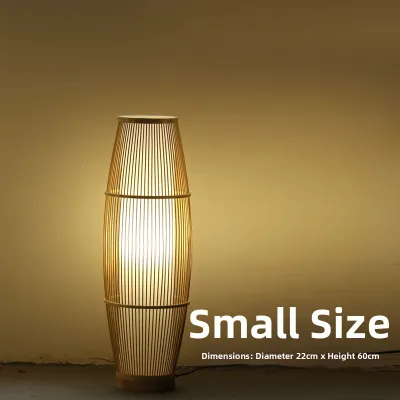
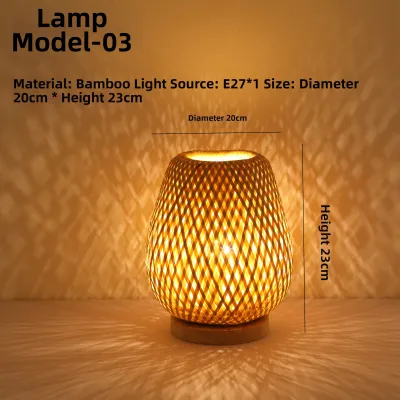
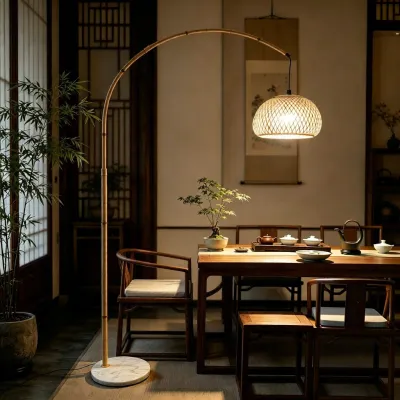
Prices are valid at publication and may change. Please refer to the product page for the latest price.
Quality manufacturers typically conceal a heavy metal disc, solid hardwood block, or concrete core beneath a decorative bamboo casing. A base diameter of at least 25 to 30 centimeters is generally recommended for lamps standing over 1.5 meters tall. Testing the lamp’s stability by gently nudging it at a 15-degree angle can help you verify if the base is heavy enough to self-right without falling.
Bamboo Treatment and Finish
Untreated bamboo contains high levels of natural starches and sugars that are highly attractive to wood-boring insects, commonly known in the Philippines as bukbok (powderpost beetles). Before purchasing any bamboo lamp, it is vital to verify that the material has undergone proper curing and treatment processes, such as boiling, smoking, or borate treatment, to eliminate these pests.
Inspect the lamp’s finish closely under bright light. High-quality bamboo fixtures are coated with a clear protective sealant, polyurethane, or lacquer to lock out moisture and prevent splintering. The surface should feel completely smooth to the touch, free of splinters, cracks, or rough joints that could snag fabrics or harbor dust.
Switch and Cord Management
Consider how you will interact with the lamp daily based on its placement in your room. Foot-pedal switches (inline foot switches) are highly convenient for reading corners, allowing you to turn the light on and off with a simple tap of your foot without bending down. For living rooms where the cord might be routed behind a large sofa, an inline cord switch or a pull-chain switch near the socket is often more practical.
Ensure the cord length is sufficient—typically at least 1.8 to 2 meters—to avoid relying heavily on extension cords, which can create tripping hazards and electrical resistance. Additionally, check that the plug and cord assembly comply with local safety standards, matching the standard Philippine household voltage of 220V at 60Hz.
Adjustability vs. Fixed Designs
Your intended lighting use determines whether you should choose an adjustable or fixed structural design. Fixed, architectural bamboo lamps excel at providing ambient, indirect light that washes over a room, making them ideal for general living room illumination.
Conversely, adjustable designs—such as those with cantilevered arms, pivoting heads, or flexible gooseneck joints—are engineered specifically for task lighting. If you choose an adjustable model, inspect the tension knobs and joints carefully; they should be reinforced with sturdy metal hardware to prevent the bamboo arms from sagging over time.
Best Bamboo Lamp Styles for Living Room Ambiance
Woven Bamboo Shade Lamps
Woven bamboo shades are celebrated for their dramatic light-and-shadow play, making them perfect for creating a warm, inviting living room atmosphere. When illuminated, the intricate weave patterns cast beautiful, textured shadows across your walls and ceiling, immediately breaking up the monotony of flat surfaces.

This style works best with diffuse light bulbs, creating a relaxed, evening-friendly atmosphere. Because the woven structure allows light to escape in all directions, place these lamps in corners or beside accent chairs where they can serve as decorative focal points without casting direct glare into your eyes. They are highly suited for tropical modern, bohemian, or rustic Filipino living spaces.
Minimalist Bamboo Pole Lamps
For homes embracing Scandinavian, modern tropical, or Japandi (Japanese-Scandinavian fusion) aesthetics, minimalist bamboo pole lamps offer a clean, uncluttered silhouette. These designs typically feature a single, slender bamboo trunk paired with a simple drum shade made of linen, cotton, or handmade paper.
They provide a soft, upward and downward glow, perfect for flanking a television console or filling a narrow gap between a sofa and the wall. Their small footprint makes them ideal for compact urban condos in Metro Manila, where floor space is at a premium but visual warmth is still highly desired.
Multi-Light Bamboo Branches
If you have a larger living room with high ceilings, a multi-light bamboo branch lamp makes a striking artistic statement. These lamps mimic natural branching structures, with multiple light sources suspended at varying heights.
They are excellent for illuminating larger, empty corners that feel cold or neglected, distributing light across a wider radius than a single-bulb lamp. When selecting a multi-light fixture, ensure your space can accommodate the wider physical footprint, as the branching arms often extend outward by 40 centimeters or more.
Ideal Bamboo Floor Lamp Designs for Reading Corners
Adjustable Arms and Goosenecks
Reading requires focused, directional light targeted directly onto your page or screen to prevent eye strain. Bamboo floor lamps designed with adjustable cantilever arms or flexible gooseneck joints allow you to position the light source exactly where you need it, regardless of your seating posture.
Look for hybrid designs that pair natural bamboo poles with brass or matte black metal joints. This combination provides the necessary mechanical durability to withstand frequent adjustments while maintaining an organic, rustic appearance. Verify that the joints lock securely in place without slipping under the weight of the shade.
Opaque or Semi-Opaque Shades
Unlike the open, woven shades used for ambient living room lighting, a reading lamp should feature an opaque or semi-opaque shade. A solid linen shade, a lined bamboo cylinder, or a metal cone lined with bamboo veneer directs the light downward, shielding your eyes from direct bulb glare.
This focused downward beam ensures that you can read comfortably for extended periods without the light scattering into the rest of the room and disturbing others. It also helps define the reading nook as a distinct, cozy zone within a larger room.
Height and Proportions
To avoid casting harsh shadows or shining light directly into your eyes, the height of the light source is critical. When you are seated in your favorite reading chair, the bottom of the lampshade should ideally align with or sit slightly above your shoulder level—typically between 1.2 to 1.4 meters from the floor.
Before purchasing, measure the height of your reading chair’s seat and armrests to ensure the bamboo lamp’s height and angle can be adjusted to match your seating posture. A lamp that is too tall will cause glare, while one that is too short will cast a shadow over your reading material.
Bulb Compatibility and Heat Safety for Bamboo Shades
Heat Sensitivity of Bamboo
Bamboo is an organic, cellulosic material that can dry out, warp, discolor, or even scorch if subjected to prolonged, high heat. Traditional incandescent and halogen bulbs generate significant heat during operation.
If these bulbs are placed inside tight, enclosed bamboo shades or close to delicate woven fibers, they pose a serious safety hazard. To protect your lamp and your home, avoid using high-wattage heat-producing bulbs in any bamboo fixture. Long-term exposure to temperatures as low as 60°C can cause drying, cracking, and structural weakening of the bamboo fibers.
LED Bulb Recommendations
Light Emitting Diode (LED) bulbs are the safest and most efficient option for bamboo floor lamps. LEDs convert the vast majority of their energy into light rather than heat, remaining cool to the touch even after hours of continuous use.
They also consume significantly less electricity, which is highly beneficial given the utility rates in the Philippines. Always verify that you are using an LED bulb that matches the lamp’s socket type—most commonly an E27 screw base in the Philippines—and ensure the bulb’s physical dimensions fit comfortably inside the shade without touching the bamboo walls.
Color Temperature Guide
The color temperature of your bulb drastically alters the mood and functionality of your space. For living room ambiance, choose warm white bulbs ranging from 2700K to 3000K; this mimics the soft, golden glow of sunset and enhances the natural, earthy tones of the bamboo.
For reading corners, a slightly cooler, neutral white light between 3500K and 4000K is preferable. Neutral white light provides higher contrast for text, making reading easier on the eyes without feeling overly clinical or cold.
Verifying Specifications
Before installing any bulb, locate the safety label on the lamp’s socket. This label specifies the maximum allowable wattage (e.g., “Max 40W”). Even when using low-heat LEDs, you must never exceed this rated wattage limit, as the internal wiring and socket materials are only rated to handle specific electrical currents.
Additionally, ensure the lamp is compatible with the standard Philippine household voltage of 220V to prevent electrical malfunctions or premature bulb failure. Check for quality marks such as the Philippine Standard (PS) mark or Import Commodity Clearance (ICC) stickers on the electrical components.
Caring for Bamboo Lamps in Humid Climates
Dusting Techniques
Woven and textured bamboo shades can easily accumulate dust in their crevices, which can dull the appearance of the wood and harbor allergens. To maintain your lamp, dust it weekly using a dry, soft microfiber cloth or a soft-bristled brush, such as a clean paintbrush or a feather duster.
Avoid using damp cloths on unsealed bamboo, as moisture can seep into the fibers and cause them to swell. If a deeper clean is necessary, use a slightly damp, well-wrung microfiber cloth, and immediately dry the surface with a separate dry cloth to prevent water spots.
Moisture Management
The tropical climate of the Philippines brings high humidity, especially during the rainy season, which can lead to mold, mildew, or warping. To prevent this, avoid placing your bamboo floor lamp directly in front of air-conditioning vents, humidifiers, or open windows where rain might splash.
Ensure the room has adequate ventilation. If you notice any signs of mold growth, gently wipe the affected area with a soft cloth moistened with a mild, diluted vinegar solution, then dry it thoroughly and place it in a well-ventilated, dry area to recover.
Sunlight Exposure
While bamboo is a hardy plant, harvested and processed bamboo fibers can degrade under prolonged exposure to ultraviolet (UV) rays. Placing your floor lamp in direct, harsh sunlight next to a west- or south-facing window can cause the natural fibers to dry out, become brittle, and crack.
It can also fade the protective lacquer finish or cause the bamboo to lose its rich, natural coloration. Position your lamp slightly away from direct sunbeams, or use sheer curtains to filter the incoming light and preserve the lamp’s structural integrity.
Frequently Asked Questions (FAQ)
Are bamboo floor lamps durable enough for homes with pets or children?
Yes, bamboo is an incredibly resilient and flexible material, but its suitability for homes with pets or active children depends heavily on the lamp’s design. To ensure safety, prioritize lamps with heavy, wide bases that resist tipping if bumped. Properly sealed bamboo is naturally scratch-resistant, but open, woven designs might tempt cats as scratching posts or catch loose pet hair. If you have pets, a minimalist pole lamp with a solid, smooth finish and a high-set shade is generally easier to keep clean and out of harm’s way.
Can I use a smart bulb in a bamboo floor lamp?
Absolutely. Most bamboo floor lamps utilize standard screw-in sockets, such as the widely available E27 base in the Philippines. Installing a smart LED bulb is an excellent way to upgrade your lamp’s functionality. It allows you to adjust the brightness and color temperature directly from your smartphone or voice assistant. This is particularly useful for multi-purpose spaces, enabling you to switch from a bright, neutral white light for daytime reading to a dim, warm golden glow for relaxing in the evening, all without needing to install physical dimmer switches.

Community discussion
Share your experience or ask a question. Comments are reviewed before publication.