
Selecting the perfect crystal wall lamp requires a careful balance of aesthetic elegance and spatial practicality, especially when comparing the distinct demands of narrow corridors and bedside tables. While both spaces benefit from the luxurious shimmer of crystal, their functional requirements could not be more different. Narrow hallways demand streamlined, low-profile fixtures that prioritize safety, clear passage, and glare-free guidance. Conversely, bedside areas require highly controllable, localized lighting that supports relaxation, reading, and intimate ambiance without causing eye strain.
By understanding how crystal refracts light, you can strategically place these fixtures to enhance your home’s architecture and daily comfort. In transitional zones, the refractive qualities of crystal can make tight spaces feel larger and brighter. In the bedroom, those same refractions must be carefully managed or diffused to maintain a restful environment. Choosing the right design depends on analyzing your physical space, lighting goals, and installation constraints.
Core Lighting and Spatial Needs: Corridor vs. Bedside
Narrow corridors are high-traffic transitional zones that suffer from a lack of natural light and limited physical clearance. The primary goal in a hallway is to provide safe, unobstructed passage while visually expanding a cramped area. A protruding light fixture in a tight corridor is not only a physical hazard but can also create harsh, uneven shadows that make the space feel even more confined. Utilizing a crystal wall lamp in this environment allows the faceted glass to scatter light across the walls and ceiling, effectively eliminating dark corners and making the corridor feel wider and more inviting.
Products mentioned in this guide
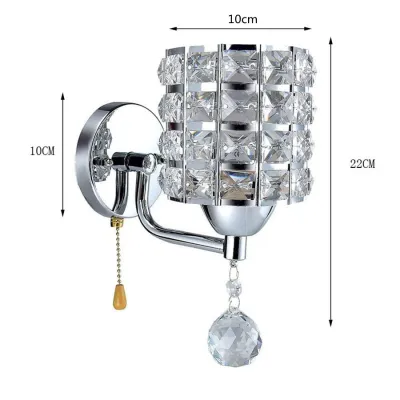
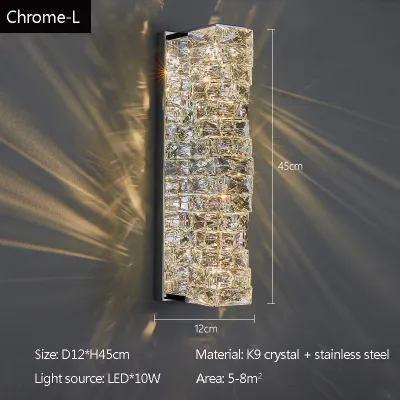
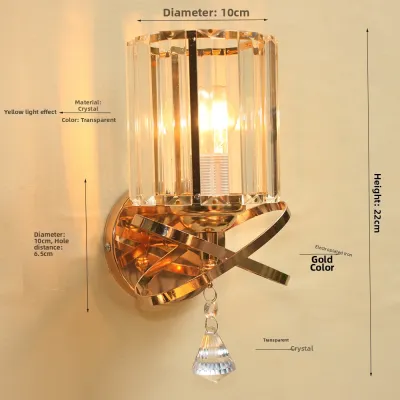
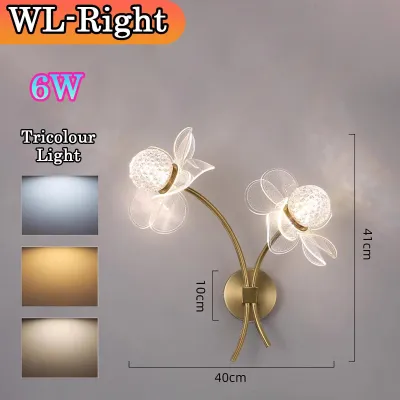
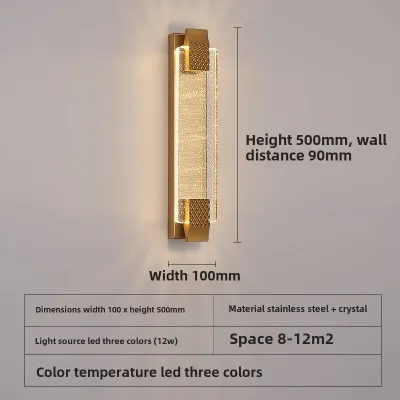
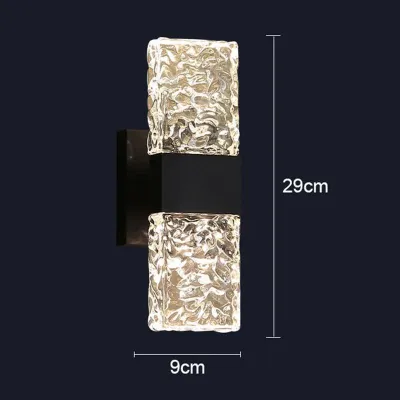
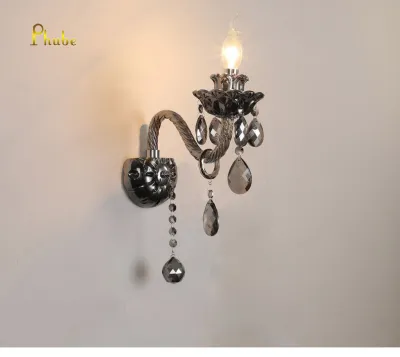
Prices are valid at publication and may change. Please refer to the product page for the latest price.
Bedside areas serve an entirely different purpose, focusing on rest, recovery, and targeted functionality. Here, the lighting must transition smoothly from bright enough for nighttime reading to soft enough to induce sleep. Because you are often viewing bedside fixtures from a low, reclined position, direct exposure to bare bulbs or intense crystal refractions can cause severe glare and eye fatigue. The scale of bedside fixtures must also harmonize with your headboard and nightstands, ensuring they do not crowd the bedside table or interfere with daily movement.
Visual impact also varies significantly between these two settings. In a corridor, the repetitive placement of crystal fixtures creates a rhythmic, architectural interest that guides the eye forward. In the bedroom, a single or paired crystal sconce acts as a refined design focal point, casting a warm, comforting glow that complements soft textiles and quiet evenings. Balancing these spatial constraints and visual effects is the first step toward selecting the ideal fixture style.
Ideal Crystal Wall Lamp Styles for Narrow Corridors
When lighting a narrow hallway, physical clearance is the most critical safety factor. Flush-mount and semi-flush crystal sconces are the premier choice for these spaces because they sit flat or very close to the wall surface. By minimizing how far the fixture protrudes, you significantly reduce the risk of residents or guests bumping into the lamp while carrying items down the hall. These low-profile designs keep the walkway completely clear while still allowing the crystal elements to catch and disperse ambient light.

Directional light distribution is another powerful tool for altering the perception of a narrow corridor. Crystal fixtures that direct light primarily upward or downward help wash the walls and ceiling with illumination, a technique that visually lifts low ceilings and pushes narrow walls outward. Upward-pointing sconces bounce light off the ceiling to create a soft, indirect glow, while downward-pointing designs highlight the flooring path safely. This directional control ensures that the light is functional without shining directly into the eyes of anyone walking through the space.
To complement the elongated architecture of a hallway, look for slim profiles and geometric arrangements. Linear, rectangular, or vertically oriented crystal designs align naturally with the vertical lines of door frames and walls. These structured shapes provide a modern, clean aesthetic that prevents the corridor from looking cluttered. Arranging these slim fixtures in a balanced, sequential pattern down the length of the hall creates a sense of continuity and deliberate design.
Maintenance is a final, practical consideration for high-traffic areas. Corridors are prone to dust accumulation from constant movement and air currents, especially in tropical climates where windows or ceiling fans are frequently open. Selecting crystal fixtures with enclosed or beveled crystal elements—where the crystals are integrated into a solid metal frame or sealed behind a clear glass panel—makes cleaning much easier. These designs prevent dust from settling in hard-to-reach crevices, ensuring the fixture retains its brilliant sparkle with a simple exterior wipe.
Best Crystal Wall Lamp Designs for Bedside Tables
For the bedroom, flexibility and personalized control are paramount, making adjustable and swing-arm crystal sconces an excellent choice. These fixtures allow you to physically pull the light source closer when reading in bed and push it back flush against the wall when it is time to sleep. This adjustability ensures that you receive targeted illumination exactly where you need it, without casting unwanted light across the entire bed and disturbing a sleeping partner.
To mitigate the intense glare that raw crystal can sometimes produce, opt for fixtures that combine fabric or frosted glass shades with crystal accents. A linen, silk, or frosted glass shade acts as a primary diffuser, softening the light output and creating a gentle, warm glow suitable for a resting environment. The crystal elements can then be positioned as decorative drops, backplate embellishments, or subtle trim, catching the diffused light to add a touch of luxury without overwhelming your eyes.
Convenience at the bedside is closely tied to how easily you can operate the fixture. Look for crystal wall lamps that feature integrated dimmers, pull chains, or rocker switches built directly onto the backplate. Having these controls within arm’s reach from a lying position eliminates the need to stand up or reach awkwardly behind a nightstand to turn off the light. Dimmable compatibility is particularly valuable, allowing you to dial down the brightness to a minimal level for a relaxing wind-down routine.
Proportion and nightstand clearance must be calculated carefully before finalizing your bedroom layout. A bedside wall lamp should be positioned relative to the height of your mattress and the width of your nightstand. Ideally, the bottom of the lamp shade should align roughly with your eye level when sitting up in bed, which is typically 28 to 32 inches above the mattress surface. This height ensures adequate reading light while leaving plenty of open space on your nightstand surface for essentials like books, phones, and water glasses.
Essential Specifications and Compatibility Checks
Before purchasing any crystal wall lamp, verifying technical specifications is essential to ensure electrical safety and physical compatibility. In the Philippines, the standard household electrical system operates on a voltage of 220V to 230V at a frequency of 60Hz. You must confirm that any imported or locally sourced fixture is rated for this voltage. Additionally, check the lamp’s base or interface type—such as E27 (standard medium screw), E14 (candelabra screw), or G9 (bi-pin)—and strictly adhere to the manufacturer’s maximum wattage limits to prevent overheating.
LED compatibility is highly recommended for modern home lighting, especially when energy efficiency and heat reduction are priorities. Crystal fixtures can trap heat, and traditional halogen or incandescent bulbs can make a small space feel noticeably warmer, which is undesirable in tropical climates. Ensure the fixture supports LED bulbs, and if you plan to use a dimming system, verify that both the bulb and the wall switch are rated as dimmable (such as trailing-edge dimmers) to prevent annoying flickering or buzzing.
Physical dimensions must be measured precisely to guarantee a proper fit. For narrow corridors, measure the exact projection—the distance the fixture extends from the wall. To maintain a safe and accessible pathway, aim for a projection of 10 centimeters (approximately 4 inches) or less. For bedside installations, measure the width and height of the fixture to ensure it does not overlap with your headboard or extend past the outer edge of your nightstand.
Finally, assess the weight of the fixture and the size of its mounting backplate. Genuine lead crystal is significantly heavier than standard glass or plastic alternatives. You must ensure that the fixture’s backplate is large enough to completely cover your existing wall junction box (often standard 2×4 inch utility boxes or 4-inch octagonal boxes in local construction) and that the wall structure can support the physical load.
Safe Installation and Mounting Guidelines
Installing a crystal wall lamp requires strict adherence to safety protocols to prevent electrical hazards and structural damage. Before beginning any installation, replacement, or maintenance work, you must isolate the power by turning off the electricity at the main circuit breaker panel. Never rely solely on a wall switch to cut the power, as live current may still be present in the junction box.
Because high-quality crystal fixtures carry substantial weight, standard drywall or plasterboard walls may not provide sufficient support on their own. For secure mounting, the fixture’s bracket should be fastened directly into wooden wall studs or concrete structural elements. If you are mounting onto hollow walls where studs are unavailable, you must use heavy-duty toggle bolts or specialized hollow-wall anchors. For concrete or hollow-block walls common in Philippine construction, use high-quality masonry drill bits and expanding wall plugs to ensure a permanent, stable hold.
While simple swap-outs of existing fixtures can often be performed by experienced DIY enthusiasts, complex electrical work requires professional expertise. If your project involves running new electrical wires through walls, chiseling concrete to bury conduits, or relocating junction boxes, you must hire a licensed electrician. Professional installation ensures compliance with the Philippine Electrical Code and guarantees that your wiring is safe, grounded, and capable of handling the electrical load.
Environmental factors should also influence your installation decisions. High humidity levels, common in tropical regions, can accelerate the corrosion of low-quality metal components. If your corridor or bedroom is located adjacent to high-humidity areas like en-suite bathrooms, verify that the metal parts of your crystal lamp have a rust-resistant finish, such as electroplated brass or treated chrome. Additionally, check the fixture’s IP (Ingress Protection) rating if there is any risk of exposure to moisture or steam.
Frequently Asked Questions (FAQ)
Can I use the same crystal wall lamp style in both the corridor and the bedroom?
While using the same crystal wall lamp style throughout your home can create a cohesive design aesthetic, it is rarely practical to use the exact same physical model in both spaces due to their contrasting functional needs. A fixture designed to sit flush against a corridor wall to maximize walking clearance will lack the adjustability, shading, and localized control required for comfortable bedside reading. Conversely, a swing-arm bedside lamp with a protruding fabric shade will stick out too far in a narrow hallway, creating a physical obstruction and a safety hazard.
If you want to maintain visual continuity, the best approach is to select fixtures from the same manufacturer collection or design family. This allows you to use a low-profile, flush-mount crystal sconce in the corridor and an adjustable, shaded, or dimmable version of the same design at your bedside. This strategy preserves matching metal finishes, crystal cuts, and overall styling while ensuring that each lamp is perfectly tailored to the physical and practical demands of its specific location.
How do I clean crystal wall lamps without damaging the wiring?
Cleaning crystal wall lamps requires a careful, methodical approach to preserve the brilliant clarity of the crystals while protecting the delicate electrical components. Before starting, always turn off the power at the main circuit breaker and allow the light bulbs to cool down completely to prevent thermal shock or accidental burns. For routine maintenance, use a dry, lint-free microfiber cloth or a static duster to gently remove surface dust from the crystals and metal frame.
For a deeper clean, never spray liquid glass cleaners or water directly onto the fixture, as moisture can easily seep into the bulb sockets, wiring connections, or backplate, leading to short circuits or corrosion. Instead, lightly dampen a soft microfiber cloth with a mixture of warm water and a few drops of mild dish soap, or a specialized crystal cleaning solution. Carefully wipe each crystal facet individually, then immediately dry them with a separate dry cloth to prevent water spots. Ensure all components are completely dry before restoring power at the breaker.

Community discussion
Share your experience or ask a question. Comments are reviewed before publication.