
Creating a dedicated reading corner at home requires more than just a comfortable armchair and a stack of books. The quality of light in your reading nook directly influences how long you can read without experiencing eye fatigue, headaches, or physical discomfort. In the Philippines, where residential layouts often combine living and dining spaces, a well-chosen floor lamp serves as a functional anchor that defines your personal sanctuary while providing targeted illumination. The ideal floor lamp for a reading corner must balance focused task lighting with physical adjustability, ensuring that light falls precisely on your pages rather than spilling harshly into your eyes or across the rest of the room.
Selecting the right fixture involves evaluating how a lamp interacts with your existing furniture, your reading posture, and the unique environmental conditions of your home. Tropical climates introduce specific considerations, such as managing heat output from light sources and ensuring materials can withstand local humidity levels. By focusing on key specifications like light direction, bulb compatibility, and structural stability, you can transform any quiet corner into an inviting, ergonomically sound reading retreat.
Key Features to Look for in a Reading Floor Lamp
To find a floor lamp that truly supports comfortable, sustained reading, you must look beyond aesthetic appeal and examine the technical specifications of the fixture. The primary function of a reading lamp is to deliver high-quality task lighting, which is localized illumination designed to help you perform specific activities. When evaluating potential lamps, start by checking the packaging or product specifications for lumen output and color temperature ratings. For reading, a light source should provide sufficient brightness to render text clearly without causing glare; look for labels indicating a lumen output that matches your visual needs, typically paired with a warm-to-neutral color temperature to keep the atmosphere cozy yet clear.
Products mentioned in this guide
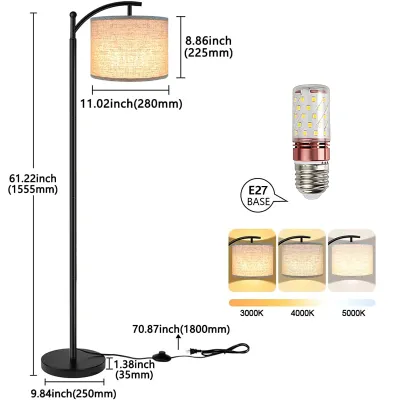
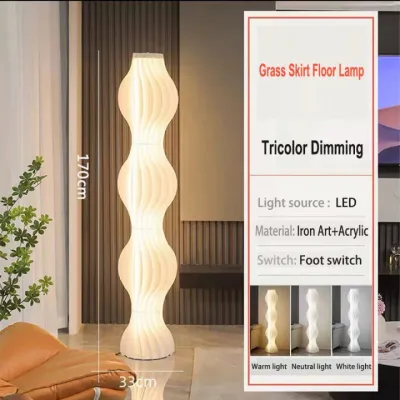
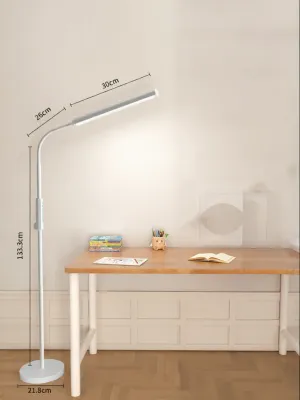
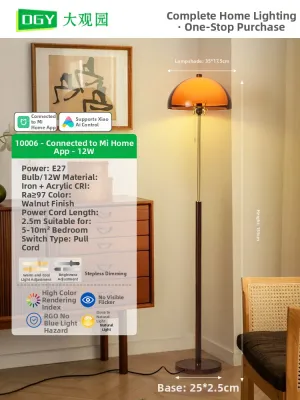
Prices are valid at publication and may change. Please refer to the product page for the latest price.
Physical adjustability is another critical feature that distinguishes a standard decorative lamp from an effective reading tool. A high-quality reading lamp should allow you to direct the light beam precisely where you need it, regardless of your seating height or posture. Look for fixtures equipped with flexible goosenecks, telescopic poles, or multi-axis pivoting lamp heads. These mechanisms enable you to lower the light source closer to your book for detailed reading or angle it away to reduce direct exposure to your eyes. When examining these adjustability features, pay close attention to the build quality of the joints and tension screws, as loose or flimsy connectors will cause the lamp head to droop over time.
Glare control is equally vital for preventing eye strain during long reading sessions. Direct exposure to a bare light bulb can cause immediate discomfort and long-term fatigue. To mitigate this, prioritize floor lamps that feature deep shades, opaque materials, or specialized inner linings that diffuse light outward rather than letting it scatter wildly. Baffle designs or frosted diffusers over the bulb compartment are also excellent for softening the light beam. When shopping, observe how the shade conceals the bulb from various angles; a well-designed reading lamp should keep the light source hidden from your direct line of sight when you are seated in your normal reading position.
Types of Floor Lamps Suited for Reading Nooks
The structural form factor of your floor lamp determines how well it integrates with your seating arrangement and the physical layout of your room. Different lamp designs offer distinct advantages depending on whether you prefer to read in a deep lounge chair, a structured armchair, or a compact corner setup.

Arc and Boom Floor Lamps
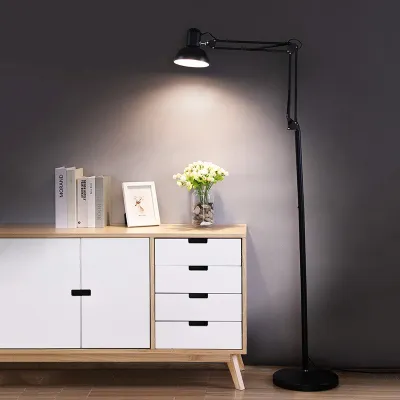
Arc and boom floor lamps feature an extended, curved arm or an adjustable horizontal pole that projects outward from a vertical base. This unique structure is exceptionally well-suited for deep seating arrangements, sectional sofas, or low-profile lounge chairs where a standard upright lamp cannot get close enough to the reader. By positioning the base of the lamp behind or beside your furniture, the arched arm can reach over your shoulder, casting light directly onto your book from above and behind. This overhead positioning is highly effective at reducing shadows cast by your hands, head, or the book itself, creating a clean and evenly illuminated reading surface.
However, because arc and boom lamps extend their weight away from the vertical axis, stability is a paramount safety consideration. Before purchasing, you must verify the weight of the lamp’s base and its overall footprint dimensions. A high-quality arc lamp requires a heavy, dense base—often constructed from solid stone, metal, or weighted composite materials—to counterbalance the extended arm. Ensure that the base is wide enough to prevent tipping, especially if the lamp is placed near walkways or in homes with active pets and children. Check the manufacturer’s specifications for the total weight of the fixture and the diameter of the base to ensure it can stand securely on your flooring material.
Adjustable Task and Torchiere Lamps
Adjustable task lamps, often resembling oversized desk lamps, utilize jointed arms and spring-tensioned mechanisms to offer maximum directional control. These lamps are ideal for dedicated, close-up reading tasks where you need to adjust the light height and angle frequently. The articulated joints allow you to pull the light source down close to your page for fine print or push it up and away when you want a broader, softer wash of light. When evaluating these fixtures, check the durability of the joints, springs, and adjustment knobs; they should move smoothly without squeaking and hold their position securely without slipping.
Torchiere lamps, on the other hand, primarily direct light upward toward the ceiling to create soft, indirect ambient light. While a standard torchiere is unsuitable for reading on its own, many modern designs feature a secondary, adjustable reading arm attached to the main pole. This dual-source configuration offers the best of both worlds: the upward-facing torchiere provides a gentle bounce light that reduces harsh contrasts in the room, while the lower, flexible arm delivers focused task lighting directly to your reading material. This combination is highly effective at minimizing eye strain, as it prevents your eyes from constantly adjusting between a bright page and a dark room.
Evaluating Light Quality and Eye Comfort
The quality of the light emitted by your floor lamp is just as important as the physical design of the fixture itself. To protect your eyes during extended reading sessions, you must understand how to evaluate light quality metrics on product packaging. One of the most critical indicators of light quality is the Color Rendering Index (CRI), which measures how accurately a light source reveals the true colors of objects compared to natural daylight. When selecting a bulb or an integrated LED fixture, look for a CRI rating of 80 or higher, with 90 or above being ideal for reading. A high CRI ensures that text contrast is sharp and illustrations or colored pages are rendered accurately, reducing the cognitive effort required to process visual information.
Flicker is another common cause of eye strain, headaches, and general fatigue, even when it is not consciously visible to the naked eye. Low-quality light sources or incompatible dimmer switches can cause rapid, imperceptible fluctuations in light output. To check for stability, you can perform a simple visual test by waving your hand rapidly under the light source; if you notice a distinct stroboscopic effect rather than a smooth blur, the light may be flickering. To avoid this issue, always invest in high-quality, brand-name bulbs and ensure that your lamp’s dimming system, if it has one, is fully compatible with the specific bulb technology you are using.
Bulb compatibility and thermal safety are also essential considerations, particularly in the warm, humid climate of the Philippines. Always verify the socket type—such as the standard E27 screw base commonly used in local households—and the maximum wattage limit specified by the lamp manufacturer. Exceeding the recommended wattage limit can cause excessive heat buildup, which can damage the lamp’s internal wiring, degrade the shade material, and pose a fire hazard. Choosing energy-efficient alternatives that run cool is highly recommended for maintaining a comfortable microclimate in your reading nook.
Space and Placement Considerations for Filipino Homes
Integrating a floor lamp into a Filipino home requires careful planning around space constraints, safety, and daily household activities. Many residential layouts in the Philippines feature open-plan living areas or compact bedrooms where space is at a premium. Before purchasing a lamp, measure the available floor space in your designated reading corner. Assess the base dimensions of the lamp to ensure it can fit snugly beside or behind your reading chair without protruding into high-traffic walkways. A lamp base that sticks out can become a major tripping hazard, especially in busy households. Ensure the lamp stands on a flat, level surface, and check its stability on different flooring types, such as polished tiles, wood laminates, or woven area rugs.
Cord management is another critical aspect of safety and aesthetics that is often overlooked. Plan the routing of the lamp’s power cable to the nearest wall outlet, keeping it flat against the wall or tucked safely behind furniture. Avoid running cords across open walkways where they can be stepped on, caught by vacuum cleaners, or tripped over. If the outlet is far from your reading corner, do not rely on permanent, daisy-chained extension cords, which can overheat and present electrical hazards. Instead, consider rearranging your furniture layout to bring the reading chair closer to an outlet, or look for a floor lamp with a generous cord length that can reach the outlet safely without tension.
Height alignment is the final step in optimizing your reading corner’s ergonomics. The height of the lamp’s light source should align correctly with your seated eye level and the specific dimensions of your reading chair. Ideally, when you are seated comfortably, the bottom of the lampshade should be roughly at eye level. This positioning ensures that the light shines directly onto your book rather than shining upward into your eyes or casting deep shadows from above. If your chair is low to the ground, an adjustable-height lamp or a model with a lower shade placement will provide a much more comfortable reading experience.
Building Your Shortlist and Pre-Purchase Checks
Before making your final purchase, it is essential to conduct a series of practical checks to ensure the floor lamp is safe, compatible, and built to last. First and foremost, verify the electrical compliance of the fixture. In the Philippines, the standard household electrical supply is 220V at 60Hz. Ensure that the lamp’s specifications, transformer (if applicable), and included bulbs are rated for this voltage to prevent electrical failures, short circuits, or premature bulb burnout. Look for recognized safety certification marks on the product packaging or the lamp’s label, which indicate that the fixture has undergone rigorous testing for electrical safety and build quality.
If you are purchasing your floor lamp from an online marketplace or e-commerce platform, extra diligence is required since you cannot physically inspect the item before it arrives. Carefully read the seller’s product description and verify the actual dimensions, as promotional photos can often make a lamp look larger or sturdier than it is in reality. Scrutinize user reviews, paying close attention to feedback regarding the weight of the base, the sturdiness of the metal poles, and how well the packaging protects the item during shipping. Additionally, review the platform’s return and refund policies specifically for lighting fixtures, ensuring you can easily return the product if it arrives damaged, missing parts, or with defective wiring.
Whenever possible, visiting a physical showroom or lighting store is highly recommended for hands-on testing. When inspecting a lamp in person, test the adjustability mechanisms yourself to see if they glide smoothly and lock securely into place. Check the placement of the power switch; is it easily accessible from a seated position, or is it located on a foot pedal that might be difficult to reach behind your chair? Observe the quality of the materials, looking for solid metal construction, clean welds, and high-quality finishes that can resist corrosion in humid environments. Finally, ask the store staff to plug the lamp in so you can observe the actual light spread and verify that the fixture operates silently.
Frequently Asked Questions (FAQ)
How bright should a floor lamp be for reading?
The ideal brightness for a reading floor lamp depends on your age, visual acuity, and the existing ambient light in the room. As a general guideline, look for a light source that delivers between 450 and 800 lumens, which provides sufficient contrast for reading standard print without causing glare. If your reading corner is located in a room with bright ambient light, you may need a slightly higher lumen output to overcome competing light sources. Conversely, in a dark room, a lower brightness level is often more comfortable. To achieve the perfect balance throughout the day, consider choosing a floor lamp with a built-in dimmer switch or pairing your lamp with a smart bulb. This allows you to easily adjust the brightness from a soft glow for evening reading to a crisp, bright light for detailed tasks during the day.
Are LED floor lamps better for reading than incandescent?
LED floor lamps offer several significant advantages over traditional incandescent fixtures, particularly for reading applications. From a practical standpoint, LEDs are highly energy-efficient and generate very little heat, which is a major benefit in the warm, tropical climate of the Philippines, where sitting close to a hot incandescent bulb can quickly become uncomfortable. Additionally, LEDs provide highly directional light, meaning they focus their output in a specific direction rather than scattering it, making them exceptionally efficient for task lighting. When choosing an LED floor lamp, check whether the fixture features an integrated LED module or a standard replaceable bulb socket. Integrated LED fixtures often allow for sleeker, more modern designs, but they may require professional servicing or complete fixture replacement if the light source eventually fails. A standard socket, such as an E27 base, offers greater flexibility, allowing you to easily replace the bulb or upgrade to a different color temperature whenever you choose.

Community discussion
Share your experience or ask a question. Comments are reviewed before publication.