
Quick Guide: Choosing Solar Lights for Tropical Balconies
For condominium dwellers in the Philippines, decorating with christmas lights solar outdoors systems is an eco-friendly and convenient way to join the festive season. Unlike traditional grid-powered decorations, solar lights eliminate the need to run extension cords through balcony doors, preserving your home’s air conditioning efficiency and preventing tripping hazards. However, high-rise balconies present a unique set of environmental challenges that do not apply to typical ground-level gardens.
To ensure your holiday display remains bright and secure throughout the festive season, you must select lighting systems tailored to the realities of condo living. High-rise balconies often face limited direct sunlight due to overhanging concrete slabs, experience intense wind shear at higher floors, and are subjected to sudden tropical downpours. Additionally, strict condominium property management rules often govern what can be hung on exterior facades.
The ideal balcony setup requires a strategic balance of weatherproofing, smart solar panel placement, and structural safety. To maximize performance, look for lights with detached solar panels that allow for flexible positioning, a minimum water-resistance rating of IP65 to withstand heavy monsoon rains, and a warm, low-glare output that respects your neighbors. By focusing on these core specifications, you can create a safe, beautiful, and compliant holiday display that lasts for years.
Products mentioned in this guide
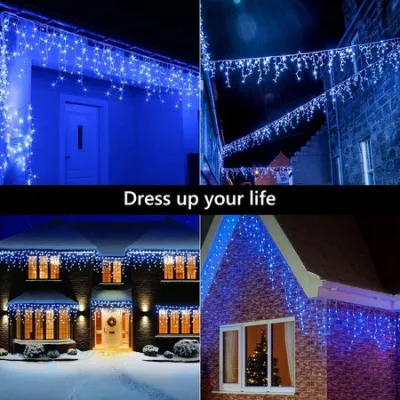
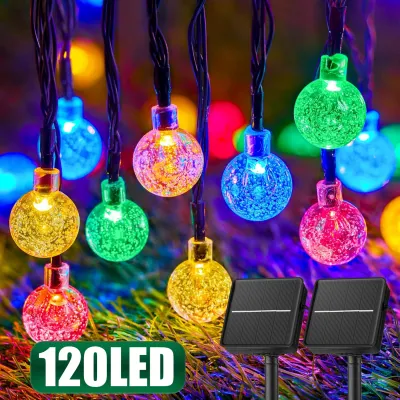
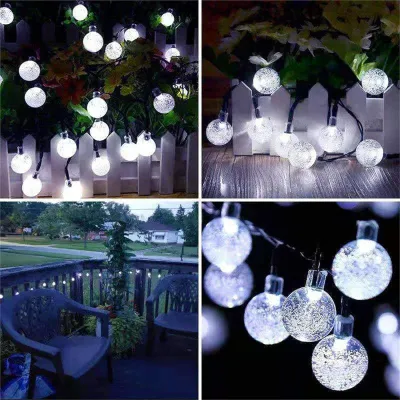
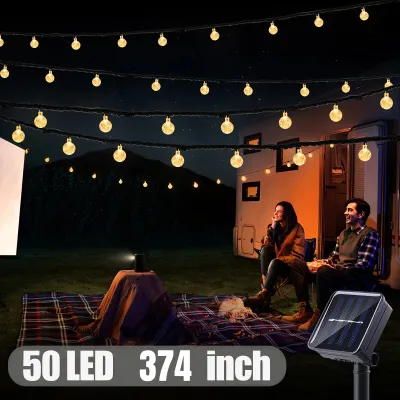
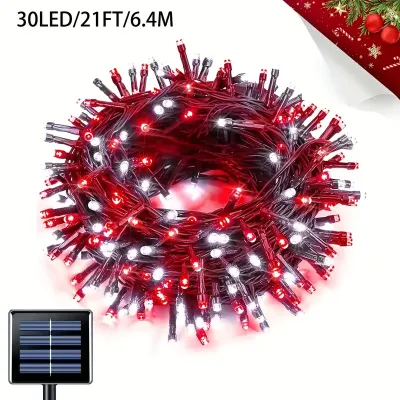
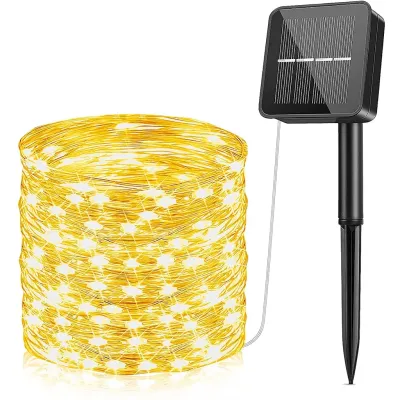
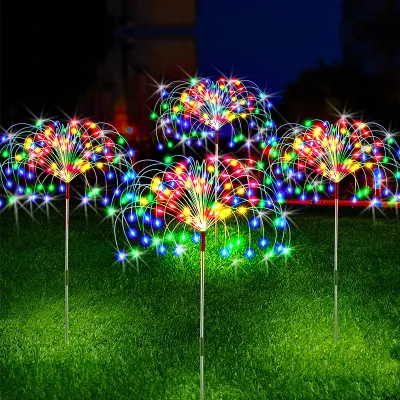
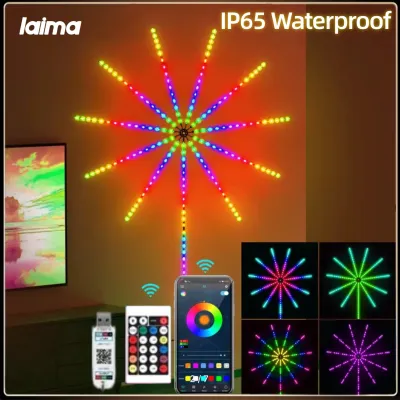
Prices are valid at publication and may change. Please refer to the product page for the latest price.
Key Features to Evaluate for Tropical Balconies
Selecting the right outdoor lighting requires looking beyond aesthetic appeal to evaluate technical specifications. The tropical climate of the Philippines, characterized by high humidity, intense heat, and heavy seasonal rainfall, will quickly degrade low-quality outdoor electronics. Understanding how to read product specifications ensures your investment survives the season.

Weatherproofing for Heavy Rain and High Humidity
When shopping on online marketplaces or at local specialty lighting retailers, the Ingress Protection (IP) rating is the most critical safety specification to verify. The IP rating consists of two digits: the first measures protection against solid objects like dust, and the second measures protection against liquids. For exposed condo balconies that experience driving rain during the late-year monsoon transition, look for lights rated at IP65 or higher. An IP65 rating indicates the unit is completely dust-tight and can withstand water jets projected from any angle, which is essential when tropical storms blow rain sideways against your building.
In contrast, cheaper decorative lights often carry an IP44 rating, which only protects against splashing water. While IP44 lights may survive a light drizzle on a fully covered patio, they are highly susceptible to water intrusion on an open balcony, leading to short circuits, corroded battery terminals, and premature product failure.
Beyond water resistance, inspect the physical construction of the wiring. The intense tropical sun in the Philippines emits high levels of ultraviolet (UV) radiation, which rapidly degrades standard PVC plastic insulation, causing it to become brittle, crack, and expose the copper wiring underneath. Prioritize light strings constructed with UV-resistant rubberized cables or silicone-coated copper wires. These materials remain flexible and intact despite prolonged exposure to heat and sunlight, preventing electrical hazards and maintaining insulation integrity over several seasons.
Solar Panel Placement and Sunlight Access
High-rise condominium architecture inherently limits sunlight access. Because balconies are stacked vertically, the concrete floor slab of the unit above acts as a deep overhang, casting a shadow over your outdoor space for most of the day. A balcony facing north or east may only receive a brief window of direct morning sunlight, which is often insufficient to fully charge an integrated solar panel.
To overcome this spatial constraint, you must evaluate the design of the solar panel itself. Solar lights generally fall into two categories: integrated systems, where the solar panel is built directly into the light housing or the end of the string, and detached systems, where the solar panel is a separate unit connected to the lights via a dedicated lead cable.
For most condo balconies, detached solar panels are highly recommended. A detached panel connected by a 3-to-5-meter extension cable allows you to place the light string deep within the shaded areas of your balcony—such as wrapped around inner pillars or woven into cozy seating areas—while mounting the solar panel itself at the absolute outer edge of the railing where it can capture maximum unobstructed sunlight. Before purchasing, observe your balcony’s sunlight patterns for a few days to identify the exact spot that receives the most direct sun, and ensure your chosen light set has a sufficiently long lead wire to bridge the distance.
Brightness, Color Temperature, and Light Pollution
Balcony lighting exists in close proximity to your indoor living space and your neighbors’ windows. Selecting the correct color temperature and brightness level is essential to create a relaxing atmosphere that complies with community standards.
Color temperature is measured in Kelvin (K). For a cozy, inviting holiday ambiance, look for lights in the warm white range, typically between 2700K and 3000K. Warm white light mimics the soft glow of traditional incandescent bulbs, creating a relaxing environment that complements indoor living spaces. Avoid cool white lights (5000K to 6500K), which emit a stark, blue-toned light that can feel clinical and harsh in confined outdoor spaces.
Brightness, measured in lumens, must also be managed carefully. While high-lumen floodlights are useful for security, decorative balcony lights should focus on low-intensity accent lighting. A brightness level of 5 to 15 lumens per bulb is generally sufficient to create a festive glow without causing discomfort. Excessive brightness can lead to light pollution, casting an unwanted glare into your own living room or, worse, directly into the windows of the condo unit opposite or adjacent to yours.
Before finalizing your lighting design, always consult your specific condominium corporation’s Deed of Restrictions or house rules. Many high-rise developments maintain strict guidelines regarding exterior modifications, visible holiday decorations, flashing light patterns, or specific color schemes to preserve the building’s architectural uniformity and prevent neighbor disputes.
Best Solar Light Configurations for Condo Balconies
Different balcony layouts and sunlight profiles require specific lighting configurations. Matching the physical style of the light string to your balcony’s structural features will yield the best aesthetic and functional results.
Detached-Panel Fairy String Lights
Detached-panel fairy string lights are the most versatile and adaptable option for the typical Philippine condo balcony. These systems feature micro-LED bulbs embedded along thin, flexible copper or silver wires, connected to a separate solar charging unit. Because the wire is highly pliable, you can easily wrap it around metal balustrades, weave it through balcony planters, or drape it along privacy screens and wooden trellises.
This configuration is especially beneficial for balconies that feature lush container gardens with palms, bougainvilleas, or snake plants. You can weave the delicate micro-LEDs through the foliage to create a magical, glowing garden effect, while routing the lead wire outward to a solar panel secured to the sunniest corner of the railing.
Because the solar panel is independent, you can adjust its angle throughout the season to account for the changing path of the sun. This flexibility ensures that even if your balcony is partially shaded by adjacent towers or architectural columns, you can still achieve a full charge without compromising the placement of your decorative lights.
Integrated-Panel Curtain or Net Lights
Curtain and net lights offer a high-impact, uniform decorative solution that is incredibly easy to install. Curtain lights feature a main top strand with multiple vertical light strings hanging downward, resembling a glowing fabric drape, while net lights consist of a grid pattern that can be stretched over a flat surface.
These configurations work exceptionally well on open, sun-facing balconies that feature glass railings or wide, unobstructed openings. Hanging a set of curtain lights directly against the exterior glass or along the outer railing creates a stunning wall of light that is visible from both inside the condo and from the street below.
However, integrated-panel curtain or net lights have a distinct limitation: the solar panel is often built directly into the top support wire or is a small unit attached closely to the main strand. If your balcony has a deep concrete ceiling overhang that blocks overhead sunlight from reaching the top of the railing, the integrated panel will struggle to charge. This configuration is best reserved for top-floor penthouses, balconies with open-air trellises, or south-facing units that receive intense, angled sunlight for most of the day.
Hybrid Solar and USB-Rechargeable Lights
In the Philippines, the Christmas season begins exceptionally early, with holiday preparations starting as early as September. This extended festive period overlaps with the latter half of the rainy season and the transition between monsoon patterns, which can bring weeks of overcast skies, heavy tropical depressions, and typhoons.
During prolonged periods of cloud cover, standard solar lights will fail to receive enough sunlight to charge, resulting in dim displays or lights that turn off after only an hour of operation. To eliminate this frustration, hybrid solar and USB-rechargeable lights are highly recommended. These innovative systems feature a solar panel equipped with a built-in battery pack that can be detached and plugged into a standard indoor USB wall charger.
When the weather is sunny, the system operates entirely on free solar energy. During consecutive rainy or overcast days, you can simply unclip the battery pack or solar unit, bring it indoors to charge via a standard 5V USB connection, and reinstall it on the balcony. This hybrid capability guarantees that your holiday display remains fully illuminated at maximum brightness during peak celebration days, regardless of the weather outside.
| Feature | Detached-Panel Fairy Lights | Integrated Curtain/Net Lights | Hybrid Solar/USB Lights |
|---|---|---|---|
| Best Balcony Type | Partially shaded, heavily planted, or narrow balconies | Open, sun-facing balconies with glass or metal railings | Low-light balconies, lower-floor units, or wet-season use |
| Installation Flexibility | High; wire can be wrapped, woven, or shaped easily | Moderate; requires a flat, wide hanging surface | High; can be placed anywhere regardless of sun access |
| Charging Source | Solar only (requires strategic panel placement) | Solar only (requires direct, unobstructed overhead sun) | Dual-power (Solar energy + indoor 5V USB backup charging) |
| Typical Price Band | Budget to Mid-range (₱300 – ₱800) | Mid-range (₱600 – ₱1,200) | Premium (₱1,200 – ₱2,500+) |
Safe Installation and Condo Rule Compliance
Installing outdoor decorations in a high-rise environment requires a strict focus on safety and structural preservation. Strong winds, gravity, and building regulations mean that casual ground-level installation methods are insufficient.
First, prioritize damage-free, non-destructive mounting solutions. Most condominium corporations strictly prohibit drilling holes into exterior concrete walls, columns, or balcony ceilings, as drilling can damage structural integrity, void waterproofing warranties, and cause aesthetic damage that is costly to repair. Instead, utilize renter-friendly mounting hardware. Heavy-duty, UV-resistant nylon zip ties are ideal for securing light strings and solar panels to metal railings and balustrades. For smooth surfaces like glass sliding doors, exterior tiles, or aluminum window frames, use outdoor-rated suction cups or weather-resistant adhesive clips designed specifically for wet, humid environments.
Second, account for wind shear. High-rise buildings experience significantly higher wind speeds than ground-level structures, especially on upper floors. A loose solar panel or a dangling wire can act as a sail, catching the wind and tearing free from its mounts. If a component falls from a high-rise balcony, it poses a severe safety hazard to pedestrians and property below. Ensure that every solar panel is anchored securely at multiple points using heavy-duty zip ties or specialized metal railing clamps. Avoid simply resting the solar panel on the balcony floor or balancing it on a planter box where a sudden gust of wind can easily displace it.
Third, implement proper cable management to prevent water damage. When routing lead wires from the solar panel to the light string, or when bringing a hybrid charging cable indoors, always create a “drip loop.” A drip loop is a simple, downward-facing loop in the wire positioned just before the cable enters a window gap, door frame, or junction box. Rainwater flowing along the wire will naturally pool at the bottom of the loop and drip safely onto the balcony floor, rather than being guided horizontally along the cable into your indoor living space or into sensitive electrical connections.
Safety Warning: For any installations involving fixed electrical wiring, mains power connections, or working at heights near open balcony edges, always isolate the power supply, follow the product manual, and consult a licensed electrician or qualified professional. Always check the applied product’s label and the treated balcony surfaces for manufacturer compatibility instructions before applying adhesives or mounting hardware.
Seasonal Maintenance and Storage
To maximize the lifespan of your solar Christmas lights and protect your investment, regular maintenance during the holiday season and proper storage during the off-season are essential.
Urban air pollution, dust, and, in coastal areas like Manila Bay, salt spray will gradually deposit a thin, grimy film over the glass or plastic cover of your solar panel. This accumulation blocks sunlight, significantly reducing the photovoltaic conversion efficiency of the panel and resulting in shorter nightly runtimes. To prevent this, perform a quick weekly maintenance check. Wipe the surface of the solar panel with a soft, damp microfiber cloth to remove dust and debris. Avoid using abrasive scrubbing pads or harsh chemical cleaners, which can scratch the protective coating and permanently degrade the panel’s light absorption capacity.
During your weekly cleaning, conduct a quick visual inspection of the wiring and connections. Check the insulation along the entire length of the light string for any signs of physical wear, such as cracking from heat exposure, pinch marks from balcony doors, or damage from urban pests. Inspect the connection points between the light string and the solar panel to ensure the waterproof silicone seals remain intact and snug.
Once the holiday season concludes, do not leave your solar lights outside permanently. While high-quality lights are designed to resist weather, continuous year-round exposure to intense tropical UV rays, high humidity, and heavy rains will accelerate the degradation of plastic housings, weaken wire insulation, and shorten the lifespan of the internal rechargeable batteries.
To store your lights correctly, follow these steps:
- Turn off the unit: Locate the power switch on the back of the solar panel or battery housing and switch it to the "OFF" position to prevent the battery from draining completely or cycling during storage.
- Clean thoroughly: Wipe down the entire light string, bulbs, and solar panel with a dry or slightly damp microfiber cloth to remove all outdoor grime, salt residue, and moisture.
- Dry completely: Allow the entire set to air-dry completely in a shaded, well-ventilated indoor area for 24 to 48 hours. Packing away even a small amount of trapped moisture can lead to mold growth, wire rot, and terminal corrosion.
- Coil neatly: Carefully coil the light strings around a piece of cardboard or a dedicated light spool to prevent tight kinks, wire strain, and frustrating tangles.
- Store in a controlled environment: Place the coiled lights and solar panel inside an airtight plastic storage container. Add a few silica gel packets to absorb any residual ambient humidity, and store the container in a cool, dry, climate-controlled indoor space away from direct sunlight and extreme temperature fluctuations.
Frequently Asked Questions (FAQ)
Do solar Christmas lights work during the Philippine rainy season?
Solar Christmas lights will still operate during the rainy season, but their performance and nightly runtime will drop significantly. Solar panels require direct sunlight to charge their internal batteries efficiently; on heavily overcast or rainy days, they rely on diffused ambient light, which reduces charging efficiency by 50% to 80%. This results in dimmer lights that may only stay illuminated for one to two hours instead of the typical six to eight hours. To ensure consistent brightness during the wet Habagat months or sudden tropical depressions, it is highly recommended to invest in hybrid solar models that feature a USB-rechargeable backup option.
Can I leave solar string lights outside all year round?
While high-quality outdoor solar lights are built to withstand rain and sun, leaving them outside year-round on a tropical balcony is not recommended. The combination of intense, daily UV radiation, high humidity, and seasonal typhoons in the Philippines will eventually cause plastic housings to warp, wire insulation to crack, and internal battery seals to fail. To maximize the lifespan of your lights and ensure they work perfectly for multiple holiday seasons, it is best to install them in September or October and take them down for proper indoor storage by early January.
How do I secure the solar panel on a concrete balcony?
Because you cannot drive ground stakes into a concrete or tiled balcony floor, you must use alternative, secure mounting methods. The safest and most effective method is to mount the solar panel directly to your balcony’s metal balustrade or railing. You can use heavy-duty, UV-resistant nylon zip ties threaded through the panel’s mounting bracket to clamp it tightly to the railing bars. Alternatively, you can use specialized metal C-clamps or railing mounts designed for outdoor cameras. Never simply rest the solar panel loose on the floor or on a ledge, as high-rise wind shear can easily blow it away, creating a dangerous falling hazard.

Community discussion
Share your experience or ask a question. Comments are reviewed before publication.