
The best tri-color flush mount ceiling lights for low-ceiling condo bedrooms are ultra-slim, integrated LED fixtures with a profile height of under one inch (2.5 cm) that offer a high Color Rendering Index (CRI 80+) and a sealed chassis to keep out dust and tropical insects. For typical condominiums in the Philippines where concrete slab ceilings limit the ability to install recessed can lights, a surface-mounted bed room light ceiling tri color fixture provides the ideal combination of space-saving design and adjustable ambiance. By switching between warm white, neutral white, and cool daylight, residents can instantly transform a compact bedroom from a bright, productive workspace into a cozy, relaxing sanctuary.
Choosing the right ceiling light requires balancing physical dimensions with functional output. In a high-density urban environment where living spaces are carefully optimized, selecting a fixture that hugs the ceiling prevents the room from feeling visually crowded. Understanding the technical specifications, installation requirements, and design variations of these modern fixtures ensures a safe and aesthetically pleasing upgrade to your home.
Why Tri-Color Flush Mounts Solve Low-Ceiling Bedroom Challenges
Most modern high-rise developments in major Philippine urban centers, such as Metro Manila or Cebu, feature structural concrete slab ceilings with finished floor-to-ceiling heights ranging from 2.4 to 2.6 meters. In these compact layouts, hanging fixtures like chandeliers, pendants, or even deep semi-flush mounts pose a physical and visual hazard. They physically obstruct pathways, disrupt sightlines, and visually bisect the room, making an already modest 10-square-meter bedroom feel claustrophobic and cramped.
Products mentioned in this guide
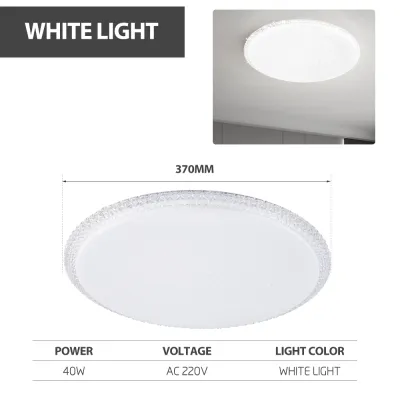
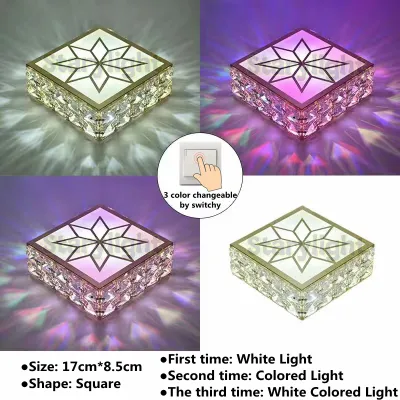
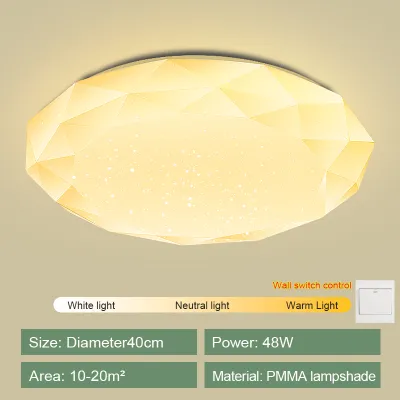
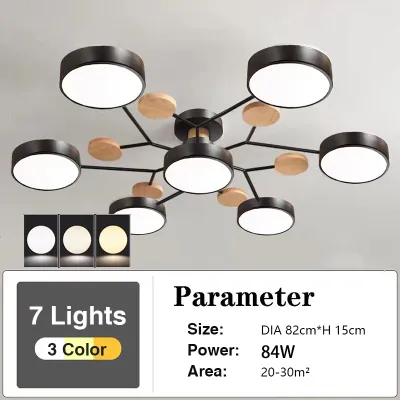
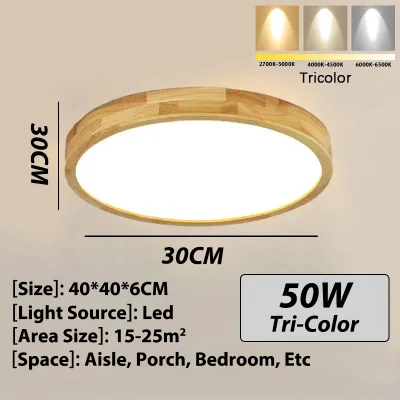
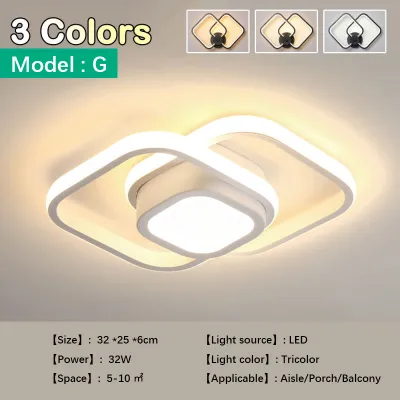
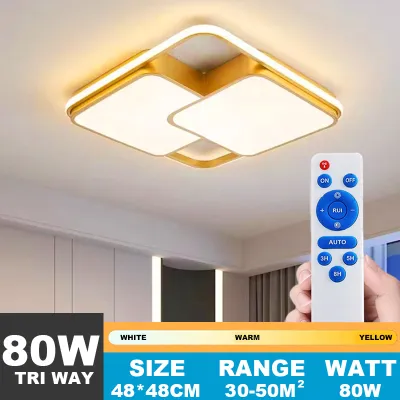
Prices are valid at publication and may change. Please refer to the product page for the latest price.
Flush mount, or surface-mounted, fixtures solve this spatial dilemma by hugging the ceiling directly. By eliminating the drop rods, chains, or decorative stems associated with suspended lighting, these low-profile designs preserve valuable vertical clearance. This keeps the center of the room entirely open, creating an unbroken plane across the ceiling that tricks the eye into perceiving a taller, more expansive volume.
The primary challenge of a single-room condo layout is that the bedroom often serves multiple purposes: a sleeping area, a dressing room, and occasionally a home office. Traditional single-color temperature lights force a compromise—either a stark, cold light that ruins the evening mood or a dim, yellow glow that makes matching clothes or reading difficult. Tri-color LED technology solves this by packing three distinct color temperatures—typically warm white (3000K), neutral white (4000K), and cool daylight (6500K)—into a single fixture. Users can shift the room’s atmosphere instantly to match their current activity without cluttering the ceiling with multiple specialized fixtures.
What to Check Before Buying a Bed Room Light Ceiling Tri Color Fixture
When vertical space is at a premium, every millimeter counts. Look for fixtures labeled as ‘ultra-slim’ or ‘low-profile,’ which typically measure between 1.5 cm and 2.5 cm in total thickness. Keeping the maximum fixture height under 5 cm ensures that taller occupants can move freely without feeling like the light source is looming directly overhead.

Do not rely on wattage as a measure of brightness, as modern LED efficiency varies widely. Instead, evaluate the light output in lumens. For a standard condo bedroom measuring between 9 and 12 square meters, a total light output of 1,500 to 2,400 lumens is generally recommended to provide sufficient ambient illumination. This translates to an illumination level of roughly 150 to 200 lux on the floor and bed surface, ensuring the space is bright enough for daily tasks without creating uncomfortable glare.
The Color Rendering Index measures how accurately a light source reveals the true colors of objects compared to natural sunlight. For bedroom applications, prioritize fixtures with a CRI rating of 80 or higher (CRI 90+ is ideal). A high CRI is particularly critical near wardrobes and vanity mirrors, ensuring that clothing colors are not distorted and skin tones appear natural and healthy.
Most entry-level and mid-range tri-color fixtures utilize a sequential wall-switch toggle system. Rapidly flipping your standard wall switch off and on (typically within a one-to-two-second window) signals the internal driver to cycle to the next color temperature. Understand that these fixtures do not require specialized smart wiring or dedicated controllers, making them highly compatible with existing simple single-pole switches.
In the Philippines, the standard household electrical supply is 220V to 240V at 60Hz. Ensure any imported or locally purchased fixture is explicitly rated for this voltage and frequency to prevent premature driver failure or safety hazards. Additionally, look for reputable safety certifications such as the Philippine Standard (PS) mark or Import Commodity Clearance (ICC) sticker. Given the high relative humidity in tropical climates, select fixtures with a sealed driver compartment to prevent moisture buildup and deter small insects from nesting inside the diffuser.
Top Flush Mount Light Styles for Compact Condo Bedrooms
Ultra-Slim Edge-Lit LED Panels
Edge-Lit technology represents a major design breakthrough for low-ceiling environments. Unlike back-lit panels where the LEDs sit behind the diffuser and require physical depth to blend the individual light points, edge-lit fixtures place the LED chips along the inner perimeter of the frame. The light is directed inward through a specialized light guide plate and out through a micro-prismatic diffuser. This configuration allows the entire fixture to achieve an incredibly thin profile, often measuring less than 2 centimeters in thickness.
The visual effect of an edge-lit panel is exceptionally clean and architectural. Because the light is scattered laterally before being projected downward, the fixture emits a soft, uniform glow across its entire surface, eliminating harsh hot spots and dark edges. This even distribution minimizes shadows and reduces eye strain, making the bedroom feel calm and balanced.
These panels are highly recommended for ultra-modern, minimalist condo interiors or bedrooms with exceptionally low ceiling clearances (under 2.4 meters). Their flat, unobtrusive design integrates seamlessly into the ceiling plane, almost mimicking a skylight when turned on and virtually disappearing when switched off.
Minimalist Acrylic Drum Fixtures
For bedrooms where an industrial or sterile panel look feels too cold, minimalist acrylic drum fixtures offer a softer, more classic aesthetic while maintaining a remarkably low profile. These fixtures feature a shallow cylindrical shape, typically between 5 cm and 8 cm in depth, wrapped in a high-grade frosted acrylic or polycarbonate diffuser. The curved edges soften the transition between the ceiling and the light source, adding a touch of warmth to the room’s design.
The primary functional advantage of a high-quality acrylic diffuser is its ability to soften intense LED glare. It scatters the light in a wide, ambient pattern, gently illuminating both the floor below and the surrounding ceiling area. When selecting a drum fixture, balance is key: for a typical 10-square-meter condo bedroom, a diameter of 30 cm to 40 cm provides an appropriate visual scale without overwhelming the ceiling space.
Additionally, these fixtures are highly practical for busy condo dwellers. The sealed or semi-sealed acrylic cover is naturally dust-resistant and easy to maintain. Unlike open-bottom or multi-bulb glass fixtures that collect dust, lint, and dead insects, a quick wipe with a dry microfiber cloth is usually all that is required to keep the diffuser clean and operating at maximum light output.
Recessed-Look Surface Mounts
Many condo residents desire the clean, modern look of recessed downlights (often called ‘pinlights’ in the Philippines). However, because most condo ceilings consist of solid, cast-in-place concrete slabs, cutting holes to install recessed cans is structurally impossible without building an expensive, space-reducing gypsum drop ceiling. Recessed-look surface mounts offer a clever workaround by mimicking the deep-bezel aesthetic of a recessed downlight within a surface-mounted housing.
These fixtures are engineered with deep inner baffles or dark-colored bezels that recess the light source slightly upward into the fixture’s own shallow frame. This design directs the light primarily downward in a controlled beam rather than scattering it sideways across the ceiling. By reducing ceiling wash, these fixtures draw less attention to the ceiling surface itself, creating a clean, uncluttered visual plane.
When opting for this style, it is crucial to verify the fixture’s beam angle. Standard recessed-look surface mounts often feature narrower beam angles (around 60 to 90 degrees) compared to wide-angle flat panels. To ensure adequate coverage across the entire bedroom, look for models with wider beam distributions or plan to install a slightly larger fixture centered over the bed to cover the primary living zone.
Safe Installation and Electrical Checks for Condos
Before beginning any installation, verify that the new fixture is fully compatible with the local 220V 60Hz electrical grid. Standardizing this check prevents catastrophic damage to the sensitive electronic drivers inside tri-color LEDs. Additionally, confirm that the mounting plate of the new fixture aligns with the standard circular or octagonal utility boxes embedded in your concrete ceiling slab.
Unlike landed residential homes, condominium properties operate under strict building management guidelines. Before scheduling any electrical work, consult your condo’s property management office (PMO). Many administrations require a formal work permit, a clearance form, and a gate pass for external contractors. They may also restrict drilling or electrical modifications to specific hours of the day to minimize noise disruption for neighboring units.
Working with electrical fixtures carries inherent risks of shock, short circuits, and fire. Always isolate the power supply by turning off the main circuit breaker at your unit’s distribution panel before inspecting, removing, or installing any light fixture. Do not rely solely on the wall switch to cut power. If the installation involves modifying fixed wiring, working on high ladders, or handling complex mounting brackets, hire a licensed electrician or a qualified professional to perform the work safely and in compliance with the Philippine Electrical Code.
While modern plastic and aluminum flush mounts are relatively lightweight, securing them safely to a concrete ceiling requires the correct hardware. Standard plastic drywall anchors or simple wood screws are entirely inadequate and pose a severe fall risk. Installers must use dedicated masonry anchors, expansion shield bolts, or concrete screws drilled directly into the structural concrete slab using a rotary hammer drill. Ensure that no structural steel reinforcement bars (rebar) or embedded electrical conduits are damaged during the drilling process.
Frequently Asked Questions (FAQ)
Can I use a tri-color flush mount with a dimmer switch?
Most standard tri-color flush mount ceiling lights are not compatible with traditional wall-mounted dimmer switches. Because these fixtures rely on rapid power interruptions to cycle through their color temperatures, connecting them to a standard phase-cut dimmer can cause severe flickering, audible buzzing, or permanent damage to the LED driver. If dimming is a priority, you must specifically purchase a fixture labeled as ‘dimmable tri-color’ and pair it with a compatible LED-rated dimmer switch, or opt for a smart-enabled model controlled via a remote or mobile application.
How does the tri-color switching mechanism work?
The switching mechanism is operated through the rapid toggling of a standard, single-pole wall switch. When you turn the switch on, the light illuminates in its default color temperature (often cool daylight). Flipping the switch off and on again within one to two seconds triggers an internal microchip in the driver to switch to the second color temperature (typically warm white), and repeating the action cycles to the third (neutral white). If the light remains turned off for more than five to ten seconds, the internal memory resets, and the fixture will return to its default starting color temperature the next time it is switched on.
Which color temperature is best for winding down at night?
To support your body’s natural circadian rhythm and prepare for restful sleep, warm white light (typically 2700K to 3000K) is the highly recommended choice for evening use. Warm light mimics the low color temperature of sunset, which helps stimulate the natural production of melatonin, a hormone critical for sleep regulation. Conversely, cool daylight (6000K to 6500K) or neutral white (4000K) should be reserved for morning routines, dressing, or performing detail-oriented tasks, as these higher, blue-enriched color temperatures promote alertness and focus.

Community discussion
Share your experience or ask a question. Comments are reviewed before publication.