
Finding the perfect balance between artistic decor and functional lighting is a common challenge when styling narrow hallways and cozy bedrooms. In the Philippines, where residential layouts often feature compact corridors and snug bedside spaces, a vine lamp serves as an exceptionally elegant solution. These nature-inspired wall sconces mimic the organic, trailing growth of climbing plants, transforming flat walls into warm, sculptural focal points. By mounting these fixtures directly to the wall, you free up valuable floor and tabletop space while introducing a soft, ambient glow that makes your home feel instantly more welcoming.
Choosing the right vine lamp requires looking beyond mere aesthetics to consider local structural realities, installation safety, and daily ergonomics. From ensuring your corridor sconces do not obstruct busy walkways to selecting bedside fixtures that prevent eye strain, every detail matters. This guide outlines the essential spatial rules, electrical requirements, and design strategies to help you select and install the ideal vine-style lighting for your home.
Why Vine Wall Lamps Elevate Hallways and Bedside Spaces
The vine aesthetic in lighting design is defined by its fluid, organic lines, mimicry of natural botanical structures, and delicate, trailing silhouettes. Unlike rigid geometric fixtures, a vine lamp often features hand-forged metal branches, leaf-shaped accents, or woven natural fibers like rattan and abaca. These elements recreate the gentle, winding paths of climbing flora, bringing a biophilic element into your interior spaces. The result is a lighting fixture that functions as a striking piece of three-dimensional wall art even when the bulb is turned off.
Products mentioned in this guide
![[Vodool Home Mall] 48/72/96/144 LED Vine Tree Branch Lights 8 Modes Wall Decoration Vine Lights Tree Branch Lamp for Desktop Wall Party Home Decoration](https://img.lazcdn.com/g/p/301a872930044d22ca8114c1892164e5.jpg_400x400q80.jpg_.webp)

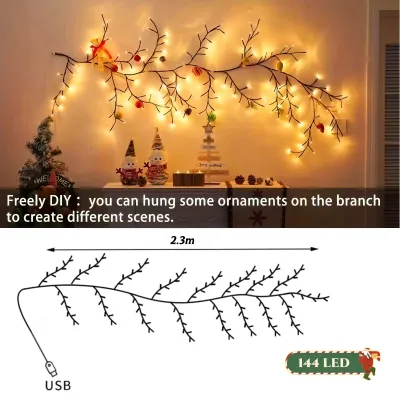
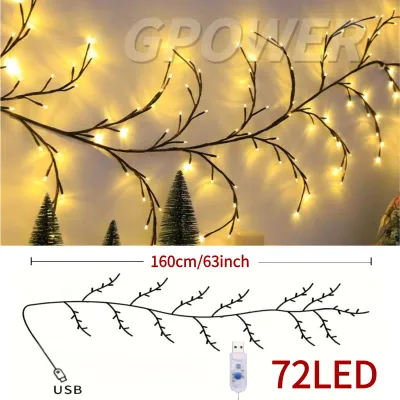
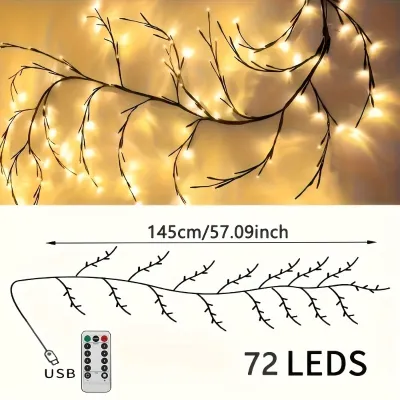
![[UEB Mall]Willow Vine Lights 8 Modes Enchanted Wall Decoration Vine Lights with Remote Tree Branch Lamp for Christmas Decoration](https://img.lazcdn.com/g/p/b60808ad6b0de31608d4624b5d7bde72.jpg_400x400q80.jpg_.webp)

Prices are valid at publication and may change. Please refer to the product page for the latest price.
In many Filipino homes, hallways are constructed with solid concrete hollow blocks, resulting in straight, narrow, and occasionally stark passages. These rigid architectural lines can make corridors feel clinical or claustrophobic. Introducing the organic curves of a vine-style wall sconce breaks up this architectural stiffness, softening the hard angles and creating a more dynamic, visually interesting transition between rooms. The trailing pattern of the metal or woven branches draws the eye along the passage, making the corridor feel longer and more spacious.
For the bedroom, space is often at a premium, particularly on bedside tables or nightstands that must accommodate phones, books, and personal items. Bedside vine lamps solve this clutter problem by shifting the light source entirely to the wall, eliminating the need for bulky table lamps. This setup provides excellent ambient mood lighting that is perfectly suited for winding down at the end of a long day. Because the fixture climbs or trails upward, it adds vertical visual interest to your bedroom walls, making low ceilings appear higher while keeping your nightstand completely clear.
Sizing and Clearance Rules for Narrow Corridors
When installing wall-mounted lighting in a hallway, physical safety and ease of movement must be your primary considerations. In the Philippines, residential corridors typically measure between 90 and 120 centimeters in width, leaving very little margin for bulky decor. A vine lamp that extends too far from the wall can easily catch on clothing, bump into shoulders, or obstruct the passage of large furniture. To maintain a safe and comfortable walkway, look for low-profile, flush, or semi-flush vine designs that protrude no more than 10 to 15 centimeters from the wall surface. Upward-trailing designs that keep the bulk of their decorative elements close to the wall are excellent choices for these high-traffic zones.

Mounting height is equally critical to ensure that the light source remains functional without causing discomfort. Standard practice dictates mounting wall sconces so that the center of the fixture sits approximately 150 to 170 centimeters above the finished floor. This height ensures that the light source is positioned slightly above average eye level for most family members, preventing direct glare as people walk past. Additionally, keeping the trailing vine branches above shoulder level minimizes the risk of accidental bumps or snags during daily transit.
The design of the lamp shade plays a decisive role in how light is distributed across your corridor. Raw, exposed bulbs can cast harsh, distracting shadows on the walls, emphasizing any unevenness in the plaster or concrete finish. Instead, opt for vine lamps equipped with frosted glass, fabric, or dense leaf-shaped metal shades that diffuse the light evenly. These materials scatter the illumination softly downward and outward, creating a warm, continuous path of light that guides you safely through the hallway without producing blinding hotspots.
Bedside Ergonomics: Reach, Switches, and Glare Control
Using a wall-mounted vine lamp next to your bed requires a careful focus on daily comfort and ease of use. Unlike hallway lights, which are typically operated by wall switches near the entrance, a bedside lamp must be easily accessible from a lying or seated position. If you enjoy reading in bed, consider a vine lamp with adjustable or articulated branches that allow you to direct the light exactly where you need it. Fixed-branch models can also work beautifully, provided they are mounted close enough to the headboard so that you do not have to stretch or strain to interact with them.
Switch placement is a crucial ergonomic detail that is easily overlooked during the planning phase. If your vine lamp is hardwired into a wall switch, ensure that the switch is positioned within arm’s reach of your pillow so you do not have to get out of bed to turn it off. For plug-in models, look for fixtures that feature an inline cord switch or a pull-chain mechanism hanging directly from the base of the lamp. These physical controls allow for effortless operation, ensuring that transitioning from reading to sleeping is a seamless, relaxing process.
Preventing direct glare is vital for maintaining a restful bedroom environment that supports healthy sleep hygiene. A bulb that shines directly into your eyes while you are lying down can disrupt your body’s natural production of melatonin and cause significant eye strain. To prevent this, select vine lamps that feature downward-facing shades, opaque decorative leaves that shield the bulb, or deep canopies. These design features direct the light downward onto your reading material or soft bedding, keeping the upper portion of the room gently illuminated while protecting your line of sight.
Electrical and Installation Checks for Philippine Homes
Before purchasing any lighting fixture, you must verify that its electrical specifications are fully compatible with local standards. In the Philippines, the standard residential electrical system operates at 220 volts and 60 hertz (220V/60Hz). Many imported vine lamps, particularly those designed for North American markets, are rated for 110V; using these without verifying compatibility can damage the fixture or present a fire hazard. Ensure the lamp’s socket and driver are rated for 220V, and check that it uses standard, locally available bulb bases such as E27 (medium screw) or E14 (candelabra screw) so that finding replacement bulbs in local hardware stores is never an issue.
The method you choose to mount and power your vine lamp depends on your wall type and whether you are conducting a major renovation. For finished walls where cutting concrete is impractical, a plug-in vine lamp is the easiest choice. You can manage the hanging cord using paintable plastic covers or textile-wrapped cables that mimic organic stems. For a seamless look, hardwiring the lamp into a concealed junction box is ideal, though this requires chasing the concrete wall and replastering.
The physical weight of the fixture dictates the mounting hardware required to secure it safely. Heavy metal or solid wood vine lamps need robust support to prevent them from pulling loose. For the solid concrete or concrete hollow block walls common in local homes, use a masonry drill bit to insert plastic wall plugs (tox anchors) before securing the bracket. For drywall or gypsum partitions, use specialized toggle bolts or anchor the bracket directly into the underlying metal or wooden studs.
Always prioritize safety protocols during installation to protect your home’s electrical system. Turn off the power supply at the main circuit breaker and verify that the circuit is dead using a voltage tester before touching any wiring. If your installation requires running new concealed lines, chasing concrete, or mounting fixtures near damp-adjacent surfaces, hire a licensed electrician. Professional installation ensures compliance with the Philippine Electrical Code, keeping your setup safe and reliable.
Cross-Scenario Compatibility: Unifying Your Corridor and Bedroom
Achieving a cohesive look throughout your home does not mean you have to use identical fixtures in every single room. When planning your corridor and bedroom lighting, you must balance visual unity with the distinct functional needs of each space. For instance, you might choose a unified design theme—such as hand-forged black iron vines—but select different variations of the model for each area. A slim, flush-mounted vine sconce works perfectly to keep the corridor clear, while a matching but more detailed, adjustable version of the same vine lamp can be reserved for the bedside. This approach maintains a consistent aesthetic thread throughout your home while respecting the physical limits of each room.
Integrating smart lighting technology is an excellent way to adapt a single vine fixture to different roles throughout the day. By equipping your vine lamps with dimmable or smart LED bulbs, you can easily transition from bright, clear illumination in the corridor to a soft, warm glow in the bedroom. For corridors, a brighter, neutral white light (around 3000K to 4000K) ensures safe passage and clear visibility during active hours. In the bedroom, dimming the bulb to a warm candle-like glow (around 2200K to 2700K) helps signal to your body that it is time to rest, all without needing to alter your beautiful vine hardware.
The tropical climate of the Philippines, characterized by high humidity and coastal salt air in many regions, requires careful material selection to ensure longevity. Metal vine lamps with low-quality painted finishes can quickly develop rust, while untreated natural fibers like rattan, bamboo, or abaca can warp or attract mold if exposed to damp air. To protect your investment, choose metal fixtures with durable powder-coated or rust-resistant brass finishes, and ensure any woven natural materials have been treated with a protective clear lacquer. Regular maintenance, such as gently dusting the intricate leaves and branches with a dry microfiber cloth or a soft brush, will keep your vine lamps looking vibrant and elegant for years to come.
Frequently Asked Questions (FAQ)
Can I install a hardwired vine sconce if my wall only has a standard outlet?
Yes, you can easily convert a hardwired vine sconce into a plug-in fixture by wiring a standard power cord with a plug to the lamp’s connection points. To maintain a clean and attractive look, you can hide the hanging cord using paintable plastic cord covers that blend into your wall, or choose a textile-wrapped cord that complements the organic aesthetic of the vine. However, if you prefer a seamless, cord-free appearance, you should hire a licensed electrician to install a concealed junction box and run the necessary wiring behind your wall.
Are rattan or woven vine lamps suitable for humid bedrooms in the Philippines?
Rattan and other woven natural vine lamps can be used successfully in Philippine bedrooms, provided the space is well-ventilated or regularly air-conditioned to control moisture levels. High humidity can cause untreated natural fibers to absorb dampness, leading to mold growth, warping, or structural weakening over time. To prevent these issues, ensure your woven lamp has been pre-treated with a protective, moisture-resistant lacquer or sealant. Additionally, keep the room well-ventilated, wipe the fixture periodically with a dry cloth, and avoid placing it directly in the path of open windows during the rainy season.

Community discussion
Share your experience or ask a question. Comments are reviewed before publication.