
Finding a reliable solar street light outdoor waterproof fixture in the Philippines requires understanding how tropical climates affect outdoor electronics. Intense heat, high humidity, and torrential monsoon rains can quickly destroy poorly constructed outdoor lights. To secure your driveways, gates, and pathways, you must look past generic marketing claims and evaluate specific engineering standards.
Selecting the right solar street light involves matching the physical environment of your property with verified technical specifications. Whether you are illuminating a small garden path in Laguna or securing a large commercial yard in Davao, the durability of your lighting setup depends on its ingress protection, battery chemistry, and solar panel configuration. This guide breaks down the essential performance metrics, installation safety standards, and practical product categories to help you make an informed purchase.
Quick Guide: What Makes a Solar Light Truly Waterproof?
To survive the harsh outdoor conditions of the Philippines, a solar street light must feature robust weatherproofing and efficient energy conversion. At a minimum, look for an IP65 or IP66 ingress protection rating to ensure the internal circuitry remains dry during heavy downpours. The internal battery should utilize lithium iron phosphate (LiFePO4) chemistry, which resists high ambient heat and offers a longer operational lifespan than standard lithium-ion alternatives.
Products mentioned in this guide
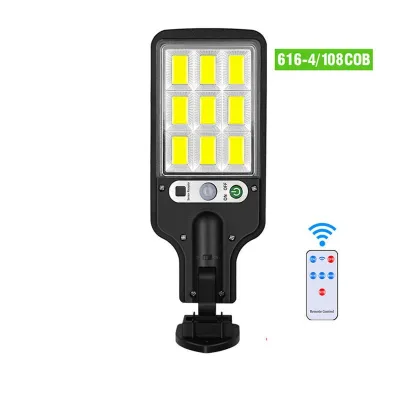
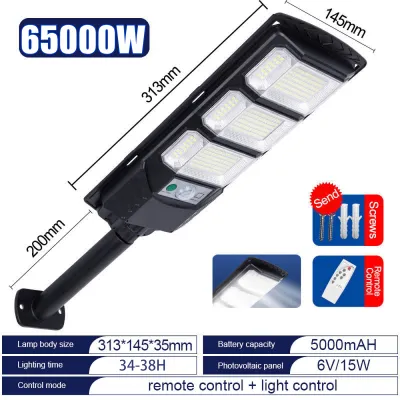
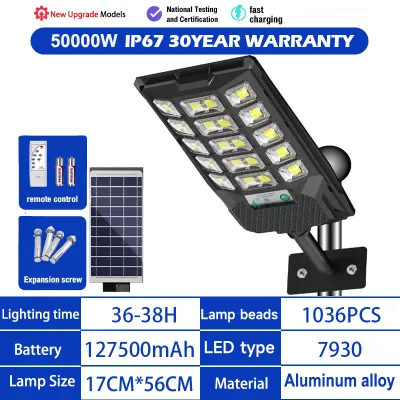
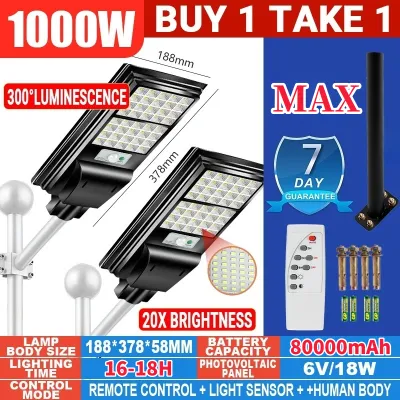
![Top Seller [171.8K Sold] KKSKY Buy 1 Take 1 1000W 60W 100W 200W 300W 500W Solar Led Lights Outdoor Flood Light 40W Street Lamp Waterproof With Remote 5 Years Warranty](https://img.lazcdn.com/g/p/71908228683594faabd610cdd55824de.jpg_400x400q80.jpg_.webp)
Prices are valid at publication and may change. Please refer to the product page for the latest price.
Furthermore, the fixture should feature a monocrystalline solar panel to maintain charging efficiency even during overcast monsoon days. By prioritizing these three core components—IP66 weatherproofing, LiFePO4 batteries, and monocrystalline panels—you ensure your outdoor lighting remains functional throughout the year. The following sections detail these technical specifications and explore the best product types for different outdoor spaces.
Essential Specs for Surviving the Philippine Monsoon
When shopping for outdoor lighting on local e-commerce platforms, technical specifications are your best defense against premature product failure. Understanding these metrics allows you to verify performance claims and choose a fixture built for long-term outdoor survival.

Understanding IP Ratings for Heavy Rain
The Ingress Protection (IP) rating system is an international standard that defines how well an electrical enclosure resists solids and liquids. The first digit represents protection against solid objects like dust, while the second digit indicates protection against water. For outdoor solar street lights, the second digit is the most critical factor for surviving heavy tropical rains.
An IP65 rating means the light is protected against dust ingress and low-pressure water jets from any direction. This rating is generally sufficient for wall-mounted lights placed under partial cover or in areas shielded from strong winds. However, for fixtures fully exposed to direct monsoon rains and high-velocity winds, an IP66 rating is highly recommended, as it guarantees protection against high-pressure water jets. Avoid installing IP65 lights in highly exposed coastal areas where wind-driven rain can mimic high-pressure jets. Ratings of IP67 or IP68 indicate protection against temporary or continuous submersion in water; while excellent, these are typically reserved for ground-level pathway lights or pool lighting rather than elevated street lights. Never rely on the word “waterproof” in a product title unless the manufacturer explicitly provides a verified IP65 or IP66 certification.
Battery and Solar Panel Efficiency
The power generation and storage system of a solar street light determines how many hours it can illuminate your property, especially during consecutive rainy days. Standard rechargeable batteries like Nickel-Metal Hydride (NiMH) or basic Lithium-ion (NCM) tend to degrade rapidly under the intense heat of the Philippine sun. High ambient temperatures can accelerate chemical degradation, leading to swelling, reduced capacity, and potential safety hazards.
To prevent these issues, prioritize fixtures equipped with Lithium Iron Phosphate (LiFePO4) batteries. LiFePO4 chemistry is highly stable, resists thermal runaway in temperatures exceeding 35°C, and supports over 2,000 charge-discharge cycles. This longevity translates to four to five years of reliable nightly operation, compared to the one-to-two-year lifespan of cheaper lithium-ion alternatives.
Pairing a high-quality battery with an efficient solar panel is equally critical. Monocrystalline solar panels are constructed from a single pure silicon crystal, allowing them to achieve energy conversion efficiencies of 18% to 22%. In contrast, polycrystalline panels, recognizable by their speckled blue appearance, average only 14% to 16% efficiency. Monocrystalline panels perform significantly better under diffuse light, meaning they can still charge your battery on cloudy, overcast, or rainy days.
When evaluating battery capacity, compare the milliampere-hours (mAh) or Watt-hours (Wh) to the light’s rated wattage. A reliable rule of thumb is to look for a battery capacity that can sustain the light for at least three consecutive nights without receiving a full charge. This buffer ensures your property remains illuminated even during prolonged tropical depressions.
Top Types of Solar Street Lights for Every Outdoor Space
Different outdoor areas require distinct lighting patterns, brightness levels, and mounting configurations. Selecting the appropriate category of solar street light ensures you achieve optimal coverage without wasting energy or overspending.
High-Lumen Security Lights for Driveways and Gates
Security lighting for main gates, driveways, and perimeter walls requires maximum brightness and wide coverage to deter intruders and provide clear visibility. For these areas, focus on high-lumen fixtures that project a bright, uniform light beam across a wide area.
- Key Specifications: Look for fixtures delivering at least 1,000 to 3,000 real lumens. Ensure the light features a wide beam angle of 120 degrees or more. The housing should be constructed from die-cast aluminum alloy or high-grade, UV-stabilized ABS plastic to prevent cracking and yellowing under intense daily sunlight.
- Typical Applications: Main entry gates, garage doors, blind spots along perimeter walls, and active driveways.
- Recommended Configurations & Price Ranges:
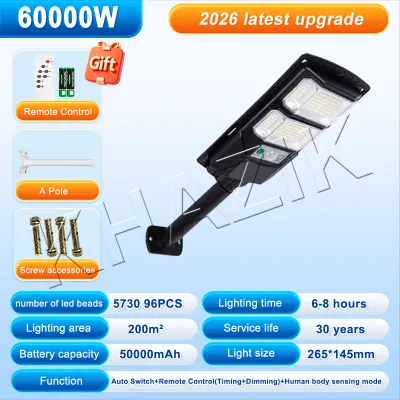
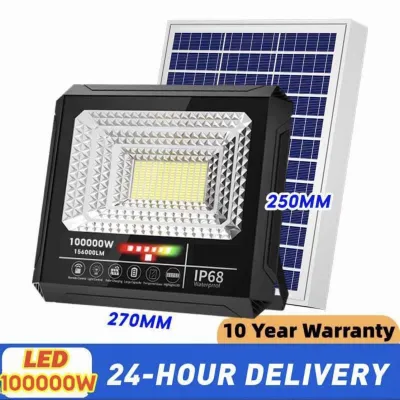
- Heavy-Duty 200W Aluminum Solar Floodlight: Features a separate monocrystalline panel, die-cast aluminum housing, and a remote control for brightness adjustment. Price range: ₱1,800 to ₱3,500.
- Integrated 120W ABS All-in-One Security Light: A compact, single-body unit with a built-in panel and motion sensor, ideal for mounting directly above a gate. Price range: ₱1,200 to ₱2,500.
- High-Output 400W Multi-Angle Security Light: Features adjustable LED panels to direct light into multiple directions simultaneously, perfect for corner mountings. Price range: ₱3,000 to ₱5,500.
When purchasing these high-lumen options on online marketplaces, verify the seller ratings and read customer reviews to ensure the stated wattage and lumen output are accurate, as lower-tier products often inflate these numbers.
Motion-Sensor Lights for Pathways and Gardens
Pathway and garden lighting should balance energy efficiency with localized illumination. Constant high-intensity lighting in these areas can deplete the battery quickly and create harsh glare that ruins the outdoor ambiance.
- Key Specifications: Look for lights equipped with Passive Infrared (PIR) motion sensors. PIR sensors detect changes in infrared heat signatures caused by moving people or animals, triggering the light to switch from a low-energy standby mode to full brightness. Ideal features include adjustable sensor sensitivity, a detection range of 5 to 8 meters, and customizable dim-to-bright modes (e.g., maintaining 20% brightness until motion is detected, then jumping to 100% for 30 seconds).
- Typical Applications: Garden walkways, side paths, pool surrounds, and fences bordering residential areas.
- Recommended Configurations & Price Ranges:
- Compact 60-LED PIR Wall-Mounted Pathway Light: A lightweight, easy-to-install option that mounts to wooden fences or concrete walls using simple screws. Price range: ₱500 to ₱1,200.
- Wide-Angle 3-Head Adjustable Solar Garden Light: Features three independent light heads that can be angled to illuminate both the pathway and adjacent landscaping. Price range: ₱800 to ₱1,800.
- Decorative Solar Pathway Bollard with Motion Override: A low-profile ground light that provides soft accent lighting and increases brightness when walked past. Price range: ₱1,000 to ₱2,200.
These motion-sensor models are highly efficient because they conserve battery power during quiet hours, making them excellent choices for secondary paths and areas where continuous bright light is unnecessary.
Heavy-Duty Pole-Mounted Lights for Large Yards
Expansive properties, rural homesteads, and wide-open backyards require elevated, commercial-grade lighting to cover large areas. These setups require sturdy mounting hardware and specific structural configurations to withstand environmental stress.
- Key Specifications: You must choose between an all-in-one design (where the solar panel, battery, and LED array are integrated into a single chassis) and a split-design (where the solar panel is separate and connected to the light fixture via a heavy-duty cable). Split designs are highly recommended for tropical climates because they allow you to position the solar panel on a roof or high pole in direct sunlight while mounting the light fixture under a tree canopy, carport, or roof eave.
- Typical Applications: Open backyards, private farm roads, basketball courts, and large parking areas.
- Recommended Configurations & Price Ranges:
- Split-Type 300W Industrial Solar Street Light: Includes a large, independent monocrystalline panel, a heavy-duty mounting bracket, and a 5-meter connecting cable. Price range: ₱4,500 to ₱8,500.
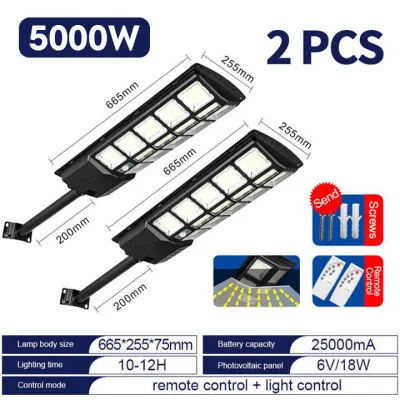
- All-in-One 500W Commercial-Grade Pole Light: Features a streamlined, low-drag body that integrates all components, reducing wind resistance during storms. Price range: ₱6,000 to ₱12,000.
When choosing a pole-mounted light, verify the required pole diameter (typically 50mm to 76mm) and ensure the mounting brackets are made of rust-resistant galvanized steel. This prevents structural degradation caused by coastal air and high humidity.
Installation and Maintenance Tips for Maximum Lifespan
Proper installation and routine maintenance are critical to protecting your investment and ensuring the safety of your property. Because solar street lights are installed outdoors and often at height, following correct safety procedures is paramount.
Installation Safety and Positioning
Before mounting any solar street light, inspect the structural integrity of the wall, fence, or pole. Heavy industrial-style fixtures can weigh upwards of 5 to 10 kilograms; mounting them to weak wood or thin sheet metal poses a severe falling hazard, especially during typhoons.
- Work at Height: For installations higher than 3 meters, always use a stable, industrial-grade ladder or scaffolding. Wear a safety harness, secure the work area below, and have an assistant present. If you are uncomfortable working at height or if the installation involves complex concrete pole anchoring, hire a qualified professional to complete the job.
- Electrical Isolation: If you are installing a hybrid solar light that connects to your home's main electrical grid as a backup power source, always isolate the power supply at the circuit breaker before handling any wiring. Follow the manufacturer's wiring instructions carefully and ensure all connections are housed in IP66-rated junction boxes.
- Optimal Solar Alignment: To maximize energy collection, position the solar panel facing south at an angle of 10 to 15 degrees. This tilt angle ensures optimal exposure to the sun's path in the Philippines while allowing rainwater to run off easily, washing away loose dust and debris. Ensure no shadows from trees, power lines, or roof eaves cast over the panel during peak daylight hours (10:00 AM to 3:00 PM).
Routine Maintenance and Cleaning
Accumulated dust, bird droppings, pollen, and salt spray can create a film over your solar panel, reducing its charging efficiency by up to 30%. Regular cleaning is essential to keep the system operating at peak performance.
- Cleaning the Panel: Wipe the solar panel surface once a month during the dry season and once every three months during the rainy season. Use a soft, damp microfiber cloth and clean water. Avoid using abrasive scrubbing pads, harsh chemical detergents, or high-pressure washers, as these can scratch the tempered glass or degrade the waterproof seals around the panel frame.
- Inspecting Seals and Gaskets: Every six months, inspect the light fixture's housing. Look for signs of water pooling or condensation inside the LED lens. If condensation is present, the silicone seal or rubber gasket may be compromised. You can carefully dry the interior and apply a thin bead of outdoor-grade silicone sealant along the joints to restore the waterproof barrier.
Battery Care and Replacement
All rechargeable batteries degrade over time, typically lasting between 2 to 4 years depending on operating temperatures and usage patterns. Proper battery management prevents premature failure and safety hazards.
- Identifying Degradation: If your solar light turns off after only 1 to 2 hours of operation despite a full day of direct sunlight, or if the light flickers continuously at night, the battery has likely reached the end of its useful life.
- Replacement Safety: Check if your product manual indicates that the battery is user-replaceable. If the manufacturer offers official replacement packs, follow their instructions precisely, ensuring you match the voltage and connector types. Never attempt to open sealed, non-serviceable battery compartments, as puncturing a lithium-based battery can cause a chemical fire. If the battery is non-serviceable, contact the manufacturer or dispose of the unit at a certified e-waste recycling center.
Frequently Asked Questions (FAQ)
Do solar street lights work during the Philippine rainy season?
Yes, high-quality solar street lights will continue to function during the rainy season, though their performance may vary. Monocrystalline solar panels can convert indirect, diffuse sunlight on cloudy or overcast days, allowing the battery to charge slowly. However, because the total solar energy received is lower than on a clear day, the battery may not reach full capacity. During prolonged periods of heavy rain, expect the light’s nightly runtime to be shorter, or configure the light to a lower brightness or motion-sensor mode to conserve power.
Can I install a solar street light under a roof eave?
Yes, you can mount the LED light fixture itself under a roof eave, carport, or porch ceiling, but you must use a split-design solar light. In a split-design system, the light fixture is connected to the solar panel via a long, waterproof cable. This setup allows you to install the light in a shaded or covered area while mounting the solar panel on top of the roof or on an exposed pole where it can receive 6 to 8 hours of direct, unobstructed sunlight daily. Attempting to install an all-in-one solar light under an eave will block sunlight from reaching the integrated panel, preventing the battery from charging.
How do I know if the battery needs replacing?
The most common indicator of battery degradation is a significant and permanent drop in nightly runtime. If your solar street light previously stayed on until dawn but now shuts off after only 1 to 2 hours of operation—despite clear, sunny weather during the day—the battery’s capacity has likely degraded. Other warning signs include visible swelling of the light’s housing, flickering LEDs, or a complete failure to turn on. Always consult the product manual before attempting a replacement, and only use manufacturer-approved batteries to avoid electrical shorts, fires, or voiding your warranty.

Community discussion
Share your experience or ask a question. Comments are reviewed before publication.