
Finding the right tube light with solar panel for your outdoor space in the Philippines requires balancing aesthetic preferences with the realities of a tropical climate. Rather than searching for a single, universally ideal model, successful outdoor lighting relies on matching specific technical features to your garden’s unique layout, shade patterns, and exposure to seasonal weather. By understanding how solar panels, battery capacities, and housing materials interact with local conditions, you can establish a reliable, self-sustaining lighting system that enhances both safety and visual appeal.
Core Selection Criteria for Outdoor Solar Tube Lights
Selecting the right solar tube light involves evaluating how the physical design of the fixture impacts its performance and placement. The primary design distinction lies between integrated solar panels and split-panel configurations. Integrated panels are built directly into the top of the tube housing, creating a clean, self-contained unit that is easy to install without visible wires. However, this design requires the entire fixture to be placed in direct sunlight to charge effectively, which limits where you can position the light.
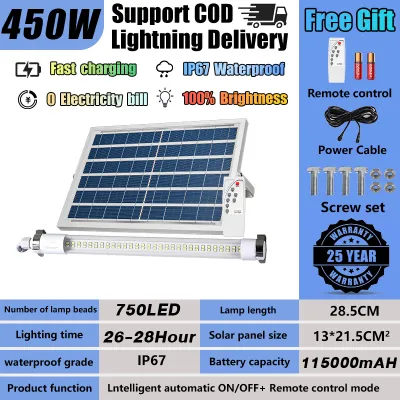
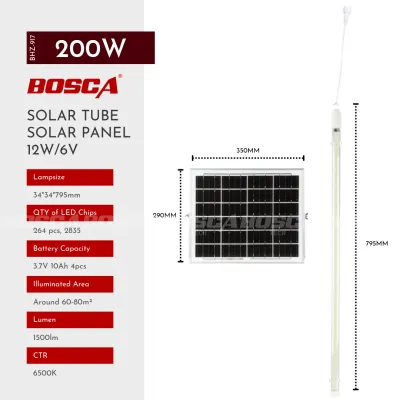
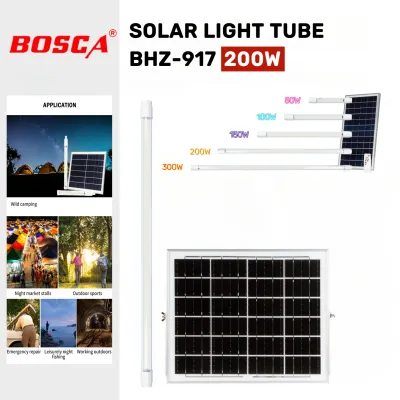
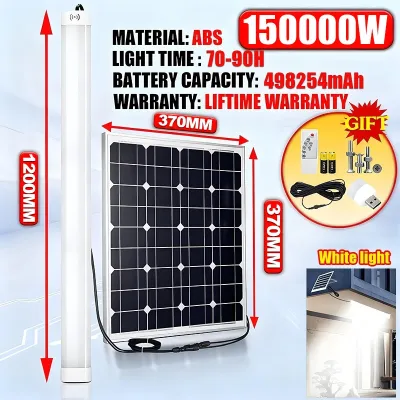
Split-panel designs separate the solar panel from the light tube, connecting them with a weather-resistant cable. This configuration allows you to position the panel on a sunny roofline, fence, or open lawn while placing the light tube under a shaded walkway, porch, or thick garden canopy. While split-panel systems require managing a connecting wire, they offer far greater flexibility for complex garden layouts.
Products mentioned in this guide
![[Free shipping]Solar Tube Light Outdoor Waterproof IP67 Rechargeable 120000W 80000W 60000W LED Solar Emergency Light Spotlight Outdoor Portable Automatic Lighting With Panel Remote Control](https://img.lazcdn.com/g/p/bd04ebc116180d92113f132c1ce5d8ea.png_400x400q80.png_.webp)
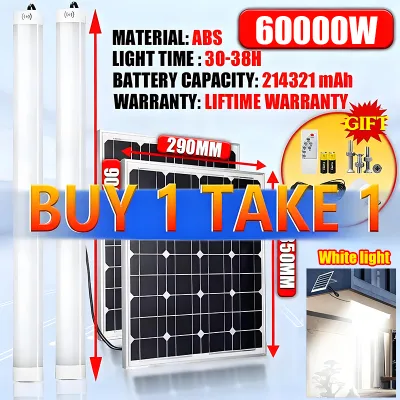
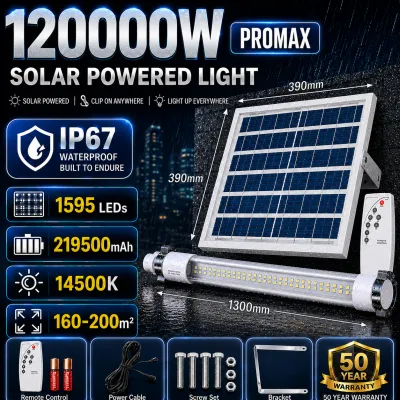
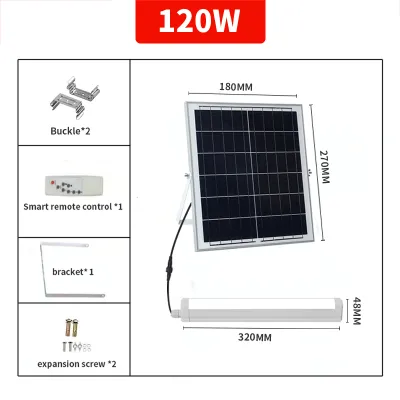
Prices are valid at publication and may change. Please refer to the product page for the latest price.
Light distribution patterns also dictate how effectively a fixture illuminates your space. A 360-degree ambient glow uses a cylindrical diffuser to scatter light in all directions, making it excellent for marking garden borders or creating a soft, decorative atmosphere. Directional downlighting, on the other hand, focuses the light downward onto the ground. This pattern is highly effective for illuminating specific steps, hazards, or narrow paths where high visibility is required without causing glare at eye level.
Build materials directly influence the durability and weight of outdoor fixtures. Stainless steel offers excellent structural rigidity and a modern look, but you must verify that it is a high-quality, corrosion-resistant alloy to withstand high-humidity environments. ABS plastic is lightweight, highly resistant to impact, and does not rust, making it a practical choice for budget-friendly installations, though it must be treated to withstand intense ultraviolet exposure. Acrylic diffusers are highly durable and shatter-resistant, whereas glass diffusers offer superior clarity but are susceptible to breakage from falling branches or accidental impacts.
Matching Solar Tube Lights to Your Garden Environment
Before purchasing any solar lighting system, it is essential to observe your garden at different times of the day. Note which areas receive uninterrupted sunlight for at least six hours and which zones are shaded by trees, walls, or roof overhangs. This mapping prevents the common disappointment of lights failing to turn on or dimming prematurely due to insufficient daytime charging.

The physical structure of your outdoor space dictates the mounting style. Open lawns and dirt pathways are ideal for standalone stake lights that push directly into the ground. In contrast, paved patios, concrete walkways, and perimeter fences require wall-mounted brackets or hanging tube variants that can be securely anchored to vertical surfaces.
High-Sun Exposure Pathways and Open Lawns
Integrated panel designs are highly suited for open, sun-drenched areas. Because there are no external wires to manage or hide, these fixtures maintain a clean, minimalist profile along walkways and garden borders. They can be spaced evenly to define the edges of your lawn without disrupting the landscape design.
For these high-exposure zones, check product labels for higher lumen outputs and larger battery capacities. Since the solar panel will receive maximum sunlight, it can fully charge a larger battery, allowing the light to operate at full brightness for extended periods throughout the night.
However, intense, direct tropical sunlight can degrade materials rapidly. It is crucial to verify that the plastic components, particularly the diffusers and integrated panel covers, are rated as UV-resistant. Without this protection, clear plastics can turn yellow, become brittle, and eventually crack under the heat, reducing both light output and weather resistance.
Partially Shaded Gardens and Covered Walkways
Shaded areas present a challenge for standard solar lights. In these zones, prioritize split-panel tube lights. By mounting the independent solar panel on a nearby roofline, fence post, or sunny patch of lawn, you can capture sufficient solar energy while routing the power cable to the light tube positioned deep within a shaded arbor or covered walkway.
Look for split-panel systems that feature adjustable mounting brackets. These brackets allow you to tilt and rotate the solar panel to face the sun’s path directly, maximizing energy absorption even in tight spaces where sunlight only penetrates at specific hours of the day.
To make the most of limited solar charges in shaded areas, select fixtures equipped with energy-efficient LED chips and passive infrared motion sensors. Instead of running at full brightness continuously, these lights can remain in a low-power dim mode or stay off entirely until motion is detected, conserving the battery for when illumination is actually needed.
Essential Specifications to Verify Before Purchase
Ingress Protection (IP) ratings are critical for determining how well a fixture can withstand the heavy downpours and high humidity common during the wet season. An IP65 rating indicates that the light is protected against dust ingress and low-pressure water jets from any direction, which is generally sufficient for standard garden use. For low-lying areas prone to temporary pooling or intense tropical storms, look for IP67-rated fixtures, which can withstand temporary submersion in water.
Most solar tube lights utilize either lithium-ion (Li-ion) or nickel-metal hydride (NiMH) batteries. Lithium-ion batteries typically offer higher energy density and longer runtimes, but they are often sealed inside the unit. NiMH batteries, often in standard AA or AAA form factors, are easily replaceable when they reach the end of their lifespan, which is usually one to two years. Verify whether the battery compartment is accessible via screws and gaskets, as sealed units must be discarded entirely once the battery degrades.
When reviewing specifications, verify the voltage, base or interface type, and wattage limits of the charging system. Ensure the physical dimensions of the fixture fit your intended mounting location without obstructing pathways. Additionally, check for electrical certifications (such as CE, RoHS, or local quality marks) on the product packaging to ensure the internal circuitry meets basic safety and manufacturing standards.
The color temperature of the LEDs significantly alters the atmosphere and functionality of your outdoor space. Warm white light (typically 2700K to 3000K) provides a soft, inviting glow that is ideal for decorative garden features and relaxing patio areas. Cool white light (5000K to 6500K) offers high-contrast, bright illumination that is better suited for security lighting and clearly identifying steps or obstacles along a pathway.
Lumens measure the total amount of light emitted by the source, while lux measures how much of that light actually reaches a specific surface area. Do not rely solely on high lumen claims on packaging; consider how the light is directed. A lower-lumen downlight can provide better pathway visibility (higher lux on the ground) than a high-lumen ambient tube that scatters light uselessly into the night sky.
Installation, Safety, and Maintenance Guidelines
Before driving stakes into the ground or drilling mounting holes, check for underground utilities such as water pipes or buried electrical conduits. Ensure the soil around the base of stake lights has adequate drainage; standing water can corrode metal stakes and seep into the lower seals of the light fixture over time.
Dust, pollen, bird droppings, and salt residue in coastal areas can form a film over the solar panel, significantly reducing its charging efficiency. Establish a routine cleaning schedule to wipe the panels down with a soft, damp microfiber cloth and clean water. Avoid using abrasive sponges or harsh chemical cleaners, which can scratch the protective cover and permanently reduce light transmission.
Periodically open accessible battery compartments to check for signs of moisture or white, powdery corrosion on the metal contacts. If corrosion is present, carefully clean the contacts with a small brush and replace the degraded rechargeable cells with new ones of matching voltage, capacity, and chemistry.
While most low-voltage solar tube lights are safe for DIY installation, certain scenarios require professional assistance. If you plan to integrate solar fixtures with an existing mains-powered outdoor lighting system, mount heavy fixtures on high, unstable structures, or perform fixed wiring in damp areas, always isolate the power source and consult a qualified electrician to ensure compliance with local electrical codes and safety standards.
Condition-Based Shortlist: Features to Target
To build your shopping shortlist, match your specific outdoor conditions to the following feature combinations:
- For security and high-traffic paths: Target high-lumen, cool-white tube lights equipped with passive infrared motion sensors. These fixtures should feature a robust ABS or aluminum housing and a directional downlight pattern to illuminate steps clearly.
- For ambient garden decor: Target warm-white, 360-degree acrylic or glass tube lights with integrated panels and decorative finishes like brushed stainless steel. These are ideal for placing among flowerbeds or along low-traffic garden borders to create a soft, welcoming atmosphere.
- For heavy rain and flood-prone areas: Target split-panel designs with IP67 or higher ratings. Elevate the light fixtures on walls or high posts while placing the solar panel in an unobstructed, high-elevation spot to keep the electrical connections clear of standing water.
Before finalizing any purchase on an online marketplace or at a local home improvement center, verify the current stock, warranty terms, and actual user reviews. Checking these details helps ensure you receive a product that matches its advertised specifications and is backed by reliable customer support.
Frequently Asked Questions (FAQ)
Do solar tube lights work during the rainy season?
Yes, solar tube lights can still function during the rainy season, but their performance will be reduced. Solar panels do not require direct sunlight to charge; they can generate electricity from ambient daylight on overcast or rainy days. However, the charging efficiency drops significantly under heavy cloud cover, resulting in shorter runtimes at night. To mitigate this, look for fixtures with larger monocrystalline solar panels and high-capacity batteries that can store enough energy to power through consecutive cloudy days. Utilizing low-power or motion-sensor modes during the monsoon season also helps conserve stored energy.
Can I replace the battery in a solar tube light?
Whether you can replace the battery depends entirely on the design of the specific fixture. Many budget-friendly or highly compact solar tube lights feature fully sealed, integrated units where the battery is soldered directly to the circuit board. Attempting to open these models can ruin the waterproof seals, void the warranty, and render the light useless. Conversely, higher-quality fixtures often feature accessible battery compartments secured by screws and rubber gaskets. When replacing these batteries, always match the voltage, capacity, and chemistry specified by the manufacturer to maintain safe operation and proper charging.
How far apart should I space solar tube lights along a pathway?
The optimal spacing for solar tube lights depends on their height, beam angle, and total lumen output. As a general rule of thumb for standard pathway lights, space the fixtures at a distance roughly equal to their height above the ground—typically every 1 to 1.5 meters. This spacing creates a continuous path of light without leaving dark, unlit gaps or causing excessive glare. If you are using high-lumen directional downlights, you can space them further apart, whereas low-lumen decorative ambient tubes may need to be placed closer together to achieve a cohesive visual effect. Adjust the spacing if your pathway already receives ambient light from nearby porch fixtures or streetlamps.

Community discussion
Share your experience or ask a question. Comments are reviewed before publication.