
Quick Answer: Core Requirements for Outdoor Solar Lights
To find the best solar icicle lights for outdoor use in the Philippines, you must prioritize weather resistance, solar conversion efficiency, and battery capacity. The local climate presents unique challenges, including intense tropical heat, high humidity, and heavy seasonal rainfall. A reliable set of outdoor lights must feature a minimum rating of IP65 to prevent water ingress during downpours. Additionally, look for monocrystalline solar panels that can charge effectively even on overcast days, paired with a high-capacity lithium-ion or nickel-metal hydride battery that provides at least eight hours of continuous nighttime illumination. By focusing on these technical specifications rather than aesthetic appeal alone, you can ensure your outdoor decorations remain bright and durable throughout the year.
Weather-Proofing: Selecting Materials and IP Ratings
The climate in the Philippines demands rigorous weather-proofing for outdoor electrical installations. When browsing online marketplaces, the first specification to verify on the manufacturer’s sheet is the Ingress Protection (IP) rating. This two-digit code indicates how well the light string and its control box resist solid objects and liquids. For outdoor decorative lighting exposed to tropical rain, an IP65 rating is the standard baseline. This rating ensures the product is completely dust-tight and can withstand low-pressure water jets from any angle. If you plan to install the lights on highly exposed rooflines or eaves where wind-driven rain is common, upgrading to an IP67-rated system offers superior protection, as it certifies the enclosure can survive temporary submersion in water.

Beyond water resistance, the intense ultraviolet (UV) radiation from the sun poses a significant threat to plastic components. Standard plastics degrade rapidly under constant sun exposure, becoming brittle, cracking, and eventually allowing moisture to seep into the internal wiring. To prevent this premature failure, look for solar icicle lights constructed with UV-stabilized polycarbonate or heavy-duty Acrylonitrile Butadiene Styrene (ABS) plastic casings. The wire insulation itself should be made of thick, weather-resistant Polyvinyl Chloride (PVC) or rubber. Avoid ultra-thin, transparent wires that lack proper insulation, as they are highly susceptible to sun damage and electrical short circuits.
Products mentioned in this guide
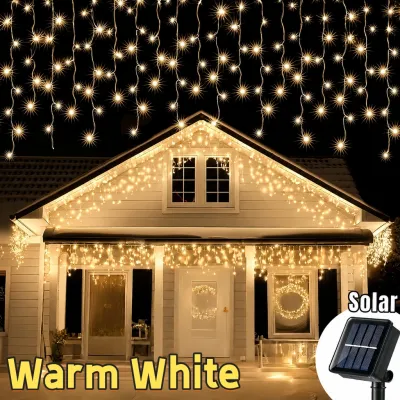
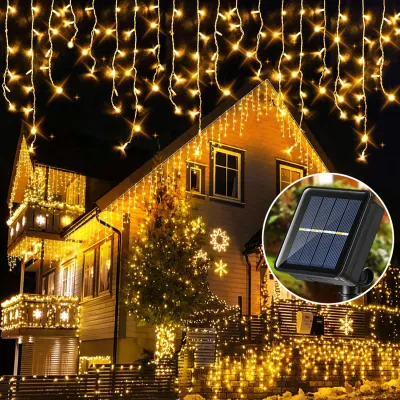
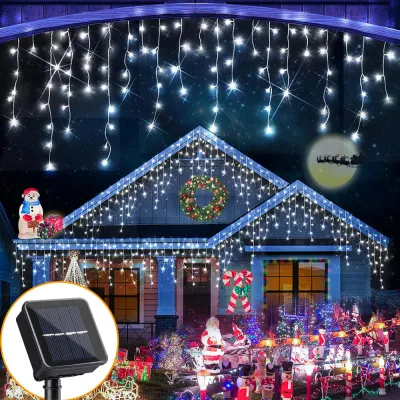
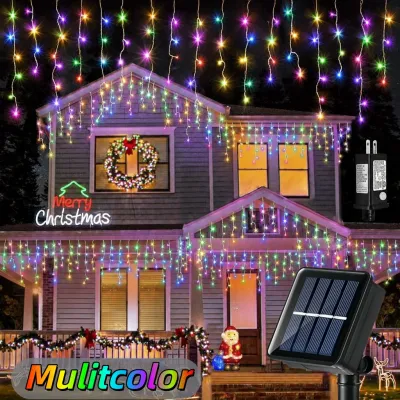
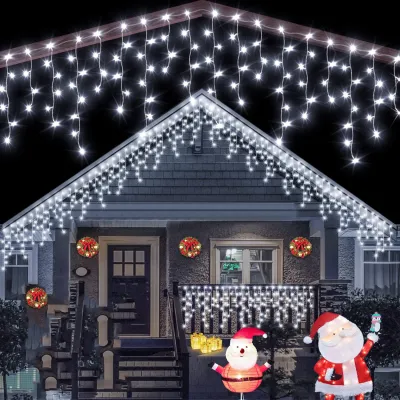
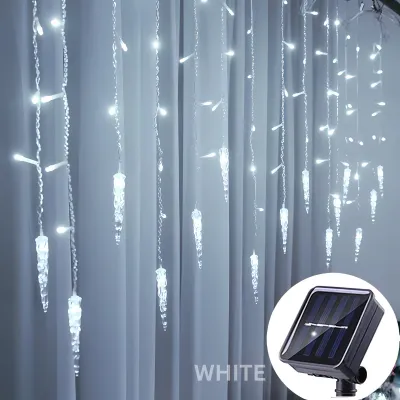
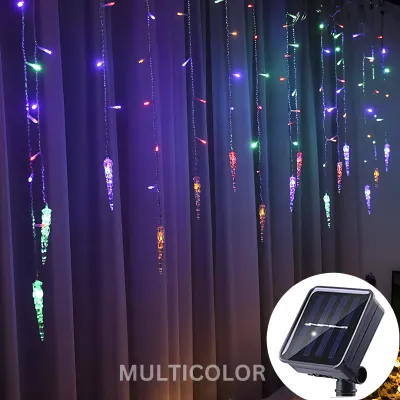
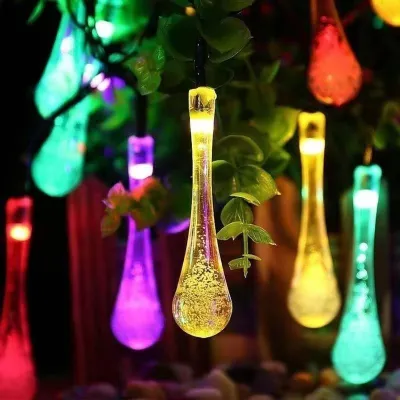
Prices are valid at publication and may change. Please refer to the product page for the latest price.
Wind resistance is another critical factor, particularly during the monsoon season when strong gusts can buffet hanging decorations. Icicle lights feature vertical drops of varying lengths, which act like small sails in the wind. If the main horizontal cable or the individual drop wires are too thin, the physical tension can stretch or snap the copper conductors inside. When evaluating product specifications, check the wire gauge; a thicker wire (such as 20 AWG or lower) indicates greater physical strength. Additionally, examine the connection points where the vertical drops meet the main strand. Reinforced T-junctions and molded strain-relief boots help distribute physical stress and prevent water from pooling at these vulnerable joints, ensuring the light string remains intact during windy conditions.
Power and Runtime: Assessing Panels and Batteries
The performance of solar icicle lights depends on their ability to harvest and store energy. In the Philippines, where daylight can transition quickly from bright sunshine to heavy cloud cover, the type of solar panel included with your light set is paramount. Monocrystalline solar panels are the gold standard for outdoor solar lighting. These panels are made from a single, high-purity silicon crystal, allowing them to achieve energy conversion efficiencies of 15% to 20%. This high efficiency is crucial because it enables the panel to generate sufficient power even during overcast afternoons or short winter days. In contrast, cheaper polycrystalline panels, recognizable by their speckled blue appearance, have lower conversion rates (typically 12% to 14%) and require much longer exposure to direct sunlight to achieve a full charge.
Equally important is the battery chemistry housed within the solar control box. Most modern solar string lights utilize either Lithium-ion (Li-ion) or Nickel-Metal Hydride (Ni-MH) rechargeable batteries. Li-ion batteries, such as the common 18650 cylindrical cells, offer superior energy density, a faster charging rate, and a longer overall lifespan of up to 500 charge cycles. They also perform exceptionally well under the warm ambient temperatures typical of the local climate. Ni-MH batteries are a reliable, cost-effective alternative often found in smaller decorative sets. While they are highly stable and environmentally friendly, they generally have a lower energy density and a shorter lifespan compared to their lithium counterparts, requiring more frequent replacement over years of use.
To ensure your icicle lights stay illuminated throughout the evening, you must match the battery capacity to your runtime expectations. Battery capacity is measured in milliampere-hours (mAh). A standard string of 200 LED icicle lights typically requires a battery capacity of at least 1200mAh to 2000mAh to operate for 8 to 10 hours on a full charge. When reviewing product listings, cross-reference the manufacturer’s stated runtime with the battery capacity. If a seller promises 12 hours of continuous light from a tiny 600mAh battery, the claim is likely unrealistic. Always opt for models that provide detailed battery specifications, allowing you to make an informed decision based on actual energy storage capacity.
Safe Installation and Placement Strategies
Proper installation maximizes both the lifespan of your solar icicle lights and home safety. The first step in planning your layout is identifying the optimal location for the solar panel. To capture the maximum amount of sunlight throughout the day in the Philippines, the panel should ideally face south or southwest. It must be positioned in an area that receives at least six hours of direct, unobstructed sunlight daily. Even partial shading from a single overhanging tree branch or a roof gutter during peak hours (between 10:00 AM and 3:00 PM) can drastically reduce the panel’s energy output, resulting in dim lights that turn off after only a few hours.
When mounting the light strings along eaves, pergolas, or fences, avoid using metal staples, nails, or screws directly over the wires. Piercing the protective insulation is a common installation mistake that invites moisture, leading to corrosion, short circuits, and potential fire hazards. Instead, utilize non-penetrating mounting hardware such as plastic gutter clips, weather-resistant adhesive hooks, or UV-rated nylon zip ties. These accessories secure the wires firmly without damaging the protective outer jacket. When wrapping lights around wooden structures, ensure the fasteners allow for slight movement, as wood expands and contracts with changes in humidity and temperature.
Safety boundaries must also be established when installing low-voltage outdoor lighting. Although solar lights operate on safe, low-voltage direct current (DC), water exposure can still cause system failures. Keep all electrical connections, including the plug-in joints between the solar panel and the light string, well away from active drainage paths, rain gutters, and areas prone to standing water. If you are installing lights near swimming pools, outdoor showers, or water features, ensure the solar panel and any connection points are positioned at a safe distance to prevent accidental splashing. Secure the solar panel’s ground stake firmly in stable, well-drained soil to prevent it from tipping over or sinking during heavy downpours.
Condition-Based Selection: Matching Specs to Your Space
Selecting solar icicle lights requires matching product specifications to your outdoor layout. For high-exposure areas like rooflines and two-story eaves, you will need light strings with longer drop lengths (such as alternating drops of 30, 50, and 70 centimeters) to create a dramatic, cascading effect that is clearly visible from a distance. These installations also require higher-lumen LEDs to ensure the display remains bright against the dark night sky. Conversely, for intimate spaces like patio perimeters, balconies, or garden gazebos, shorter drop lengths and lower-lumen, warm-white LEDs are preferable. This creates a cozy, inviting ambiance without producing harsh glare that can disrupt outdoor dining or conversations.
When shopping on online marketplaces, it is essential to use a rigorous verification checklist to separate high-quality products from substandard imitations. Do not rely solely on promotional images or generic titles that claim “100% waterproof” or “super bright.” Instead, scroll down to the technical specifications section and verify the following details:
- IP Rating: Ensure it explicitly states IP65, IP66, or IP67.
- Battery Specification: Look for the exact battery chemistry (e.g., Li-ion 18650) and capacity (e.g., 1200mAh or higher).
- Solar Panel Type: Confirm whether it is monocrystalline or polycrystalline.
- Certifications: Check for international safety and quality markings such as CE, RoHS, or FCC, which indicate the product has undergone standardized testing.
- Lead Wire Length: Verify the distance between the solar panel and the first LED bulb to ensure you can position the panel in direct sunlight while keeping the lights in the shade.
Another critical decision is choosing between integrated solar units and separate panel-and-string configurations. Integrated units, where the solar panel is built directly into the light fixture or sits immediately adjacent to it, are highly compact and easy to install. However, they limit your placement options because the lights must be installed in a sunny spot. Separate configurations feature a long lead wire (often 2 to 5 meters) connecting the light string to a detached solar panel. This setup is highly recommended for covered patios, porches, or shaded garden areas, as it allows you to mount the decorative lights in the shade while placing the solar panel on a sunny roof or open lawn to maximize solar harvesting.
Routine Maintenance and Troubleshooting
To keep your solar icicle lights operating at peak performance, establish a simple routine maintenance schedule. The most common cause of declining performance is a dirty solar panel. In the Philippines, airborne dust, pollen, and salt spray in coastal areas can quickly form a thin film over the panel’s glass surface, blocking sunlight and reducing charging efficiency. Wipe the solar panel surface once a week using a soft, damp microfiber cloth. Avoid using abrasive scrubbing pads, harsh chemical cleaners, or dish soap, as these can scratch or degrade the protective coating on the solar cells, permanently reducing their efficiency.
Regularly inspect the light string and control box for observable signs of wear or damage. Look for condensation or water droplets inside the LED bulbs or the battery compartment, which indicates a breach in the weather seals. Check the battery terminals for signs of rust or white powdery corrosion, which can disrupt the electrical connection and cause the lights to flicker or fail to turn on. If you notice minor corrosion, you can carefully clean the terminals with a small brush and a mixture of baking soda and water, ensuring the compartment is completely dry before reassembling.
Knowing when to troubleshoot and when to replace a unit is essential for safety. If your lights fail to turn on after a full day of charging, try replacing the rechargeable battery with a new one of the same specification. However, if the lights still do not function, or if you discover extensive water damage, melted plastic, or frayed wiring, stop using the product immediately. Do not attempt to splice damaged wires or bypass the control box yourself. In these cases, it is safest to decommission the unit and replace it, or contact the manufacturer if the product is still under warranty.
Frequently Asked Questions (FAQ)
Can solar icicle lights survive typhoon season in the Philippines?
While high-quality solar icicle lights rated IP65 or IP67 are designed to withstand heavy tropical rain and moderate winds, they are not built to survive the extreme conditions of a typhoon. Typhoon-force winds can easily tear the light strings from their mountings, while flying debris can shatter the solar panels and crush the LED bulbs. Additionally, prolonged exposure to torrential downpours and localized flooding can exceed the water-resistance limits of the seals. To protect your investment and prevent electrical hazards, always take down your solar lights and store them safely indoors when a tropical cyclone warning is active in your area.
Do I need to replace the batteries in solar string lights?
Yes, the rechargeable batteries inside solar string lights have a finite lifespan and will eventually need to be replaced. Typically, these batteries last between one and two years, or approximately 300 to 500 charge-discharge cycles, before their capacity begins to degrade significantly. You will know the battery needs replacing when the lights only stay on for an hour or two after a sunny day. Before purchasing replacements, open the battery compartment on the back of the solar panel to verify if it is user-accessible. Always match the replacement battery’s chemistry (such as Ni-MH or Li-ion), voltage (typically 1.2V or 3.7V), and physical size to the manufacturer’s original specifications.

Community discussion
Share your experience or ask a question. Comments are reviewed before publication.