
To find reliable solar raindrop Christmas lights for outdoor use in the Philippines, you must look beyond festive aesthetics and focus on tropical weather resilience. The local climate presents unique challenges, including intense tropical sun, high humidity, and sudden torrential downpours during the monsoon season. Selecting the right set of lights requires verifying specific technical ratings, material compositions, and battery capacities to ensure your holiday display remains bright and safe throughout the festive season.
By understanding how these outdoor lights interact with the environment, you can make an informed purchase that lasts for multiple holiday seasons. This guide breaks down the essential specifications, durability factors, and practical shopping tips to help you choose the most reliable solar raindrop lights for your home.
Essential Specs for Tropical Weather Survival
The primary factor determining the lifespan of outdoor solar lights in a tropical climate is their ability to resist moisture and dust. This resistance is measured by the Ingress Protection (IP) rating, which consists of two digits. The first digit represents protection against solid particles like dust, while the second digit indicates protection against liquids. For outdoor holiday decorations exposed to heavy rains and tropical storms, look for lights with a minimum rating of IP65. An IP65 rating ensures the product is completely dust-tight and can withstand low-pressure water jets from any direction, making it highly resilient against typical monsoon downpours. Avoid products rated IP44 or lower for fully exposed outdoor areas, as these are only splash-proof and are highly susceptible to water ingress during severe storms.
Products mentioned in this guide
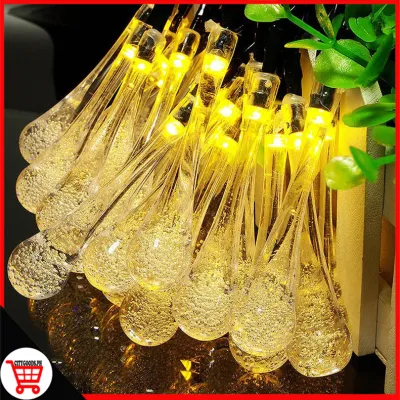
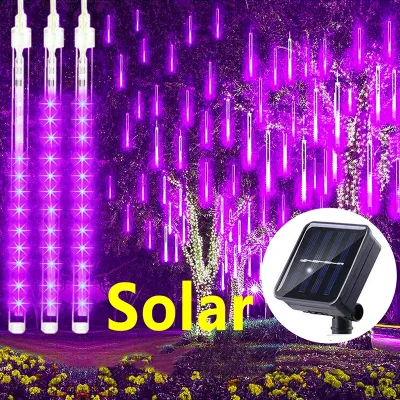
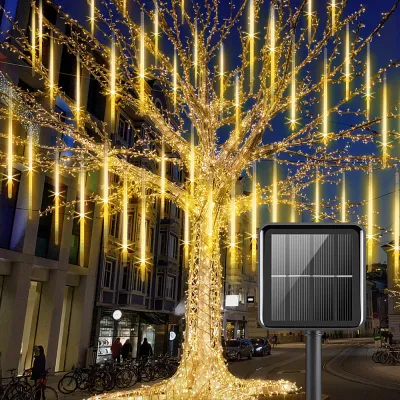
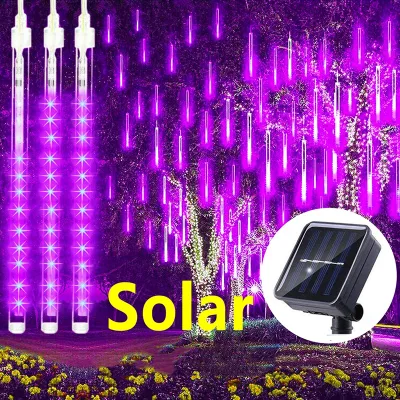
![[COD]Solar/Plug in Meteor Shower Rain Lights LED Outdoor Waterproof Icicle Fairy String Lights for Home Garden Christmas Raya Decoration](https://img.lazcdn.com/g/p/f9d204b382f3c916f39938eb9f1049fd.jpg_400x400q80.jpg_.webp)
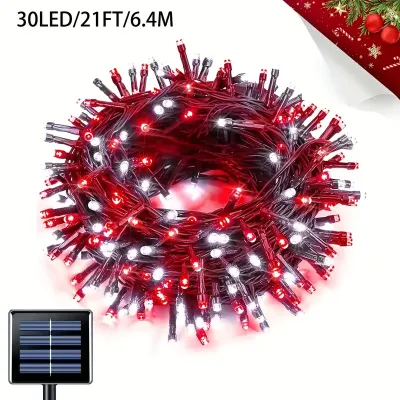
Prices are valid at publication and may change. Please refer to the product page for the latest price.
Solar panel efficiency and battery capacity are equally critical for ensuring your lights stay illuminated throughout the night. Solar panels convert sunlight into electrical energy, which is then stored in a rechargeable battery. In the Philippines, where daylight can be intense but interrupted by sudden cloud cover, monocrystalline solar panels are preferred over polycrystalline options due to their higher energy conversion efficiency. When evaluating product labels, check the battery capacity measured in milliampere-hours (mAh). A battery capacity of 800mAh to 1200mAh is generally sufficient for standard string lights, providing enough storage to power the LEDs for six to eight hours on a full charge. Ensure the solar panel wattage is balanced with the battery capacity; a panel with too low a wattage will struggle to fully charge a high-capacity battery, especially on overcast days.
The materials used in the construction of the wiring and casings play a vital role in surviving the intense heat and UV radiation of the tropical sun. Cheap plastics degrade rapidly under continuous UV exposure, becoming brittle, cracking, and allowing water to seep into the electrical components. Look for wiring made of heavy-duty, UV-resistant materials such as thick PVC or rubberized cables. The solar panel housing and the control box should be constructed from high-grade ABS plastic or polycarbonate, which offer high impact resistance and thermal stability. These materials prevent the housing from warping or cracking under the heat, protecting the internal circuitry from moisture and humidity.
Assessing Brightness and Raindrop Bulb Durability
When selecting solar raindrop lights, balancing visual appeal with physical durability is key to a successful holiday display. The brightness of LED lights is measured in lumens, though many decorative string lights focus more on creating a soft, ambient glow rather than high-intensity illumination. Color temperature, measured in Kelvin (K), defines the visual warmth of the light. Warm white lights (typically 2700K to 3000K) offer a cozy, traditional holiday atmosphere that complements natural garden elements. Cool white lights (5000K to 6500K) provide a bright, modern, and crisp look that stands out clearly from a distance. Multicolor options, featuring alternating shades of red, blue, green, and yellow, add a vibrant and playful festive energy to your outdoor space.

The physical design of the raindrop-shaped bulbs requires careful consideration, particularly regarding the materials used. These elongated, teardrop-shaped covers protect the delicate LED chips inside. It is highly recommended to choose shatterproof acrylic or polycarbonate bulbs over traditional glass. Acrylic bulbs are lightweight, highly durable, and resistant to cracking or shattering if blown against hard surfaces like concrete walls, metal gutters, or wooden fences during strong winds. This shatterproof quality is especially important in high-traffic areas such as garden pathways, patios, or low-hanging tree branches where children, pets, or guests might accidentally bump into the lights.
Wire gauge and bulb spacing are practical dimensions that dictate how easily the lights can be installed and how they will look once hung. The wire gauge refers to the thickness of the copper wire inside the protective insulation. Thicker wires (lower gauge numbers) are more durable and can handle the physical tension of being stretched across wide spans or wrapped tightly around structures. Bulb spacing determines the density of the light display. For detailed wrapping projects, such as winding lights around columns, pillars, or tree trunks, a closer bulb spacing of 10 to 15 centimeters creates a rich, continuous glow. For draping along rooflines, fences, or wide garden hedges, a wider spacing of 20 to 30 centimeters allows you to cover a larger area efficiently without overcrowding the lights.
Pre-Purchase Checklist for Online and In-Store Shopping
Shopping for solar Christmas lights on an online marketplace or in physical retail stores requires a critical eye to avoid low-quality products and misleading claims. Before making a purchase, cross-reference the seller’s product description with the actual manufacturer specification sheet whenever possible. Look for consistent model numbers, certified IP ratings, and clear battery specifications. If a listing uses generic terms like “waterproof” without specifying an IP rating, or if the technical details seem vague and inconsistent across different sections of the page, it is advisable to look for an alternative product with verified specifications.
A reliable warranty and a clear return policy are essential safeguards when purchasing solar electronics, which are inherently exposed to harsh outdoor environments. Check if the seller offers a warranty, even if it is a limited coverage period of three to six months. A warranty indicates the manufacturer’s confidence in the product’s durability. Additionally, review the return policy carefully, paying close attention to the terms for returning defective items. Ensure you understand who covers the shipping fees for returns and how long the return window remains open after purchase, as this can vary significantly between different online sellers and local retail shops.
When comparing prices in ₱, be wary of deals that seem too good to be true. Extremely low-priced solar lights often compromise on critical components, such as using thin, easily damaged wires, low-capacity recycled batteries, or inadequate silicone seals around the solar panel and bulb connections. Look out for common red flags in product listings, such as unrealistic runtime claims (e.g., “shines for 24 hours on a single charge”) or photoshopped product images that exaggerate the size and brightness of the bulbs. Investing a bit more in a mid-range or premium set of lights with verified specifications and positive customer reviews will save you money in the long run by avoiding premature product failures.
Setup and Care for Maximum Lifespan
Proper installation and routine maintenance are crucial for maximizing the lifespan of your solar raindrop lights and ensuring consistent performance throughout the holiday season. The placement of the solar panel is the most critical factor in determining how long your lights will stay illuminated each night. Position the solar panel in an area that receives direct, unobstructed sunlight for at least six to eight hours daily. Avoid placing the panel under the shadow of trees, roof eaves, walls, or larger garden plants. Additionally, keep the solar panel away from artificial light sources like streetlights or porch lights, as the built-in light sensor may mistake this ambient light for daytime and prevent the string lights from turning on automatically.
When mounting the lights, use safe installation methods that protect the wiring and bulbs from physical damage. Secure the string lights using insulated plastic clips, zip ties, or outdoor-rated adhesive hooks. Never use metal staples, nails, or bare wire ties, as these can easily pinch or pierce the protective insulation, leading to short circuits, water ingress, or electrical hazards. Leave a small amount of slack in the wires to accommodate natural movement from wind or temperature changes, preventing excessive tension on the connection points. If a severe weather warning or typhoon is approaching, it is highly recommended to temporarily take down the lights and store them safely indoors to prevent them from being torn apart or damaged by flying debris.
Routine maintenance and proper off-season storage will keep your solar lights functioning beautifully for years to come. Regularly wipe the surface of the solar panel with a damp, soft microfiber cloth to remove accumulated dust, dirt, pollen, and dried rain spots, which can block sunlight and significantly reduce charging efficiency. During prolonged cloudy or rainy periods, turn off the power switch on the solar panel to allow the battery to rest and prevent it from draining completely, which can permanently damage its capacity. When the holiday season ends, carefully untangle the lights, clean them thoroughly, and store them in a cool, dry place indoors. If the lights begin to dim or run for significantly shorter periods after a year or two of use, consider replacing the internal rechargeable batteries with fresh ones of the same specification to restore their original performance.
Frequently Asked Questions (FAQ)
Do solar raindrop lights work during the rainy season?
Yes, solar raindrop lights can still function during the rainy season, but their performance and runtime will be noticeably reduced. Solar panels do not require direct sunlight to charge; they can generate electricity from diffused daylight filtering through clouds. However, the charging rate under heavy cloud cover is significantly lower than on a bright, sunny day. To ensure your lights still run for a few hours during overcast periods, choose products equipped with high-efficiency monocrystalline solar panels and larger battery capacities, which can store energy more effectively and sustain the lights even with limited daily charge.
Can I leave solar string lights outside all year round?
While high-quality outdoor solar lights are designed to withstand daily weather exposure, leaving them outside continuously all year round is not recommended if you want to maximize their lifespan. Continuous exposure to the intense tropical sun, high humidity, and heavy seasonal rains in the Philippines will accelerate the degradation of the plastic casings, wire insulation, and internal battery chemistry. To preserve the appearance and functionality of your lights, it is highly recommended to take them down, clean them, and store them indoors during the off-season, especially during the peak typhoon months when extreme winds and heavy rainfall pose the greatest risk of physical damage.

Community discussion
Share your experience or ask a question. Comments are reviewed before publication.