
Choosing the right wall sconce involves balancing aesthetic appeal with practical illumination. While an angel wall lamp serves as a striking decorative statement, its performance depends heavily on where you install it. Corridors require safe, glare-free navigation lighting to guide you through high-traffic pathways, whereas bedside areas demand soft, adjustable ambient light that supports relaxation and nighttime routines. By understanding how the unique sculptural elements of an angel-themed fixture interact with light, you can select a model that enhances both the safety of your hallways and the comfort of your bedroom.
Understanding the Lighting Needs of Each Space
Before selecting an angel wall lamp, it is essential to define the primary functional and atmospheric goals of your target area. Corridors are transitional zones that require even light distribution. In these narrow spaces, the primary objective is safe navigation without harsh glare that can startle the eyes, especially when walking through the house in the middle of the night. The lighting must illuminate the floor and walls uniformly, minimizing dark corners and shadows that could cause missteps.
In contrast, bedside lighting centers on personal comfort and relaxation. The goal here is to create a soothing ambient glow that minimizes eye strain during late-night reading or early-morning waking. Because you are often looking at the fixture from a reclined position, the light must be shielded and soft.
Products mentioned in this guide
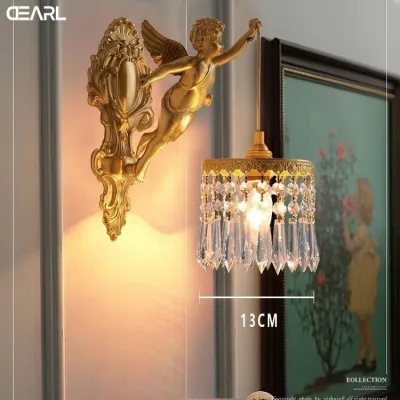
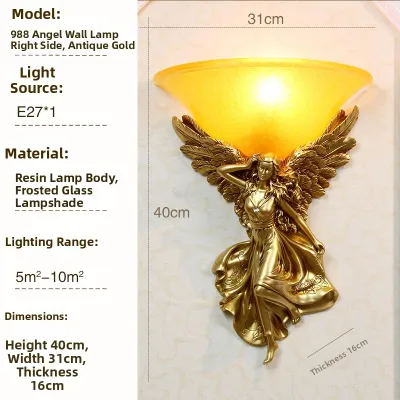
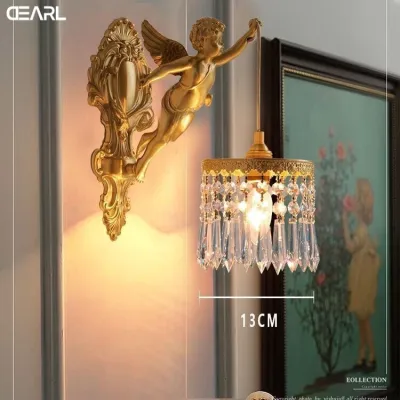
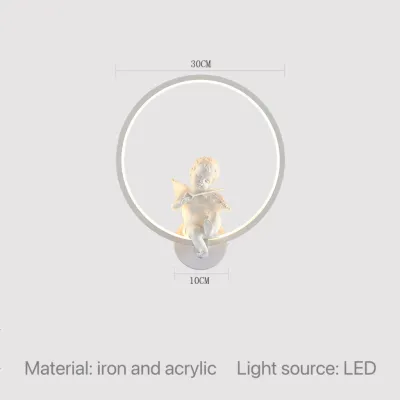

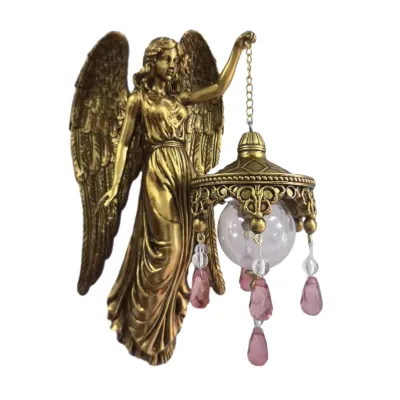
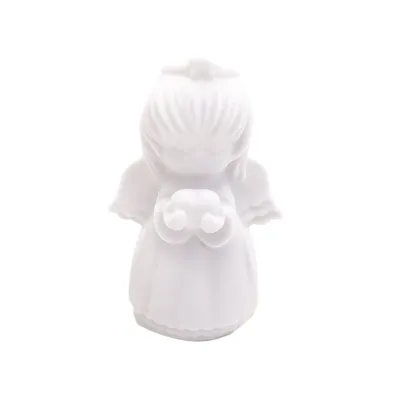
Prices are valid at publication and may change. Please refer to the product page for the latest price.
The decorative angel motif itself plays a significant role in how light diffuses into these spaces. For instance, fixtures featuring solid, opaque wings tend to block direct light, casting it backward against the wall to create a soft halo effect. This is highly suitable for bedside relaxation. On the other hand, open, filigree, or translucent wing designs allow light to pass through, often casting intricate, patterned shadows. While visually stunning, these patterns can sometimes create distracting visual noise in a narrow corridor where clear visibility is paramount.
Key Features to Compare for Corridor and Bedside Use
To find the ideal angel wall lamp, you must evaluate specific fixture specifications against the physical constraints of your room. The primary dimensions to compare include light output, physical footprint, and the resulting beam angle.

Brightness and Light Direction
Achieving the right illumination level starts with checking the manufacturer’s label for maximum wattage limits and recommended bulb types. For corridors, you generally want a brighter, more consistent light source. Look for fixtures that support LED bulbs with a neutral or warm color temperature, which provides clear visibility without feeling clinical. For bedside use, lower-wattage bulbs or dimmable LED options are preferable to maintain a calm atmosphere.
Light direction is equally critical. Corridor lamps benefit from upward or downward washing designs. An upward wash bounces light off the ceiling, making a narrow hallway feel taller and more open, while a downward wash highlights the walking path. For the bedside, you want either a highly diffused downward light or a fixture that shields the bulb entirely from your direct line of sight.
Avoiding exposed bulbs is a universal rule for both spaces, but for different reasons. In a narrow hallway, an exposed bulb can cause temporary blindness as you walk past. At the bedside, looking directly at a bare filament while lying down can disrupt your sleep cycle and cause immediate eye strain.
Size, Proportions, and Mounting Style
Physical dimensions dictate how well the angel wall lamp integrates into your home’s architecture. In corridors, you must measure the available wall space carefully. Hallways are high-traffic zones, so fixtures must not protrude too far into the walkway. A bulky lamp with wide, sweeping angel wings can easily bump into shoulders, catch on clothing, or get damaged during daily movement.
For bedside scaling, the fixture should harmonize with your existing furniture. The height and width of the angel wall lamp must match the proportions of your headboard and nightstand. A lamp that is too large will overwhelm a small bedside table, while one that is too small will look lost on a spacious wall.
You must also choose between hardwired and plug-in mounting styles. Hardwired fixtures offer a clean, seamless look with no visible cords, which is ideal for corridors. However, they require a fixed junction box. Plug-in options provide excellent placement flexibility and easier installation, making them popular for bedside setups where you can easily route the cord behind a nightstand, though you must plan for neat cord management to avoid tangles.
Electrical and Installation Considerations
Safe and reliable operation requires careful planning of your electrical setup. First, verify that the angel wall lamp is compatible with your local voltage. In the Philippines, the standard residential voltage is 220V at 60Hz. Connecting a fixture designed solely for 110V without a proper transformer can damage the lamp or pose a fire hazard. Always check the product packaging or manufacturer specifications for necessary electrical certifications, such as the Philippine Standard (PS) mark or Import Commodity Clearance (ICC) sticker, to ensure the fixture meets local safety standards.
Switch placement is another factor that directly affects daily convenience. Bedside lamps require easily accessible controls. Look for fixtures with inline cord switches, built-in rotary switches, or compatibility with smart plugs and wall switches that you can reach comfortably without getting out of bed. For corridors, the lamps should integrate seamlessly with your hallway circuits, ideally utilizing three-way or multi-way switches at both ends of the corridor so you can turn the lights on before entering and off after exiting.
Always prioritize safety during installation. For any hardwired installation, adding a new junction box, or modifying existing circuits, turn off the main breaker at your electrical panel first. If you are not experienced with electrical wiring, or if your home’s wiring requires complex routing through concrete walls—a common construction feature in tropical climates—hire a licensed electrician to complete the work safely and in compliance with the Philippine Electrical Code. When budgeting for professional installation fees in ₱, ensure you factor in any additional materials needed for your specific wall type.
Step-by-Step Selection Checklist
Use this structured checklist to guide your final purchase decision and ensure your chosen angel wall lamp fits your space perfectly:
- Measure the Space: Determine the width of your corridor or the wall area beside your bed. For corridors, ensure the fixture's depth leaves ample clearance for comfortable walking.
- Check Bulb and Socket Specifications: Verify the socket type (such as E27 or E14) and ensure the maximum wattage limit matches your desired brightness level.
- Confirm Voltage and Certification: Ensure the lamp is rated for 220V and carries recognized safety certification marks.
- Plan the Switch Access: Identify how you will turn the lamp on and off. Confirm that bedside switches are within arm's reach and corridor lights connect to convenient entry/exit switches.
- Assess Material Durability: In humid tropical environments, moisture can affect certain materials. Verify that the metal finishes are treated to resist corrosion, or opt for high-quality resin models that withstand ambient humidity.
If you encounter missing safety labels, incompatible mounting hardware, or find that the fixture protrudes too far into a narrow walkway, stop the purchase and look for an alternative model.
Before drilling any holes into your wall, use painter’s tape to outline the physical dimensions of the angel wall lamp on the wall. This simple step allows you to test the visual weight, check the physical clearance from doors or headboards, and confirm the mounting height from various angles before making a permanent change.
Frequently Asked Questions (FAQ)
Can I use the same angel wall lamp design in both the corridor and the bedroom?
Yes, you can use the same design in both spaces to create visual cohesion throughout your home, but you must adjust the configuration. For example, use a lower-wattage, warm-toned bulb or a dimmable setup for the bedside to maintain a relaxing atmosphere, while opting for a brighter, more direct bulb in the corridor. However, ensure the physical depth of the lamp is safe for the corridor; a wide-winged design that fits perfectly above a nightstand might protrude too far and block a narrow hallway.
Do angel wall lamps require special bulbs for the decorative effect?
Angel wall lamps do not strictly require special bulbs, but your choice of bulb significantly impacts the final look. Always check the fixture’s socket type and maximum wattage limit before buying. A frosted bulb will soften the light and reduce harsh shadows, which is excellent for a cozy bedside feel. Conversely, a clear filament bulb or a smart bulb can enhance the sculptural details of the angel wings, casting dramatic, defined patterns on the wall if that fits your aesthetic preference.

Community discussion
Share your experience or ask a question. Comments are reviewed before publication.