
Creating a dedicated reading corner in a Philippine home requires balancing comfort, space, and the unique challenges of tropical living. A smart floor lamp offers a highly customizable solution, allowing you to adjust brightness and color temperature to match your reading material, the time of day, and your personal visual comfort. To find the right model, you must evaluate key lighting metrics, physical stability, smart ecosystem compatibility, and local electrical safety standards.
Key Lighting Features for a Reading-Friendly Smart Floor Lamp
Reading requires adequate illumination without causing glare or visual fatigue. When evaluating a smart floor lamp, look for devices that offer adjustable lumen output rather than fixed brightness. A range of 400 to 1000 lumens is generally suitable for task lighting in a reading nook. Step-less dimming, which allows a smooth transition from 1% to 100%, is highly recommended over stepped dimming because it lets you fine-tune the light level as natural daylight fades. In the Philippines, where natural light can shift rapidly from intense tropical sunshine to dark, overcast skies during the monsoon season, this granular control is particularly valuable.
The color of the light significantly impacts eye comfort and alertness. For active reading that requires focus, a neutral to cool white light in the range of 4000K to 5000K helps enhance contrast and text readability. For evening wind-down sessions, transitioning to a warm white light between 2700K and 3000K minimizes blue light exposure, helping your body prepare for sleep. A quality smart floor lamp should offer a wide, adjustable Kelvin range to accommodate both activities seamlessly.
Products mentioned in this guide
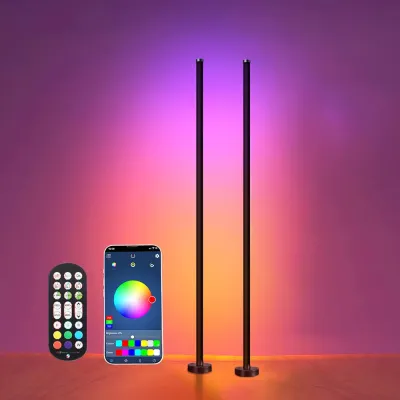
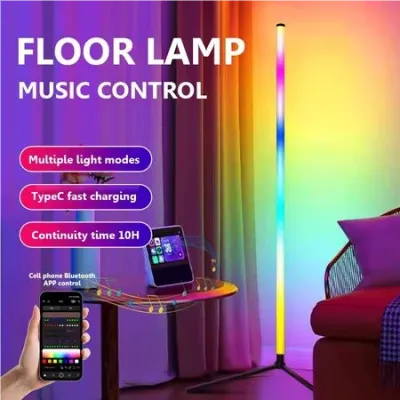
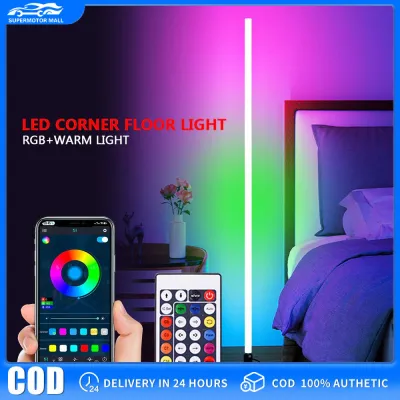
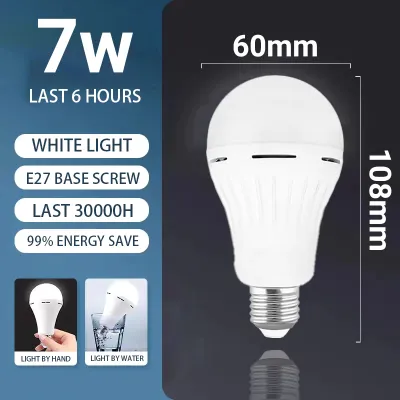
Prices are valid at publication and may change. Please refer to the product page for the latest price.
Direct exposure to a bare light bulb causes harsh shadows and intense glare on paper or glossy screens. Look for lamps equipped with physical diffusers, frosted covers, or adjustable shades that direct light downward or away from your direct line of sight. An adjustable lamp head or a flexible gooseneck allows you to angle the light precisely onto your book, preventing reflection off the pages and keeping the light source out of your peripheral vision.
Smart Controls and Automation for Reading Routines
Smart lamps can be controlled via mobile apps, voice assistants, or physical switches. While app control is convenient for initial setup and detailed scheduling, having a physical switch—such as a foot pedal, touch-sensitive pole, or a dedicated remote—is crucial for daily use. It ensures you can turn the lamp on or off without needing to unlock your smartphone or rely on an active internet connection. Voice control via platforms like Google Assistant or Amazon Alexa adds hands-free convenience when your hands are full with a book or a cup of tea.

The true utility of smart lighting lies in automation. Look for companion apps that allow you to save custom lighting profiles. You can create a focused reading scene with cool light at high brightness, and a relaxation scene with warm light at low brightness. Transitioning between these modes should require only a single tap or voice command, eliminating the need to manually adjust settings every time your activity changes.
Integrating your reading lamp into your daily routine can support better sleep hygiene. Many smart lamps support scheduling features, such as a gradual dimming function that mimics the sunset. Setting a sleep timer to slowly lower the brightness over 30 minutes can serve as a gentle, non-disruptive cue that it is time to close your book and prepare for sleep.
Space, Placement, and Physical Design Considerations
The physical design of the lamp must match your reading chair and room layout. Directional task lamps with adjustable goosenecks or swing arms are excellent for deep armchairs, as they let you position the light directly over your shoulder. Arc lamps provide a dramatic overhead light source that works well with low-profile modern seating, though they require more physical clearance. Torchieres project light upward to bounce off the ceiling, providing ambient room illumination rather than focused task lighting; these are less suitable as primary reading lights unless they include an integrated secondary reading arm.
In busy households, especially those with children or pets, lamp stability is a critical safety consideration. A heavy, well-weighted base prevents the lamp from tipping over if accidentally bumped. When evaluating a lamp, check the base diameter and weight specifications. If your reading corner is situated on a smooth tile floor—common in many Philippine homes to keep spaces cool—ensure the base has non-slip rubber padding to prevent sliding and protect the flooring.
Floor lamps require a nearby power outlet, which can lead to unsightly and hazardous trailing cords. Plan your reading corner layout so the lamp base is positioned close to a wall outlet. If the cord must cross a walkway, use low-profile cord covers or secure the cable along the baseboards to eliminate tripping hazards. Ensure the cord length specified by the manufacturer is sufficient for your planned layout without requiring daisy-chained extension cords.
Electrical Safety and Smart Home Compatibility Checks
The standard residential voltage in the Philippines is 220V at 60Hz. When purchasing smart floor lamps online, particularly from international sellers, always verify that the device is rated for 220V. Importing a 110V-only lamp designed for other regions can lead to immediate electrical failure or fire hazards if plugged directly into a local outlet without a heavy-duty step-down transformer. Additionally, check the plug type (typically Type A or Type B) to ensure it fits your wall outlets without loose adapters, which can cause electrical arcing.
Most budget-friendly smart lamps connect directly to your home Wi-Fi network. These devices almost exclusively operate on the 2.4GHz frequency band rather than the faster 5GHz band. Ensure your home router is configured to broadcast a 2.4GHz signal, or that you can temporarily split your dual-band network during the initial pairing process. If you plan to install multiple smart devices, consider whether your router can handle the additional traffic, or if a hub-based system (using Zigbee or Matter protocols) would be more stable.
Although LED light sources generate significantly less heat than traditional incandescent bulbs, the internal electronics and drivers of smart lamps still produce heat during extended use. Ensure the lamp is placed in a well-ventilated area with adequate clearance from flammable materials such as curtains, upholstered furniture, and bookshelves. In warm, humid tropical climates, heat buildup can shorten the lifespan of sensitive smart components, so avoiding tight, unventilated corners is essential for product longevity.
Building Your Shortlist: An Evaluation Checklist for E-Commerce
When browsing online marketplaces, establish a clear budget in Philippine Pesos (₱) and prioritize essential features over secondary smart integrations. A lamp with high-quality light diffusion and smooth dimming should take precedence over one with millions of color-changing RGB options if your primary goal is comfortable reading.
Before finalizing your purchase on any ecommerce platform, carefully read the product specifications sheet. Look for local warranty terms and clear return policies. Reliable sellers should offer at least a six-month to one-year warranty against manufacturing defects. Avoid listings that lack detailed technical specifications or those that use generic, unbranded descriptions.
Be cautious of listings that make unrealistic performance claims or lack standard electrical safety certifications (such as the Philippine Standard or Import Commodity Clearance marks, or international equivalents like CE, FCC, or RoHS). Vague descriptions regarding smart ecosystem compatibility—such as claiming compatibility with “all smart apps” without naming specific platforms—often indicate low-quality firmware that may be difficult to pair or maintain over time.
Frequently Asked Questions (FAQ)
Do I need a smart hub for a smart floor lamp?
Whether you need a smart hub depends entirely on the communication protocol used by the lamp. Many smart floor lamps utilize direct Wi-Fi or Bluetooth connections, allowing them to pair directly with your smartphone app or home router without any additional hardware. However, lamps that run on Zigbee or Matter protocols require a compatible smart hub to bridge the connection between the lamp and your home network. While hub-based systems require an extra upfront investment, they often provide faster response times and reduce the bandwidth load on your home Wi-Fi router.
Can smart floor lamps help reduce eye strain while reading?
Yes, smart floor lamps can play a significant role in reducing eye strain by allowing you to match your lighting to the surrounding environment. Visual fatigue often occurs when there is a high contrast between a bright reading surface and a dark room, or when the light is too dim, forcing your pupils to dilate excessively. By adjusting the lamp’s brightness to complement the ambient room light and selecting a neutral color temperature (around 4000K) that enhances text contrast, you can minimize glare and reduce the muscular strain on your eyes during long reading sessions.

Community discussion
Share your experience or ask a question. Comments are reviewed before publication.