
Creating a dedicated reading corner in a Philippine home requires more than just a comfortable armchair and a good book. To enjoy your reading sessions without straining your eyes, selecting the right stand lamp is essential. A well-chosen floor lamp provides targeted task lighting that illuminates your pages clearly while complementing the ambient atmosphere of your living room or bedroom. In tropical climates where natural light shifts dramatically between bright, sunny afternoons and dark, rainy afternoons during the monsoon season, having adjustable and reliable indoor lighting becomes even more critical.
Finding the ideal stand lamp involves balancing functional specifications with your personal space constraints. Whether you are setting up a cozy nook in a high-rise condominium in Metro Manila or arranging a quiet corner in a spacious suburban home, the physical design, electrical safety, and light output of your lamp must align with your daily habits. By focusing on key factors such as adjustable brightness, color temperature, and physical stability, you can transform any quiet corner into an inviting literary sanctuary.
Lighting Requirements for a Comfortable Reading Corner
To protect your vision and maintain focus during long reading sessions, you must first understand the specific lighting conditions your eyes require. Reading is a high-contrast visual task that demands sufficient illumination to distinguish text from the page clearly. Relying solely on general overhead room lighting often creates shadows or leaves the reading material too dim, forcing your eyes to work harder and leading to premature fatigue.
Products mentioned in this guide
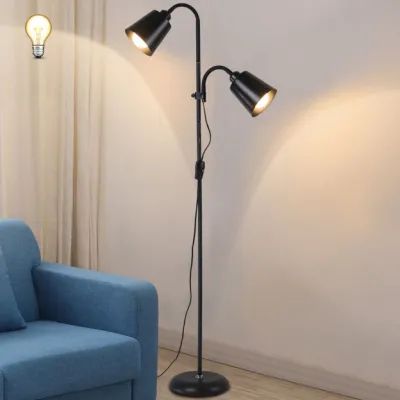
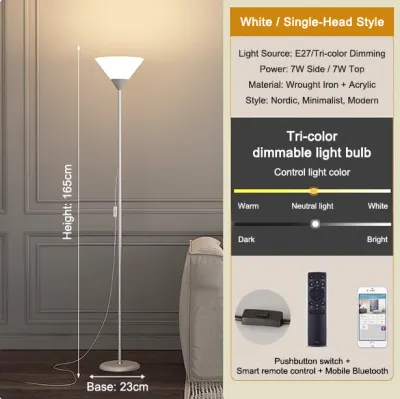
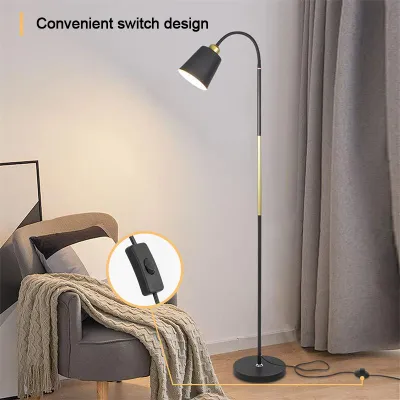
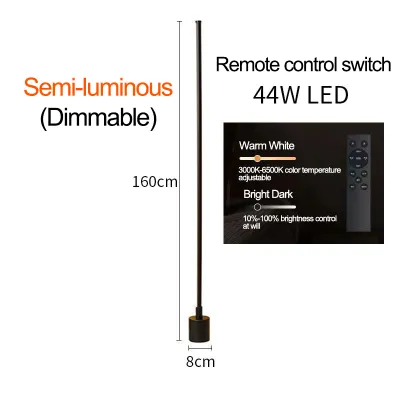
![[Free Bulb] Floor Lamp Living Room Bedroom Bedside Lamp Modern Creative Fabric Decorati Study Floor Light](https://img.lazcdn.com/g/p/578da9679681a8de06d88bb423e4a152.jpg_400x400q80.jpg_.webp)
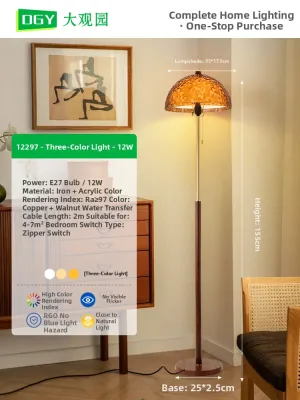
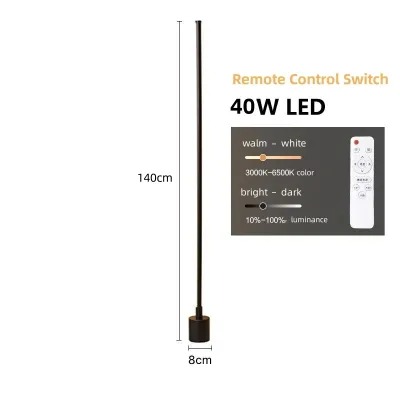
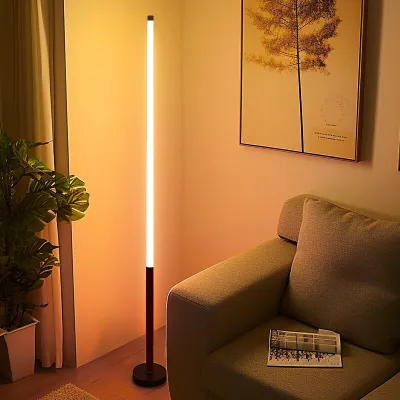
Prices are valid at publication and may change. Please refer to the product page for the latest price.
When evaluating potential stand lamps, pay close attention to the manufacturer’s lumen ratings rather than relying strictly on wattage. Lumens measure the actual amount of visible light emitted by a bulb, which directly determines brightness. For comfortable reading, a task light should generally deliver between 400 and 800 lumens directly onto your book or e-reader. You must balance this output with the existing ambient light in your room; a pitch-black room with a single, ultra-bright spotlight creates harsh contrast that tires the eyes, whereas a balanced layer of soft ambient light paired with a focused task lamp offers the most comfortable viewing experience.
Color temperature, measured in Kelvins (K), plays a significant role in how your brain processes visual information and regulates focus. For active reading and high concentration, a neutral white light ranging from 3500K to 4500K is highly effective because it mimics natural daylight and enhances text contrast. However, if your reading corner is primarily used for winding down before sleep, a warmer light between 2700K and 3000K is preferable, as it minimizes blue light exposure and promotes relaxation. Many modern LED stand lamps feature adjustable color temperature settings, allowing you to switch between these modes depending on the time of day.
The beam angle and light distribution of the lamp are equally critical in preventing harsh glares and distracting shadows. A narrow beam angle acts like a spotlight, which can be useful for pinpointing light on a page but may create sharp, dark borders around your immediate reading area. Conversely, a wide beam angle disperses light across a larger space, which reduces shadow intensity but may dilute the brightness needed for fine print. Look for lamps with adjustable shades or directional covers that let you shape the light path, ensuring the beam falls directly on your book without spilling into your eyes or reflecting off glossy pages.
Key Features to Look for in a Reading Stand Lamp
A high-quality reading stand lamp must offer physical flexibility to accommodate different seating positions and reading postures. Fixed-arm lamps often force you to adjust your body to the light, which can lead to neck and back discomfort over time. Instead, prioritize lamps equipped with adjustable swing arms, swivel heads, or flexible goosenecks. These mechanical features allow you to position the light source precisely where you need it, whether you are sitting upright in a study chair or reclining on a lounge sofa.

Another essential feature to verify is the presence of built-in dimmer switches or step-less brightness controls. Because natural light levels in your home change throughout the day, a lamp with a single, fixed brightness level can quickly become either too dim during stormy afternoons or too bright at night. Step-less dimming or multi-level brightness settings allow you to fine-tune the illumination to match your immediate environment, protecting your eyes from sudden glare and reducing overall power consumption.
The design of the lamp shade and its internal components also dictates the quality of the light output. Look for shades made from opaque materials like metal or dense fabric, which direct the light downward rather than letting it bleed out horizontally into your field of vision. Some premium task lamps include internal baffles or frosted diffusers over the bulb socket; these components scatter the light rays evenly, eliminating the harsh “hot spots” of intense light that can bounce off white paper or digital screens.
Finaly, never overlook the physical stability of the lamp’s base and its overall footprint. In busy households, especially those with active children, pets, or cooling appliances like oscillating stand fans, a top-heavy lamp poses a significant tipping hazard. Ensure the base is constructed from heavy materials like solid steel, iron, or weighted stone, and check that its diameter is sufficient to support the extended arm of the lamp without wobbling. The footprint should be compact enough to tuck neatly beside or behind your furniture, keeping walkways clear and preventing accidental trips.
Fitting the Lamp to Your Space and Seating Setup
Before purchasing any stand lamp, you must carefully measure your reading corner to ensure a seamless physical fit. Start by measuring the height of your favorite reading chair or sofa, paying attention to where your eyes and shoulders align when you are seated. Ideally, the bottom of the lamp shade should sit at or slightly below your eye level when you are sitting down. This positioning ensures that the bright light source remains shielded from your direct line of sight while casting an unobstructed pool of light onto your lap.
Clearance around your furniture is another critical spatial constraint to calculate. If your reading corner is tucked into a tight alcove or a small bedroom, an arc lamp with a wide, sweeping arm might take up too much overhead space or collide with nearby shelving. For compact areas, a straight-pole pharmacy lamp or a slender gooseneck model is often more appropriate because it occupies minimal vertical and horizontal space. Ensure there is enough clearance for you to adjust the lamp’s arm without hitting walls, curtains, or decorative wall art.
Cord management is a vital safety and aesthetic consideration that is frequently forgotten during the planning phase. Identify the nearest electrical outlet relative to your desired lamp placement and measure the distance along the baseboards. Running a power cord across a high-traffic walkway creates a dangerous tripping hazard and can damage the cord over time. If the lamp must sit far from an outlet, plan to use low-profile cord covers or secure the cable neatly behind your furniture to keep the space tidy and safe.
Additionally, consider the visual weight of the lamp and how it integrates with your existing interior design. A bulky, industrial-style metal lamp might look out of place in a minimalist, Scandinavian-inspired living room, while an ultra-thin modern lamp might get lost in a room filled with heavy, traditional wooden furniture. Pay attention to the finishes—such as matte black, brushed brass, or natural wood—and choose a style that complements your room’s color palette and textures, creating a cohesive and inviting atmosphere.
Safety, Electrical Compatibility, and Maintenance
Operating electrical appliances safely in the Philippines requires careful attention to local power standards and environmental conditions. The standard residential voltage in the country is 220V at a frequency of 60Hz. When shopping for a stand lamp, especially when browsing online marketplaces that source products internationally, always verify that the lamp’s electrical components are rated for 220V. Using a lamp designed strictly for 110V without a proper transformer can cause immediate electrical failure, short circuits, or fire hazards.
Always look for official safety certifications on the product packaging or the lamp itself. In the local market, reliable electrical products should carry the Philippine Standard (PS) quality mark or an Import Commodity Clearance (ICC) sticker, which indicates the item has undergone rigorous safety testing. Additionally, check the maximum bulb wattage limit printed directly on the lamp’s socket or safety label. Exceeding this wattage limit—especially when using traditional incandescent bulbs that generate high heat—can melt the socket, damage the wiring, and create a serious fire risk.
The tropical climate of the Philippines, characterized by high humidity and seasonal dampness, demands strategic placement and regular maintenance of your lighting fixtures. Avoid placing your stand lamp directly beneath or adjacent to air conditioning units where condensation might drip onto the electrical housing. Keep the lamp away from open windows during the rainy season to prevent wind-blown rainwater from contacting the plug or switch. If you live in a coastal area, high salt content in the air can accelerate the corrosion of metal finishes, making rust-resistant coatings or regular wipe-downs essential.
To maintain the lamp’s performance and aesthetic appeal, establish a safe cleaning routine based on the manufacturer’s instructions. Always isolate the power by unplugging the lamp from the wall outlet and allowing the bulb to cool completely before cleaning. Use a dry, soft microfiber cloth to remove dust from the shade, pole, and base; avoid using wet cloths or harsh chemical solvents on electrical parts or brass finishes, as moisture can seep into the wiring and chemicals can strip away protective lacquers. For fabric shades, a gentle lint roller or a soft brush attachment on a vacuum cleaner is highly effective for removing accumulated dust without damaging the material.
Building Your Shortlist: A Step-by-Step Evaluation Checklist
To make a confident and practical purchase, you should organize your search using a structured evaluation framework. Begin by defining your primary use case: will this lamp be used exclusively for intense, close-up reading, or must it also serve as secondary ambient lighting for the entire room? Once your needs are clear, establish a realistic budget in ₱. While basic models may start around ₱1,000, high-quality stand lamps with advanced features like step-less dimming, adjustable color temperatures, and heavy-duty weighted bases typically range from ₱2,500 to ₱6,000.
Next, cross-reference the physical specifications of the lamps on your shortlist with the measurements you took of your reading space. Verify the maximum height, the reach of the adjustable arm, and the diameter of the base to ensure the lamp will fit comfortably without blocking walkways or hitting nearby furniture. If you plan to use a specific type of bulb, such as a smart LED bulb, confirm that the lamp’s socket interface (most commonly E27 in local households) is compatible and that the shade provides enough physical clearance for the bulb’s dimensions.
Before finalizing your purchase from any retailer or online marketplace, carefully review the merchant’s return policies and warranty coverage. A reliable manufacturer or distributor should offer at least a six-month to one-year warranty against manufacturing defects, particularly for lamps with integrated, non-replaceable LED modules. Check if replacement parts, such as tension springs for swing arms or replacement shades, are readily available, as this significantly extends the lifespan of your investment.
Finally, identify any potential deal-breakers that would make a lamp unsuitable for your daily routine. For example, if you frequently read late at night while a partner sleeps nearby, a lamp with a non-adjustable head that spills light across the entire room is a clear deal-breaker. Similarly, if your wall outlets are controlled by a wall switch, ensure the lamp’s physical switch can remain in the “on” position so you can control it conveniently from the wall. By systematically filtering your options against these criteria, you will easily find the perfect stand lamp for your home.
Frequently Asked Questions (FAQ)
Can I use a standard floor lamp for reading?
While a standard floor lamp can provide general illumination for a room, it is rarely ideal for dedicated reading corners. Standard lamps typically feature fixed shades that diffuse light upward or outward to create ambient light, which often leaves your reading material cast in shadow. A dedicated reading lamp, on the other hand, features an adjustable head or arm designed to direct a concentrated beam of light precisely onto your book. If you choose to use a standard lamp, you may find yourself straining your eyes or constantly shifting your posture to catch the light, which can lead to physical fatigue over time.
How high should the lamp be relative to my chair?
As a general rule of thumb, the bottom of the lamp shade should align with your eye level or sit slightly below it when you are comfortably seated in your reading chair. This height, which typically ranges between 40 and 48 inches from the floor depending on your furniture, ensures that the bright bulb remains hidden from your direct line of sight to prevent glare. If multiple members of your household use the same reading corner, choosing a stand lamp with an adjustable height pole or a highly flexible gooseneck is highly recommended, as it allows each user to customize the light source placement to match their individual seated height.
Are smart bulbs suitable for reading task lighting?
Smart bulbs can be an excellent addition to a reading stand lamp, provided they are compatible with the fixture’s electrical specifications. They offer the convenience of adjusting both brightness and color temperature via a mobile app or voice commands, allowing you to transition seamlessly from a bright, focused study session to a warm, relaxing evening read. However, you must verify that your stand lamp does not have a built-in manual dimmer switch, as pairing a smart bulb with a physical dimmer can cause flickering, buzzing, or premature bulb failure. Additionally, ensure your home Wi-Fi connection is stable in your reading corner to avoid control latency.

Community discussion
Share your experience or ask a question. Comments are reviewed before publication.