
Low-ceiling condo living rooms in the Philippines present a unique design challenge. With standard ceiling heights in modern high-rises often hovering around 2.4 meters or lower, traditional hanging fixtures like chandeliers or low-hanging pendant lights can make a space feel cramped, dark, and visually cluttered. The solution lies in selecting a high-quality tri-color flush mount ceiling light. These fixtures sit tight against the ceiling, preserving precious vertical clearance while offering the flexibility to shift between warm, neutral, and cool white light to suit different times of day and activities. By understanding how to evaluate these fixtures, you can transform your compact living area into a bright, versatile, and visually spacious home.
Choosing the right fixture requires balancing aesthetics with technical compatibility. Because condo units are often compact and multi-functional, the lighting must adapt to various daily routines—from focused remote work during the day to relaxed family gatherings at night. A well-chosen flush mount light not only provides adequate illumination but also serves as a subtle design element that complements modern interior styles without overwhelming the room’s proportions.
Why Flush Mount and Tri-Color Matter in Low-Ceiling Condos
In a compact living room with a ceiling height under 2.4 meters, every centimeter of vertical space is valuable. Traditional hanging fixtures draw the eye downward, effectively cutting the room in half visually and making the ceiling feel lower than it actually is. Flush mount profiles, particularly those with an ultra-slim depth of 5 centimeters or less, hug the ceiling plane. This design keeps the visual line of sight clear, allowing light to disperse across the upper walls and ceiling, which creates an illusion of a taller, more open room.
Products mentioned in this guide
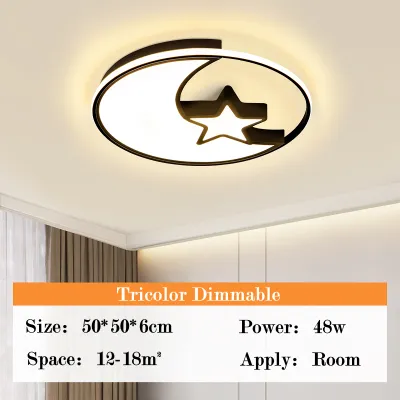
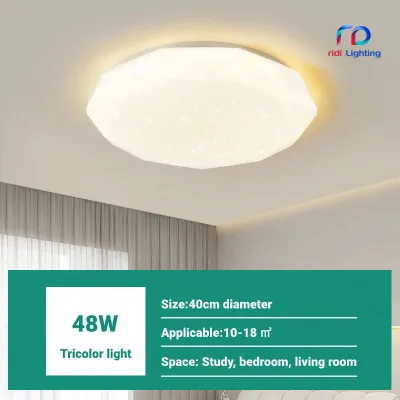
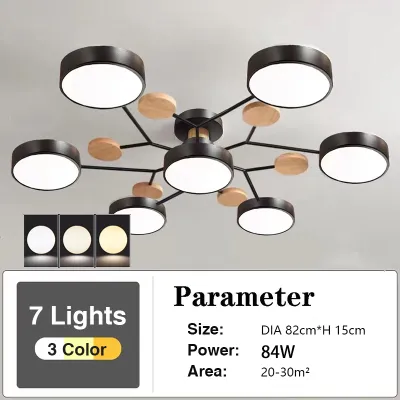
Prices are valid at publication and may change. Please refer to the product page for the latest price.
Furthermore, modern high-rise condos in metropolitan areas are typically constructed with solid concrete slab ceilings. This structural design limits the installation of recessed downlights unless you are willing to sacrifice valuable headroom by installing a dropped gypsum ceiling. A flush mount fixture offers a practical alternative, providing widespread, ambient illumination from a single central junction box without requiring extensive structural modifications.
Tri-color switching technology is equally essential for the multi-purpose nature of condo living. A single living room often serves as a home office, a study area, a dining space, and a relaxation zone throughout the day. Tri-color fixtures allow you to adjust the color temperature to match these changing needs. Cool white light (around 6000K to 6500K) is ideal for high-focus tasks and daytime productivity, as it mimics natural daylight and helps reduce eye strain.
As the afternoon transitions into evening, switching to neutral white light (around 4000K) provides a balanced, natural atmosphere that is perfect for hosting guests or reading. When it is time to wind down, transitioning to warm white light (around 3000K) creates a cozy, inviting ambiance that signals the body to relax. This adaptability is crucial in a compact home where separate rooms for work and leisure are not always an option.
Finally, the visual weight of a light fixture plays a significant role in how spacious a room feels. Bulky, ornate fixtures cast heavy shadows and create dark corners, which can make a small room feel even smaller. A slim, wide-diameter flush mount light distributes light evenly across the entire space, eliminating dark spots and softening shadows. This even distribution of light opens up the room, making the boundaries of the walls feel more expansive and less confining.
Essential Specifications to Verify Before Purchase
Before purchasing a tri-color flush mount light, you must verify several critical technical specifications to ensure compatibility with your condo’s electrical and structural setup. First and foremost is the voltage and electrical frequency standard. In the Philippines, the standard residential electrical system operates at 220V to 240V at 60Hz. Many imported fixtures sold online are designed for 110V systems or 50Hz frequencies; installing these without a transformer can lead to immediate driver failure, flickering, or electrical hazards. Always look for products that explicitly state compatibility with 220V-240V 60Hz systems and carry local safety certifications, such as the Philippine Standard (PS) mark or the Import Commodity Clearance (ICC) sticker.

Physical dimensions are the next crucial check. For a standard low-ceiling living room, prioritize fixtures with an ultra-slim drop height. A thickness of 2 to 5 centimeters is ideal for maintaining maximum clearance. The diameter of the fixture should be proportional to the room’s square footage. As a general guideline, a living area under 15 square meters is best served by a fixture with a diameter of 30 to 40 centimeters. For larger living spaces or open-concept layouts, a diameter of 50 centimeters or more may be necessary to ensure the light looks balanced and provides adequate coverage.
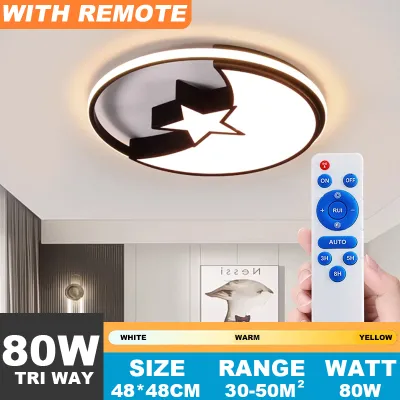
Understanding the tri-color switching mechanism is vital for daily convenience. There are two primary methods used to cycle through color temperatures: sequential wall switch operation and remote control dependencies. Sequential wall switch models change colors each time you toggle your existing physical wall switch off and on within a few seconds. While simple and requiring no extra accessories, this method can sometimes become out of sync if the switch is toggled too quickly. Remote-controlled models, on the other hand, allow you to select the exact color temperature and brightness level directly. Many remote-controlled fixtures also feature a memory function, which saves your preferred setting so you do not have to readjust the light every time you turn it on.
Additionally, you must evaluate the correlation between lumens and wattage rather than relying on wattage alone to estimate brightness. Wattage measures energy consumption, whereas lumens measure actual light output. High-efficiency LED fixtures can produce high lumen output at relatively low wattages, which is excellent for reducing electricity bills. For a standard condo living room, a total light output of 1,500 to 3,000 lumens is generally recommended. Ensure that the fixture’s internal LED driver is rated to handle the heat dissipation required for its specified wattage, particularly in tropical climates where ambient indoor temperatures and humidity can accelerate driver wear.
Building Your Shortlist: Design and Functional Criteria
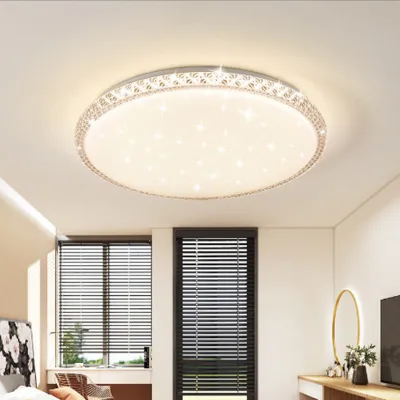
When compiling a shortlist of potential fixtures, focus on the materials and construction quality to ensure long-term durability. Look for diffusers made from high-grade acrylic (PMMA) or polycarbonate. These materials are highly resistant to yellowing and cracking over time, which is a common issue with cheaper plastics exposed to continuous heat and ambient tropical humidity. Edge-lit LED designs are particularly beneficial for low ceilings; they project light sideways into a light guide plate before diffusing it downward, resulting in soft, uniform, and glare-free illumination that prevents eye fatigue.
Aesthetic finishes should complement your existing interior decor while maintaining a low profile. Matte white frames are highly popular for low ceilings because they blend seamlessly with standard white ceiling paint, making the fixture virtually disappear when turned off. If you prefer a more defined look, minimalist frames in matte black, brushed aluminum, or subtle wood-grain accents can add a touch of modern sophistication. Avoid fixtures with heavy metallic trim or dangling crystal elements, as these add unnecessary visual weight and can make the ceiling feel lower.
If you are interested in smart home integration, verify the connectivity requirements of the fixture before buying. Some smart tri-color flush mounts connect directly to your home Wi-Fi network or via Bluetooth, allowing you to control the lighting through mobile apps or voice assistants. If you opt for a model with a dedicated remote control, check the battery requirements (typically AAA batteries) and the pairing process. Ensure the remote operates on a reliable radio frequency (RF) rather than infrared (IR), so you do not need a direct line of sight to operate the light from across the room.
Budget allocation is another practical consideration. High-quality tri-color flush mount lights in the Philippines generally range from ₱1,500 to over ₱8,000, depending on the size, materials, and smart features. While it may be tempting to opt for the cheapest option available on online marketplaces, investing in a reputable brand from an authorized local retailer is highly recommended. This ensures you receive a genuine product with a reliable warranty—typically one to two years. Having access to local after-sales support is invaluable if you ever need to replace a faulty driver or seek technical assistance.
Installation Realities and Safety Boundaries in Condos
Installing a new ceiling fixture in a condo unit involves unique structural and administrative considerations. Because most condo ceilings are solid concrete slabs, mounting a fixture requires drilling holes to secure the mounting bracket. This task requires a rotary hammer drill and high-quality masonry wall plugs. Before you begin drilling, it is essential to consult your condo administration’s guidelines. Many property management offices have strict rules regarding drilling depth to prevent damage to embedded electrical conduits, water pipes, or post-tension structural cables.
Weight restrictions must also be taken into account. While flush mount fixtures are generally lighter than chandeliers, they still require secure anchoring. Standard plastic wall plugs are usually sufficient for lightweight acrylic fixtures, but heavier models with metal frames may require metal expansion bolts. Always check the weight of the fixture against the load capacity of your mounting hardware and the ceiling structure. Ensure the existing junction box is securely fastened to the concrete slab and is not loose or damaged.
Safety should always be your top priority when dealing with fixed electrical wiring. Before attempting any installation or replacement, isolate the power at the main circuit breaker panel of your condo unit. Use a voltage tester to verify that the wires are completely dead before touching them. If you are uncomfortable working at heights on a ladder, handling electrical wiring, or drilling into solid concrete, do not attempt a DIY installation. Hire a licensed electrician to complete the work safely and in compliance with the Philippine Electrical Code. Many condo corporations actually require a professional installation to maintain your unit’s insurance coverage and comply with building safety regulations.
Once the installation is complete, perform a thorough post-installation check before finalizing the setup. Turn the circuit breaker back on and test the fixture through several switching cycles to ensure it operates smoothly without flickering, buzzing, or delayed starting. Check that the fixture sits completely flush against the ceiling surface. Any gaps between the fixture frame and the concrete ceiling should be sealed or adjusted, as these gaps can allow dust, moisture, and small insects to enter the diffuser, which can reduce light output and shorten the lifespan of the LED components over time.
Frequently Asked Questions (FAQ)
Can I change the color temperature after installation?
Yes, tri-color flush mount ceiling lights are specifically designed to allow you to change the color temperature at any time after installation. Depending on the specific model you purchase, this is done either by toggling your existing wall switch in quick succession, using an included remote control, or adjusting the settings via a smartphone app. Switch-controlled models cycle through warm, neutral, and cool white light each time the switch is turned off and on within a few seconds. Remote-controlled and smart models offer more precise control and usually feature a memory function that retains your last selected color temperature.
Do tri-color flush mounts require special dimmer switches?
No, standard tri-color flush mount lights generally do not require, and are often incompatible with, traditional wall-mounted dimmer switches. Using a standard wall dimmer with a non-dimmable LED driver can cause severe flickering, buzzing, and permanent damage to the fixture’s internal electronics. If you want dimming capabilities, you should look for a tri-color fixture that includes a dedicated remote control or smart app integration, which handles dimming internally through the fixture’s own driver. If you prefer to use a physical wall dimmer, you must verify that the fixture is explicitly labeled by the manufacturer as compatible with external triac dimmers.
How do I clean a flush mount light without damaging the LED panel?
To clean your flush mount light safely, always turn off the power at the wall switch first and allow the fixture to cool down completely. Use a dry, soft microfiber cloth to gently wipe away dust and cobwebs from the exterior of the diffuser. For stubborn smudges or dirt, you can slightly dampen the microfiber cloth with clean water; however, do not allow any moisture to seep into the edges of the fixture or come into contact with the internal LED driver and wiring. Never use harsh chemical cleaners, alcohol, solvents, or abrasive scrubbing pads, as these can scratch, cloud, or permanently degrade the acrylic or polycarbonate diffuser.

Community discussion
Share your experience or ask a question. Comments are reviewed before publication.