
Selecting the right bedside lighting is crucial for couples with different sleep schedules. The ideal wall lights for reading must deliver focused illumination for your book or device while strictly containing light spill to protect your partner’s sleep. By focusing on directional designs, adjustable components, and proper placement, you can create a comfortable personal reading nook without compromising the tranquility of your shared bedroom.
In a shared bedroom, standard lamps often cast a wide, uncontrolled glow that easily reaches the other side of the bed. Wall-mounted fixtures offer a practical alternative, freeing up valuable space on your bedside table while allowing you to position the light source exactly where you need it. To achieve the perfect balance between reading comfort and your partner’s sleep quality, you must evaluate specific design features, brightness levels, and installation techniques.
Key Design Features That Prevent Light Spill
To keep light from spilling onto your partner’s side of the bed, look for fixtures that offer precise physical control over the direction of the beam. Adjustable swing arms, flexible goosenecks, and swivel heads are excellent features that allow you to pull the light close to your book and angle it away from your partner. This adjustability ensures that the light is concentrated only on your reading material, minimizing the ambient glow that escapes into the rest of the room.
Products mentioned in this guide
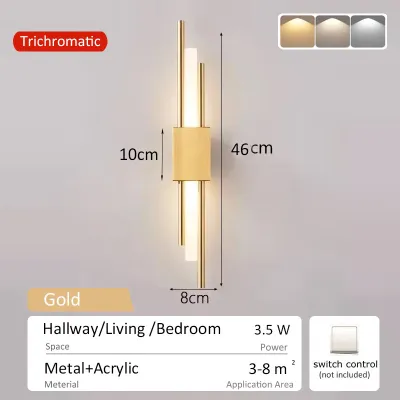
Prices are valid at publication and may change. Please refer to the product page for the latest price.
The shape and material of the light shade also play a critical role in containing light spill. Opaque metal or thick ceramic shades are ideal because they block light from transmitting sideways, directing the entire output forward. Deep recessed bulb housings, cylindrical spotlight designs, and fixtures with adjustable barn doors physically shield the light source, ensuring that the bulb is not visible from your partner’s sleeping angle.
When selecting an adjustable fixture, always check the manufacturer’s specifications for rotation limits, joint tension, and the durability of moving parts. In humid tropical climates, metal joints can degrade or loosen over time if they are not made from corrosion-resistant materials. Look for high-quality brass, powder-coated steel, or aluminum fixtures that feature adjustable tension screws, allowing you to tighten the joints if the arm begins to droop under the weight of the shade.
Selecting the Right Brightness and Color Temperature
Controlling the intensity and tone of your reading light is essential for maintaining a sleep-friendly environment. Look for wall lights that feature built-in dimmers, rotary knobs, or touch-sensitive controls located directly on the fixture base. This allows you to easily lower the brightness as your eyes adjust to the dark, ensuring the light remains comfortable for reading without becoming overly bright for the room.

Color temperature significantly influences both reading comfort and sleep quality. Warmer color temperatures, typically between 2700K and 3000K, emit a soft, amber glow that is less disruptive to the body’s natural sleep cycle compared to cool, blue-toned light. Before purchasing a bulb or an integrated LED fixture, verify the Kelvin rating on the product packaging to ensure it falls within this warm, relaxing range.
Always check the fixture’s maximum wattage limit and electrical specifications on the product label before installation. In the Philippines, standard residential voltage is 220V, so any bulb or integrated LED module you choose must match this rating. If you plan to use smart bulbs or dimmable LEDs, verify that they are fully compatible with the fixture’s dimming mechanism to prevent flickering, buzzing, or premature component failure.
Positioning and Installation Guidelines for Shared Beds
Proper placement of your bedside wall lights is just as important as choosing the right fixture design. Instead of relying on standard mounting heights, determine the ideal position based on your specific sitting or lying reading posture, mattress thickness, and headboard height. Sit comfortably in your bed as you normally would when reading, and mark the wall at a point slightly above your shoulder level to ensure the light shines directly onto your page.
Angle the fixture so that the light beam is directed downward and slightly outward, casting shadows away from your partner’s side of the bed. The primary goal is to ensure that the concentrated beam of light never crosses the centerline of the mattress. By keeping the light source close to your reading material and angled sharply downward, you can maintain a clear boundary between the illuminated reading zone and the dark sleeping zone.
Before installing hardwired fixtures, review the existing electrical box locations and wall structure. For any fixed wiring installation, always isolate the power at the main circuit breaker before handling wires or mounting brackets. If your desired placement lacks existing wiring or requires structural modifications to your walls, consult a qualified electrician to ensure a safe, code-compliant installation that prevents electrical hazards.
Balancing Reading Needs with General Bedroom Lighting
A well-planned bedroom lighting scheme relies on layered light sources rather than a single, multipurpose fixture. Avoid relying on your focused reading sconces for general room illumination, as this can lead to glare and uneven lighting. Instead, combine your task-specific wall lights with separate, low-level ambient lighting, such as soft under-bed LED strips or warm corner floor lamps, to create a relaxing atmosphere.
To maintain complete control over your shared space, ensure that each bedside wall light operates on an independent control circuit. Whether you choose individual wall switches, pull chains, or smart home integrations, isolating the reading lights allows one partner to sleep in darkness while the other continues to read. This independence is key to preventing late-night disruptions and maintaining a harmonious bedroom environment.
For ultimate versatility, consider dual-function wall lights that offer two distinct light sources on a single fixture. These innovative designs often feature a flexible, narrow-beam LED spotlight for focused reading alongside a separate, diffused ambient backlight for general room use. This allows you to switch seamlessly between a soft, room-filling glow and a highly targeted reading beam depending on your immediate needs.
Frequently Asked Questions (FAQ)
Can I install a hardwired reading sconce if my bed is already placed?
Yes, but retrofitting a hardwired fixture requires careful preparation to avoid damaging your bedroom walls. Before cutting into drywall or plaster, you must locate existing wall studs and hidden electrical wiring using a reliable stud finder. Because working with fixed wiring involves electrical safety risks, it is highly recommended to consult a licensed electrician to ensure the installation complies with local building codes and safety standards in the Philippines.
Are plug-in wall lights a safe alternative for bedside reading?
Plug-in wall lights are an excellent, damage-free alternative for renters or anyone looking to avoid complex electrical work. To ensure a safe installation, always secure the hanging power cords to the wall using rigid cord covers or clips to prevent them from becoming tripping hazards or getting caught in bedding. Additionally, verify the weight capacity of your wall anchors and ensure the plug does not overload your bedside outlet or create a fire hazard.
How do I clean and maintain adjustable wall light joints?
Regular maintenance keeps your adjustable wall lights operating smoothly and prevents the joints from loosening over time. Dust the shades, arms, and bulbs weekly using a dry or slightly damp microfiber cloth, ensuring the power is turned off and the bulb is completely cool. Avoid using harsh chemical cleaners or abrasive sprays, which can damage the protective finish. If the adjustable arm begins to droop, consult the manufacturer’s manual and gently tighten the joint tension screws.

Community discussion
Share your experience or ask a question. Comments are reviewed before publication.