
When selecting a wall mounted led light, the decision hinges on matching the fixture’s light distribution, physical profile, and control mechanism to the specific demands of the space. A hallway requires a low-profile, highly diffused fixture designed to facilitate safe movement and provide soft ambient illumination. Conversely, a bedside requires a highly targeted, adjustable, and easily dimmable task light that supports reading and winding down without disturbing a partner. Understanding these distinct roles prevents common lighting mistakes, such as installing a protruding fixture that blocks a narrow corridor or choosing a blinding, non-adjustable light next to your pillow.
Hallway vs. Bedside: Ambient Navigation vs. Task Lighting
The primary difference between hallway and bedside lighting lies in their functional roles and how we interact with the spaces they illuminate. Hallways are transitional zones where people are constantly in motion. The lighting here must serve as a continuous guide, offering spatial orientation and preventing trips or falls. Because you view hallway lights while standing and moving, the light must be evenly distributed to avoid creating dark pockets or harsh glare that can temporarily blind you as you walk past.
In contrast, the bedside is a stationary, intimate environment meant for relaxation, recovery, and targeted tasks like reading. Glare control at the bedside is highly localized. Because you are positioned horizontally or reclined, a light source that is comfortable while standing can become painfully bright when viewed from below. Bedside fixtures require precise directional control, allowing you to cast light exactly where it is needed—such as on the pages of a book—while keeping the rest of the room in restful shadow.
Products mentioned in this guide
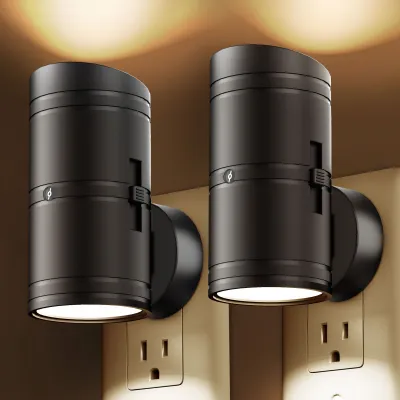
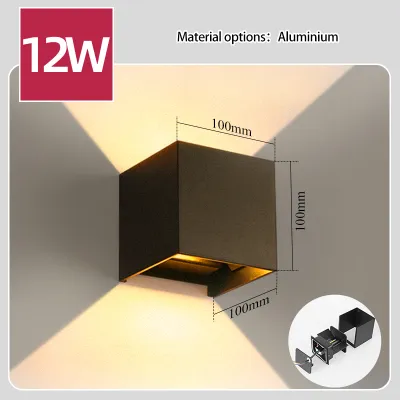

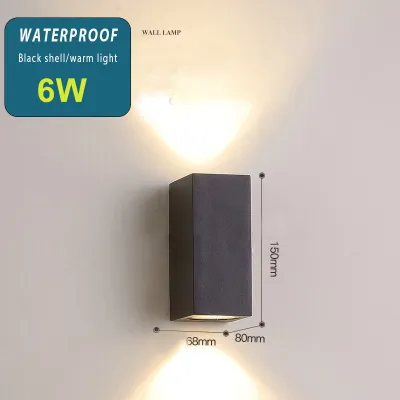
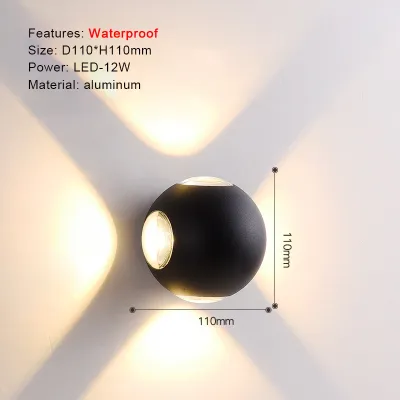
Prices are valid at publication and may change. Please refer to the product page for the latest price.
Both environments benefit from the concept of layered lighting, where wall-mounted fixtures complement other light sources rather than operating in isolation. In a hallway, wall sconces work alongside recessed ceiling downlights to soften shadows and add vertical interest to long, flat walls. At the bedside, sconces free up valuable nightstand space while working in tandem with general ambient ceiling fixtures, allowing you to transition from bright, functional room lighting to a cozy, localized glow as you prepare for sleep.
Key Features for Hallway Wall Sconces
To choose the ideal wall mounted led light for a hallway, you must prioritize fixtures designed for wide light distribution and physical safety.

Light Distribution Look for uplight/downlight (bi-directional) configurations or fixtures with enclosed diffusers made of frosted glass, opal acrylic, or fabric. These designs shield the raw LED diodes from direct view, instead scattering the light across the ceiling and floor. This creates a soft wash of illumination that makes narrow corridors feel wider and more inviting.
Clearance and Proportions Physical dimensions are critical in transitional spaces. Standard hallways in residential homes can be narrow, making protruding light fixtures a physical hazard. To prevent family members or guests from bumping into the lights, look for slim-profile or “ADA-compliant” sconces that extend no more than 4 inches (10 cm) from the wall. This ensures a clear path for carrying laundry baskets, moving furniture, or walking in the dark.
Smart and Sensor Integration Integrating motion sensors or smart LED technology elevates the safety of your home’s walkways. Sconces compatible with passive infrared (PIR) sensors can automatically illuminate when someone steps into the hallway at night, eliminating the need to search for a switch in pitch-black conditions. Smart bulbs or integrated smart drivers also allow you to program automatic dimming schedules, lowering the light output to a gentle 10% brightness during late-night hours.
Voltage and Dimmer Compatibility In the Philippines, the standard residential electrical supply is 220V to 230V at 60Hz. When purchasing an integrated LED wall sconce, you must verify that the built-in driver is rated for this specific voltage and frequency to prevent premature driver failure or flickering. Furthermore, if you plan to connect your hallway sconces to a wall dimmer, ensure the LED driver explicitly supports your dimming method, such as TRIAC or trailing-edge dimming, as non-dimmable LED drivers will buzz, flicker, or fail entirely when paired with a dimmer switch. Always check for local safety certifications, such as the Philippine Standard (PS) Mark or Import Commodity Clearance (ICC) sticker, to ensure the fixture meets national safety standards.
Must-Have Specs for Bedside LED Sconces
Bedside lighting demands a completely different set of specifications, focusing heavily on user comfort, adjustability, and sleep hygiene.
Adjustability A high-quality bedside wall mounted led light should offer mechanical flexibility. Look for fixtures with swing arms, articulated joints, goosenecks, or rotating heads. This adjustability allows you to position the light source close to your reading material and angle the beam away from your sleeping partner’s eyes, ensuring a harmonious shared space.
Color Temperature and Dimmability For bedside applications, warm color temperatures, specifically between 2700K and 3000K, are highly recommended. This warm light mimics the natural progression of sunset, helping your body transition into a restful state by minimizing blue light exposure that disrupts melatonin production. Stepless dimming is equally essential; a fixture that can transition smoothly from a bright reading level down to a faint nightlight glow provides the ultimate flexibility for winding down.
Switching Mechanisms Convenience is paramount when you are ready to sleep. Avoid fixtures that require you to stand up to turn them off. Look for bedside sconces featuring accessible control interfaces, such as touch-sensitive bases, built-in rotary dimmers, toggle switches on the backplate, or inline cord switches that sit within arm’s reach of your pillow. Smart integration via mobile apps or voice control offers another layer of modern convenience.
Dual-Light Designs For the ultimate bedside setup, consider dual-light sconces. These innovative fixtures feature two independently controlled light sources on a single backplate: a soft, diffused backlight that provides low-level ambient illumination for the entire bedroom, and a focused, adjustable LED spotlight on a flexible arm for reading. This allows you to switch between a relaxing room ambiance and a highly targeted task light depending on your evening routine.
Placement Heights and Electrical Safety Boundaries
Achieving the perfect balance of visual comfort and physical safety requires careful planning during the installation phase.
Mounting Heights For hallway wall sconces, the standard mounting height is typically between 60 and 66 inches (150 to 167 cm) from the finished floor to the center of the fixture. This placement keeps the light source slightly above eye level for most adults, preventing direct glare from the top of the fixture while maintaining adequate clearance for head room. For bedside sconces, the ideal height is determined by your mattress height and sitting position. Sit upright against your headboard and measure your shoulder height; the fixture should be mounted roughly 30 to 36 inches (76 to 91 cm) above the top of the mattress, placing the light source just above your shoulder to cast a clear beam onto your lap without shining directly into your eyes.
Hardwired vs. Plug-in Options Hardwired fixtures offer a clean, high-end look with all electrical wiring hidden behind the drywall or plaster. However, this requires pre-existing junction boxes or structural modifications. Plug-in sconces are an excellent, renter-friendly alternative. They mount directly to the wall surface and plug into a nearby standard outlet. To maintain a polished look and prevent loose cords from hanging loose, use matching metal or plastic cord covers (also known as wire ducts or cable raceways) to secure and conceal the wire against the wall.
Safety and Professional Boundaries Working with electricity carries inherent risks of shock, fire, and equipment damage. Before beginning any installation or maintenance on a hardwired wall mounted led light, you must isolate the power by turning off the corresponding circuit breaker at your home’s main panel. Always read and follow the manufacturer’s specific installation and wiring instructions. In the Philippines, residential walls are often constructed of solid concrete or hollow blocks, making the routing of internal electrical conduits a complex task. For any fixed wiring modifications, adding new junction boxes, or dealing with complex electrical configurations, always hire a licensed professional electrician to ensure all work complies with the Philippine Electrical Code (PEC).
Cross-Scenario Compatibility: Can One Sconce Do Both?
It is natural to wonder if a single, versatile fixture design can successfully serve both hallway and bedside needs. Some minimalist, highly adjustable LED sconces can indeed cross over. For example, a fixture featuring a fully rotatable, dimmable cylinder head can be pointed directly at the wall to create a soft, indirect bounce of light suitable for a hallway, or rotated downward to serve as a focused bedside reading light.
However, attempting to use a single fixture design for both spaces often highlights their inherent limitations. A bulky, articulated swing-arm sconce that works beautifully next to a bed will protrude too far into a narrow hallway, creating a constant collision hazard. Conversely, a fixed, flush-mounted frosted glass cylinder that provides excellent, glare-free hallway illumination cannot be adjusted or focused, making it a poor choice for reading in bed where directional light is required.
Instead of forcing a single fixture model to perform two vastly different tasks, a more cohesive design strategy is to select different functional models from the same manufacturer’s collection. Many lighting brands design cohesive product families that share identical finishes (such as brushed brass, matte black, or satin nickel) and design languages. By choosing a slim, flush-mounted model for your hallway and a matching swing-arm model for your bedside, you achieve perfect functional performance in both areas while maintaining a unified, professional aesthetic throughout your home.
Frequently Asked Questions (FAQ)
Do bedside wall sconces need to be hardwired?
No, bedside wall sconces do not need to be hardwired. Many high-quality models are designed as plug-in fixtures, which feature a power cord that hangs down from the backplate to plug directly into a standard wall outlet. This is a highly effective, renter-friendly solution that requires no cutting into your walls. To ensure a clean and professional appearance, you can use decorative textile cords or install matching metal cord covers to neatly secure and hide the wire along the wall surface.
How bright should a hallway LED light be?
The ideal brightness for a hallway LED light typically ranges between 100 and 300 lumens per fixture, depending on the length of your corridor, the color of your walls, and whether other light sources are present. Darker walls absorb more light and may require higher lumens, while light-colored walls reflect light efficiently. To ensure maximum comfort throughout the day and night, check the manufacturer’s specifications for lumen output and opt for dimmable LED sconces, allowing you to lower the brightness to a soft, non-disruptive glow during the late-night hours.

Community discussion
Share your experience or ask a question. Comments are reviewed before publication.