
Selecting the right solar meteor shower lights for a condominium balcony or window requires balancing personal design preferences with the practical realities of shared-space living. Because condo units are situated in close proximity to neighbors and are highly exposed to elevated weather conditions, standard outdoor lighting choices often require careful calibration. To find the ideal set, you must look beyond basic aesthetics and evaluate specific customizable features such as color modes, dynamic lighting patterns, tube dimensions, brightness levels, and memory functions. By focusing on these adjustable settings, you can create a stunning visual display that complements your home without causing light spill or violating property guidelines.
In the tropical climate of the Philippines, where intense sunlight is followed by heavy seasonal downpours, the durability and adaptability of your lighting setup are just as important as its visual appeal. High-rise balconies present unique environmental challenges, including strong wind shear and limited angles for solar collection. Understanding how to customize and configure your solar-powered display ensures that your investment remains safe, functional, and beautiful throughout the year. This guide breaks down the essential customizable features and physical specifications to look for when shopping on online marketplaces or at local home decor centers.
Key Customizable Features for Condo Ambient Lighting
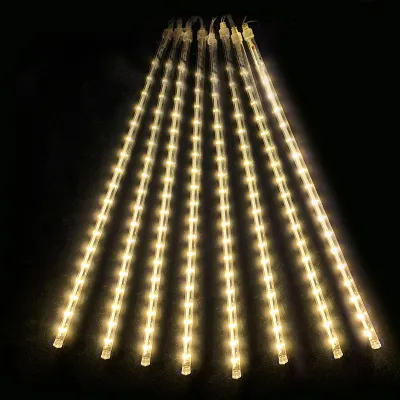
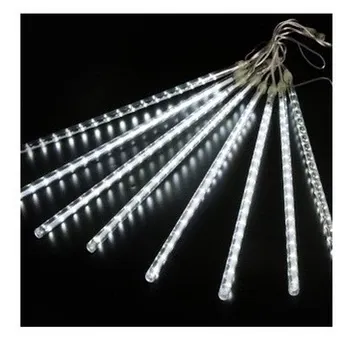
When selecting solar meteor shower lights, the ability to customize color modes allows you to transition your balcony from a quiet evening retreat to a festive holiday display. Fixed color options, such as warm white or cool white, offer a classic, uniform look. Warm white (typically ranging from 2700K to 3000K) provides a soft, candle-like glow that enhances a relaxing, resort-style balcony ambiance. Cool white (around 6000K) delivers a bright, crisp effect that mimics falling snow, which is highly popular for modern minimalist aesthetics. If you prefer versatility, look for models featuring switchable RGB or multicolor modes, which allow you to select vibrant color schemes for specific celebrations and revert to neutral tones for everyday use.
Products mentioned in this guide
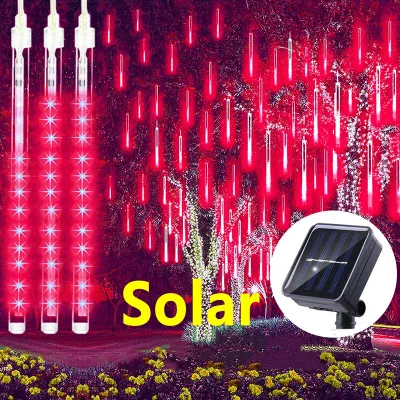
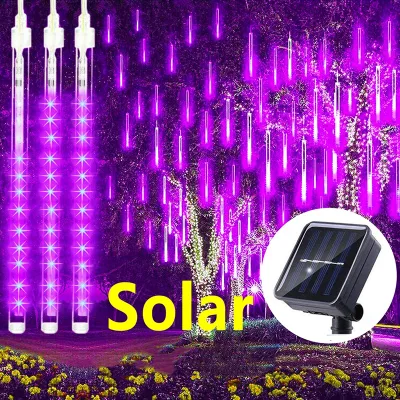
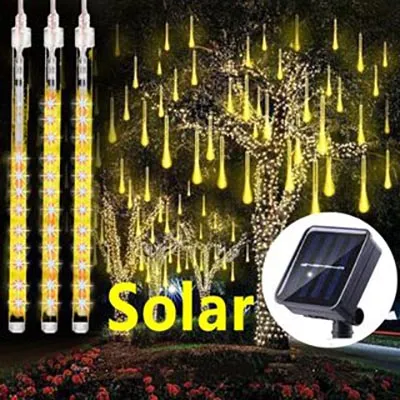
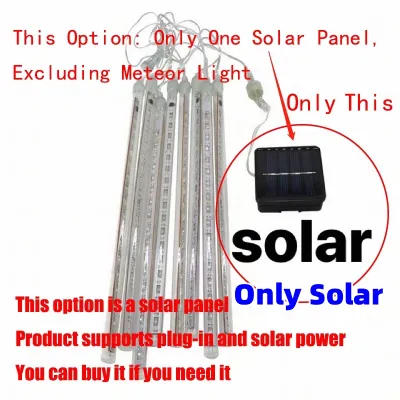
![[COD]Solar/Plug in Meteor Shower Rain Lights LED Outdoor Waterproof Icicle Fairy String Lights for Home Garden Christmas Raya Decoration](https://img.lazcdn.com/g/p/fd49d32f1a873f0ead753f71865dcfa9.jpg_400x400q80.jpg_.webp)
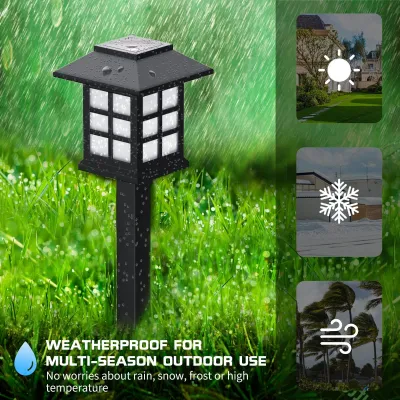
Prices are valid at publication and may change. Please refer to the product page for the latest price.
Lighting patterns dictate the movement and speed of the cascading light effect, which is created by integrated circuit chips inside each tube. Basic models may only offer a single, rapid cascading speed that can feel frantic in a small space. Advanced customizable sets feature pattern controllers that let you choose between rapid meteor falls, gentle rain drips, slow fades, or steady-on modes. Adjusting the speed of the cascade is crucial for matching the mood of your space; a slower, drifting pattern is far more conducive to a relaxing outdoor lounge, while faster chasing patterns are better suited for active festive gatherings.
Brightness control is an indispensable feature for condo dwellers who must remain mindful of light spill into neighboring units. High-intensity LEDs can easily disturb neighbors across a narrow courtyard or in the unit directly adjacent to yours. Look for solar light kits that include dimmable settings, often adjustable via a remote control or a button on the solar panel housing. Being able to lower the brightness to 25% or 50% of the maximum output allows you to maintain a beautiful ambient glow while respecting the comfort and privacy of those living around you.
Memory functions ensure that your customized settings are preserved night after night without manual intervention. Because solar lights automatically shut off during the day to recharge and turn on again at dusk, basic models without memory chips often reset to their default factory setting—which is frequently a high-speed flashing mode. Verifying on the product packaging that the lights feature an automatic memory function saves you the daily hassle of stepping outside to re-select your preferred color, pattern, and brightness level after every charge cycle.
Matching Physical Specifications to Your Condo Layout
The physical dimensions of the light tubes must align with the scale of your balcony railing, window frame, or ceiling height to avoid a cluttered appearance. Meteor shower lights are commonly available in tube lengths of 30 centimeters, 50 centimeters, and 80 centimeters. For standard condominium balconies, 30-centimeter or 50-centimeter tubes are generally the most proportional, preventing the strands from hanging too low or touching the balcony floor. Additionally, check the spacing between the tubes along the main wire; a spacing of 30 to 40 centimeters ensures a balanced distribution of light without overcrowding your limited outdoor area.

Solar panel placement is often the most challenging aspect of installing solar lights in a high-rise building. Because condo balconies are frequently covered by the unit above, direct sunlight may only reach the outermost edge of your railing for a few hours a day. To overcome this, check the lead cable length—the distance between the solar panel and the first light tube. A generous lead cable of at least 2 to 3 meters allows you to mount the solar panel in the sunniest spot on your railing while keeping the decorative light tubes neatly aligned in a shaded or sheltered section of your balcony.
Weather resistance is a critical specification that determines how well your lights will survive the local climate. The Philippines experiences intense tropical sun, high humidity, and severe monsoon rains that can easily penetrate poorly sealed electronics. Always check the product packaging for an Ingress Protection (IP) rating. An IP65 rating indicates that the tubes and connectors are completely dust-tight and protected against water jets, making them suitable for fully exposed outdoor railings. For semi-enclosed balconies that receive some shelter from the wind and rain, an IP44 rating may be sufficient, but higher protection is always recommended for longevity.
Deciding between modular and fixed designs depends on the total area you plan to decorate. Fixed strands feature a set number of tubes, typically 8 to 10, permanently wired to a single solar panel. This is ideal for compact windows or small balcony sections. Modular, connectable designs allow you to link multiple strands together using waterproof screw-cap connectors. If you opt for a modular setup, you must verify the maximum wattage and current limits of the solar panel and battery; overloading a single solar panel with too many connected tubes will result in significantly dimmer lights and a rapid depletion of stored power.
Building a Conditional Shortlist for Your Space
To simplify your purchasing decision, it is helpful to categorize your options based on your primary aesthetic goals and the physical limitations of your condo unit. By matching your specific environmental conditions to the right product features, you can avoid the frustration of buying lights that are either too bright, too long, or unable to charge properly in your space.
If your goal is to create a subtle, relaxing sanctuary for quiet evenings, prioritize warm white lights with slow-fade or gentle dripping patterns. Look for models that offer low-range dimming capabilities and shorter tube lengths (such as 30 centimeters) to keep the display delicate and unobtrusive. This configuration minimizes visual distraction and blends seamlessly with potted balcony plants and cozy outdoor seating.
For those decorating for festive holidays or lively social gatherings, prioritize RGB color-changing capabilities and multiple dynamic chasing patterns. Ensure the set has a higher maximum brightness output and a larger tube count to create a striking, celebratory focal point. For these dynamic setups, a remote control is highly beneficial, allowing you to change themes instantly from inside your living room.
If your balcony has limited sunlight access due to neighboring towers or a north-facing orientation, filter your search for models that feature detachable solar panels with extra-long extension cables. Alternatively, look for advanced solar kits that include a secondary USB charging port on the solar panel housing. This allows you to detach the panel or the battery pack and charge it indoors using a standard wall outlet during prolonged rainy weeks or during the overcast monsoon season.
| Aesthetic Goal | Recommended Color Mode | Ideal Pattern Speed | Key Physical Feature | Sunlight Requirement |
|---|---|---|---|---|
| Subtle Ambiance | Warm White (2700K-3000K) | Slow / Gentle Drip | 30cm Tubes, Dimmable | Low to Moderate (3-4 hours) |
| Festive Decorating | RGB / Multicolor | Fast / Dynamic Cascade | 50cm-80cm Tubes, Connectable | Moderate to High (5+ hours) |
| Shaded Balcony | Warm or Cool White | Adjustable Speed | Detachable Panel, USB Backup | Low (Requires USB charging option) |
Installation and Safety Checks for Condo Environments
Before purchasing or installing any exterior lighting, it is essential to consult your condominium’s Property Management Office (PMO) guidelines. Many condo associations enforce strict rules regarding building aesthetics, which may prohibit bright flashing lights, specific color schemes, or visible wiring on exterior facades. Ensuring your customized settings comply with these rules—such as keeping the lights on a steady, warm white mode at a lower brightness setting—will prevent complaints and potential fines.
When mounting your lights, prioritize non-destructive installation methods to protect your condo’s structural integrity and avoid losing your security deposit. Avoid drilling holes into concrete walls, balcony railings, or window frames, as this can compromise waterproofing seals and lead to structural damage. Instead, use outdoor-rated plastic zip ties to secure wires to metal railings, or high-strength, weather-resistant suction cups for glass surfaces. Plastic gutter clips can also be used to hang tubes neatly along the edges of balcony ceilings without leaving permanent marks.
High-rise balconies are subject to intense wind loads, especially during the typhoon season. If light tubes are left to swing freely, they can violently strike glass windows, balcony railings, or building walls, leading to shattered plastic and broken LEDs. Ensure that each tube is secured firmly at the top mounting point, and consider using a secondary zip tie or clear outdoor adhesive clip at the bottom of each tube to prevent horizontal swaying. Regularly inspect the mounting hardware to ensure that high winds have not loosened the attachments, which could cause a tube to fall to the units below.
Electrical safety must always be verified, even though solar-powered lights operate on low-voltage direct current. Before hanging your lights, inspect the entire length of the wire for any visible cuts, fraying, or exposed copper, which can quickly corrode in humid salt air or short-circuit during heavy rain. Ensure that all screw-cap connectors between strands are tightened securely and wrapped with waterproof electrical tape for added protection. Finally, position the solar panel and any control boxes well above the balcony floor to prevent them from sitting in pooling water during sudden tropical downpours.
Frequently Asked Questions (FAQ)
Can I connect multiple sets of solar meteor shower lights together?
Whether you can connect multiple sets depends entirely on the manufacturer’s specifications, which you must verify on the product packaging before purchasing. Connectable models feature specialized male and female waterproof plugs at the ends of the strands, allowing you to link them together. However, because solar panels operate on limited wattage and battery capacities, connecting too many strands to a single solar panel will overload the system. This overload typically results in significantly dimmer lights, uneven brightness across the tubes, or a battery that drains completely within an hour or two. If you need to cover a large balcony railing, it is generally safer and more reliable to install multiple independent light sets, each powered by its own dedicated solar panel, rather than attempting to chain too many strands together.
How do I maintain the solar panel for optimal charging?
To ensure your lights receive adequate power, you must maintain the solar panel regularly, especially in urban tropical environments. Dust, vehicle soot, salt air residue, and bird droppings can quickly accumulate on the panel’s glass surface, blocking sunlight and reducing charging efficiency. Wipe the panel surface at least once every two weeks using a soft, damp microfiber cloth without any harsh chemical cleaners or abrasive pads that could scratch the protective coating. Additionally, adjust the angle of the panel seasonally as the sun’s path shifts, ensuring it faces directly into the sun without being shaded by balcony railings, potted plants, or hanging laundry. Finally, periodically inspect the panel’s plastic housing for any signs of moisture buildup or cracked seals; if water penetrates the internal battery compartment, discontinue use immediately to prevent corrosion and battery failure.

Community discussion
Share your experience or ask a question. Comments are reviewed before publication.