
When browsing online marketplaces for outdoor lighting, you will likely encounter listings advertising a “10000W Solar Light BUY 1 TAKE 1” at surprisingly low prices. In the world of electrical engineering, ten thousand watts is an immense amount of power—enough to run several household air conditioners simultaneously. For a self-contained outdoor solar fixture, however, this number does not represent actual electrical power consumption. Understanding what these extreme wattage claims really mean will help you make an informed purchase and avoid disappointment when lighting your yard, driveway, or barangay street.
The Reality of '10000W' Marketing Claims
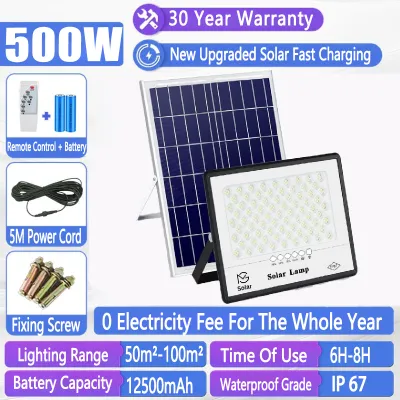
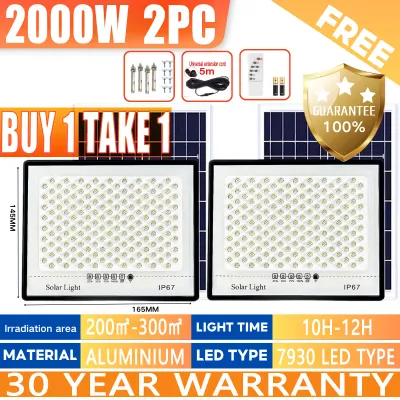
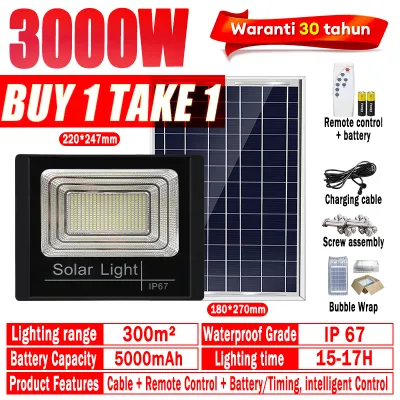
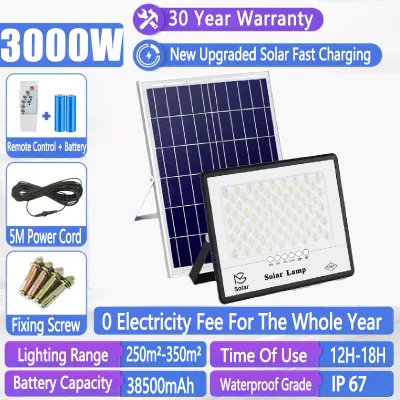
The “10000W” label seen on many solar light listings is a marketing designation rather than a technical measurement of electrical power draw. In traditional grid-tied lighting, wattage indicates how much electricity a bulb consumes from your home’s power supply. For solar-powered LED lights, which operate on low-voltage direct current (DC) from built-in batteries, actual power consumption is typically a tiny fraction of that figure, often ranging from 5 to 50 watts.
Sellers frequently use these massive numbers as search keywords or as a highly exaggerated “equivalent” to old incandescent bulbs. Some manufacturers calculate these figures by multiplying theoretical maximums of individual LED chips, even though the battery and control circuit could never supply enough current to run them at that level. When shopping on ecommerce platforms, it is best to treat these extreme wattage ratings as product model names or search tags rather than verified technical specifications.
Products mentioned in this guide
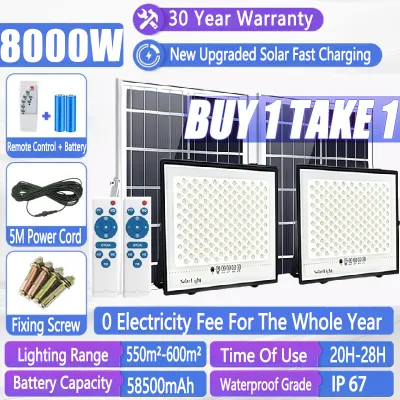
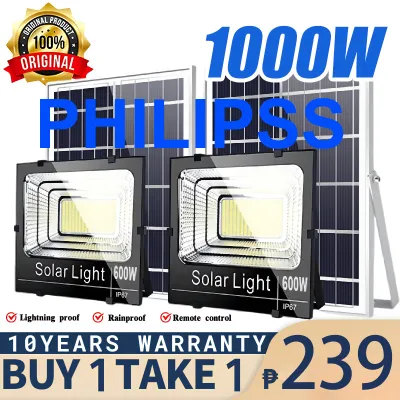
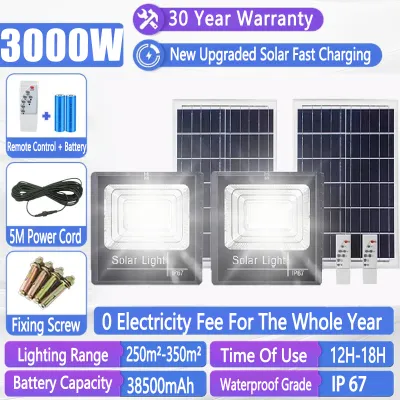
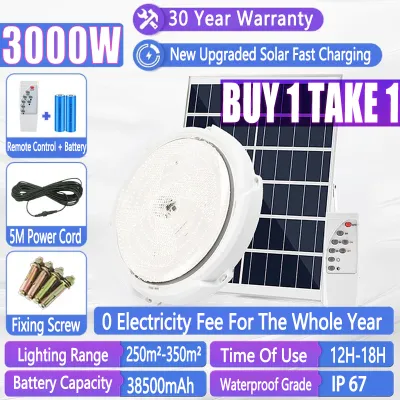
Prices are valid at publication and may change. Please refer to the product page for the latest price.
Specifications That Actually Determine Brightness
To determine how bright a solar light will actually be, you must look past the headline wattage and examine the lumens rating. Lumens measure the total amount of visible light emitted by a source. A reliable outdoor solar floodlight typically delivers between 800 and 3,000 lumens, which is more than sufficient for security and general outdoor illumination. If a listing claims 10,000 watts but fails to specify a realistic lumen output, the actual brightness may be much lower than expected.

Battery capacity is another critical specification that dictates how long the light will stay illuminated through the night. Look for the battery capacity stated in milliampere-hours (mAh) or watt-hours (Wh), typically using lithium iron phosphate (LiFePO4) or lithium-ion chemistry. A larger battery capacity ensures the light can sustain its brightness during the long, dark hours, especially after a cloudy day.
Finally, evaluate the solar panel’s physical size and rated wattage. The solar panel is responsible for converting sunlight into electrical energy to refill the battery. A small, low-quality panel will struggle to fully charge a high-capacity battery, particularly during the rainy season. Checking the panel’s dimensions and wattage rating on the product specification sheet provides a clearer picture of charging efficiency than any promotional title.
Evaluating 'Buy 1 Take 1' Promotions on E-Commerce Platforms
“Buy 1 Take 1” promotions are highly popular on online marketplaces, offering what appears to be double the value for a single price. However, when these deals are priced extremely low, such as under ₱1,000 for two massive fixtures, manufacturers often compromise on component quality. The internal batteries may have lower capacities, the plastic housings may degrade quickly under the tropical sun, and the LEDs may dim prematurely.
Before clicking the checkout button, take time to read customer reviews, focusing specifically on uploaded photos and videos. These real-world images show the actual size of the fixtures, which are often much smaller than the digitally altered promotional graphics. Check the seller’s overall rating and read feedback regarding how long the lights actually stay on at night.
Additionally, verify what accessories are included in the package. A complete set should include sturdy mounting brackets, screws, a remote control, and a clear instruction manual. Be sure to check the seller’s return policy and look for any mention of a local warranty, as returning defective items can be difficult if the seller does not have a local presence.
Weatherproofing and Installation Essentials
Outdoor solar lights in the Philippines must withstand harsh tropical weather, including intense heat, high humidity, and heavy monsoon rains. When selecting a fixture, check the product label for its Ingress Protection (IP) rating. An IP65 or IP66 rating is highly recommended for outdoor installations, indicating that the housing is dust-tight and protected against powerful water jets from any direction.
Proper placement is essential for maximizing the performance of your solar lights. Install the fixture in a location that receives unobstructed, direct sunlight for at least six to eight hours a day. Avoid placing the solar panel under the shadow of roof eaves, trees, or adjacent buildings, as even partial shading can drastically reduce charging efficiency.
For standard pathway lights or low-mounted wall fixtures, DIY installation is straightforward and safe. However, if you are installing heavy streetlights or floodlights on high poles or complex structural surfaces, safety should be your priority. In these situations, it is best to hire a qualified local professional to securely mount the fixtures and prevent any risk of falling hazards during strong typhoons.
Frequently Asked Questions (FAQ)
Can a solar light actually consume 10000W of power?
No, a standard residential solar light cannot consume 10,000 watts of power. A true 10,000W electrical load would require a massive industrial power source and would instantly drain or damage typical solar batteries. These extreme numbers are purely marketing labels or highly exaggerated theoretical equivalents used by online sellers to attract attention.
What lumen count is suitable for outdoor security?
For effective outdoor security and wide-area floodlighting, look for fixtures that deliver between 1,500 and 3,000 lumens. For smaller areas like pathways, garden borders, or doorways, 100 to 800 lumens is generally sufficient. Always check the beam angle of the fixture to ensure the light spreads across your target area rather than focusing in a narrow spot.
How do I verify the real specs of a discounted solar light?
When your package arrives, inspect the physical specification label printed on the box or on the back of the light fixture itself. Compare these printed values, such as the battery capacity in mAh and the solar panel wattage, with the claims made in the online listing. If the physical label shows significantly lower specifications than advertised, contact the seller immediately to request a clarification or a return.

Community discussion
Share your experience or ask a question. Comments are reviewed before publication.