
Finding the perfect balance of light in a dedicated reading nook or living room can transform your reading experience. While a beautiful room often relies on soft, ambient lighting to create a welcoming atmosphere, settling down with a book requires a completely different approach to illumination. A standard overhead light or a decorative table lamp rarely provides the targeted, high-quality light needed to read comfortably for hours. Instead, choosing a specialized floor light designed with task-oriented features ensures that your eyes remain relaxed, your posture stays natural, and your focus remains entirely on the pages of your favorite book.
In many homes, a reading corner is a sanctuary for relaxation, but poor lighting choices can quickly turn a peaceful evening into a struggle against eye strain and physical discomfort. Selecting the right floor light involves looking beyond aesthetics to evaluate how a fixture performs under real-world reading conditions. By focusing on key features such as physical adjustability, precise brightness controls, and optimal color temperatures, you can create a highly functional setup tailored to your personal comfort. This guide breaks down the essential features to look for when selecting a reading floor light, helping you make an informed decision for your home.
Why Specific Features Matter for Reading Comfort
To understand why a dedicated floor light is necessary, it helps to look at how different types of lighting interact with your eyes. General ambient lighting is designed to disperse light evenly across a room, which naturally dilutes its intensity. When you try to read under ambient light alone, the contrast between the printed text and the paper is significantly reduced. This forces your eyes to work much harder to distinguish letters, leading to rapid fatigue, squinting, and a general sense of tiredness during extended reading sessions. A dedicated task light solves this by concentrating a clean, bright beam directly onto your reading material, restoring the sharp contrast your eyes need to process text effortlessly.
Products mentioned in this guide
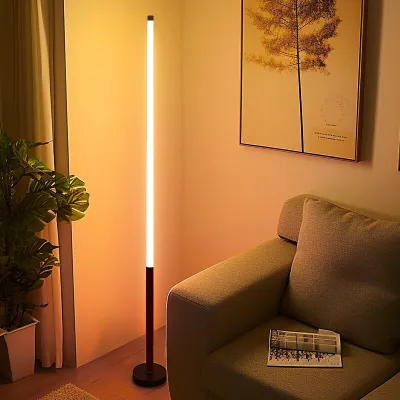
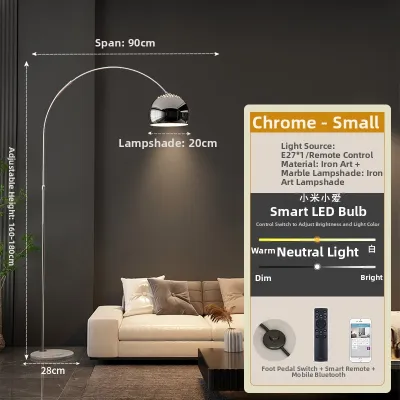
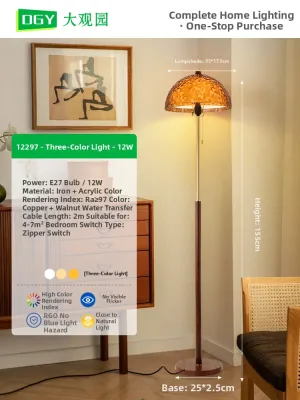
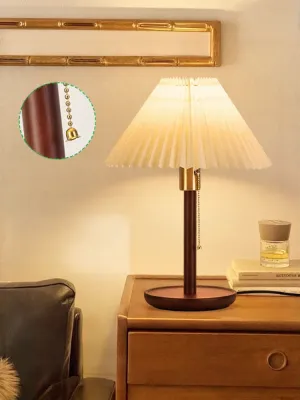
Prices are valid at publication and may change. Please refer to the product page for the latest price.
Another common obstacle to comfortable reading is glare, which occurs when light reflects directly off a surface and into your eyes. This is particularly problematic when reading glossy magazines, textbooks, or digital screens like e-readers and tablets. A poorly positioned light source can create a harsh reflection that masks the text entirely. Similarly, if a light fixture is static, your head, hands, or the book itself can cast distracting shadows across the page. A high-quality reading light allows you to direct the beam from an angle that minimizes reflections and eliminates shadows, keeping the reading surface uniformly illuminated.
Ergonomics and physical posture are also deeply connected to your lighting setup. When a light source is fixed or too far away, readers instinctively compensate by leaning forward, slouching, or tilting their necks at awkward angles to bring the book closer to the light. Over time, these subtle postural adjustments can lead to tension in the neck, shoulders, and lower back. By choosing a floor light with targeted ergonomic features, you can bring the light directly to your preferred seating position, allowing you to maintain a healthy, relaxed posture throughout your reading session.
Essential Adjustability and Ergonomic Features
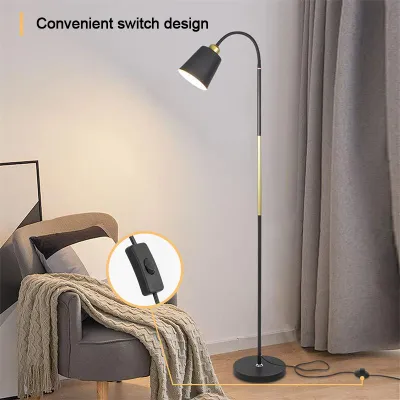
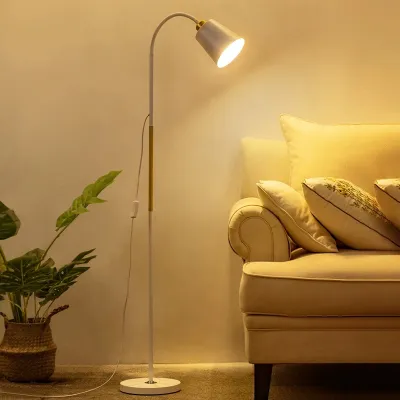
Physical flexibility is one of the most critical factors when evaluating a floor light for reading. A rigid, non-adjustable lamp forces you to adapt to its position, whereas an adjustable fixture adapts to you. Look for models featuring adjustable swing arms, counterbalanced joints, or flexible goosenecks. A gooseneck design offers seamless, multi-directional movement, allowing you to twist and bend the lamp head to the exact angle required. Swing arms, often found on classic pharmacy-style lamps, provide horizontal and vertical reach, making it easy to pull the light close when reading fine print and push it away when you need broader illumination.

Height adjustability is another essential feature that ensures compatibility with various seating arrangements. A floor light that works perfectly next to a low-slung lounge chair or a native rattan armchair might be completely inadequate next to a high-backed study chair or a deep sofa. If the light source is positioned too high, it can shine directly into your eyes, causing discomfort; if it is too low, the light spread may be too narrow to cover your book. Choosing a lamp with an adjustable pole or a highly flexible upper arm allows you to customize the height of the light source relative to your eye level and seating height.
Because adjustable floor lights often require you to extend the lamp head far from the main pole, structural stability is a paramount safety consideration. A top-heavy lamp with a weak or lightweight base can easily tip over when the arm is fully extended, risking damage to the fixture or injury to anyone nearby. When shopping, pay close attention to the weight and construction of the base. A heavy, solid metal or stone base provides the necessary counterweight to keep the lamp anchored securely, even when the adjustable arm is stretched to its maximum limit. This stability is especially important in busy households where pets, children, or passing foot traffic might accidentally bump into the fixture.
Lighting Quality: Brightness and Color Temperature
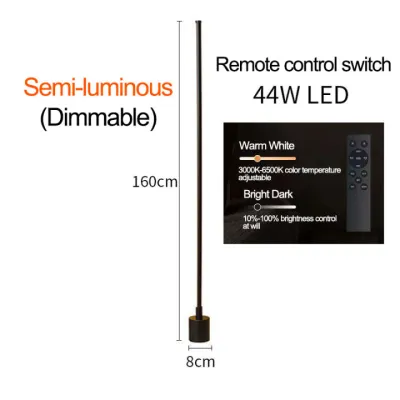
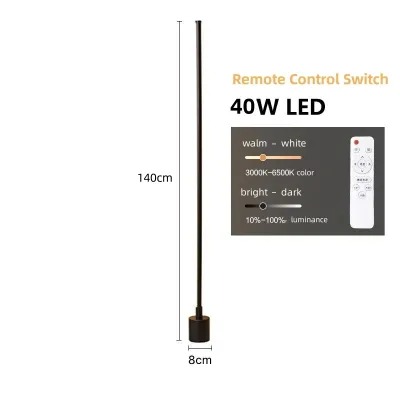
Beyond the physical structure of the lamp, the quality of the light it emits plays a decisive role in visual comfort. Dimmability and precise brightness controls are highly beneficial features for a reading light. Throughout the day, the natural light entering your room changes constantly, meaning a light level that feels comfortable at noon will likely feel blindingly bright at midnight. A floor light with step-less dimming or multiple brightness presets allows you to fine-tune the light output to match the surrounding environment, preventing your eyes from having to adjust to extreme differences in contrast.
Color temperature, measured in Kelvins (K), significantly influences how your eyes perceive text and how relaxed you feel while reading. While color temperature preferences are highly subjective, different ranges are generally suited to different tasks. For cozy, evening reading where relaxation is the priority, a warm white light ranging from 2700K to 3000K creates a soothing, low-stress environment. Conversely, if you are studying, analyzing complex documents, or reading fine print, a cooler, high-contrast light between 4000K and 5000K can help improve focus and text clarity. Many modern LED floor lights offer adjustable color temperature settings, giving you the flexibility to switch between warm and cool tones depending on your task and the time of day.
Another critical metric for light quality is the Color Rendering Index (CRI), which measures how accurately a light source reveals the true colors of objects compared to natural sunlight. For reading, especially when enjoying illustrated books, graphic novels, or colorful magazines, a high CRI rating of 90 or above is highly recommended. Low-CRI light sources can make colors look dull, washed out, or unnaturally distorted, which increases visual fatigue as your brain works harder to interpret the images. Opting for high-CRI LED bulbs or integrated LED fixtures ensures vibrant, true-to-life color reproduction that is gentle on the eyes.
Recommended Floor Light Styles for Reading Tasks
When searching for the ideal reading light, you will encounter several distinct styles, each offering unique functional advantages. Understanding these styles can help you narrow down your options to find a design that complements both your reading habits and your interior decor.
- Pharmacy and Task Floor Lights: These classic fixtures are designed specifically for focused illumination. They typically feature a slender metal pole, a heavy base, and a highly adjustable swing arm topped with a metal shade. Because the shade is opaque, it directs 100% of the light downward in a concentrated beam, preventing light spill from scattering into the rest of the room. This makes pharmacy lamps an excellent choice for dedicated reading chairs where you want maximum control over the light path.
- Arc Floor Lights: Characterized by a long, sweeping curved neck, arc lamps are designed to position the light source directly overhead. This style is incredibly useful if your reading chair is situated away from walls or if you want to illuminate the center of a deep sectional sofa without placing a lamp base right next to your seat. The dramatic curve allows the heavy base to sit safely out of the way while the light hangs precisely where you need it.
- Torchiere Lights with Integrated Reading Arms: If you want a single fixture that can handle both general room lighting and focused reading tasks, a dual-source torchiere is an excellent hybrid option. The main upward-facing bowl bounces light off the ceiling to provide soft, indirect ambient illumination throughout the room. Meanwhile, a smaller, highly flexible reading arm branches off the main pole at mid-height, allowing you to direct a focused beam onto your book without disturbing the overall ambiance of the space.
Pre-Purchase Checklist and Installation Safety
Before finalizing your purchase, it is essential to verify that your chosen floor light is safe, compatible, and practical for your specific living space. Taking the time to run through a quick checklist can prevent common installation headaches and ensure long-term reliability.
First, verify the electrical specifications of the fixture to ensure compatibility with local standards. In the Philippines, the standard residential electrical system operates at 220V and 60Hz. Ensure that the lamp, its ballast, or its integrated driver is rated for this voltage to prevent electrical malfunctions or premature bulb failure. Additionally, check the plug type; most local outlets accommodate two-pin flat plugs (Type A) or three-pin grounded plugs (Type B). If you are purchasing an imported fixture, you may need to verify if a safe, high-quality adapter is required, though choosing a native-compatible plug is always the safest option. Always look for official safety certifications, such as the Philippine Standard (PS) mark or the Import Commodity Clearance (ICC) sticker, to ensure the product has undergone rigorous safety testing.
Next, consider the physical placement of the lamp and the management of its power cord. Measure the distance from your preferred reading chair to the nearest wall outlet. A cord that is too short will force you to position the lamp awkwardly or rely on extension cords, which can create unsightly clutter and dangerous tripping hazards in high-traffic living areas. Look for fixtures with integrated cord management clips or routes along the pole to keep the cable neat and secure. If the cord must cross a walkway, use a heavy-duty rubber cord protector to secure it flat against the floor.
Finally, pay close attention to bulb compatibility and heat dissipation. Reading floor lights are often positioned close to your head, shoulders, and hands, meaning a bulb that generates excessive heat can quickly make your reading corner uncomfortably warm. This is a particularly important consideration in tropical climates where managing indoor heat is a constant priority. Traditional incandescent or halogen bulbs can become extremely hot to the touch and radiate noticeable heat downward. Opting for energy-efficient LED bulbs or integrated LED fixtures is highly recommended, as they remain cool to the touch even after hours of continuous use, consume significantly less electricity, and offer a much longer lifespan.
Frequently Asked Questions (FAQ)
Can I use a smart bulb in a standard reading floor light?
Yes, you can generally use a smart bulb in a standard reading floor light, provided the bulb’s base size matches the fixture’s socket (most commonly an E27 screw base) and the bulb does not exceed the fixture’s maximum wattage rating. However, you must check the lamp’s control mechanism before installation. If your floor light features a built-in physical dimmer switch or a touch-sensitive control pad, standard smart bulbs may flicker, buzz, or fail to operate correctly because the lamp’s internal circuitry interferes with the smart bulb’s power supply. For fixtures with simple on/off rotary or step switches, smart bulbs work beautifully, allowing you to adjust brightness levels, customize color temperatures, and set automated reading schedules directly through a smartphone app or smart home system.
How far should the floor light be placed from my reading chair?
For the most comfortable reading experience, place the floor light approximately 50 to 100 centimeters away from your reading chair. The ideal position is slightly behind and to the side of your shoulder—opposite to the hand you use to turn pages—so that your body does not cast a shadow across the book. The bottom edge of the lamp shade should be positioned roughly at eye level when you are seated. This height prevents the bulb from shining directly into your eyes while ensuring that the light beam spreads wide enough to fully illuminate your reading material without creating harsh, direct glare on your pages or digital screens.

Community discussion
Share your experience or ask a question. Comments are reviewed before publication.