
Solar energy has transitioned from a niche alternative to an essential home upgrade across the Philippines. With high electricity rates and frequent power interruptions during the typhoon season, local homeowners are increasingly turning to outdoor solar lighting. Among these solutions, the solar wall light stands out as a versatile choice for securing perimeters, illuminating dark pathways, and enhancing architectural beauty. However, the unique tropical climate of the archipelago presents distinct challenges that standard outdoor lights cannot always withstand.
To choose a solar wall light that will perform reliably year after year, you must look beyond basic aesthetic designs. The ideal fixture for a Philippine home must feature robust weatherproofing, a highly efficient solar panel capable of charging under overcast skies, heat-tolerant battery chemistry, and smart sensor modes that conserve energy. Understanding these technical specifications allows you to make an informed investment that keeps your property safe, bright, and energy-independent.
Quick Guide: Must-Have Features for Tropical Climates
Selecting outdoor lighting in the Philippines requires a focus on durability due to intense seasonal shifts. The combination of scorching summer heat, high relative humidity, and torrential monsoon rains can quickly degrade substandard electronics. To ensure your solar wall light survives these demanding conditions, prioritize the following baseline specifications:
Products mentioned in this guide
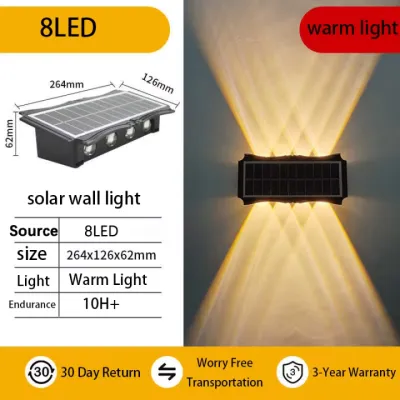
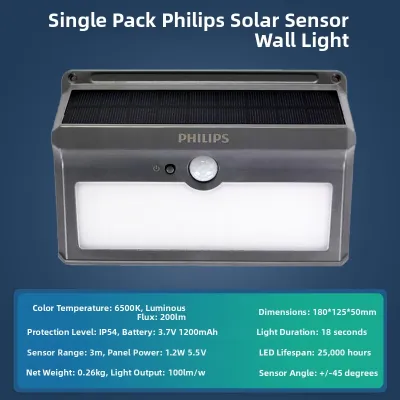
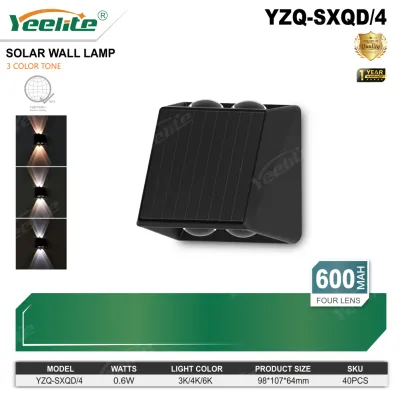
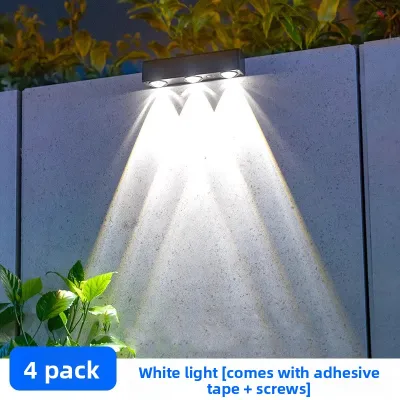
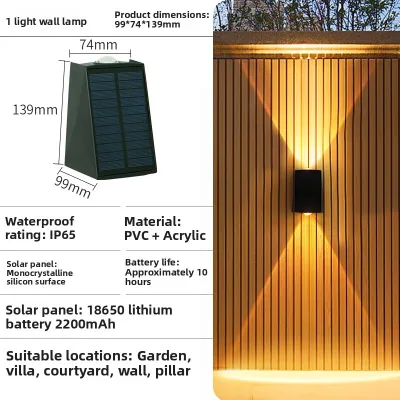
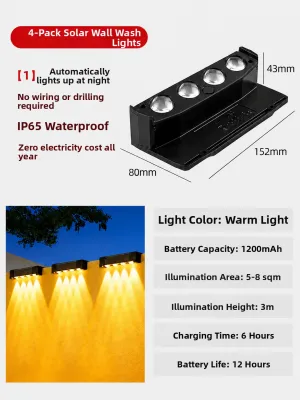
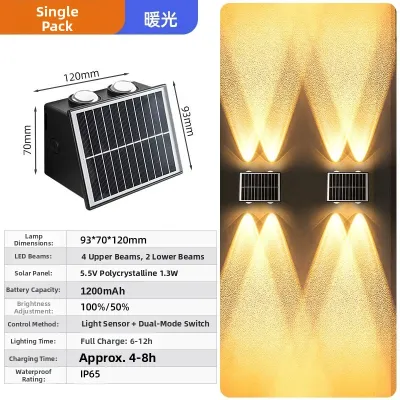
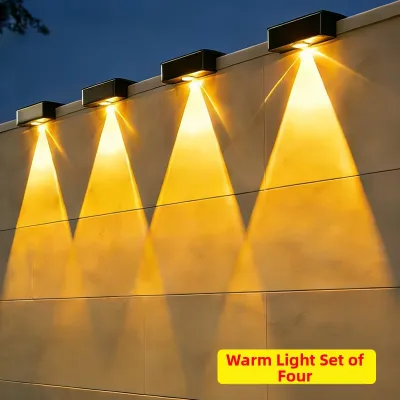
Prices are valid at publication and may change. Please refer to the product page for the latest price.
- Ingress Protection (IP) Rating: A minimum of IP65 is necessary to keep out heavy rain and fine dust, while IP66 is highly recommended for fully exposed areas.
- UV-Stabilized Housing: Materials must be treated to resist degradation from intense ultraviolet radiation, preventing cracking and yellowing.
- LiFePO4 Battery Chemistry: Lithium Iron Phosphate batteries offer superior thermal stability, which is crucial for safety and longevity in hot climates.
- Monocrystalline Solar Panels: These panels offer the highest conversion efficiency, ensuring the battery charges even during the gloomy rainy season.
Investing in these high-quality features prevents premature hardware failure, saving you money on frequent replacements while providing dependable security and ambient lighting throughout the year.
Weather Resistance and Material Durability
The Philippine climate is notoriously harsh on outdoor fixtures. High humidity accelerates rust, intense sunlight degrades plastics, and typhoons test the physical integrity of any wall-mounted device. Evaluating the build quality and material composition of a solar wall light is the first step in protecting your investment.

Ingress Protection (IP) Ratings Explained
When shopping for an outdoor solar wall light, the IP rating is your most reliable indicator of water and dust resistance. This rating consists of two digits: the first represents protection against solid objects, while the second indicates protection against liquids. For outdoor home use, the first digit should always be 6, meaning the fixture is completely dust-tight.
The second digit is where you must pay close attention. An IP65 rating means the light can withstand low-pressure water jets from any direction, making it suitable for general outdoor use under eaves or on partially sheltered walls. An IP66 rating indicates protection against high-pressure water jets and heavy seas, which is ideal for exposed perimeter walls and gates that bear the full brunt of tropical storms. Avoid anything rated lower than IP65 for outdoor installations, as moisture ingress will quickly corrode the internal circuitry.
Housing Materials
The material of the light housing determines how well the fixture resists physical damage, heat, and corrosion over time. The two most common materials used in solar wall lights are ABS plastic and aluminum alloy, each with distinct characteristics:
- UV-Resistant ABS Plastic: High-quality Acrylonitrile Butadiene Styrene (ABS) is lightweight, cost-effective, and naturally rust-proof. This makes it an excellent choice for coastal areas where salty air quickly corrodes metal. However, standard ABS can become brittle and crack under prolonged exposure to intense tropical sunlight. Always verify that the manufacturer specifies "UV-resistant" or "UV-stabilized" ABS.
- Aluminum Alloy: Aluminum offers excellent structural strength, high impact resistance, and superior heat dissipation. Efficient heat dissipation is vital because keeping the internal temperature low extends the lifespan of both the LED chips and the battery. To prevent oxidation and white rust, ensure the aluminum is powder-coated or anodized.
Verification Steps
Before purchasing, do not rely solely on generic “waterproof” marketing claims. Check the product packaging, user manual, or manufacturer’s specification sheet for the exact IP rating and operating temperature range. A reliable fixture should be rated to operate in temperatures up to 50°C or 60°C to handle the heat buildup on sunny afternoons. Additionally, look for explicit certifications or testing standards, such as CE or RoHS compliance, which indicate that the product has undergone standardized quality checks.
Evaluating Brightness, Battery Life, and Panel Efficiency
A solar wall light is only as good as its ability to capture, store, and distribute energy. Balancing these three factors ensures that your lights remain bright throughout the night without dying prematurely.
Lumens vs. Wattage
Many buyers mistakenly look at wattage to determine how bright a solar light will be. In modern LED lighting, wattage only measures the power consumed or generated, whereas lumens (lm) measure the actual light output. Looking at lumens ensures you get the right brightness level for your specific needs.
| Application | Recommended Lumen Range | Purpose |
|---|---|---|
| Ambient Accent Lighting | 100 to 300 Lumens | Soft illumination for garden walls, patios, and architectural features. |
| Pathways and Steps | 300 to 500 Lumens | Clear visibility for safe walking and navigating outdoor transitions. |
| Security and Floodlighting | 800+ Lumens | High-intensity light to deter intruders and illuminate large driveways or gates. |
Battery Chemistry
The battery is the heart of any solar lighting system, storing energy during the day for use at night. In the tropical heat of the Philippines, battery chemistry is critical for both safety and performance. Most modern solar lights use either Lithium-ion (Li-ion) or Lithium Iron Phosphate (LiFePO4) batteries.
While standard Li-ion batteries are common and affordable, LiFePO4 batteries are vastly superior for tropical environments. LiFePO4 chemistry offers a much higher thermal runaway threshold, meaning it can withstand high ambient temperatures without degrading or posing safety risks. Furthermore, LiFePO4 batteries typically support over 2,000 charge-discharge cycles, compared to just 500 to 1,000 cycles for standard Li-ion. This translates to a lifespan of five to seven years instead of just two, making them far more cost-effective in the long run.
Solar Panel Types
Solar panels convert sunlight into electrical energy, and their efficiency determines how quickly the battery charges. This is especially important during the rainy season when daylight hours are often overcast.
- Monocrystalline Panels: Made from a single crystal structure, these panels are highly efficient, typically converting 15% to 22% of sunlight into electricity. They perform significantly better in low-light and cloudy conditions, making them the ideal choice for reliable year-round operation in the Philippines.
- Polycrystalline Panels: These panels are made from multiple silicon fragments melted together. They are cheaper to produce but less efficient, usually hovering around 13% to 16%. They require more surface area and direct sunlight to achieve the same charge, which can lead to poor performance during consecutive rainy days.
Additionally, consider whether you need an integrated or separate solar panel design. Integrated panels are built directly onto the light fixture, making installation simple but requiring the light itself to be mounted in direct sunlight. Separate panels connect to the light via a cable, allowing you to mount the light in a shaded area (like under an awning or inside a carport) while placing the panel on the roof where it receives unobstructed sunlight.
Actionable Advice
Always verify the battery capacity (measured in milliampere-hours, or mAh) and panel wattage on the manufacturer’s label. To ensure the light can run through the night, a good rule of thumb is to look for a battery capacity that is at least three times the daily energy consumption of the LED light. This provides a buffer for rainy days when the panel cannot fully charge the battery.
Choosing the Right Motion Sensors and Lighting Modes
To maximize the utility of your solar wall light, you need to control how and when it shines. Smart sensors and versatile lighting modes allow you to customize the fixture’s behavior to balance security, convenience, and energy conservation.
PIR Sensor Specifications
Passive Infrared (PIR) sensors are the standard for motion detection in outdoor lighting. They work by detecting changes in infrared radiation, which is emitted as heat by living bodies like humans and animals. When evaluating PIR sensors, look closely at two key specifications: the detection angle and the detection distance.
A standard motion-sensing solar wall light typically offers a detection angle of 120°, which is suitable for narrow pathways or entryways. For wider areas like driveways, front gates, or spacious yards, look for models with a 180° or even 270° detection angle. The detection distance should ideally range between 5 to 10 meters, giving the light ample time to switch on before a person reaches your door or gate.
Lighting Modes
Most high-quality solar wall lights offer multiple operational modes to suit different security and lifestyle needs:
- Motion-Activated Bright Mode: The light remains completely off or at a very low standby level (around 3% to 5% brightness) until the PIR sensor detects movement, at which point it ramps up to 100% brightness for 15 to 30 seconds. This mode is highly energy-efficient and is the best choice for security lighting, especially during the rainy season when battery levels may run low.
- Dim-to-Bright Mode: The light shines continuously at a low level (typically 10% to 20% brightness) to provide constant baseline visibility. When motion is detected, it triggers to full brightness. This mode is excellent for driveways and pathways where you want some continuous light but need extra illumination when active.
- Continuous Dusk-to-Dawn Mode: The light turns on automatically at sunset and shines at a constant brightness (usually 30% to 50%) until sunrise or until the battery is depleted. This mode is ideal for decorative accent lighting but requires a large solar panel and a high-capacity battery to sustain operation through the night.
Adjustability
Opt for solar wall lights that allow you to adjust sensor sensitivity and timer delays. In residential areas in the Philippines, stray animals, wind-blown tropical foliage, or passing vehicles can easily cause false triggers. Being able to lower the sensitivity or shorten the active timer prevents these false alarms from draining your battery, ensuring the light remains operational when you actually need it.
Recommended Solar Wall Light Profiles for Different Outdoor Spaces
Different areas of your home require different lighting strategies. Matching the right solar wall light profile to each specific zone ensures optimal performance, safety, and aesthetic appeal.
Gates, Driveways, and Perimeter Walls
The primary goal for gates, driveways, and outer perimeter walls is security and clear visibility. These areas are fully exposed to the elements and require robust, high-performance fixtures.
For these zones, prioritize high-lumen security floodlights delivering 800 to 1,500 lumens. Look for fixtures equipped with wide-angle PIR sensors (180° or more) and an IP66 rating to withstand direct exposure to heavy rain and wind. The housing should be made of durable aluminum alloy or heavy-duty, UV-stabilized ABS plastic to resist physical impacts and intense sun.
A separate solar panel design is highly recommended for perimeter gates and walls. This setup allows you to mount the solar panel high on a roof or pole where it receives unobstructed sunlight throughout the day, while the light fixture itself is installed at the optimal height for motion detection and illumination.
Garden Pathways and Facade Accent Lighting
Garden pathways, patio borders, and house facades require lighting that enhances the beauty of your home while providing safe passage. Here, high-intensity floodlights are counterproductive, as they create harsh shadows and uncomfortable glare.
Choose ambient solar wall lights with a lower output of 100 to 300 lumens. Opt for warm color temperatures between 2700K and 3000K to create a cozy, inviting atmosphere. Look for decorative fixture designs, such as up/down wall lights or louvered covers, which direct the light downward to prevent glare and cast elegant patterns on your walls.
Since these lights are meant for aesthetic appeal, continuous dusk-to-dawn mode or a gentle dim-to-bright mode is preferred. Ensure the fixture features a high-quality monocrystalline panel and a reliable LiFePO4 battery to support several hours of continuous operation each night.
Covered Patios, Balconies, and Entryways
Covered patios, balconies, and entryways are transitional, semi-sheltered spaces that experience high foot traffic. These areas require a balance of moderate brightness and compact, attractive designs.
Select fixtures that deliver 300 to 500 lumens to provide clear visibility without overpowering the semi-enclosed space. A dim-to-bright mode is highly effective here, offering a soft guiding light that brightens to full capacity when someone approaches the door or steps onto the patio.
Before purchasing, carefully check the physical dimensions, required clearance, and mounting depth of the fixture. This ensures the light does not obstruct walkways, screen doors, or narrow corridors. Because these areas are covered by roofs or awnings, choose models with a detachable solar panel and a long connecting cable. This allows you to mount the light under the ceiling or eaves while placing the solar panel on the exterior roof to capture maximum sunlight.
Installation Best Practices and Routine Maintenance
Proper installation and regular upkeep are essential to maximize the performance and lifespan of your solar wall lights. Even the highest-quality fixture will underperform if it is poorly positioned or neglected.
Placement
The performance of your solar wall light depends entirely on how much sunlight its panel receives. Because the Philippines is located in the Northern Hemisphere, solar panels should ideally face south to maximize daily sun exposure.
Avoid mounting panels under deep roof overhangs, heavy tree canopies, or in the shadow of neighboring buildings. Even partial shading on a small portion of a solar panel can dramatically reduce its charging efficiency. Ensure the panel is angled slightly (typically 15 to 30 degrees) rather than mounted completely flat; this tilt allows rainwater to run off easily, carrying away loose dust and debris.
Routine Maintenance
To keep your solar lights operating at peak efficiency, establish a simple maintenance routine:
- Clean the Solar Panel: Wipe the panel surface with a soft, damp microfiber cloth at least once a month. In urban areas like Metro Manila, dust, soot, and bird droppings can accumulate quickly, forming a barrier that blocks sunlight and reduces charging efficiency by 20% or more. Do not use abrasive sponges or harsh chemical cleaners, as these can scratch the panel's protective coating.
- Clear Surrounding Debris: Trim back any growing branches, vines, or foliage that may begin to shade the solar panel over time.
- Inspect the Seals: Periodically check the rubber seals and gaskets around the light housing for signs of cracking or wear, especially after severe weather. Damaged seals should be replaced or sealed with outdoor-grade silicone to maintain water resistance.
Safety Boundaries
Before cleaning or performing any maintenance on your solar wall light, always turn off the unit using its physical power switch. For high-wall installations, heavy commercial-grade fixtures, or any project requiring work at significant heights, prioritize safety and use secure ladders or scaffolding.
If you are installing a solar system that integrates with existing hardwired electrical systems, or if you are unsure about the structural integrity of your mounting surface, stop and consult a qualified electrician or professional installer. Always check the manufacturer’s manual and the treated item’s instructions before proceeding with installation.
Frequently Asked Questions (FAQ)
Do solar wall lights work during the Philippine rainy season?
Yes, solar wall lights continue to work during the rainy season, but their performance will vary depending on their specifications. Monocrystalline solar panels can still generate electricity on overcast or rainy days by capturing indirect sunlight, though at a reduced rate. To ensure reliable performance during prolonged cloudy weather, choose fixtures with high-capacity LiFePO4 batteries and energy-efficient LED chips. Additionally, switching the light to a motion-activated mode rather than a continuous dusk-to-dawn mode will significantly conserve stored energy.
Can I replace the battery in a solar wall light?
Whether you can replace the battery depends entirely on the design of the specific solar wall light. Some fixtures feature accessible battery compartments with simple screw-on covers, allowing you to swap out old batteries easily. Other models are completely sealed at the factory to achieve a high IP rating for water resistance. Opening a sealed unit can compromise its waterproof seals and void the manufacturer’s warranty. Always check the product specifications and warranty terms before purchasing if battery replaceability is important to you.
How high should I mount a solar motion wall light?
Most manufacturers recommend mounting solar motion-activated wall lights at a height of 2 to 3 meters (approximately 6.5 to 10 feet) above the ground. Mounting the fixture within this range ensures the PIR motion sensor operates at its optimal detection angle and distance. If you mount the light too high, the sensor may fail to detect movement on the ground, and the light output will be overly dispersed. If mounted too low, the sensor’s detection field will be restricted, increasing the likelihood of false triggers from pets or low-lying plants. Always defer to the installation manual provided with your specific product.

Community discussion
Share your experience or ask a question. Comments are reviewed before publication.