
Finding reliable solar garden lights under ₱500 in the Philippines is entirely possible, especially during major online marketplace campaigns. However, navigating these budget-friendly options requires a balance of realistic expectations and careful technical verification. While a “solar light piso sale” or flash discount can yield excellent bargains for path lighting and decorative accents, buyers must look beyond low prices to ensure their chosen fixtures can withstand tropical weather conditions. To get the most value out of a ₱500 budget, you need to focus on essential performance metrics rather than marketing hype. This guide outlines how to evaluate budget solar listings, identify genuine discounts, assess physical build quality, and maintain your fixtures to ensure they illuminate your outdoor spaces reliably night after night.
Setting Realistic Expectations for a ₱500 Solar Budget
When shopping with a strict ₱500 limit, understanding what features are realistic prevents disappointment. At this price point, solar lights are primarily designed for accent lighting, path marking, and decorative ambiance rather than high-intensity security illumination. You can easily find multi-packs of small ground stake lights, fairy string lights, or compact wall-mounted step lights within this budget, but heavy-duty floodlights with advanced features are generally out of reach.
Essential features in this price bracket are straightforward, typically consisting of basic dusk-to-dawn automatic illumination and simple on/off switches. Premium features like adjustable motion sensors, multi-color remote controls, or high-capacity battery banks are rare and often poorly executed if offered at ultra-low prices. Focus on finding a single-function light that performs its primary task reliably rather than a multi-feature unit that compromises on component quality.
Products mentioned in this guide
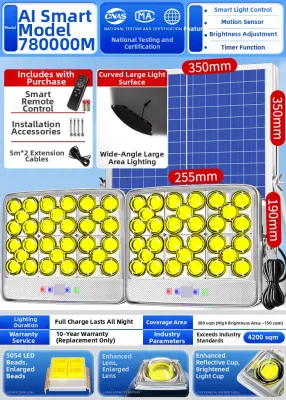
Prices are valid at publication and may change. Please refer to the product page for the latest price.
The trade-offs between lumen output, battery capacity, and solar panel efficiency are highly pronounced in budget models. A ₱500 solar light will generally produce between 5 to 50 lumens, which is perfect for guiding footsteps along a garden path but insufficient for lighting up an entire backyard. The solar panels on these models are typically small polycrystalline or amorphous silicon sheets, which require several hours of direct, unobstructed sunlight to charge the modest internal battery fully.
Additionally, treat decorative style, perceived color temperature, and spatial effects as conditional preferences rather than universal performance facts. A warm white glow might create a cozy atmosphere in a small patio but may not provide the crisp visibility needed for a dark walkway. Choose the color temperature and style based on your specific spatial layout and personal preference rather than assuming one style performs better than another.
It is also important to demystify extreme discount events, such as a “solar light piso sale” or flash deals where items are listed for single-digit prices. These promotions almost exclusively apply to individual, entry-level plastic stake lights or very short decorative string lights. While they offer an incredibly cheap way to add a touch of light to your garden, they should not be confused with robust, long-term landscape lighting solutions.
Essential Specifications to Verify in Budget Solar Listings
Before clicking the purchase button on any discounted solar light, you must verify the technical specifications listed on the product page. The most critical specification for any outdoor fixture is its Ingress Protection (IP) rating, which indicates its resistance to water and dust. For garden lights exposed to the elements, look for a minimum rating of IP44 for sheltered areas, though IP65 or higher is strongly recommended to survive heavy tropical downpours.

Next, inspect the battery specifications, as the battery is almost always the first component to fail in a budget solar light. Many low-cost fixtures use standard AA or AAA size rechargeable Nickel-Metal Hydride (Ni-MH) batteries, which are highly desirable because they are cheap and easy to replace when they eventually degrade. Avoid completely sealed units with proprietary, non-replaceable batteries unless you treat the entire fixture as a disposable item.
Review the manufacturer’s stated charging time versus working time to manage your daily expectations. In the Philippines, where daylight is abundant but cloud cover can be unpredictable, a good budget light should require no more than 6 to 8 hours of direct sunlight to provide 6 to 8 hours of nighttime illumination. If a listing claims an unrealistically short charge time yields all-night illumination, treat the claim with extreme skepticism as it violates basic battery and solar efficiency limits.
Do not rely on vague marketing terms like “super bright,” “ultra-luminous,” or exaggerated wattage claims that do not align with the physical size of the product. Instead, look for the actual lumen count or the number of individual LED chips embedded in the fixture. A realistic listing for a budget path light will specify a modest lumen output, allowing you to plan exactly how many fixtures you need to space out along your walkway.
Additionally, verify the physical dimensions, installation environment, and any electrical certifications listed. While solar lights operate on safe, low-voltage direct current (DC) and do not require complex wiring, checking the base or mounting interface ensures it fits your intended garden posts or walls. If a budget model includes an auxiliary AC charging adapter, ensure it carries valid electrical safety certifications and matches standard household voltage limits before plugging it indoors.
Spotting Genuine Discounts and Avoiding Pricing Traps
Online marketplaces are filled with promotional banners, but not every advertised sale represents a genuine discount. To find true bargains under ₱500, you must compare the current promotional price against the historical retail price of the item. Some sellers artificially inflate the “original” price right before a campaign to make a standard retail price look like a massive 70% discount.
Another common pricing trap involves hidden shipping fees that can quickly push a cheap item past your ₱500 budget limit. A solar light priced at ₱150 might seem like an incredible deal until you realize the shipping cost from an overseas warehouse adds another ₱350 to the total. Always calculate the final checkout price, including shipping and local taxes, before comparing different listings.
Be cautious of bundle deals that seem to offer high value by including unnecessary accessories, such as extra mounting brackets of poor quality or cheap plastic tools. These bundles are often priced higher than the standalone light, inflating the cost without adding real utility. Stick to purchasing the core lighting fixture and only buy accessories that you know are necessary for your specific garden layout.
To counter exaggerated product photos that use clever angles or digital editing to make small lights look like massive floodlights, spend time reading recent buyer reviews. Look specifically for reviews that include real-life photos and videos of the product installed in local gardens. Pay close attention to comments regarding the actual physical size, the real brightness at night, and how well the packaging protected the items during transit.
Evaluating Build Quality and Weather Resistance Limits
The physical durability of a budget solar light determines whether it will last for years or fail after the first heavy storm. When evaluating a product, inspect the housing material; high-impact ABS plastic with UV inhibitors is generally more durable outdoors than cheap, thin metals that rust quickly in humid environments. Look closely at the product photos for visible seams, unsealed battery compartments, or gaps around the solar panel where water could easily seep in.
It is vital to understand the limits of standard weather resistance in this price bracket. While a budget light rated IP65 can easily survive typical seasonal rains, it is not designed to be submerged or subjected to the extreme wind and torrential downpours of a severe typhoon. Preparing to temporarily shelter your lights or choosing models that can be easily unclipped from their mounts during extreme weather warnings will save you from replacing them prematurely.
Strategic placement is also key to protecting fragile, low-cost casings from physical damage. Avoid placing budget stake lights directly adjacent to pathways where they might be stepped on, or near lawn edges where grass cutters and weed whackers can easily shatter the plastic housings. Keep them clear of low-hanging tree branches that could fall during windy afternoons and crack the delicate solar panels.
For any budget fixtures that require mounting at a height, such as wall-mounted gutter lights, safety must be your priority. Ensure the mounting surface is stable and use appropriate anchors rather than relying on cheap double-sided tape that can degrade under the tropical heat. If you are installing any solar lighting system that interfaces with existing fixed household wiring or requires working at significant heights, always isolate the power supply first and follow the manufacturer’s installation instructions carefully, or consult a qualified professional.
Maximizing Lifespan Through Proper Placement and Care
To get the maximum possible lifespan out of your budget solar garden lights, proper placement is absolutely essential. The solar panel must be positioned where it can receive direct, unshaded sunlight for the majority of the day. Placing a light under dense tree canopies, roof eaves, or large garden shrubs will drastically reduce its ability to charge, leading to dim outputs and short operating times at night.
Regular maintenance is another simple way to keep your affordable lights functioning at their best. Over time, a thin layer of dust, pollen, soot, and bird droppings will accumulate on the solar panel, blocking sunlight and reducing charging efficiency. Wiping the panels clean with a damp, soft microfiber cloth once a month is usually sufficient to restore optimal charging performance.
During prolonged periods of heavy rain, continuous overcast skies, or during the peak of the typhoon season, consider turning the lights off using their physical switches or storing them indoors. Allowing a solar battery to drain completely and remain uncharged for multiple consecutive days can permanently damage its capacity to hold a charge. Taking this small preventive step preserves the battery chemistry and ensures your lights are ready to shine when the sunny weather returns.
Frequently Asked Questions (FAQ)
Do solar lights under ₱500 work well during the rainy season?
During the rainy season in the Philippines, budget solar lights will experience a noticeable drop in performance. Because these models feature smaller solar panels and lower-capacity batteries, they rely heavily on direct sunlight to reach a full charge. On heavily overcast or rainy days, the panels cannot generate enough power, resulting in much shorter operating hours at night or a complete failure to turn on.
How long do budget solar garden lights typically last?
While the LED light source itself can easily last for several years, the overall lifespan of a budget solar light is limited by its battery and housing. In tropical climates, the internal rechargeable batteries in low-cost models typically begin to degrade after 12 to 18 months of daily charge cycles. The plastic housing may also become brittle over time due to constant exposure to intense UV rays and high humidity.
Can I replace the batteries in low-cost solar lights?
Whether you can replace the battery depends entirely on the design of the specific solar light model. Many budget stake lights feature a simple, slide-off battery cover on the underside of the solar assembly, allowing you to easily swap out the old rechargeable battery for a new one. However, some models are completely sealed with glue or sonic welding to maintain water resistance; attempting to force these open will break the waterproof seal, ruin the IP rating, and permanently damage the fixture.

Community discussion
Share your experience or ask a question. Comments are reviewed before publication.