
Finding the ideal billiard table light in the Philippines requires balancing precise optical performance, physical dimensions, and electrical safety. Unlike standard residential lighting, which focuses primarily on ambiance, a billiard table light serves a highly functional purpose: it must provide uniform, shadow-free illumination across the entire playing surface while shielding the players’ eyes from direct glare. Achieving this balance depends on matching the fixture’s design to your specific table size, ceiling height, and room layout.
In the Philippines, selecting the right fixture also involves navigating local environmental and electrical realities. High relative humidity can accelerate the corrosion of low-quality metal components, while the standard 220V/60Hz electrical grid requires careful verification of imported fixtures. This guide outlines the essential evaluation criteria, installation standards, and local sourcing strategies to help you select a durable, high-performing billiard table light that enhances both your gameplay and your space.
Evaluating Light Output and Proportions for Billiard Tables
The primary objective of any billiard table light is to deliver uniform illumination across the slate bed, from cushion to cushion. When light is unevenly distributed, it creates dark patches or subtle shadows around the balls, which can distort a player’s depth perception and lead to missed shots. To prevent this, look closely at the fixture’s optical specifications rather than relying solely on wattage. Modern lighting manufacturers often provide photometric data, including beam angles and recommended lux levels. For recreational play, a target of 300 to 500 lux at the table surface is generally sufficient, while competitive play may require higher levels. A wider beam angle ensures that light reaches the corners of the table, but it must be balanced with proper shielding to prevent the light from spilling directly into the players’ eyes when they stand up.
Products mentioned in this guide
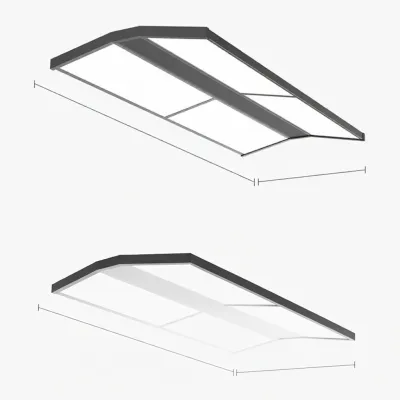
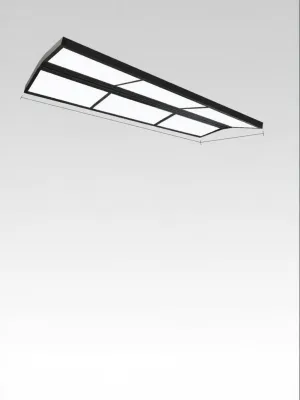
Prices are valid at publication and may change. Please refer to the product page for the latest price.
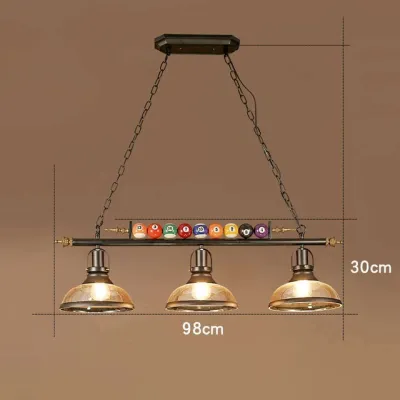
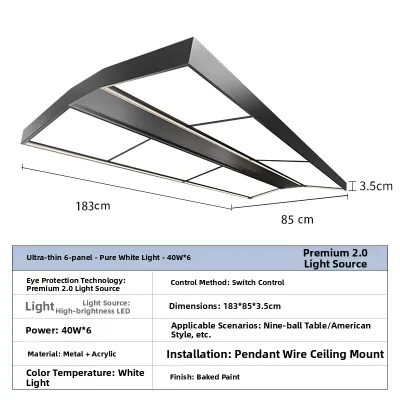
The physical proportions of the fixture must directly correspond to the dimensions of your billiard table. Billiard tables in the Philippines typically come in three standard sizes: 7-foot, 8-foot, and 9-foot. A fixture that is too short will leave the corners and short rails in shadow, while a fixture that is too long may look visually overwhelming and spill excess light into the rest of the room. As a general guideline, a single linear fixture or a multi-shade bar should span approximately half to two-thirds of the length of the table’s playing surface. For a 7-foot table (with a playing surface of roughly 78 by 39 inches), a fixture length of 36 to 44 inches is ideal. An 8-foot table (playing surface of 88 by 44 inches) pairs best with a fixture measuring 48 to 54 inches. For a regulation 9-foot table (playing surface of 100 by 50 inches), you will need a fixture of at least 54 to 60 inches, or a multi-shade setup featuring three or four individual shades spaced evenly along a single bar.
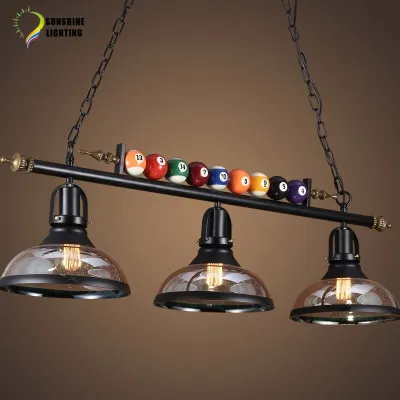
Shade design plays a critical role in both light distribution and glare control. Deep, downward-facing bowl shades made of metal, thick glass, or dense acrylic are highly effective because they channel light directly onto the playing surface. The interior finish of these shades is equally important; a matte white or highly reflective metallic silver coating helps maximize light output and dispersion without requiring higher-wattage bulbs that generate excessive heat. Furthermore, look for shades that feature deep rims or integrated edge baffles. These design elements ensure that the bulb remains recessed within the shade, preventing direct line-of-sight glare when players bend down to align a shot.
Verifying Electrical and Installation Specifications
Before purchasing any billiard table light, verifying electrical compatibility with local standards is essential for safety and performance. The standard electrical supply in the Philippines is 220V at 60Hz. Many specialized billiard lights are imported from regions that utilize 110V/50Hz systems. If you purchase an imported fixture, you must verify that its internal wiring, sockets, and any integrated ballasts or LED drivers are rated for 220V/60Hz. Using a 110V fixture on a 220V line without a proper transformer or rewiring can lead to immediate component failure, electrical fires, or short circuits.

Socket compatibility is another practical consideration. Most residential fixtures in the Philippines utilize standard E27 screw-type bases, which offer the widest selection of locally available bulbs. If the billiard light you select uses specialized sockets, such as GU10, G9, or integrated LED boards, confirm that replacement light sources are readily available in the local market. For fixtures with integrated LEDs, check the manufacturer’s specifications regarding driver compatibility and whether the light source can be serviced or replaced if a single diode fails, as some integrated designs require replacing the entire fixture.
Determining the correct hanging height is a precise step that directly impacts playability. The standard recommendation is to position the bottom edge of the light shades between 31 and 36 inches above the playing surface (the slate bed, not the floor). If the light is hung too low, it can obstruct the players’ view of the opposite side of the table and increase the risk of accidental contact with cue sticks during high-angle shots. If hung too high, the light spreads too widely, causing direct glare to hit players in the eyes and reducing the intensity of the illumination on the table. Because individual fixture designs, beam angles, and weights vary, always consult the specific product’s installation manual to determine the optimal mounting height.
Structural safety is paramount when installing heavy suspended loads like multi-shade billiard lights. These fixtures often feature heavy metal frames, glass shades, or solid wood accents that weigh significantly more than standard ceiling domes. Standard plastic junction boxes or simple drywall anchors are insufficient for supporting this weight over time. The fixture must be securely anchored directly into a ceiling joist, concrete slab, or a reinforced metal junction box rated for heavy loads. Because this process involves working at heights, handling fixed electrical wiring, and securing heavy overhead structures, always isolate the power at the main circuit breaker before beginning any work. It is highly recommended to hire a qualified professional electrician and structural installer to ensure the fixture is wired safely and mounted securely in accordance with the Philippine Electrical Code.
Sourcing and Validating Local Availability in the Philippines
Finding the right billiard table light in the Philippines involves balancing the convenience of online shopping with the assurance of physical inspection. Visiting specialized lighting showrooms in major urban centers like Metro Manila, Cebu, or Davao allows you to evaluate the physical build quality, shade thickness, and actual light distribution of a fixture in person. Showrooms also provide an opportunity to consult with lighting specialists who can verify electrical specifications. However, because billiard lights are a niche category, physical showrooms may have limited styles on display.
Online marketplaces and official brand stores offer a much broader catalog of designs, ranging from classic three-shade brass bars to modern minimalist linear LEDs. When sourcing fixtures online, it is crucial to validate the seller’s credentials and product details. Confirm real-time local inventory and delivery lead times before finalizing your purchase. Because billiard lights are bulky and often contain fragile glass or polished metal components, ask the seller about their packaging standards. Ensure they use robust double-boxing, protective foam inserts, or wooden crates to prevent damage during transit across domestic shipping routes.
Finally, carefully review the warranty terms and after-sales support offered by the retailer. A reliable local distributor or official store should provide a clear warranty covering electrical components, drivers, and structural defects. Clarify the return policy for items damaged during shipping, and verify whether the seller stocks replacement shades or matching light sources. Some premium local retailers also offer professional installation services as an optional add-on. Opting for professional installation not only ensures structural and electrical safety but often preserves or extends the manufacturer’s warranty, giving you peace of mind that your investment is protected.
Frequently Asked Questions (FAQ)
Can I use regular LED bulbs in a billiard table pendant light?
Yes, you can use standard LED bulbs in a billiard table light, provided the bulb base matches the fixture’s sockets (most commonly E27) and you strictly adhere to the fixture’s maximum wattage rating. Even though LED bulbs consume significantly less power than traditional incandescent bulbs, they still generate heat at their base. Enclosed or deep metal shades can trap this heat, which can degrade the internal electronics of the LED bulb and shorten its lifespan if the wattage limit is exceeded. For optimal gameplay, select LED bulbs with a high Color Rendering Index (CRI) of 90 or above, which ensures that the colors of the billiard balls are rendered accurately. A neutral white color temperature between 4000K and 5000K is highly recommended, as it provides excellent visual clarity and contrast without the yellow dimness of warm light or the harsh blue glare of cool daylight.
How do I clean and maintain the shades of billiard lights?
To maintain the optical performance and aesthetic appeal of your billiard light, regular cleaning is necessary, but it must be done safely. Before performing any maintenance or cleaning, it is a mandatory safety step to turn off the power at the main switch or circuit breaker and allow the bulbs to cool down completely to prevent thermal shock, burns, or electrical hazards. The cleaning method you use should depend on the shade material. For general maintenance, use a dry, clean microfiber cloth or a static duster to gently remove dust from both the exterior and interior of the shades. If your fixture features metal or glass shades with reflective interior coatings, avoid using harsh chemical cleaners, alcohol, ammonia, or abrasive cloths, as these can permanently scratch or strip the reflective layer, reducing the fixture’s light output. For stubborn dirt on glass shades, use a soft cloth slightly dampened with water or a highly diluted, mild dish soap, and dry the surface immediately with a clean, lint-free towel.

Community discussion
Share your experience or ask a question. Comments are reviewed before publication.