
Selecting the right Bosca motion sensor light for your outdoor space in the Philippines requires balancing functional security with the realities of a tropical climate. Whether you are illuminating a dark pathway in a suburban subdivision, securing a driveway in a bustling city, or adding accent lighting to a garden in a coastal province, the ideal choice depends on matching the specific physical layout of your property with the technical capabilities of the light. By evaluating key factors such as solar exposure, ingress protection against heavy monsoon rains, and sensor detection zones, you can find a reliable lighting solution that enhances safety and convenience without unnecessary energy costs.
Assessing Your Outdoor Lighting Needs
Before browsing online marketplaces or visiting local hardware stores, you must define the primary purpose of your outdoor lighting. Security lighting requires bright, immediate illumination to deter intruders and provide clear visibility across wide areas. Navigation lighting, on the other hand, focuses on guiding residents and guests safely along paths, steps, or entryways without causing blinding glare. Aesthetic accent lighting aims to highlight architectural features or landscaping elements, creating a welcoming atmosphere after sunset.
The physical environment of your property plays a critical role in determining which light will perform reliably. In the Philippines, where tropical storms and high humidity are common, you must assess how much direct sunlight your mounting locations receive throughout the day. Solar-powered motion sensor lights require unobstructed exposure to the sun to charge their internal batteries fully. If your desired location is shaded by large trees, roof eaves, or neighboring buildings, you may need to consider a model with a detachable solar panel or opt for a hardwired electrical fixture. Additionally, evaluate the mounting surfaces—such as concrete walls, wooden fences, or metal posts—to ensure you have the correct hardware and tools for a secure installation.
Products mentioned in this guide
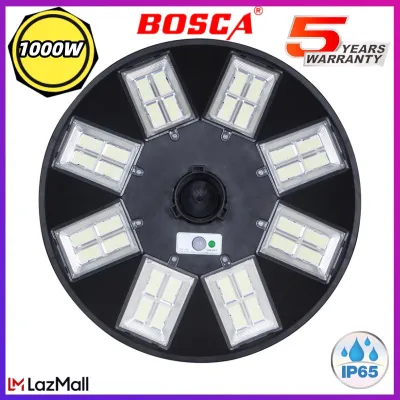
Prices are valid at publication and may change. Please refer to the product page for the latest price.
Finally, determine the required detection zone and trigger frequency for each area. High-traffic zones, such as main entrances or driveways, will trigger the motion sensor frequently, requiring a robust battery capacity or a steady power connection. Low-traffic areas, like side alleys or back gardens, only need occasional activation, making them ideal for standard solar-powered units that conserve energy when no movement is detected.
Matching Bosca Motion Sensor Features to Specific Scenarios
Different outdoor spaces demand distinct lighting patterns and sensor behaviors. To achieve the best results, you must align the beam angle and sensor range of the fixture with the physical layout of the area. A wide-angle floodlight is highly effective for open spaces, while a narrow spotlight is better suited for targeted illumination. Always check the manufacturer specifications on the product packaging to verify if a specific model is designed for your intended scenario.

Pathways and Walkways
Illuminating garden paths and walkways requires a gentle, practical approach to ensure safe foot traffic. For these areas, look for fixtures that provide downward or diffused lighting. This design directs the light exactly where people step, preventing harsh glare from shining directly into the eyes of walkers.
Shorter motion detection ranges are generally preferred for pathways. A sensor with a limited range prevents the light from turning on unnecessarily due to passing cars on the street or movement in a neighbor’s yard. When selecting a pathway light, check the product label for appropriate mounting heights or stake stability. If you are using ground-stake solar lights, ensure the stakes are sturdy enough to withstand soft, rain-soaked soil during the wet season.
Driveways and Entrances
Driveways and main entry points serve as transition zones for both vehicles and pedestrians, requiring robust and expansive illumination. To ensure safety when parking or entering the home, choose motion sensor lights with wider detection angles and longer sensor ranges. This setup ensures that the light activates as soon as a vehicle approaches the gate or a person steps onto the driveway.
Adequate brightness is essential for these high-visibility zones. Verify the lumen output listed on the product packaging; higher lumens provide the clear, bright light needed to maneuver vehicles safely and identify visitors at night. For expansive driveways or multi-car garages, consider dual-head or adjustable-head models. These designs allow you to angle individual light panels in different directions, maximizing coverage from a single installation point.
Garden and Accent Lighting
Using motion sensors in gardens and landscaped areas allows you to highlight the beauty of your outdoor space while conserving energy. For aesthetic purposes, warmer color temperatures are highly recommended. Warm white or soft yellow light creates a cozy, inviting ambiance that complements natural foliage and stone features, whereas cool white light can sometimes look clinical in a garden setting. Note that decorative style, perceived color temperature, and spatial effects are highly subjective and should be treated as conditional preferences based on your personal taste, rather than universal performance facts.
Targeted, narrow-beam spotlights are ideal for focusing on specific plants, trees, or architectural elements. When positioning these lights, ensure the motion sensor can be adjusted or angled away from low-lying vegetation. This prevents the light from constantly triggering due to wind-blown leaves or small local wildlife, such as stray cats and geckos, which can quickly drain the battery of a solar-powered unit.
Key Specifications to Check on the Product Label
To ensure your selected Bosca motion sensor light can withstand the demanding Philippine climate, you must carefully verify several technical specifications on the product label or user manual before purchasing.
First, check the Ingress Protection (IP) rating, which indicates the fixture’s resistance to dust and water. For outdoor exposure in areas prone to heavy tropical downpours, look for a rating of at least IP65. An IP65 rating ensures the light is dust-tight and protected against water jets from any direction, making it durable enough to survive intense monsoon seasons.
Second, evaluate the power source and battery specifications. For solar-powered models, check the solar panel type (such as monocrystalline, which is generally more efficient in low-light or overcast conditions) and the battery capacity, typically measured in milliampere-hours (mAh). A larger battery capacity ensures the light can operate throughout the night, even after cloudy days with limited sunlight.
Third, confirm the sensor specifications to match your space. Look for the exact detection angle (often ranging from 120 to 180 degrees) and the maximum detection distance. Some models also feature adjustable delay times, allowing you to choose how long the light remains illuminated after motion stops, which is highly useful for customizing energy consumption.
Finally, prioritize electrical safety and compatibility. If you are installing a hardwired model connected to the home’s electrical grid, verify that the voltage rating matches the standard 220V system used in the Philippines. Verify the base or interface type, overall dimensions, and wattage limits to prevent overloading your system. If dimming is a priority for your outdoor ambiance, check whether the product supports a specific dimming method, as many standard motion sensor lights operate strictly on an on-and-off binary system. Always look for recognized safety certification marks on the packaging to ensure the product has undergone rigorous quality and safety testing.
Installation and Placement Tips for Optimal Performance
Proper installation is key to maximizing the efficiency, performance, and lifespan of your motion sensor lights. For solar-powered models, position the solar panel where it will receive the maximum amount of direct daily sunlight. In the Philippines, angling the panel slightly toward the south can help optimize sun exposure throughout the year. Ensure that nearby tree branches, roof eaves, or climbing plants do not cast shadows over the panel, as even partial shade can significantly reduce charging efficiency.
Mount the fixture at the height recommended by the manufacturer, which is typically between two to three meters above the ground. Mounting the light too high can reduce the sensitivity of the motion sensor, while mounting it too low can limit the coverage area and create blind spots.
For installations involving fixed wiring, damp areas, work at height, exposure to high heat, or suspended loads, strict adherence to safety boundaries is essential. Always perform complete power-isolation at the breaker before handling any electrical components. Carefully follow the manufacturer’s installation instructions regarding load limits and mounting hardware. If you encounter complex wiring configurations or feel uncomfortable working on ladders or near high-voltage lines, always consult a qualified professional electrician to handle the installation.
Once installed, perform routine maintenance to keep the system functioning optimally. Wipe the solar panel with a soft, damp cloth periodically to remove dust, pollen, and salt residue, especially in coastal areas. Additionally, clear any dirt, cobwebs, or debris from the motion sensor lens to prevent false triggers or reduced detection sensitivity.
Frequently Asked Questions (FAQ)
Why does my solar motion sensor light stay on during the day?
This issue is often caused by a blocked or dirty solar panel, which prevents the internal light sensor from detecting ambient daylight. If the panel is covered in dust, leaves, or shadow, the system assumes it is nighttime and keeps the light active. To resolve this, thoroughly clean the solar panel and ensure it is not shaded. Additionally, check the user manual to verify if the light is set to a continuous-on mode or if the sensor sensitivity needs to be reset.
Can I adjust the sensitivity of the motion sensor?
Whether you can adjust the sensitivity depends entirely on the specific model’s design. Some advanced models feature physical dials or toggle switches on the housing that allow you to customize the detection range, sensitivity, and illumination delay. Other basic models may operate on fixed, pre-set sensitivity levels. Always consult the product manual to identify the available control options and adjustment procedures for your specific unit.

Community discussion
Share your experience or ask a question. Comments are reviewed before publication.