
Finding outdoor solar lights that can survive the intense tropical climate of the Philippines requires looking past generic “waterproof” labels. Between torrential monsoon rains, high humidity, and seasonal typhoons, standard outdoor lights often fail due to water ingress, corroded circuits, or physical damage from strong winds. To secure a long-lasting lighting setup, you must evaluate specific technical standards, including Ingress Protection (IP) ratings, impact resistance, housing materials, and battery chemistry. This guide provides a comprehensive framework to help you identify and verify truly heavy-duty solar fixtures that will keep your yard, driveway, or perimeter illuminated year-round.
Defining "Heavy-Duty" and "Waterproof" in Solar Lighting
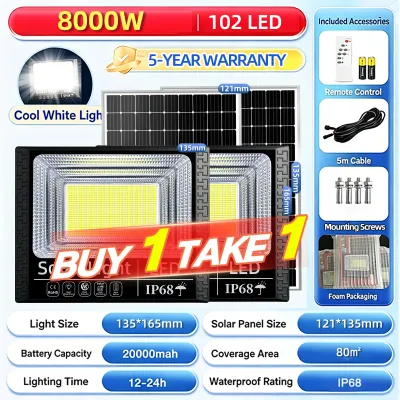
To find a solar light that can withstand extreme weather, you must understand the technical standards that define durability. The most critical metric is the Ingress Protection (IP) rating, which consists of two digits. The first digit (ranging from 0 to 6) measures protection against solid objects like dust and dirt, while the second digit (ranging from 0 to 9K) measures protection against liquids. For outdoor solar lights exposed to heavy tropical downpours, an IP65 rating is the absolute minimum requirement. An IP65-rated fixture can withstand low-pressure water jets from any angle, making it suitable for standard rain. However, for highly exposed areas or ground-level installations where water might pool, look for IP67 or IP68 ratings. An IP67 rating means the fixture can be temporarily submerged in water up to one meter deep for 30 minutes, providing a crucial safety margin during severe localized flooding.
Beyond water resistance, the physical housing material determines how well a solar light survives years of intense tropical sun and wind. Cheap, thin plastics degrade rapidly under ultraviolet (UV) radiation, becoming brittle, fading, and eventually cracking. Once the outer shell cracks, water easily penetrates the internal electronics, causing immediate failure. Heavy-duty fixtures utilize die-cast aluminum or high-grade, UV-stabilized polycarbonate. Die-cast aluminum offers superior structural strength, resists corrosion when properly coated, and acts as an excellent heat sink to dissipate warmth from the LEDs and internal circuitry.
Products mentioned in this guide
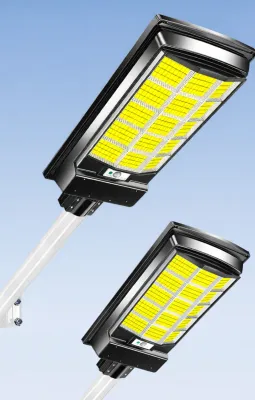
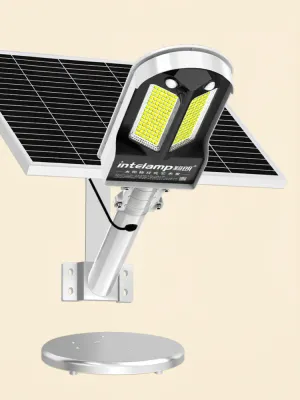
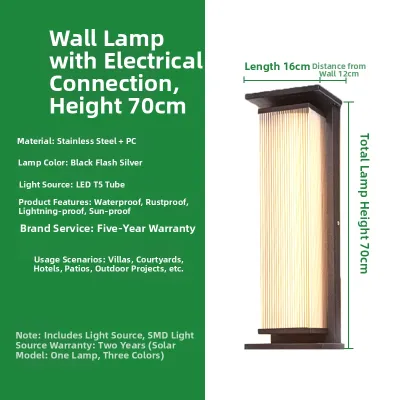
Prices are valid at publication and may change. Please refer to the product page for the latest price.
Another often-overlooked specification is the IK (Impact Protection) rating, which measures a fixture’s resistance to mechanical impacts. During severe storms and typhoons, strong winds can loft small stones, twigs, and other debris. A solar light with an IK07 or IK08 rating is certified to withstand significant physical impacts without shattering its protective lens or housing. Choosing a fixture with a high IK rating ensures that flying debris during a storm will not leave your property in the dark.
Key Specifications to Check Before Buying
When evaluating product listings on any online marketplace or in local hardware stores, you must look closely at the internal components. The battery is the heart of any solar lighting system, and its chemistry dictates how well it performs in hot, humid environments. Traditional lithium-ion (Li-ion) batteries are common, but they degrade quickly when subjected to the high ambient temperatures typical of the Philippines. For maximum longevity, prioritize fixtures equipped with Lithium Iron Phosphate (LiFePO4) batteries. LiFePO4 batteries offer superior thermal stability, reducing the risk of swelling or capacity loss in extreme heat. Furthermore, they support significantly more charge-discharge cycles—often up to 2,000 to 3,000 cycles compared to the 500 cycles typical of standard Li-ion batteries—translating to years of reliable nightly operation. While fixtures with LiFePO4 batteries may require a slightly higher initial investment of a few hundred pesos (₱), the extended lifespan makes them far more cost-effective over time.

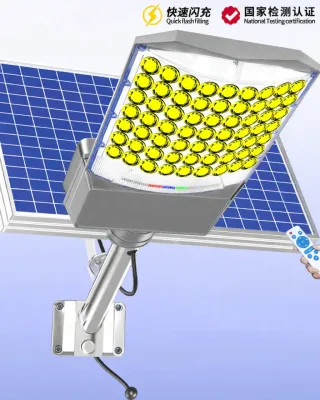
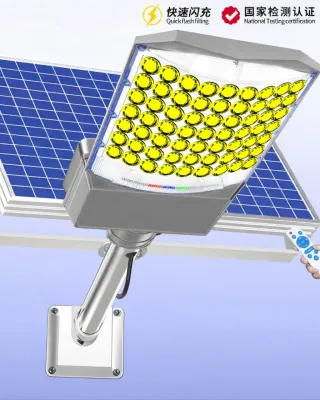
The solar panel itself is another critical point of evaluation. Monocrystalline solar panels are highly recommended over polycrystalline alternatives. Monocrystalline panels feature a higher energy conversion efficiency, which is vital during the rainy season when overcast skies and heavy cloud cover limit direct sunlight. A highly efficient panel can still harvest sufficient ambient light on cloudy days to partially charge the battery. Additionally, consider split-type solar light designs. In a split-type system, the solar panel is physically separate from the light fixture, connected by a heavy-duty, waterproof cable. This design allows you to mount the solar panel in an optimal, unshaded location on your roof or pole while placing the actual light fixture under an eave, carport, or shaded pathway where it is protected from direct wind and rain.
To ensure the light operates reliably throughout the night, you must match the lumen output with the battery capacity. A high-lumen light paired with a small battery will drain within a few hours, leaving your property dark long before dawn. Look for fixtures that specify both the battery capacity (in milliampere-hours, mAh, or watt-hours, Wh) and the estimated runtime. Many heavy-duty solar lights feature intelligent power management systems. These systems automatically dim the light output when the battery level drops or use motion sensors to keep the light at a low ambient level until activity is detected, conserving precious battery power during consecutive rainy days.
Finally, carefully review the manufacturer’s warranty terms. A reliable, heavy-duty product should come with a clear warranty that explicitly covers water ingress, seal degradation, and electronic failures. Avoid products that offer vague guarantees or lack clear customer support channels, as these are often indicators of low-quality manufacturing that will not survive a single monsoon season.
Matching Light Types to Outdoor Environments
Different outdoor areas require different lighting designs, and matching the right fixture type to its environment is key to ensuring both performance and durability. Security floodlights are ideal for high-mounting applications, such as on perimeter walls, tall poles, or above garage doors. Because they are mounted high, they are highly exposed to strong winds. To prevent these fixtures from vibrating or tearing loose during a storm, they must be paired with heavy-duty steel mounting brackets and secure anchoring hardware. The wind load on a large floodlight can be substantial, so a robust, aerodynamic design is preferred to minimize resistance.
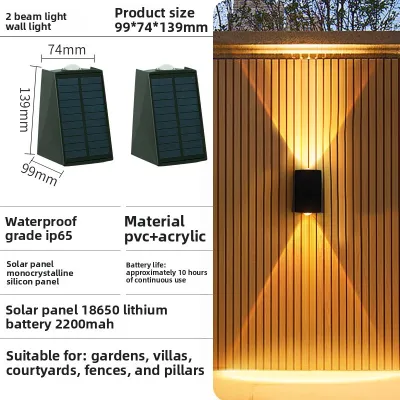
For areas where structural stability is the primary concern, wall-mounted packs are an excellent choice. These fixtures sit flush against the exterior walls of your home or concrete fences. By leveraging the building’s structure, wall packs are naturally shielded from the worst of the wind and vibration. This flush-mount design also reduces the surface area exposed to driving rain, making it easier for the fixture’s waterproof seals to keep moisture out of the internal compartments.
Pathway lights and ground stakes provide low-level illumination along garden paths, driveways, and flower beds. However, because they are positioned close to the ground, they face unique environmental hazards. During heavy downpours, water can quickly pool around the base of these lights, and soil erosion can loosen their stakes, causing them to tilt or fall over. When selecting pathway lights, ensure they have a high IP rating (preferably IP67) to handle temporary submersion. Additionally, look for models with extra-long, rugged ground stakes made of corrosion-resistant materials like heavy-duty ABS or aluminum, which can be driven deep into stable soil to resist shifting during heavy rains.
Installation and Maintenance for Maximum Lifespan
Even the most durable solar light will fail prematurely if it is poorly installed or neglected. Secure mounting is the first line of defense against extreme weather. When installing fixtures on concrete walls or brickwork, avoid using cheap plastic wall plugs that can degrade and loosen over time. Instead, use high-quality stainless steel expansion bolts or masonry anchors. Stainless steel (specifically grade 304 or 316) is highly resistant to rust and corrosion, which is essential in the humid, salty air of coastal regions in the Philippines. Regularly inspect the mounting hardware to ensure no screws have loosened due to wind vibration.
Proper positioning of the solar panel is equally important. To maximize solar energy harvest, panels should face south at an angle of approximately 10 to 15 degrees. This slight tilt is not only optimal for catching the sun’s rays near the equator but also crucial for encouraging rainwater runoff. Rainwater running off the panel acts as a natural cleaning mechanism, washing away accumulated dust, pollen, and bird droppings that would otherwise block sunlight and reduce charging efficiency.
Routine maintenance is simple but vital for extending the lifespan of your solar lights. At least once every few months, wipe down the solar panel with a soft, damp microfiber cloth to remove stubborn dirt and grime. Avoid using abrasive sponges or harsh chemical cleaners, which can scratch or degrade the panel’s protective coating. During your cleanings, take a moment to inspect the fixture’s seals and gaskets. Look for any signs of cracking, dry rot, or condensation inside the lens. If you notice moisture buildup inside the light, turn off the power, open the fixture to let it dry completely, and apply a thin bead of outdoor-grade silicone sealant along the gasket line to restore the waterproof barrier.
While many solar light installations are straightforward DIY projects, some scenarios require professional assistance. If you are mounting heavy floodlights at significant heights, routing complex wiring through roof spaces for split-panel systems, or installing fixtures on structurally sensitive surfaces, it is best to consult a qualified electrician or professional installer. Working at heights during windy conditions poses serious safety risks, and improper installation can compromise your home’s structural integrity or void the product’s warranty.
Frequently Asked Questions (FAQ)
Can solar lights withstand typhoons and extreme winds?
Heavy-duty solar lights designed with robust aluminum housings and secure mounting brackets can withstand strong winds, but extreme typhoon-force winds present a severe hazard. The primary risk during a typhoon is not just the wind speed itself, but the flying debris and falling tree branches that can physically smash the fixtures. If a severe weather warning or typhoon signal is raised in your area, it is highly recommended to temporarily remove detachable solar lights, especially those mounted on temporary poles or garden stakes. For permanently fixed lights, ensure that all mounting bolts are tightly secured and that there are no overhanging branches nearby that could fall and damage the installation.
Do waterproof solar lights need to be brought inside during the rainy season?
High-quality solar lights with verified IP65, IP67, or IP68 ratings do not need to be brought indoors during the typical rainy season. These fixtures are engineered to remain outdoors year-round and can easily handle daily exposure to heavy rain and high humidity. However, you must ensure that the lights are not installed in low-lying areas where water pools permanently, as prolonged submersion can eventually compromise even the best waterproof seals. Periodically checking the drainage around your ground-mounted lights and inspecting the rubber gaskets for wear will ensure your lights remain fully functional throughout the wettest months of the year.

Community discussion
Share your experience or ask a question. Comments are reviewed before publication.