
Finding the ideal waterproof solar meteor lights for your outdoor spaces in the Philippines requires balancing aesthetic appeal with the harsh realities of tropical weather. High humidity, intense solar exposure, and sudden torrential downpours can quickly degrade substandard outdoor lighting. To ensure your decorative lights survive the wet season and continue to cascade beautifully night after night, you must look beyond basic visual designs and carefully evaluate technical specifications like Ingress Protection (IP) ratings, solar panel efficiency, and housing material durability. By understanding these key factors, you can select a lighting system that not only enhances your garden, patio, or storefront but also stands up to the demanding local climate.
Investing in outdoor solar lighting is an eco-friendly and cost-effective way to illuminate your property without adding to your monthly electricity bill. However, because these systems rely entirely on outdoor exposure to function, they are constantly vulnerable to environmental wear and tear. A well-chosen set of solar meteor lights can transform a simple backyard into a dramatic, festive space, mimicking the natural beauty of falling stars or dripping rain. To achieve this lasting effect, consumers must learn how to decode product specifications and match them to the specific environmental conditions of their installation site.
Understanding Waterproof Ratings for Tropical Weather
When shopping for outdoor lighting in the Philippines, the Ingress Protection (IP) rating is the most critical specification to verify. The IP rating is an international standard that defines how effectively an electrical enclosure seals against solids and liquids. It consists of two digits: the first digit (ranging from 0 to 6) indicates protection against solid objects like dust and insects, while the second digit (ranging from 0 to 9) measures protection against water. For outdoor decorative lights, you should focus primarily on the second digit to ensure the internal circuitry remains dry during heavy downpours.
Products mentioned in this guide
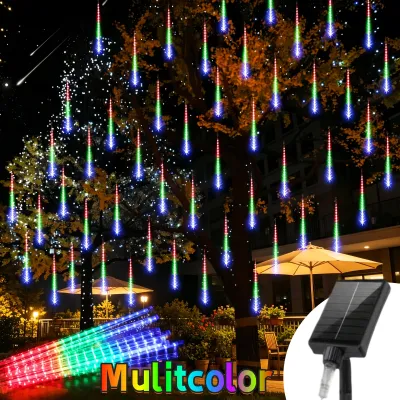
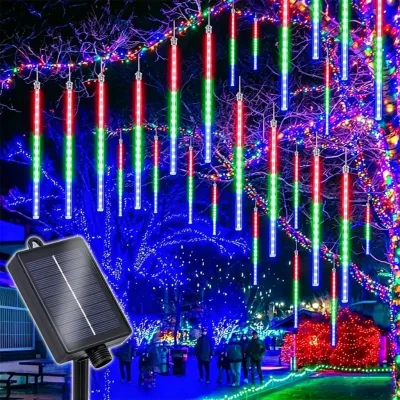
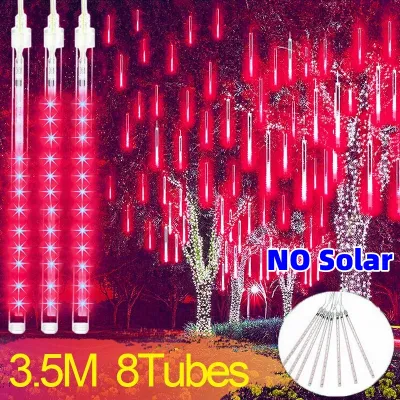
![[COD]Solar/Plug in Meteor Shower Rain Lights LED Outdoor Waterproof Icicle Fairy String Lights for Home Garden Christmas Raya Decoration](https://img.lazcdn.com/g/p/fd49d32f1a873f0ead753f71865dcfa9.jpg_400x400q80.jpg_.webp)
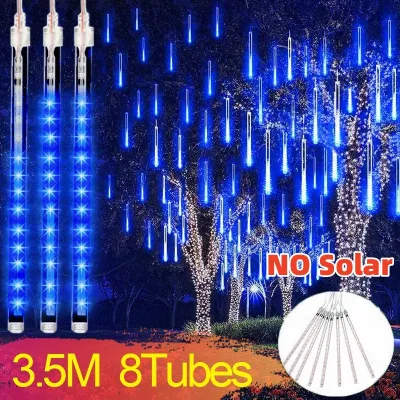
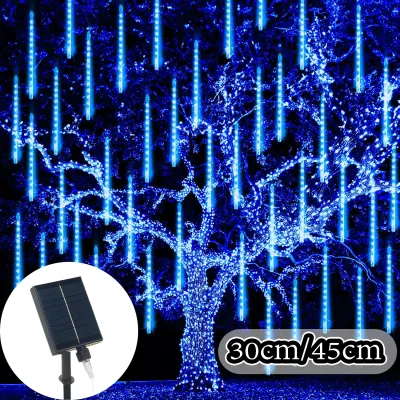
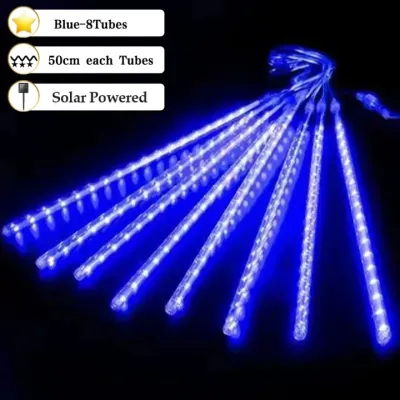
Prices are valid at publication and may change. Please refer to the product page for the latest price.
Many budget-friendly string lights carry an IP44 rating, which means they are protected against solid objects larger than one millimeter and splashing water from any direction. While IP44 lights are suitable for semi-protected outdoor areas, such as covered verandas, balconies, or under deep eaves, they are highly vulnerable if left fully exposed to the elements. During the monsoon season, wind-driven rain can easily bypass basic splash-resistant seals, leading to water accumulation inside the light tubes, short circuits, and premature product failure.
For fully exposed outdoor installations—such as hanging lights from tree branches, wrapping them around pergolas, or lining open rooflines—you should look for a minimum rating of IP65. An IP65 rating indicates that the product is completely dust-tight and can withstand low-pressure water jets from any angle. This level of protection ensures that even during intense tropical storms, water cannot penetrate the protective housing. If you live in an area prone to severe flooding or plan to install lights close to the ground where water might pool, upgrading to IP67-rated lights, which can withstand temporary immersion in water, provides an extra layer of security.
Beyond the rating printed on the box, it is wise to inspect the physical construction of the light tubes and connectors. High-quality waterproof meteor lights feature sonic-welded end caps or heavy-duty silicone seals at both ends of each tube. The entry point where the wire connects to the tube is a common failure point; look for models that utilize threaded waterproof compression joints or thick rubber boots to prevent water from creeping along the wire and into the electronics. Verifying these sealing details before purchase will save you the hassle of replacing waterlogged lights after the first major storm.
Key Selection Criteria for Solar Meteor Lights
To achieve the desired visual impact while ensuring long-term durability, you must evaluate several physical and functional specifications of the meteor lights. The first consideration is tube length and LED density. Solar meteor lights typically come in tube lengths of 30 centimeters or 50 centimeters, containing varying numbers of LED chips. Longer tubes with higher LED counts provide a more dramatic, continuous cascading effect, making them ideal for tall trees or high rooflines. Shorter tubes are better suited for smaller shrubs, low fences, or compact balcony railings where a subtle accent is preferred.

Color temperature is another crucial factor that shapes the ambiance of your outdoor space. This is largely a matter of personal preference and design intent rather than performance. Warm white LEDs (around 2700K to 3000K) emit a soft, golden glow that creates a cozy, romantic, and inviting atmosphere, perfect for residential gardens and dining areas. Cool white LEDs (6000K and above) produce a bright, crisp, ice-like effect that mimics real falling snow or shooting stars, which is highly visible from a distance and popular for festive holiday displays. Multicolor (RGB) options offer vibrant, shifting colors that add a playful, celebratory energy to parties and commercial spaces.
Material quality directly dictates how well the lights will withstand the intense ultraviolet (UV) radiation of the tropical sun. Cheap plastics degrade rapidly when exposed to constant sunlight, becoming yellow, brittle, and prone to cracking within a few months. Look for product descriptions that explicitly specify the use of UV-resistant polycarbonate or high-grade acrylic for the light tubes. Polycarbonate is highly impact-resistant, meaning it can survive being bumped by tree branches during high winds without cracking. Additionally, ensure that any metal components, such as hanging hooks or internal wire paths, are made of rust-resistant materials like stainless steel or treated copper to prevent corrosion in high-humidity environments.
Finally, check the functional features of the lighting controller. Many modern solar meteor lights offer multiple lighting modes, allowing you to adjust the speed of the cascading effect, transition from a fast drip to a slow fade, or set the lights to a steady-on mode. Some models also include convenient remote controls, which are incredibly useful if the solar panel or control box is mounted in a hard-to-reach location. A remote control allows you to adjust settings, set timers, or turn the lights on and off without needing to physically access the control unit, enhancing the overall user experience.
Evaluating Solar Panel and Battery Efficiency
Because solar meteor lights rely entirely on the sun for power, the efficiency of the solar panel and the capacity of the internal battery are critical to ensuring reliable nighttime performance. When reviewing product specifications, pay close attention to the type of solar panel included. Monocrystalline solar panels are characterized by their dark, uniform appearance and offer the highest energy conversion efficiency, typically converting more sunlight into electricity even on overcast or rainy days. Polycrystalline panels, which have a blue, speckled look, are more economical but less efficient, requiring longer exposure to direct, unobstructed sunlight to achieve a full charge.
In the Philippines, where seasonal cloud cover and afternoon rain showers are common, choosing a monocrystalline panel can make a significant difference in how long your lights stay illuminated at night. Along with panel type, verify the battery capacity, which is measured in milliampere-hours (mAh). The battery acts as the reservoir for the energy collected during the day. A higher capacity battery (such as 1200mAh or 2000mAh) can store more power, allowing the meteor lights to run for eight to twelve hours on a full charge. If the battery capacity is too low, the lights may fade and turn off after only a few hours of operation.
To maximize charging efficiency, the placement and adjustability of the solar panel are paramount. Look for solar panel assemblies that feature an adjustable mounting bracket, allowing you to tilt and rotate the panel to face the sun’s path directly. In the southern hemisphere-facing regions of the tropical zone, angling the panel slightly southward or northward depending on the season helps capture maximum solar radiation. Additionally, check the length of the lead cable connecting the solar panel to the first light tube. A generous lead cable (ideally three meters or more) gives you the flexibility to mount the solar panel in a fully sunlit area, such as a rooftop or open lawn, while hanging the decorative light tubes in shaded areas under trees or patio roofs.
It is also important to manage expectations regarding solar performance during the peak of the rainy season. Even the most efficient monocrystalline panels will struggle to fully charge the battery on heavily overcast days with continuous rainfall. Some advanced solar light kits address this limitation by including a dual-charging feature, allowing you to detach the solar panel or control box and charge it indoors via a USB port during extended periods of bad weather. Checking for this feature on product labels can provide a helpful backup plan for special events or holiday celebrations when you want to guarantee the lights will shine brightly.
Installation and Safety Guidelines for Outdoor Spaces
Proper installation is essential not only for achieving the best visual effect but also for ensuring the safety of your property and the longevity of your lighting system. When hanging meteor lights in trees, avoid using bare metal wires or tight plastic ties directly against growing branches, as these can cut into the bark and damage the tree over time. Instead, use outdoor-rated, UV-stabilized nylon zip ties, insulated cable clips, or soft garden ties. Leave a small amount of slack in the wires to accommodate tree growth and natural movement during windy conditions, preventing the cables from being pulled taut and snapping.
When mounting lights along eaves, gutters, or fences, ensure the wires are secured neatly and do not hang loose where they could catch on passing objects or be damaged by pets. Keep all electrical connections and the solar panel clear of ground-level debris, fallen leaves, and areas where water tends to pool during heavy downpours. While the light tubes themselves are designed to hang vertically, the solar panel should always be mounted securely on a stable surface—such as a sturdy wooden post, a wall, or firmly staked into solid ground—to prevent it from being knocked over or misaligned by strong winds.
Safety must always be your top priority during installation. Although solar lighting systems operate on low-voltage direct current (DC) power, which poses a minimal risk of electrical shock compared to mains voltage, working at heights or near existing electrical infrastructure carries inherent dangers. If your installation plan involves climbing tall trees, accessing high rooflines, or working near overhead power lines, do not attempt a DIY installation. Always isolate nearby power sources if you are working close to existing outdoor wiring, and consult a qualified professional to handle high-altitude mounting or complex integrations with your home’s exterior structure.
Furthermore, if you plan to connect multiple sets of solar meteor lights together, verify the manufacturer’s specifications regarding end-to-end connectivity. Some low-voltage solar controllers are only rated to power a single string of lights; overloading the controller by daisy-chaining too many sets can cause the wires to overheat, damage the control box, or significantly shorten the lifespan of the LEDs. Always follow the manufacturer’s instructions regarding the maximum number of connectable tubes, and ensure that all intermediate connection points are tightly screwed and sealed with waterproof electrical tape for added protection.
Condition-Based Shortlist: Matching Lights to Your Space
To help you make the right purchasing decision, it is helpful to match the specifications of the solar meteor lights to the specific environmental conditions of your outdoor space. Different areas of your home present unique challenges, and selecting a configuration tailored to those conditions will ensure optimal performance and durability.
Fully Exposed Rooftops, Open Gardens, and Large Trees
For areas that receive no shelter from the elements, durability and weatherproofing are the absolute priorities. These installations face intense, direct tropical sun during the day and heavy, wind-driven rain during storms.
- Recommended Specifications: Look for lights with an IP65 or IP67 waterproof rating to ensure complete protection against water ingress. Choose heavy-duty, UV-resistant polycarbonate tubes (50cm length for high visibility) and a large monocrystalline solar panel with an adjustable metal bracket.
- Battery & Wiring: Select a system with a high-capacity battery (at least 1800mAh to 2000mAh) to sustain illumination through the night. Ensure the kit includes extra-thick, double-insulated wiring and waterproof threaded connectors to withstand wind strain and UV exposure.
Covered Patios, Balconies, and Verandas
Semi-protected spaces are shielded from direct downpours but are still exposed to high ambient humidity, blowing mist, and indirect sunlight. Here, aesthetic control and ease of operation are often more important than extreme weatherproofing.
- Recommended Specifications: An IP44 or IP55 rating is generally sufficient for these sheltered locations. Opt for shorter 30cm tubes to fit compact spaces without looking cluttered. Warm white LEDs are highly recommended to create a cozy, relaxing outdoor living area.
- Features & Charging: Look for models that include a remote control for easy operation from inside the house. Since these areas may receive partial shade, ensure the solar panel has a long lead cable (at least 5 meters) so you can position the panel on the edge of the roof or railing where it can capture direct sunlight.
Pathways, Driveways, and Low Shrubbery
Ground-level installations are highly visible and define the boundaries of your property. They must be bright enough to provide safety lighting while being physically robust enough to withstand ground-level moisture, dirt, and accidental impacts.
- Recommended Specifications: Choose meteor lights with high-lumen LED labels to ensure clear visibility along pathways. An IP65 rating is essential to protect against ground splashes, heavy dew, and garden sprinklers. Durable acrylic or thick plastic tubes are preferred to resist accidental bumps.
- Mounting & Safety: Ensure the solar panel comes with a sturdy, long ground stake that can be driven deeply into the soil to remain stable. Keep all connecting wires pinned flat to the ground using garden staples or buried slightly shallowly in protective conduit to prevent tripping hazards and protect the cables from lawn mowers or weed trimmers.
Frequently Asked Questions (FAQ)
How do I clean the solar panel to maintain charging efficiency?
To keep your solar meteor lights operating at peak efficiency, you should clean the solar panel regularly, especially during the dry season when dust and pollen accumulate quickly. Use a soft, damp microfiber cloth and a mild, non-abrasive soap mixed with water to gently wipe the surface of the panel. Avoid using abrasive materials like steel wool, stiff brushes, or harsh chemical cleaners, as these can scratch the protective glass or plastic coating on the panel. Scratches scatter incoming sunlight, permanently reducing the panel’s ability to absorb solar energy and charge the internal battery.
Why do my solar meteor lights only stay on for a short time at night?
If your lights are turning off prematurely, the most common cause is insufficient charging during the day. Check the solar panel to ensure it is not shaded by growing tree branches, nearby structures, or accumulated dirt and leaves. Even partial shading on a small portion of the panel can drastically reduce its power output. If the panel is clean and receives at least six hours of direct sunlight daily, the issue may be a degraded rechargeable battery. Over time, all rechargeable batteries lose their capacity to hold a charge; refer to the manufacturer’s instructions to see if the battery can be replaced, and swap it with a compatible rechargeable battery of the same voltage and chemistry.

Community discussion
Share your experience or ask a question. Comments are reviewed before publication.